Liz Steel’s Primer on Fountain Pens
[Image: Liz Steel]
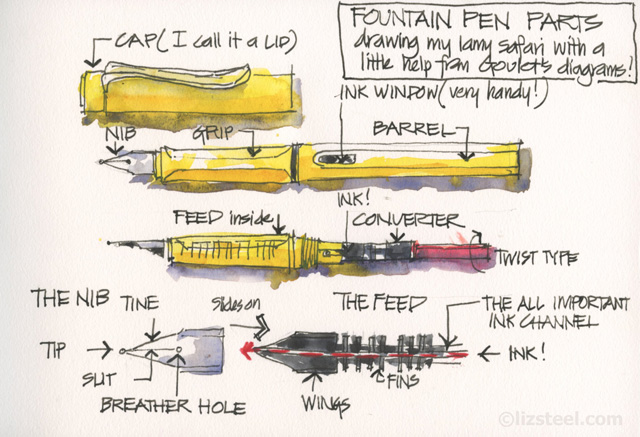
I wanted to point people over to a useful project: Liz Steel’s mini-series on selecting and using fountain pens for sketching. At the time of writing she’s posting articles to her blog twice a week, expecting to be complete before the end of Dec.
There is some very solid info for beginners – so I know many online students will love this primer. Plus, some of her notes should come in handy if you’re looking for new pens this holiday gift season.
Click over for Liz Steel’s series on Fountain Pens for Sketching.

Announcing: Shari Blaukopf: Sketching the City

My frequent sketching partner, sometimes co-teacher and fellow USK:Montreal sketcher Shari Blaukopf has recently released her second workshop with Craftsy.com: Sketching the City in Pen, Ink and Watercolor.
Regular readers will know Shari’s work from our painting outings, and maybe you remember this free wet-in-wet watercolor demo she did for us back in 2013.
Shari’s also the author of Sketching Landscapes in Pen Ink and Watercolor, so it’s no surprise that this new course is a good companion class. This time out they visit various locations around Craftsy’s home town Denver Colorado, capturing demos of her sketchbooking process. Starting with sketching thumbnails, followed by a simple but precise drawing that becomes a framework for the watercolor to follow.


The program has seven chapters, each featuring more than one demonstration related to architectural sketching or street views. Alongside the start-to-finish demonstrations, Shari fits in a lot of helpful tips such as how to draw brick work or field stone, handling reflections and depth in windows, or filling streets with lifelike detail – all the signage and wires and crowds of people.


My favorite section is an excellent demo on painting complex cast shadows. This is a nice bit of brushwork creating the effect of leaf dappling. It’s helpful to see how simple the approach really is – but how brush handling is a matter of practice-makes-perfect. A great exercise for beginners ready to go to the next level.


The final demo is a panoramic park view that illustrates how to place a focal point with color and contrast. Something I’m always trying to instill in students. A drawing might include a wide view of the world, but there should still be a strong central focus.
~m
Returning to Rio: Tinting your old sketchbooks
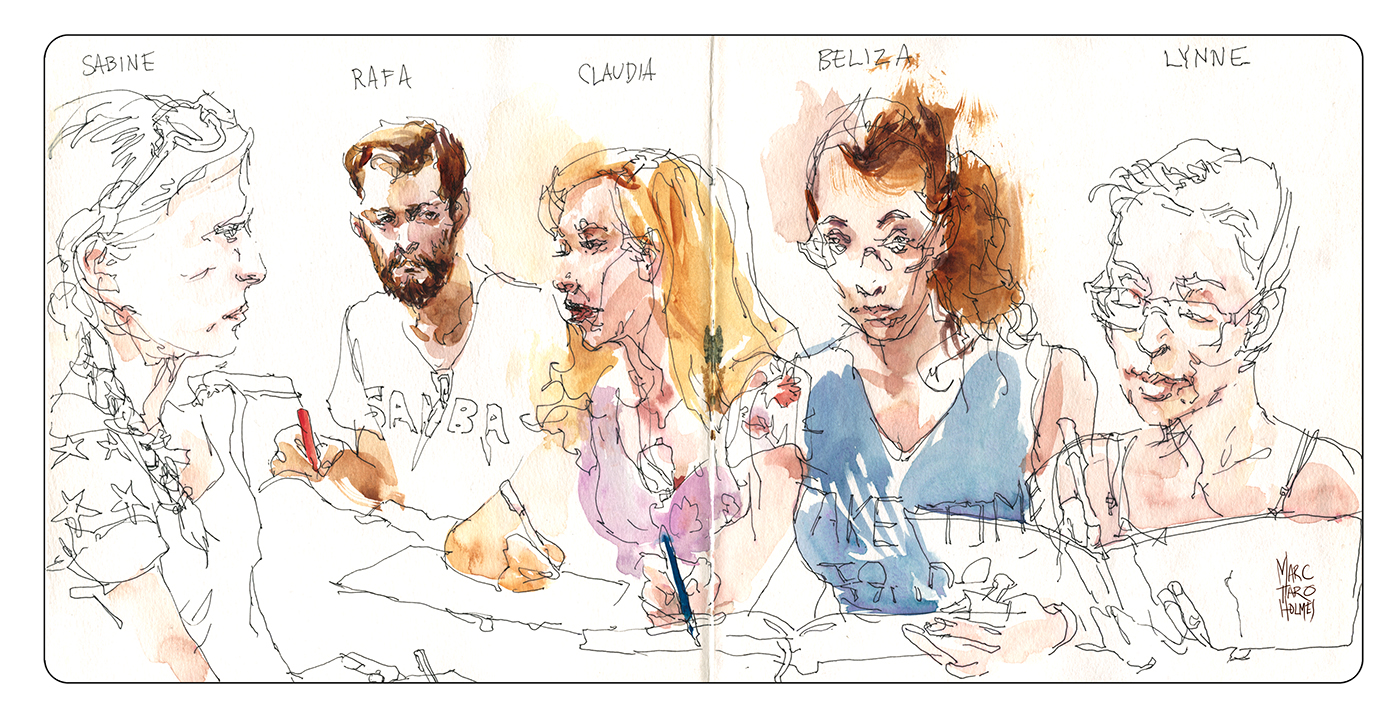

While preparing for my Craftsy.com class on Travel Sketching, I went back to an old sketchbook from the 2014 Urban Sketchers conference in Brazil. These were my doodles from the afterparty in Rio. Here’s a link to the original story. One of the best sketching walks I’ve every been on :)
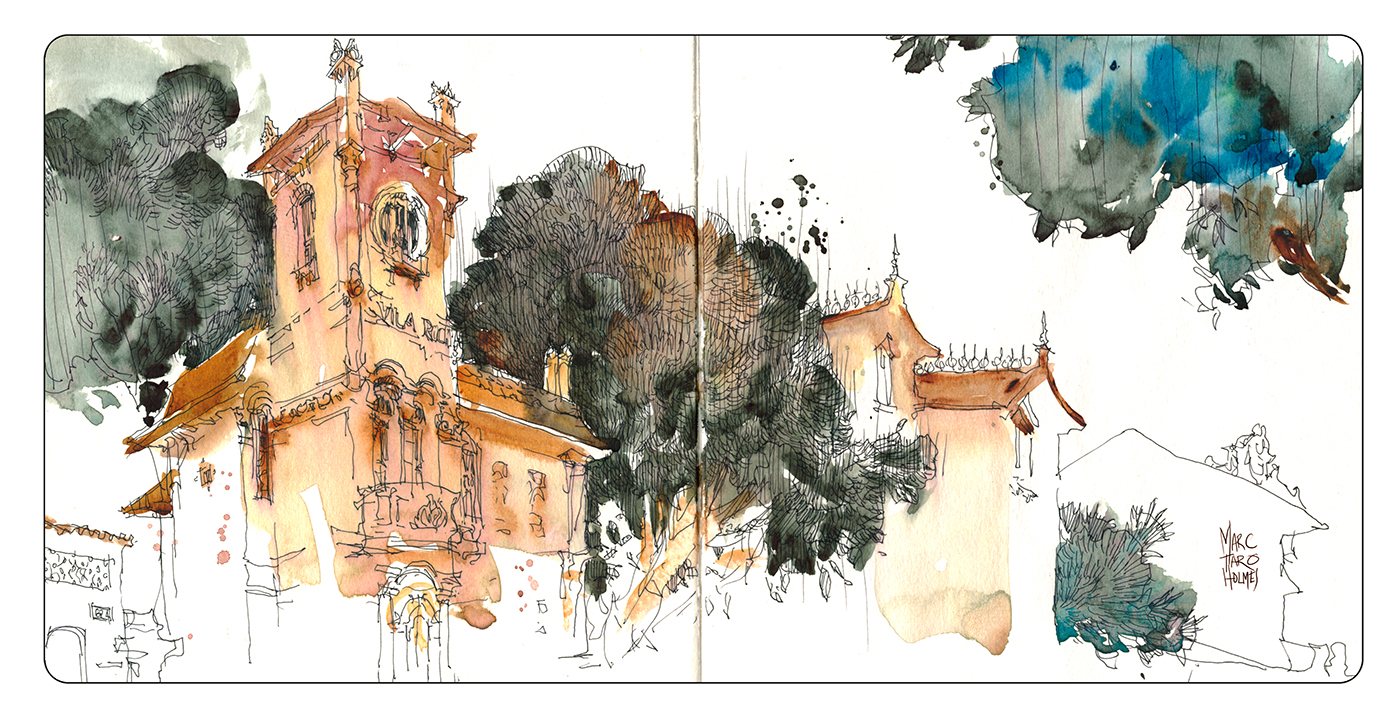

Craftsy ended up using this one for the ‘title page’ of the video (though they photoshopped it into a studio shot of a sketchbook). A student recently asked to see the before and after – so here’s the original drawing, made on location, compared with the painting done almost a year later.
I think you can see my strategy here – The values are clearly established in the drawing – so when I go to color, I’m following the light’s and darks I’ve indicated for myself. And I’m thinking in terms of solid shapes of color. Not floating dabs, or brustrokes – I want strong silhouette shapes.
I usually try to paint on location, but at the time I was a bit tired of carrying my gear after almost a week of teaching and traveling. I had just been sketching with Paul Heaston – and watching him produce some excellent pen and ink – I decided to borrow his method, working with just a pen and a lot of cross hatching. It’s quite a relief sometimes to be able to pack light.
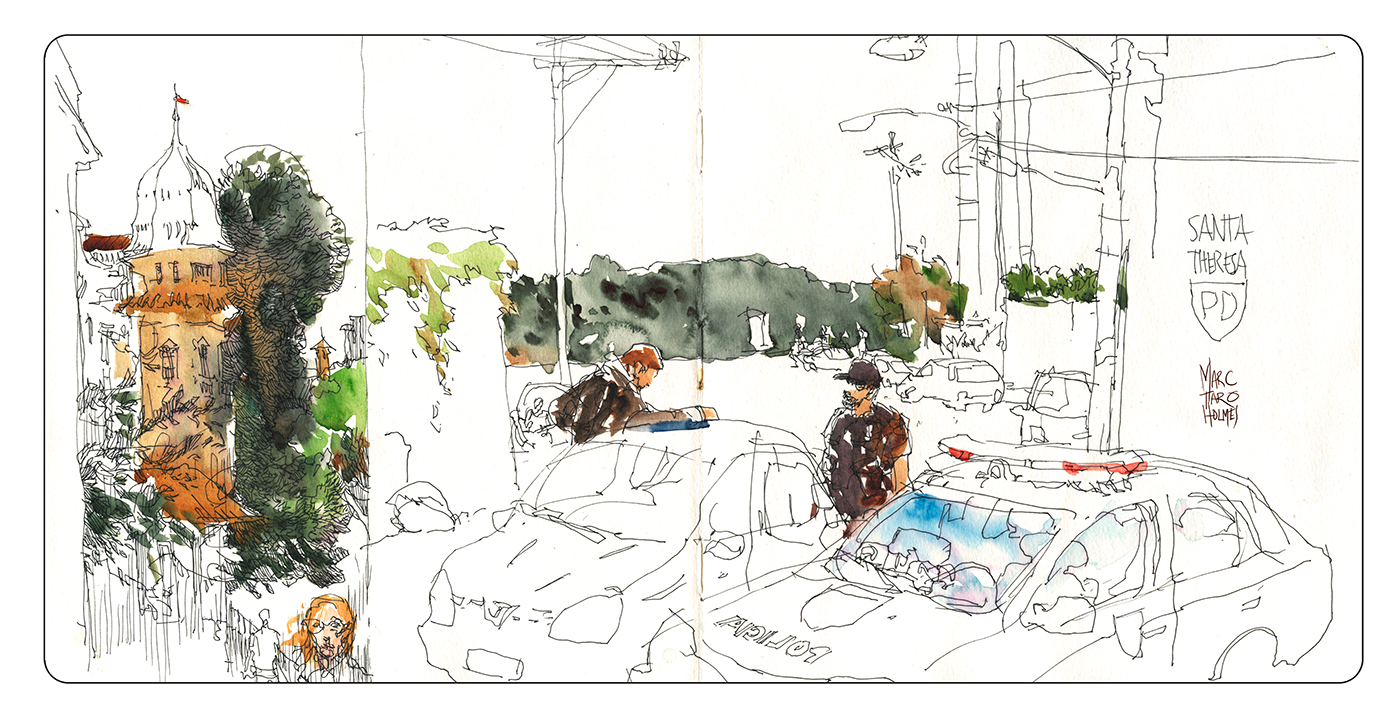

I always liked this sketch – it was Lynne Chapman’s idea to draw this police checkpoint. I’m not sure I’d have had the guts to draw them on my own, but in a sketching group you are always braver.
The police are everywhere in Rio. I had never seen so many armed cops – it seemed like the police force has to be one of the largest in any city. There were six of them on every street corner where we stayed near Copacabana. I suppose I’m being a typical nervous american tourist – even in Montreal I’m used to seeing cops in groups of four at the metro stations. But still – when walking around, I was wondering – why are they everywhere? Is the crime really that bad?
Our friend Rafa said this was a good neighborhood, so we didn’t need to worry – as long as we were out of there by sundown.
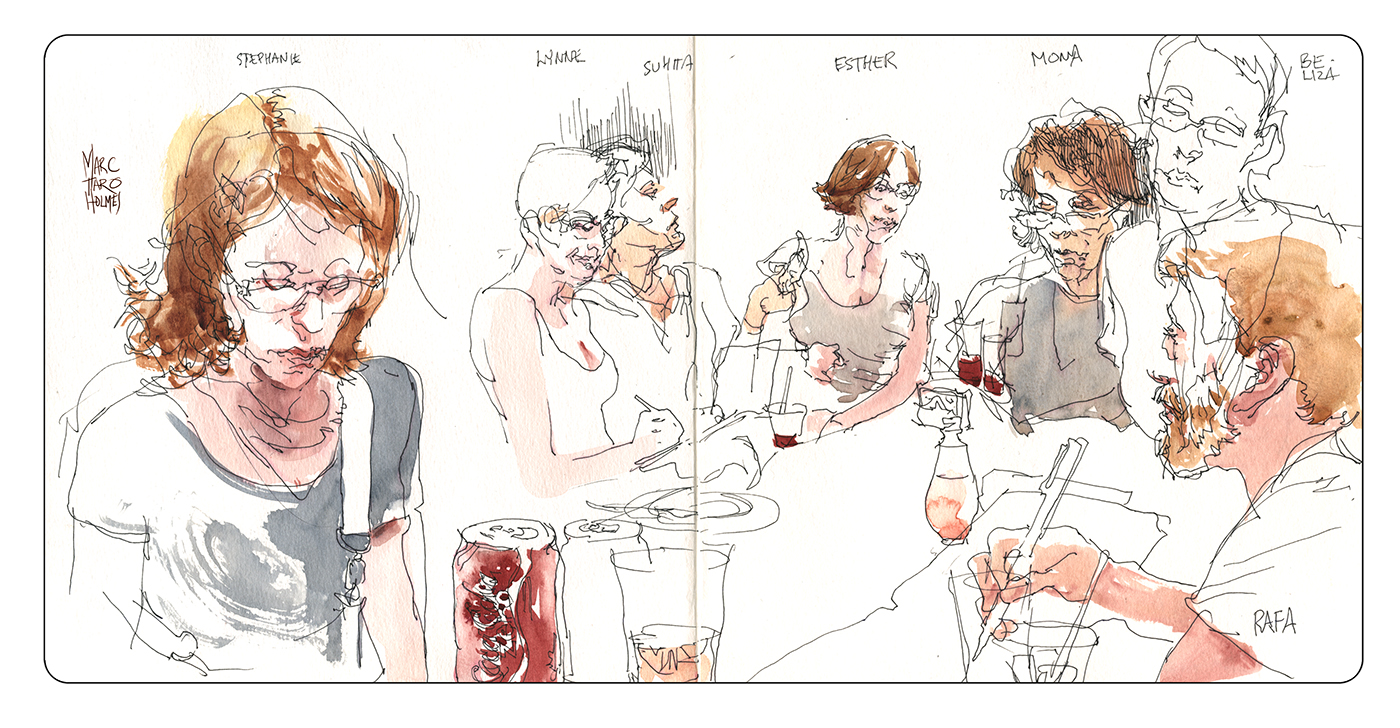

So – again, normally my advice is to paint as soon as possible after the drawings – the same day if possible, so your memory is fresh. It’s even better to paint right on the spot, so the color will be more true to life.
I don’t think I’d have gone back to these if I hadn’t scanned them. It’s a bit easier knowing you have them archived. The drawings are important memories for me and I’d have been nervous about ruining them. Of course I needn’t have worried – they always turn out in the end. If the drawing is solid the color is always a nice improvement. You really can’t go wrong :)
I’m looking forward to the next urban sketchers symposium in Manchester. We should know in a few months if I’ve been accepted as a instructor. I hope to get a chance to draw with some of these folks again :)
~m
Internal Travelogue: Working from Imagination
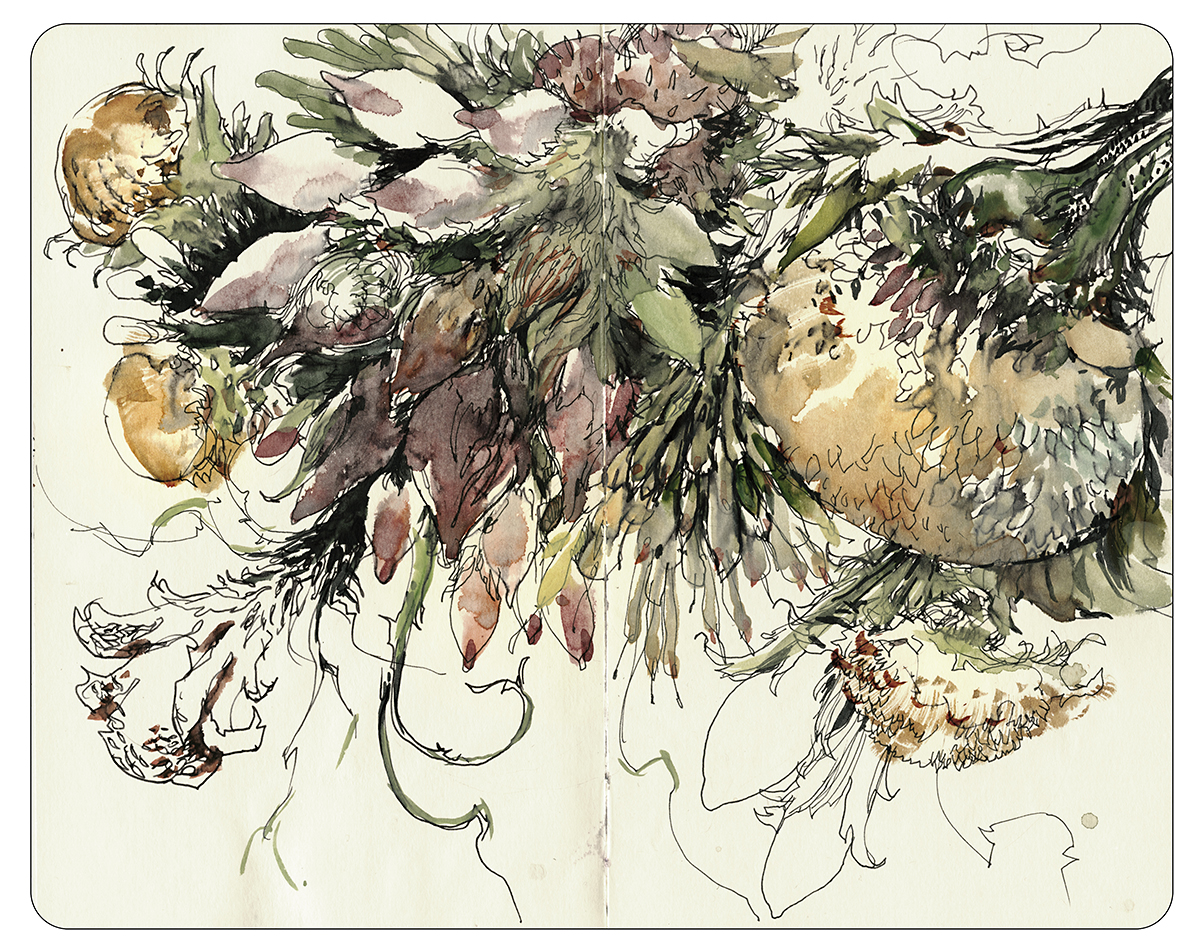
As blog readers know, I love to sketch on location. But to be honest, you can’t be sketching from life all the time.
It’s demanding – constantly getting to new places. Deciding where to go, finding the time, schlepping your gear. All the little travel expenses.
But that’s my personal flaw (and my motivating passion) as an artist. I’m addicted to the new. Always wanting to find the next exciting place to discover through drawing. Or wanting to return to a well known place, and see it with a new technique.

But on the occasions where I’m trapped by circumstance, not able to go exploring – well, most of the time I’ll end up drawing people. People are an endless subject – we’re always doing something.
BUT – even then, there are only so many drawings of people playing on their phones or reading on the subway you can do in a week :)
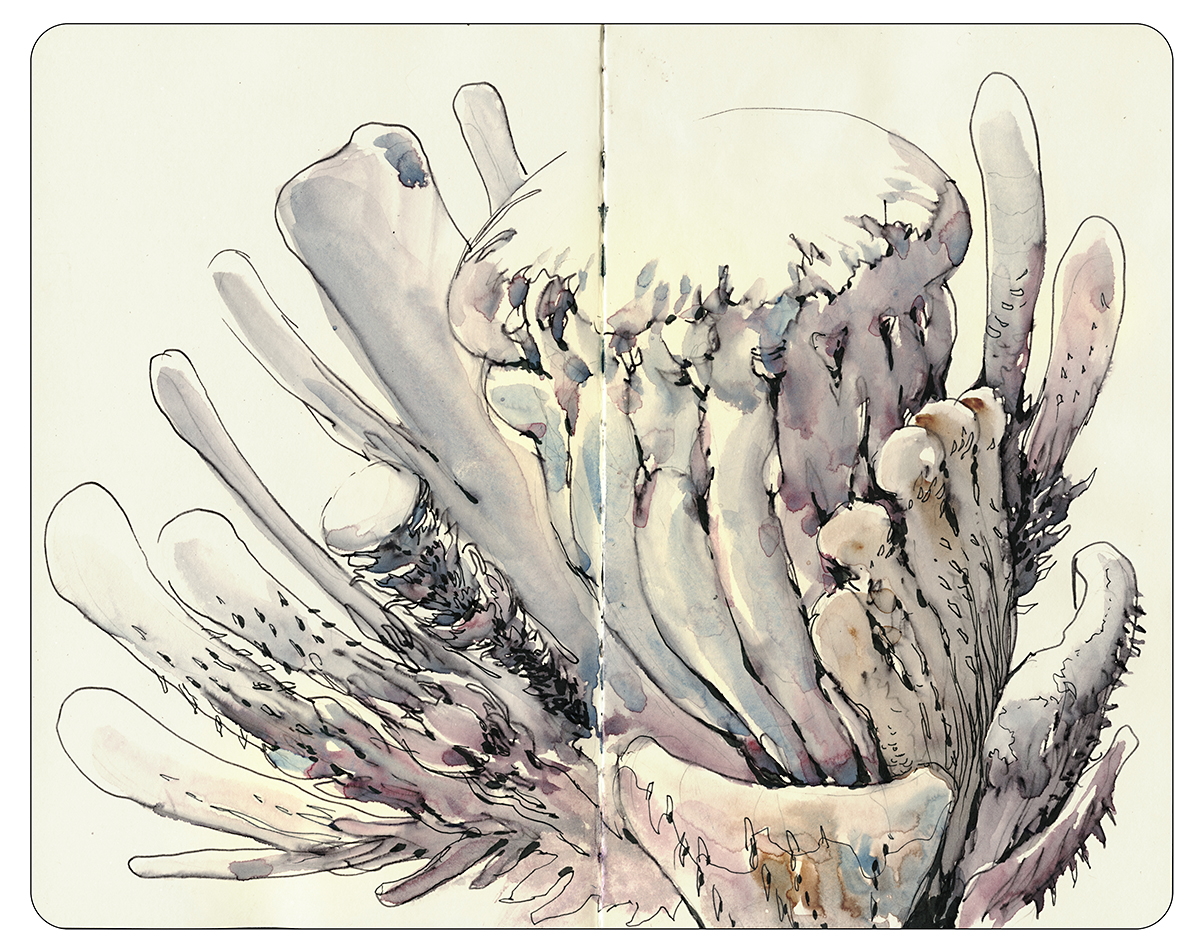
At those times – when the weather is bad, or you’re on a long flight – or you’re in bed with the flu – any time when you have nothing to sketch from – maybe then you can go back to sketching from your imagination. Like maybe you used to do when you were a kid?
Only now, as a more mature artist, I like to think the sketches are informed by what we’ve drawn out in the world. All the observation in museums and greenhouses and on the street is stored up in the data banks. So when I go to draw from imagination, it’s a mix of visualizing an idea and drawing from memory.
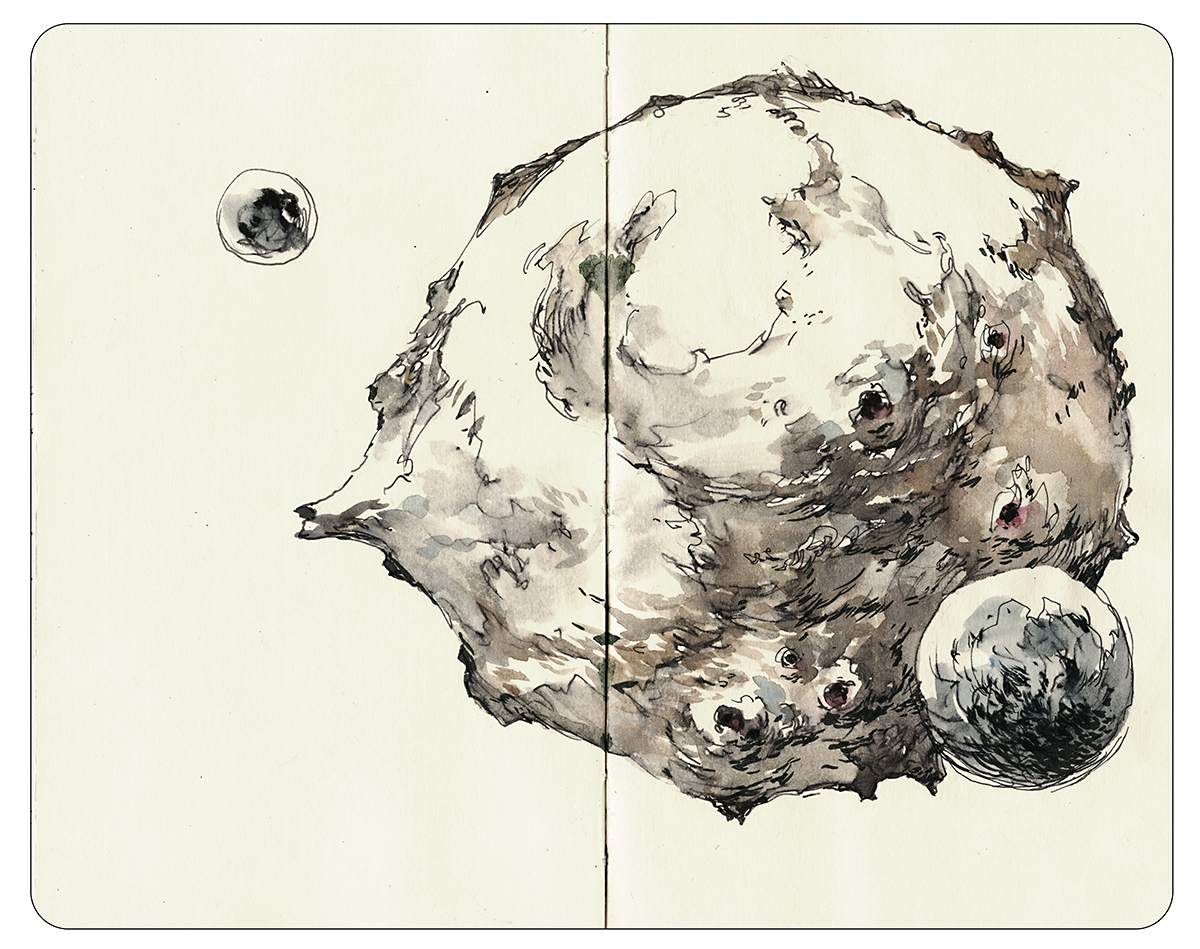
I have one moleskine dedicated to these imagination drawings. (You know me, I have to keep my sketchbooks strictly compartmentalized. No mixing subjects!) This little book is very very slowly getting filled with these alien worlds and fantasy characters.
This is a long term application of what I call ‘knitting’. That is – slowly finishing a sketch. Scribbling down something while you’re ‘seeing’ it (I’ll brainstorm ideas in pencil). And then detailing up things like surface texture and foliage gradually in ink.
Working ten minutes waiting for lunch, five minutes more standing in line at the bank. Some of these drawings took months start to finish, but only a hour or two total.

So – sketching from imagination! It’s a different kind of travelogue!
Maybe some of you have a secret sketchbook like this?
If you post any of your drawings from the imagination somewhere – let me know in the comments. I’d like to see some of your interior journeys.
~m
Announcing: James Richards: Sketching the Energy of Places
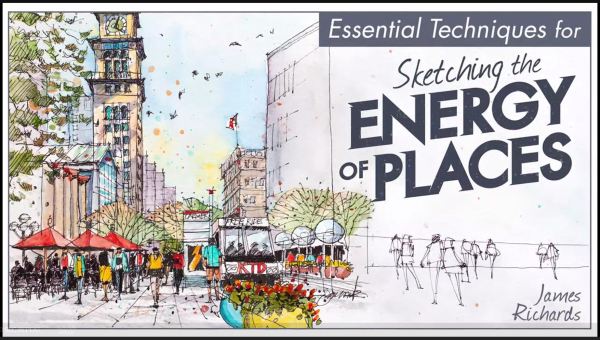
Fellow Urban Sketcher James Richards recently released his first Craftsy.com course titled: Sketching the Energy of Places.
As a Craftsy instructor myself, we get free access to all their classes, and I was excited to see his name pop up on the list.
I’ve drawn alongside James at Urban Sketchers workshops around the world, and have always been impressed by his ability to swiftly capture an urban environment bustling with street life. He’s from Texas, and has that big warm personality that seems part of the culture there.

His sketches are full of the color and activity of people in open air markets, squares, and public spaces – in large part due to his experience as a location-sketcher, his successful career as a concept designer in architecture and urban planning, and his current work as an associate professor of landscape architecture at the University of Texas at Arlington. He’s also the author of Freehand Drawing and Discovery: Urban Sketching and Concept Drawing for Designers, and is an urban sketchers.org correspondent for Dallas/Fort Worth.

The Craftsy course itself follows the format of 7 lessons, where he covers topics such as drawing people and places together – establishing the proportions of people, how to draw crowds, how to set a correct eye line for groups, and how they diminish in size as they go down the street.


The meat of the class is a demo drawing of a train station, which he draws from start to finish, taking side jaunts to explain composition, sight measuring techniques, and plenty of great information on how to capture the important details.


Along the way he gives some great lessons on specific concepts – like how to add trees and cars to your scene – the details that set the drawing into the urban space.


You get to see him finish the demonstration sketch with watercolor, introducing many useful tricks along the way – such as using white pencils to put window panes back over darks.

The lessons culminate with a trip on location where you’ll see James sketching thumbnails and sitting down to do another demo of a finished piece. He includes information on his tools throughout- (we like the same portable easel!).


I can highly recommend James Richard’s new course. If you were to combine it with Stephanie Bower’s class Perspective for Sketchers, and Shari Blaukopf’s more painterly Landscapes in Pen, Ink and Watercolor, Paul Heaston’s Pen and ink Classes; Drawing Everyday and Pen and Ink Essentials – and of course my own offerings – Craftsy is building quite a strong program in sketching! These online courses are frankly giving my art school education a run for its money.
A nice bit of feedback…
I recently posted up some drawings to the discussion forum on my Craftsy.com class as part of a long answer to a student. I was referring back to some sketches done while testing a new (old) pen nib.
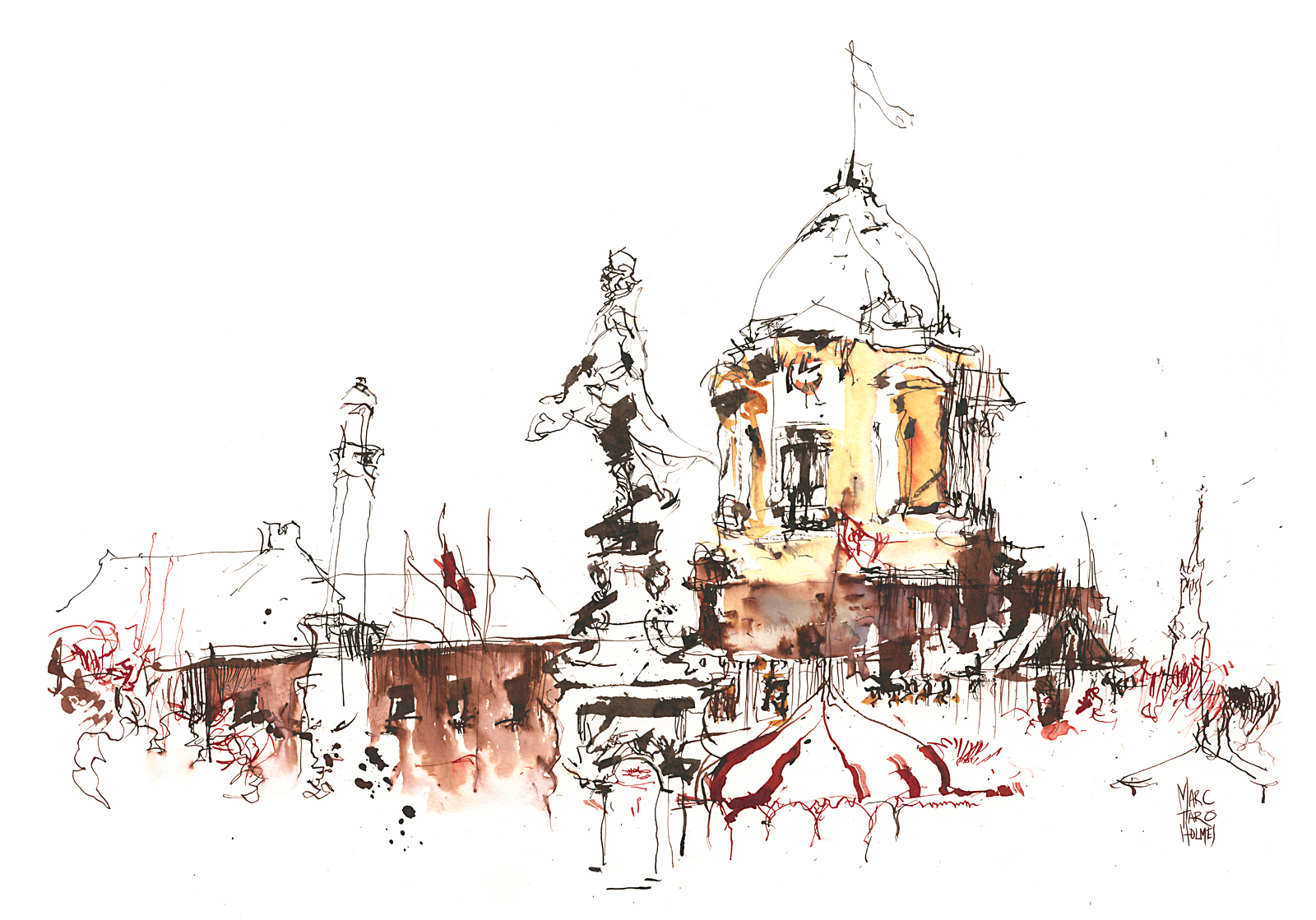
I’d said:
“Continuing on with the question about – should I draw in pencil first?
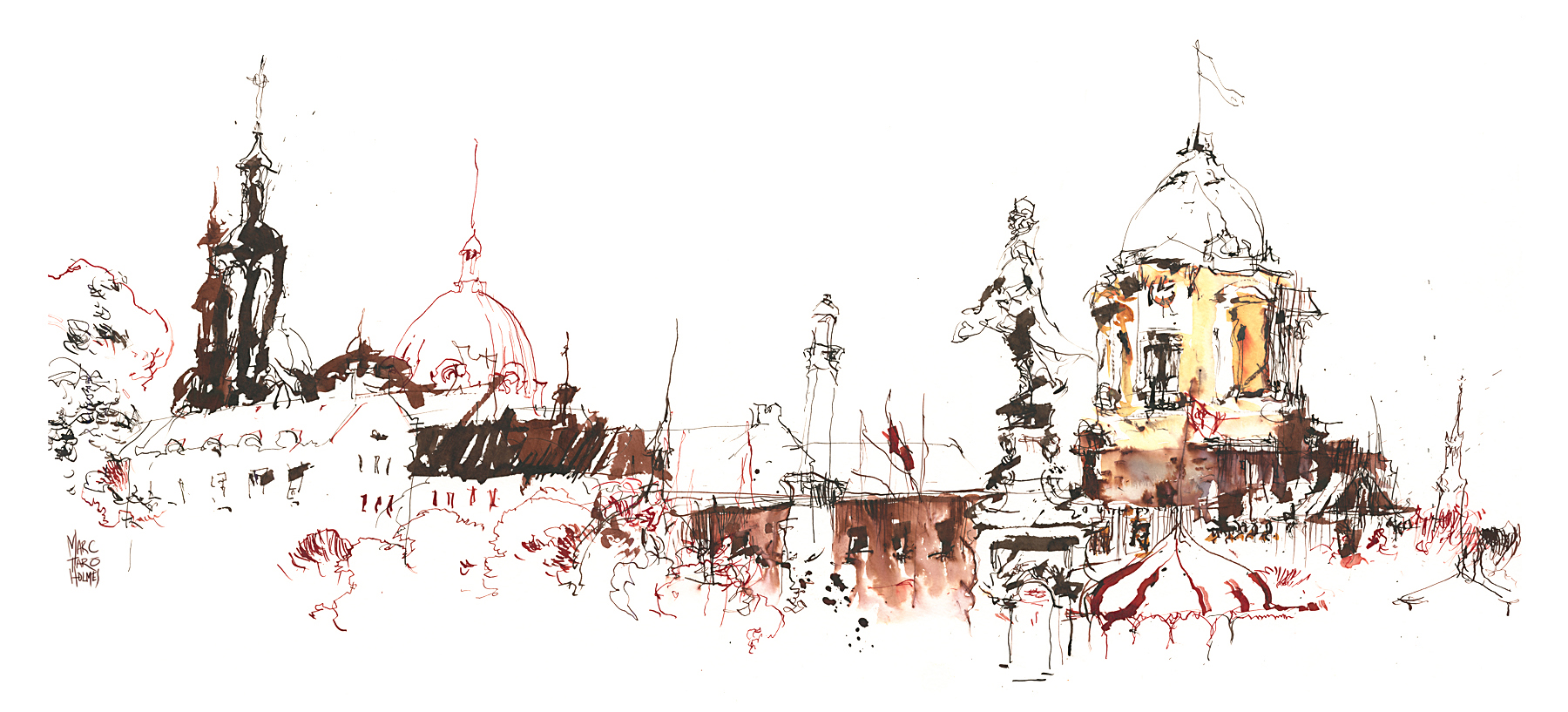
Here’s a small set to emphasize my point about drawing directly in ink. Now, I know everyone sees art differently, and these might be somewhat extreme examples. But if you like the sense of freedom and exuberance in these drawings and you’d like to try to get here with your art – this is why you can’t really do it by drawing in pencil first.
You just won’t have this sense of freedom. If your mind is saying ‘I need to plan the drawing so it’s perfect’ – your hand cannot possibly be free in the execution. This is something that I’m loving more and more as I draw. I have simply made the decision that there are no mistakes in drawing. That I don’t care about accuracy, I care about my drawing. My personal mark making. Anyway, that’s just some thinking from me. Take from it if you like what you see!”
And I got a nice answer back:
“I am really glad you decided to address this, because I had been wondering the same thing myself. Since following some of your traveling sketch class I have gotten so much freer and it’s been so great not to worry about if I’m being accurate enough. I’ve loved the freedom. I’ve been away from the tutorial a bit lately, and I could feel myself getting more concerned about accuracy, less free and then giving consideration to drawing in pencil first. So, bingo! I see your comments and sketches and it’s taking me back to what I was enjoying. So, I’m going to go back and watch the videos again and do more practicing until it’s super instilled in me to continue to enjoy the freedom of ink drawing!!”
So in celebration of that nice reminder of why I do this blog, and who I made the Travel Sketching class for, I just wanted to remind everyone, that if you give out this link, any friend you send it to can register at $20 off the retail price. This is my full instructor discount, permanently on offer to you, just for reading my blog.
My Sketching People class, which just got voted in the top 5 favorite drawing classes on Craftsy (thanks for those 5 stars!), is also on at my full instructor discount – just for clicking through me you’ll get $15 off.
Craftsy gives instructors a slightly higher royalty click if you sign up to a class this way, because they know we love our blog followers, and they want us to be able to offer you the best rate.
So I’m glad to do it, please pass it on to your friends and support the blog, and thanks for being a loyal reader!
~m
Watercolor Sketching in the Redpath Museum
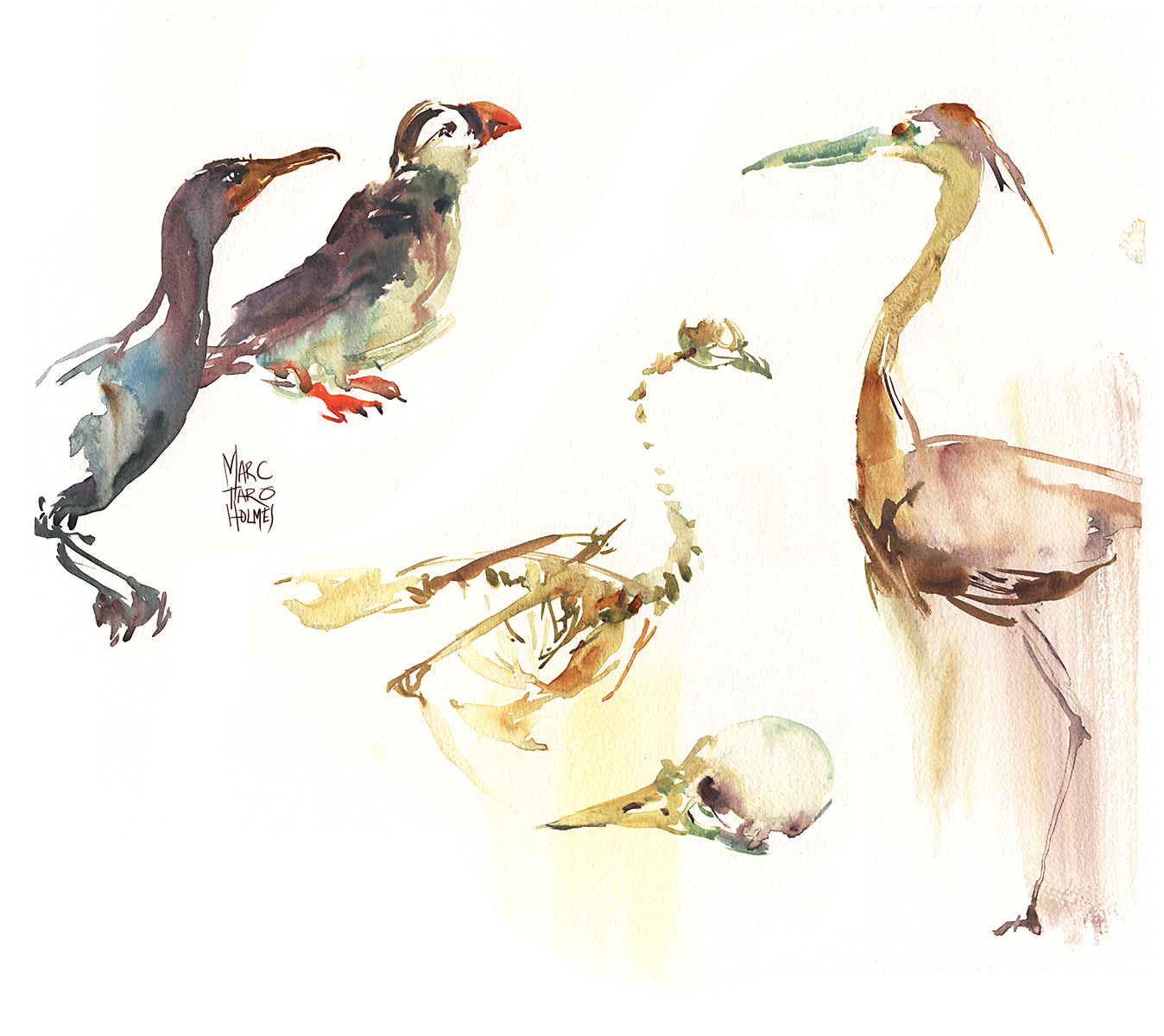
Yesterday was fourth Sunday sketching with our drawing group Urban Sketchers Montreal.
With the fall chill in the air, we returned to the Redpath Museum. Blog readers will know, I love a chance to draw from taxidermy animals and mounted skeletons. So this was just a relaxing day for me.
Here we have a cormorant, puffin and egret, along with a common farmyard chicken skeleton. I didn’t note what kind of bird skull that was – it was only a couple inches – the drawing is bigger than the real thing.
This outing I felt like some free-sketching in brush and watercolor. It’s a lot of fun taking on these delicate subjects with a direct brush drawing. When I do silhouettes, I always feel a kinship with Japanese sumi brush painting. Each rapid brush stroke combining to make an image. It’s fun, and fast, making these economical little drawings. I did more talking than drawing this afternoon and still came away with a nice collection of sketches. If you take the time to make a painstaking drawing – well I don’t think the results are any more interesting – and you’d only get half a drawing done in a day :)

The key to these water-sketches is making the silhouette in a single wet shape – so the colored strokes fuse. But also knowing when to simplify. I haven’t counted every rib and vertebra on this ostrich skeleton. It’s just the impression of the animal – not really a scientific record. One day I’d like to try for that – a perfect rendering – but that’s not the spirit of an urban sketchers meet up, chatting with friends and sketching for enjoyment.
With these ‘casual’ sketches, I sometimes take a few tries at it. So they look easier than they sometimes are. This is the second of two ostriches I did that day. My first try is sometimes a bit off – a bit out of proportion or tentative in the brushwork. So I’ll just do it again while it’s fresh in my mind. It always gets a little better the second or third time.

The thing I love about the Redpath is the Cabinet of Curiosity feeling of the place. Where else will you see dinosaur bones, Samurai armor, Egyptian mummies, sea shells, taxidermy animals, African musical instruments – all this in one small exhibition hall. It feels more like visiting a crazy uncle’s mansion than going to a museum.
We skip December, due to the holidays, but I hope to see some of you at next year’s Fourth Sunday Sketching. Just watch the USK : MTL blog for the location announcement.
~m
So – I’m working on a book. But not the kind you’d expect.

Hey all. It’s Sunday afternoon Monday afternoon here and I’m just taking a break from some work-work.
I don’t usually post just to chat about life, but I’m in the middle of something right now, and I wanted to talk a bit about it.
I’ve been working on a big illustration job for the last few months. It’s an art book – but not about travel sketching or watercolor or any of the things I usually talk about here.
It’s about my old life as a video game designer.

I’ve been slowly retiring from game design for about five years. Other than sketching designs for the Dragon Age games made by old friends at Bioware, I haven’t been looking for this kind of work.
I worked as an art director and conceptual artist for about 20 years before that. When we moved to Montreal from San Francisco, a goal was to escape the bounds of commercial art and go full time with my own drawing and painting.
That’s sort of a silly thing to say, because game designer is a great job. It’s creative. It’s very rewarding financially, that’s for sure (in the corporate version – not so much the indy space). And you work with some really great people. It’s a highly sought after position, so everyone involved is at the top of their game. No pun intended.
But I think an artist can only work for someone else for so long, before the desire to be on your own becomes overwhelming. If you’re lucky enough to be in a position where you have creative control, you can get some satisfaction. But there’s always market forces at work. If you’re making entertainment, it’s driven by budgets, sales, and whatever was the most recent mega-hit.
The trick is to navigate all that without just pandering to the fans. It’s very easy to slip into a mindset of just making the goreiest gorefest ever. Or putting a scantily dressed young woman in peril. Peril she usually escapes by dint of cheerful mass murder.
For me – I always loved the storytelling and the fantastic characters in our games. But I liked making up the stuff in the world more than I liked playing the games themselves.
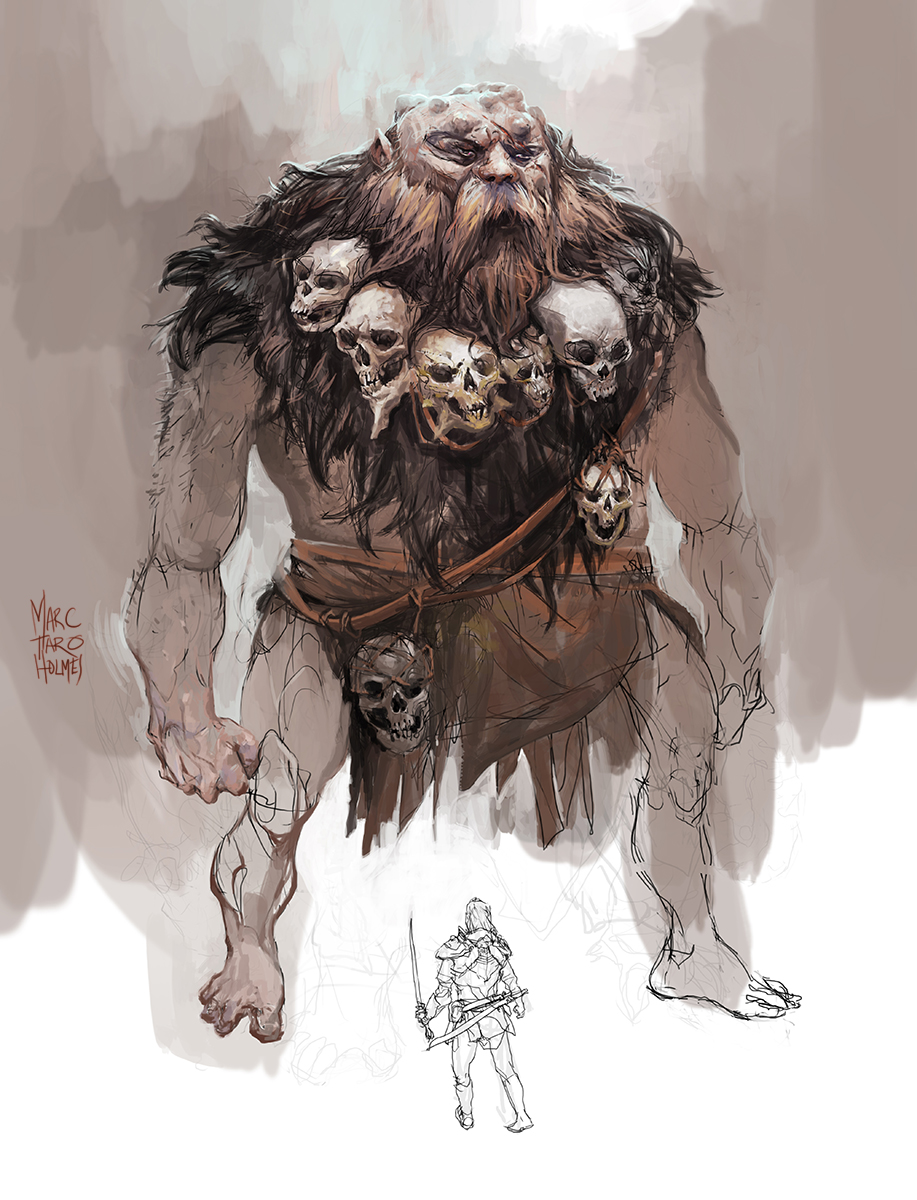
The thing that brought it all to a head for me was when I started drawing on location. Video gamers are not known for their love of the outdoors. But I accidentally discovered I liked it. Liked being on the road, discovering new places, and digesting them through drawing. When I draw a place, it’s like I’m consuming it and will carry it around forever. Eating it up and chewing on every fascinating detail. It’s a kind of sorcery that expands your experience of world.
For whatever quirk of my personality, sketching unlocked that rampant desire to explore. Before location drawing, you’d have had to drag me away from my comics and D&D books. After becoming a sketcher, I’m finding it hard to stay home for two days in a row.

But here’s the other side of the coin – I think I have a unique perspective to offer.
There are lots of books / courses / videos on digital art. Both 2D and 3D. But being the sketch artist – the idea generator – it’s totally different from being the artist that makes the playable game content. There’s fewer places to learn about the thinking that fuels the whole process. And most of the books that do come out on concept development tend to be painting technique books disguised as design training. Teaching you how to draw well is not the same as teaching how to think for a living.
Concept art is a mindset. A kind of analytical hyper-creativity that isn’t about perfection, or skill of execution – but more like the polar opposite of artist’s block. You have to train the ability to be a fountain of ideas. A fire hose of concepts. There’s no such thing as ‘Sorry, just couldn’t come up with something today’.
You have to be able to produce a viable idea by the next morning, and keep doing it all week long, week in, week out. It’s hard work, but it’s also exciting. Knowing there’s a whole team of sculptors, animators, and programmers depending on you to invent something cool. And an army of gamers waiting to enjoy it.

So that’s why I have a video gaming book under way.
It’s written for students that are trying to focus their art school experience into this career. Or working artists that want to change fields from something more industrial, to something more creative.
Like my previous urban sketching book, it’s going to be very hands on.There’s much more doing, than reading. The goal is for anyone who actually completes all the work, to end up with a professional portfolio. A body of work that could get them started in the field. Depending where someone is with their drawing skills, it might take a bit longer. But there’s a kind of wax-on-wax-off learning that I prefer. If you just have fun doing everything in the course, you’ll discover you’ve mastered it without even trying.
But I didn’t start writing this entry to pitch you the book! I’m already regretting how much I have to talk about classes and courses in order to keep this blog alive :)
Mainly, I just wanted to say what was up with me. Because this is what I’ll be doing for the next few months.
The book’s completely written, and I have a publisher involved with the design and layout. So I’ll be spending the entire winter just making the drawings.
Unfortunately, that’s going to slow things down on Citizen Sketcher. Even more than it has for the previous months. I’ll still be talking to many of you in my Craftsy courses every day. And I hope to get out drawing at least once a month at our regular sketching group. Just to keep my sanity!
But if you feel things have been a little slow on the blog this fall – that’s the reason why.
We have big plans for next year’s sketching though! So let’s just get through the winter until painting season begins again. I can’t wait!
~marc

Announcing: New Workshop: Galway Ireland, July 2016!

I’m happy to announce our newest urban sketching workshop: July 2016, Galway Ireland.
Myself and my sketching partner in Montreal Shari Blaukopf will be joining Irish UrbanSketchers.org correspondent Róisin Curé, in her home town of Galway for three days of sketching.
All three experienced sketchers will be demonstrating our methods for on-the-street sketching, doing small works on location in pen and ink and watercolor, working in sketchbooks and on small painted sketches. I hope some of you will be able to come along!
Head over to the workshop page here for more info – and please do register early. Sketching workshops do tend to fill up fast.
~m
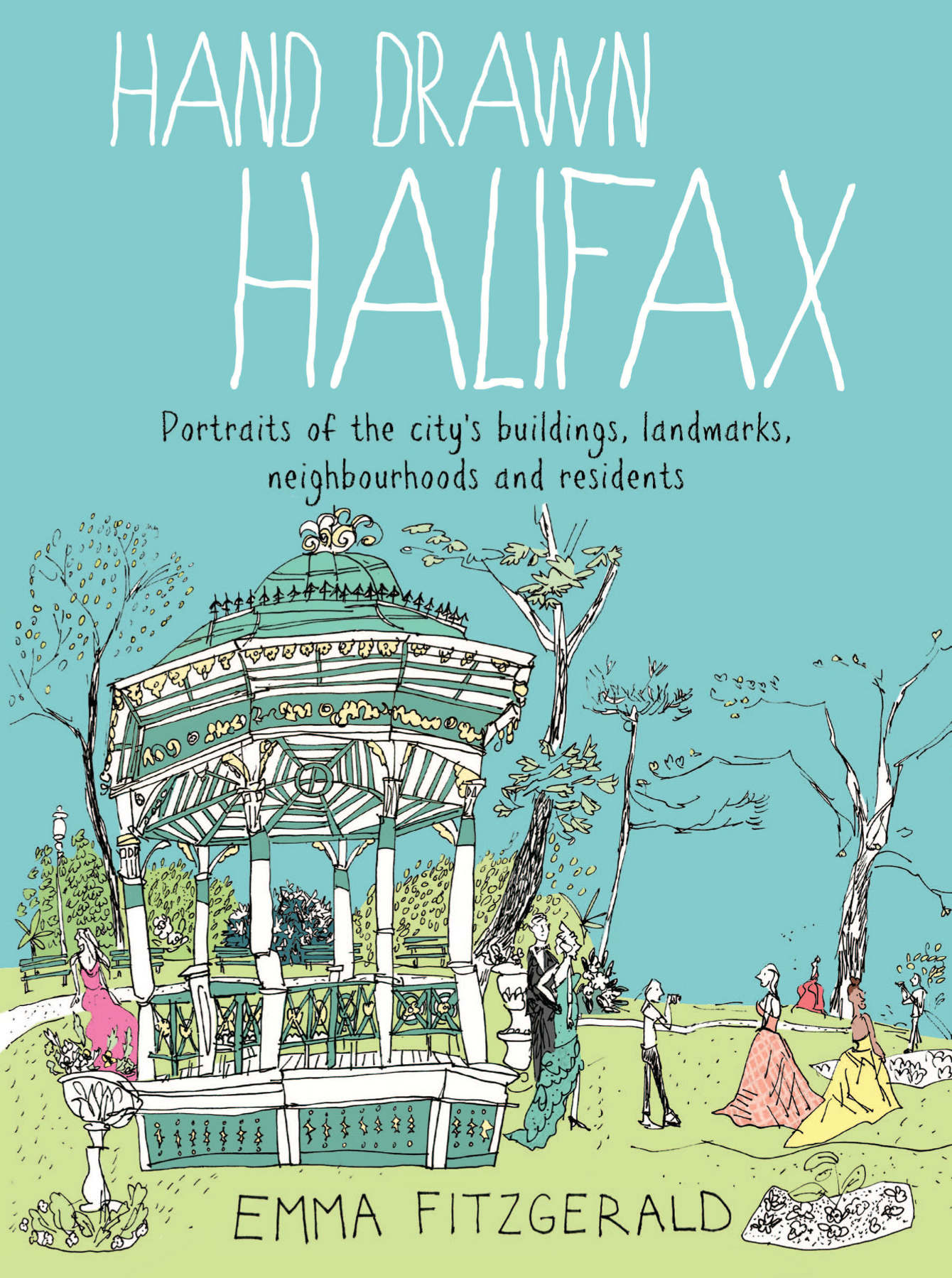
Book Review: Hand Drawn Halifax by Emma FitzGerald
I met Emma FitzGerald at a past Urban Sketchers Symposium. I forget if it was Lisbon? (No – it was Paraty Brazil).
One of the first things you ask at an international sketching conference is where someone is from. I’m always excited to hear someone is a fellow Canadian. She probably told me she’s from Halifax – but it’s complicated – as she seems to be from all over. Born in Lesotho South Africa, grew up in Vancouver Canada but now living in Halifax.
I’ve done a lot of city hopping myself, and I find being a transplant to a place leads naturally to obsessive sketching. You’re new to a town, you want to explore it. It can become a passion – finding new corners to draw.
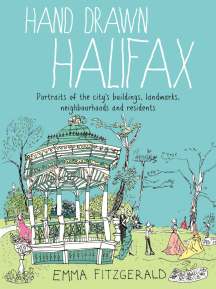
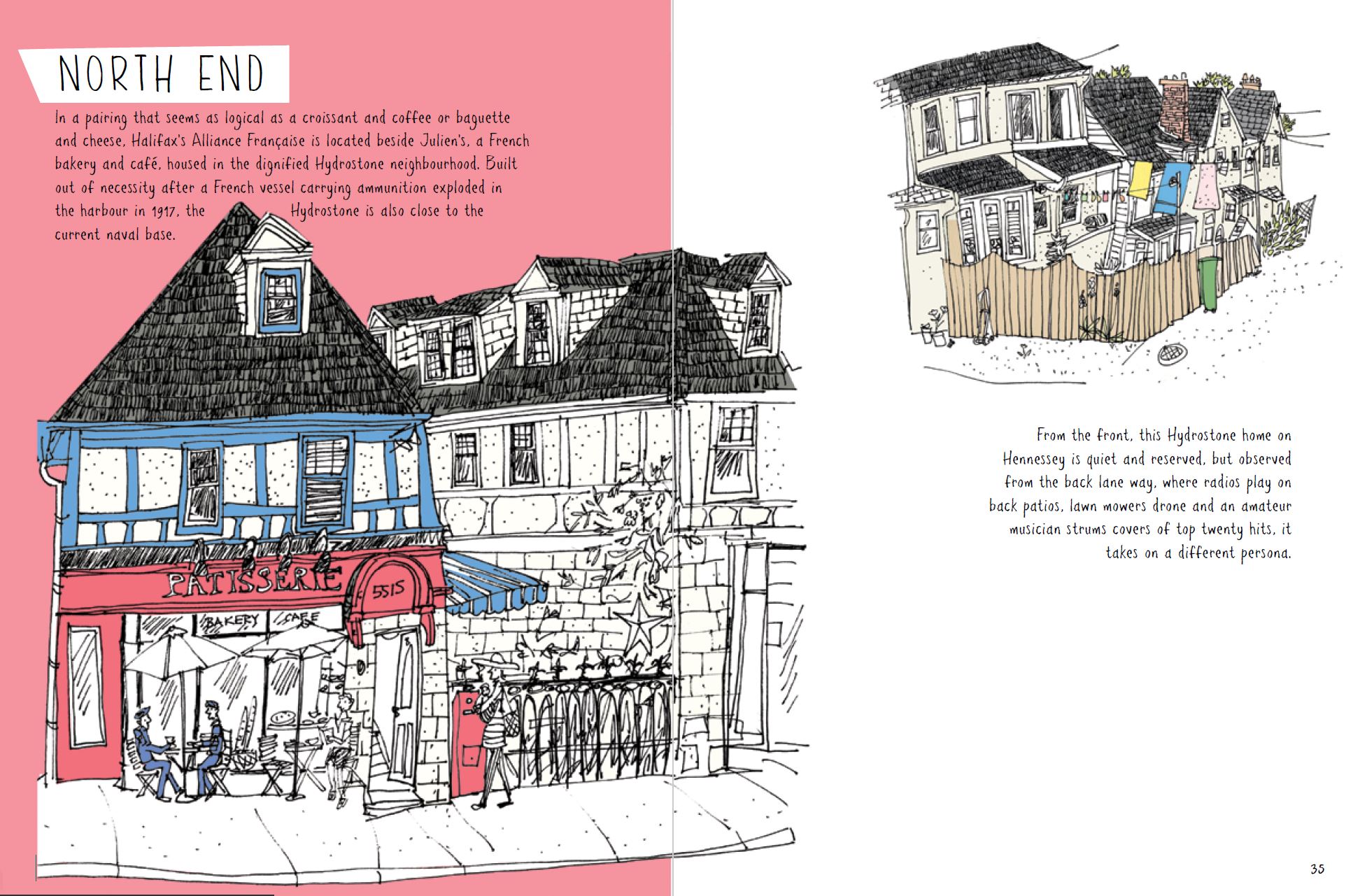
Emma has recently released her book Hand Drawn Halifax: Portraits of the city’s buildings, landmarks, neighbourhoods and residents. She was gracious enough to let me review a pre-released copy – so I’ve only seen it in pdf format. But now it’s out, and we can all get our hands on it in print.
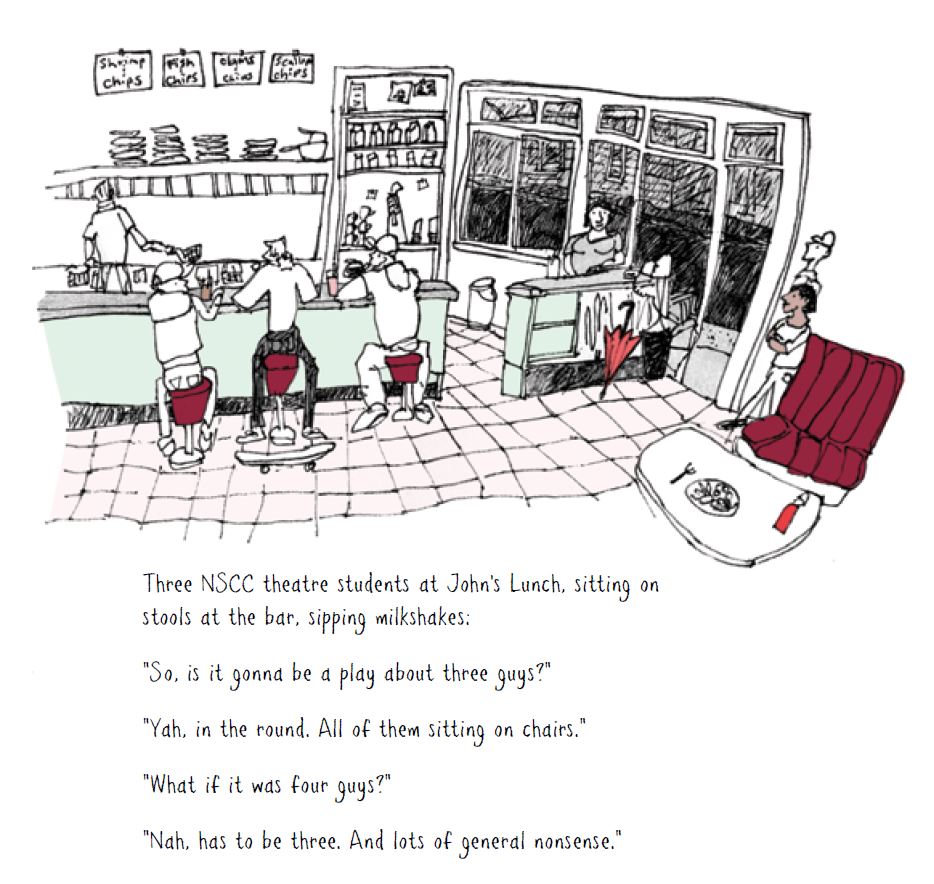
I was immediately impressed with her storytelling and sketching. The word that jumps to mind is “charming”. Her intimate sketches and poetic story-snippets of her now-home-town will absolutely charm you. You’d have to be an ogre not to fall for this town. Halfway into the book you’ll be packing to move.
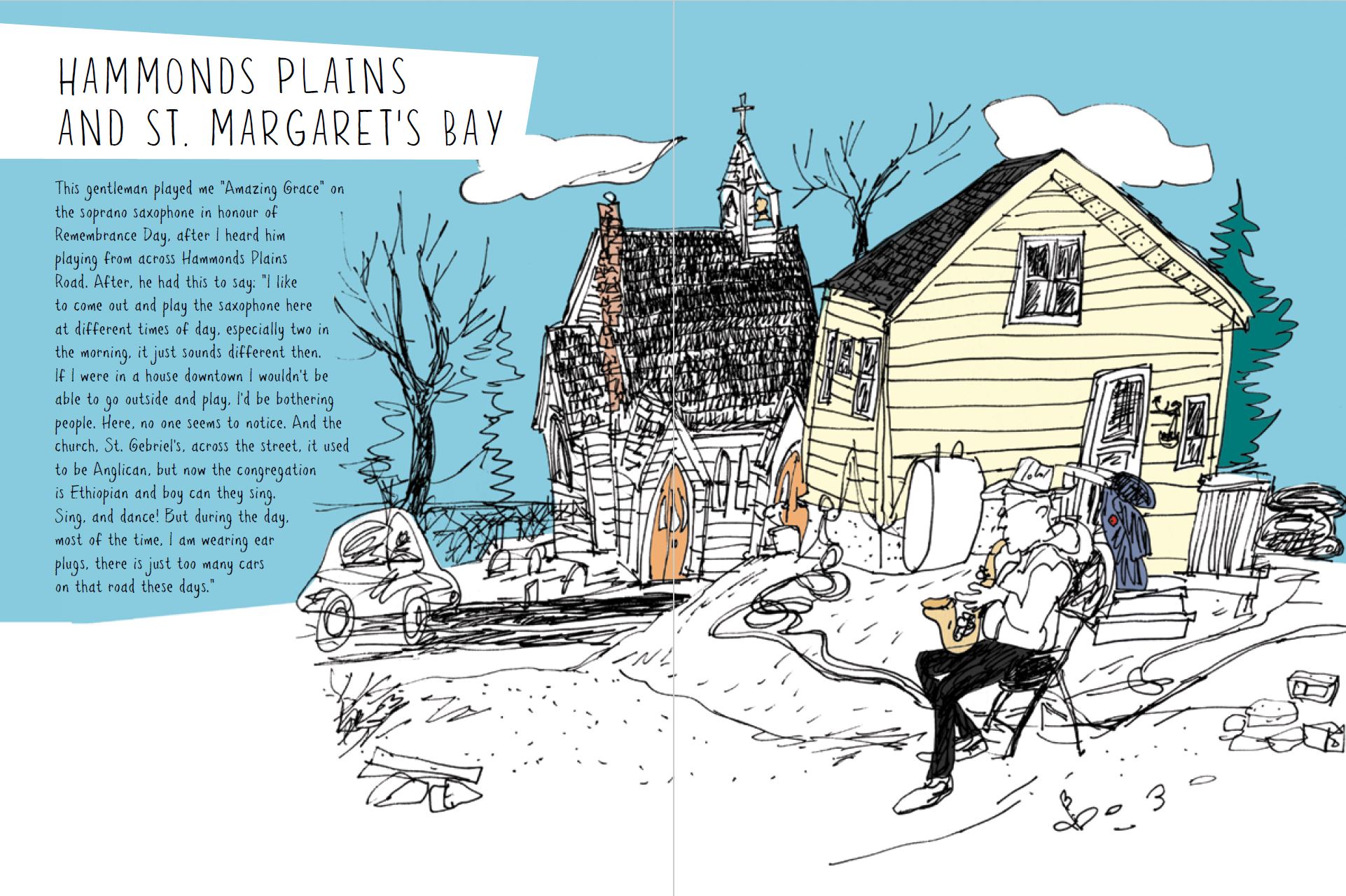
I reached out to Emma to ask a few sketching-related questions. I’ll let her tell you about it in her own words and pictures.
MTH: So, you’re not from Halifax originally, but you’ve lived there over a decade. How long had you been in town when you began these drawings? And how long did the book take to write! It seem like you’ve been to every street and alley of your town.
EF: I started the drawings in 2013, so 9 years after arriving in Halifax. I had always drawn while travelling, but it took losing my job and the new necessity to create income, to get me drawing what had become my home town. Knowing where I wanted to draw was in many cases informed by years of ‘research’ going to different places in the city. Lots of places were completely new to me as well. Once I realized I was making a book about Halifax, the project took me two years to complete.
MTH: Each of these sketches has a perfect little story to go with it. How did you choose the places to draw? Did you find the story or location first – or – is there some other magic to the storytelling?
EF: A variety of factors informed what I drew. I wanted both the most ‘typical’ Halifax moments, and also, the things people wouldn’t think to notice. Most of the text was generated simply by listening to what was going on around me while I drew, though in some cases I referenced a previous memory, like Elvis in the South End, or turned to a reference to gather a few historic tidbits, like the history of the Ferry boat in the Halifax Harbour.

MTH: Your drawings are very direct, very economical, yet they have a feeling of immediacy. How did you arrive at your style? How much of your drawing technique is just capturing life as it happened, and how much is strategic?
EF: I think I developed this style through drawing a lot in small sketchbooks while travelling with friends who weren’t necessarily interested in drawing! I also spent hours looking at the drawings of Quentin Blake as a child, and that influence seems to have come through!
MTH: I love this answer! I think that’s such a basic reality about travel sketching. We have to find ways to make it happen, no matter what is going on in the moment :)

MTH: What is next for you art-and-book wise? And where can people go online to find out more about you and your work?
EF: I have a new book I am working on, about the South Shore, another beautiful area of Nova Scotia. I am also getting ready for a wonderful Christmas craft fair put on by Halifax Crafters, a local organization that is committed to local artists finding a viable economic outlet for their work! I have a website, at www.emmafitzgerald.ca, and just started an Etsy shop. Many thanks Marc! All the best to you and yours.

You can get a copy of Hand Drawn Halifax from the usual suspects. Your local bookstores can order from Formac Publishing .You can order from Amazon US or Amazon CA – or purchase directly from Emma’s Etsy shop.


 Citizen Sketcher