#30×30 Day 15 : Boiling it down to the Essence
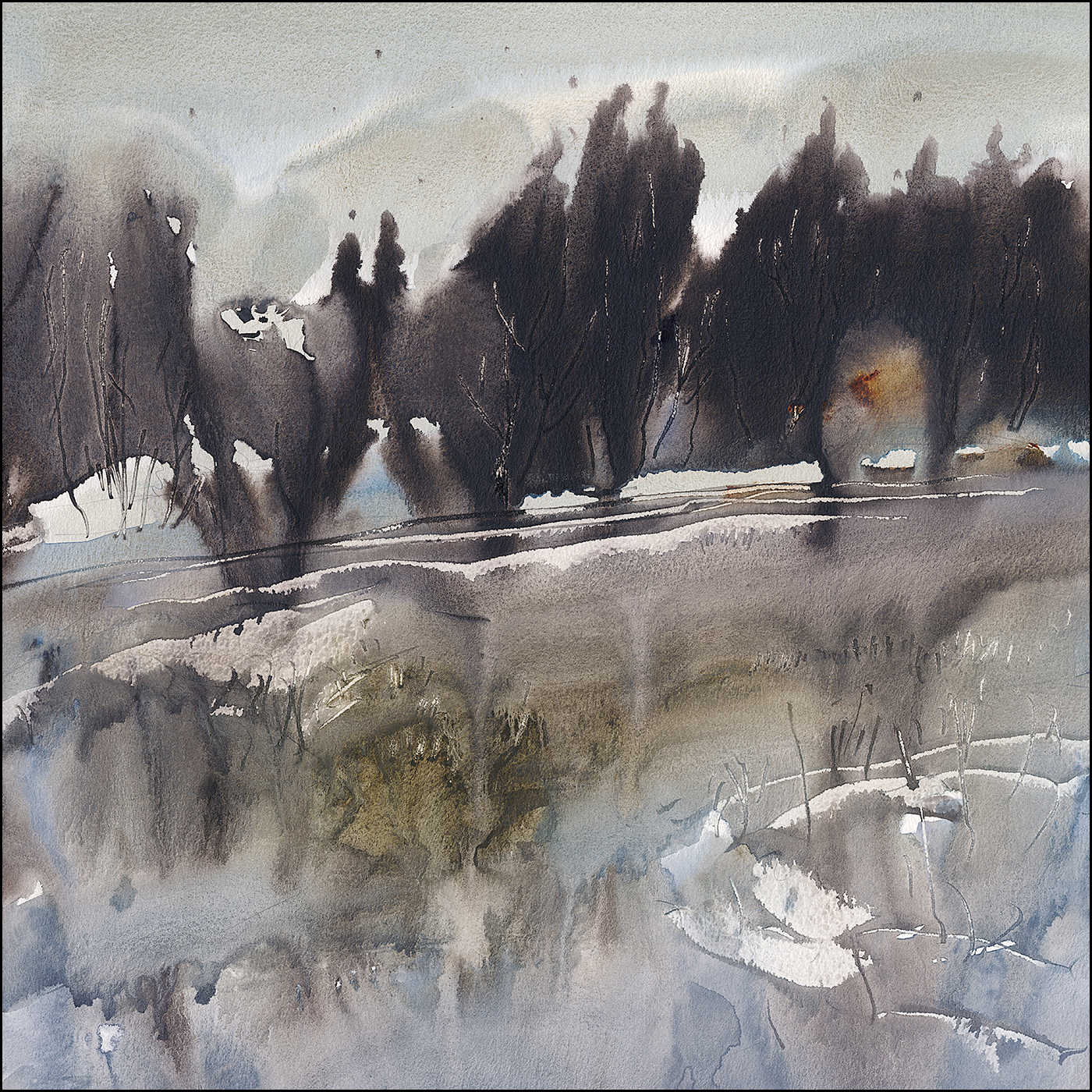
I started in here with the goal: What can I do with watercolor, that I couldn’t do in any other media?
This one is all about pouring on premixed colors.
And, when I say pouring, I don’t really mean pouring. It’s more like – holding a cup of paint over the painting and ‘ladling it on’ with a big mop.
Just to walk through the process: I take my (plastic) 30ml medicine cups (I got a box of 1000 as a hand-me-down, but I’m sure you can find something equivalent? I hope?) and I pre-mix the colors. Squeezing paint right in the cup and adding a little water at a time, mixing them with a small palette knife.
I keep all my mixes-in-progress in a shallow plastic box on my desk, so if I were to spill one, it wouldn’t go far.
With these paint mixes, I’m aiming for the consistency of wasbi – because there will still be water in the brush or on the paper so I don’t want to over-thin. But – if it’s a sky wash, maybe I’ll go more like half-and-half creamer.
I keep the dregs of every cup and use them to make other colors. If a color goes unused for a long time, it can often be re-constituted. Just mix new color right on top.
Often, I’ll make two or three cups of each color, to know I have enough. I’ll batch mix them. You take an extra empty cup and begin pouring half of one into the other and back again repeatedly till they’re all cross-mixed – this ensures all the cups are exactly the same color.
I have to say, I’m certainly getting this premixing approach from my oils, where I tend to mix up large piles of paint before I start, aiming to eyeball how much I’ll need for the whole painting. The paint stays good for days, so you might as well. Also, if you do need to mix more, it’s easier to match a color if you don’t completely run out.
What’s the big benefit of these pre-mixes? I think I’m doing a better job on color sensitively. I’ve gotten used to a more complex/neutral color range, less of a out-of-the-tube experience.
Ok, enough talk, here’s some detail shots!
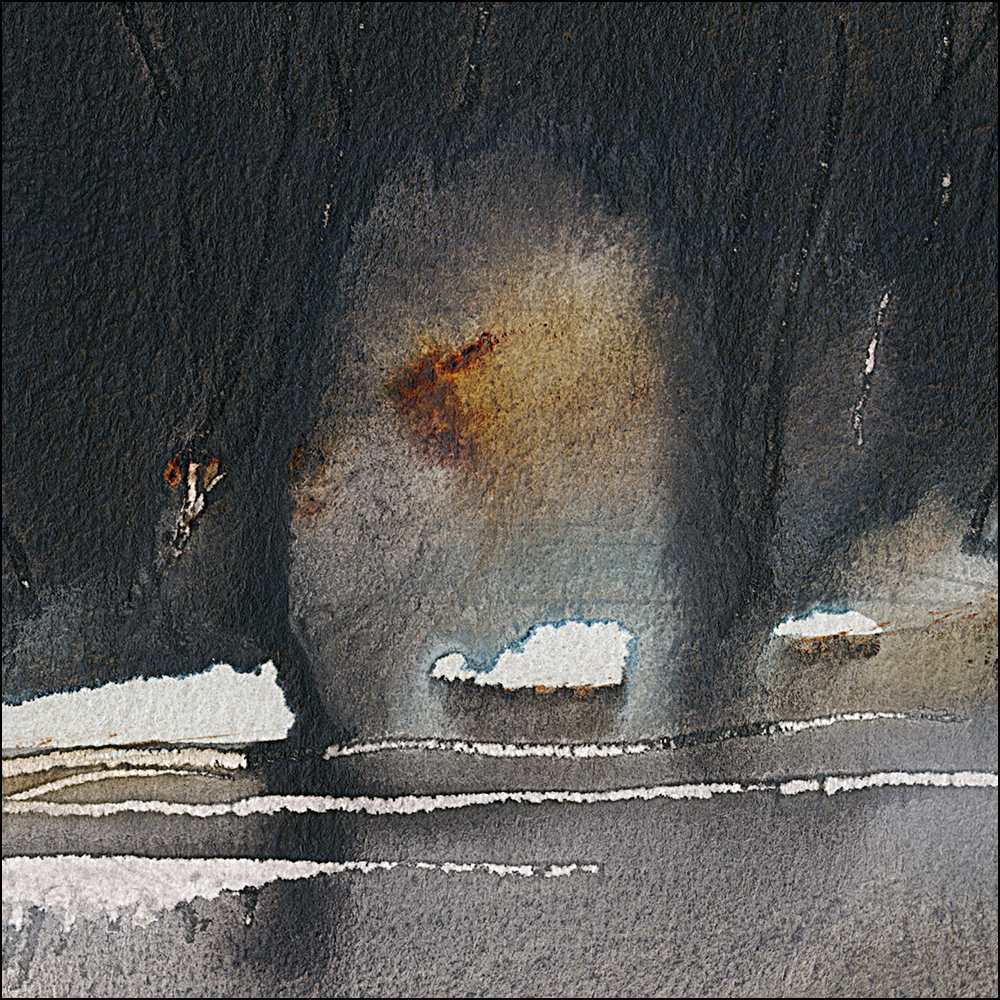
Here’s the only touch of pure pigment – that iron oxide there. Something I’m used to doing quite a bit! But – if you only do it once on the entire painting – it’s quite a strong statement.
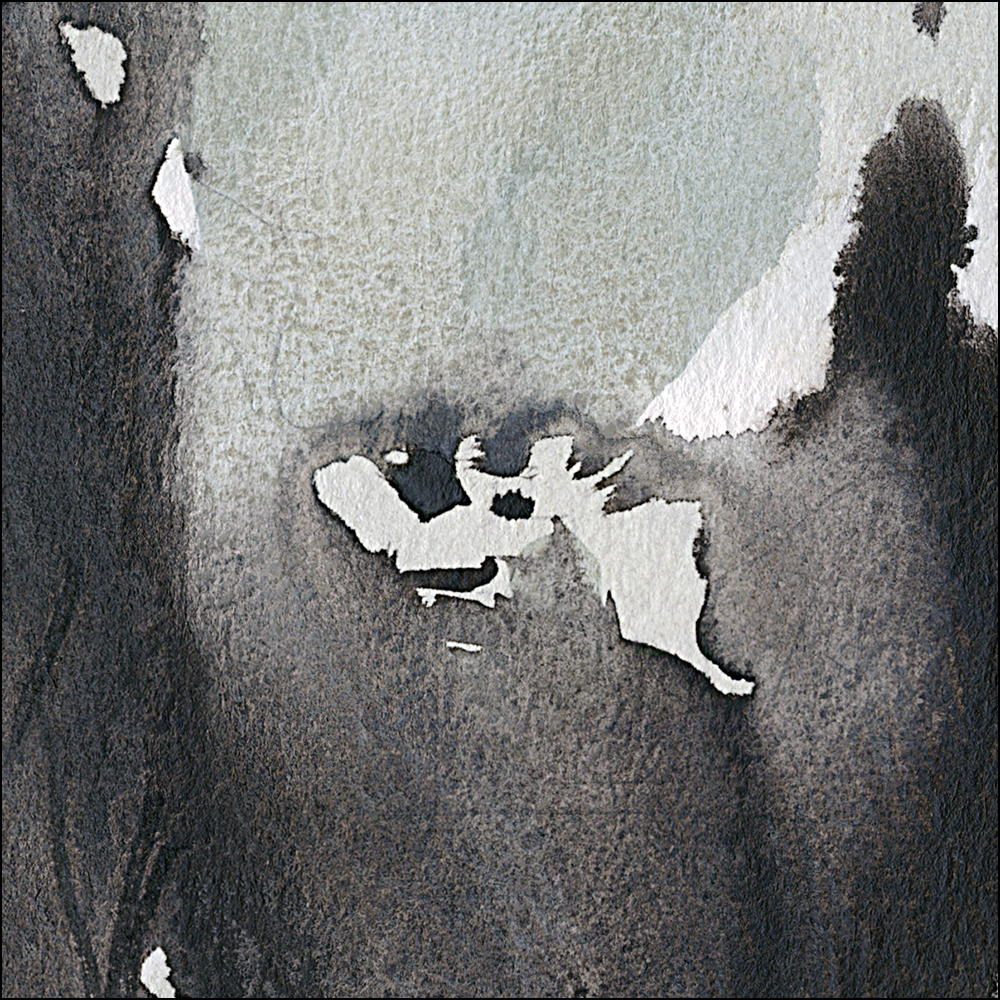
Here’s a reserved white shape. Normally I would have these all along that row of trees, making them sharp and well defined. This time, I wanted the entire tree line to soften naturally. To melt into each other, and into the sky.
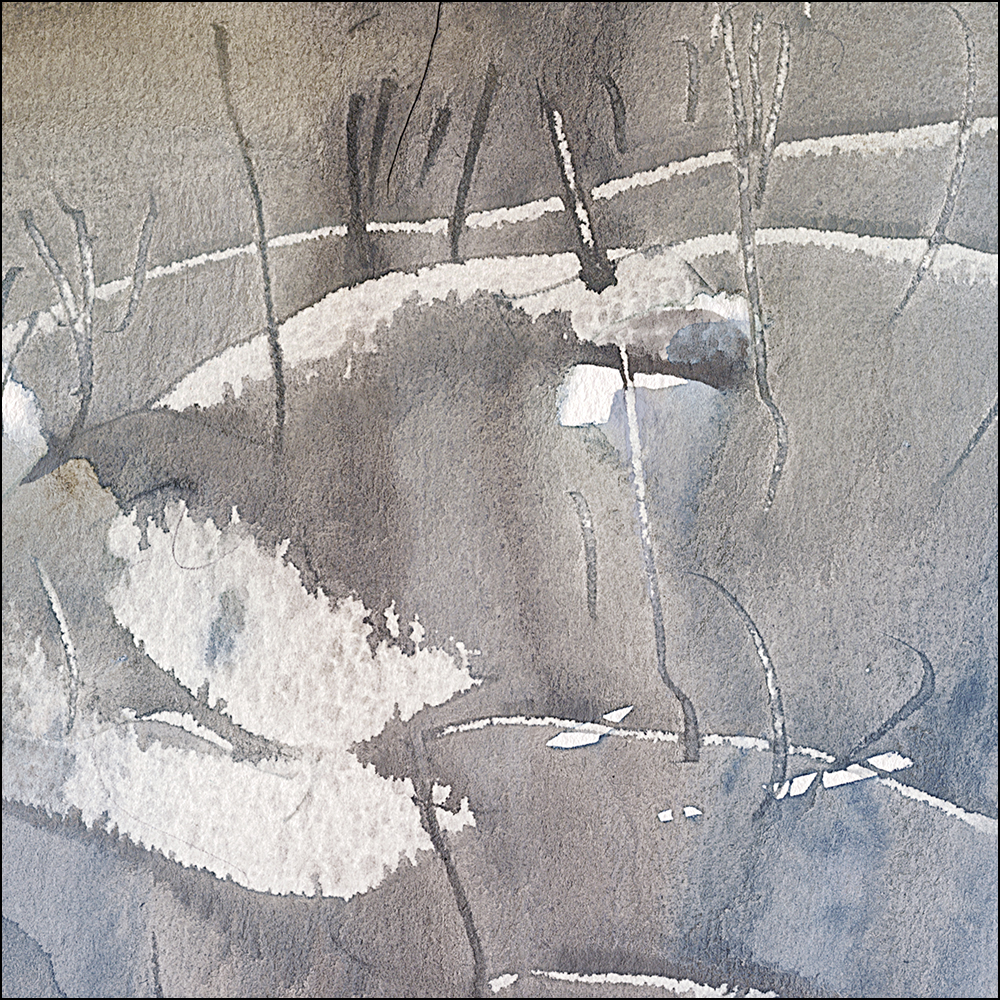
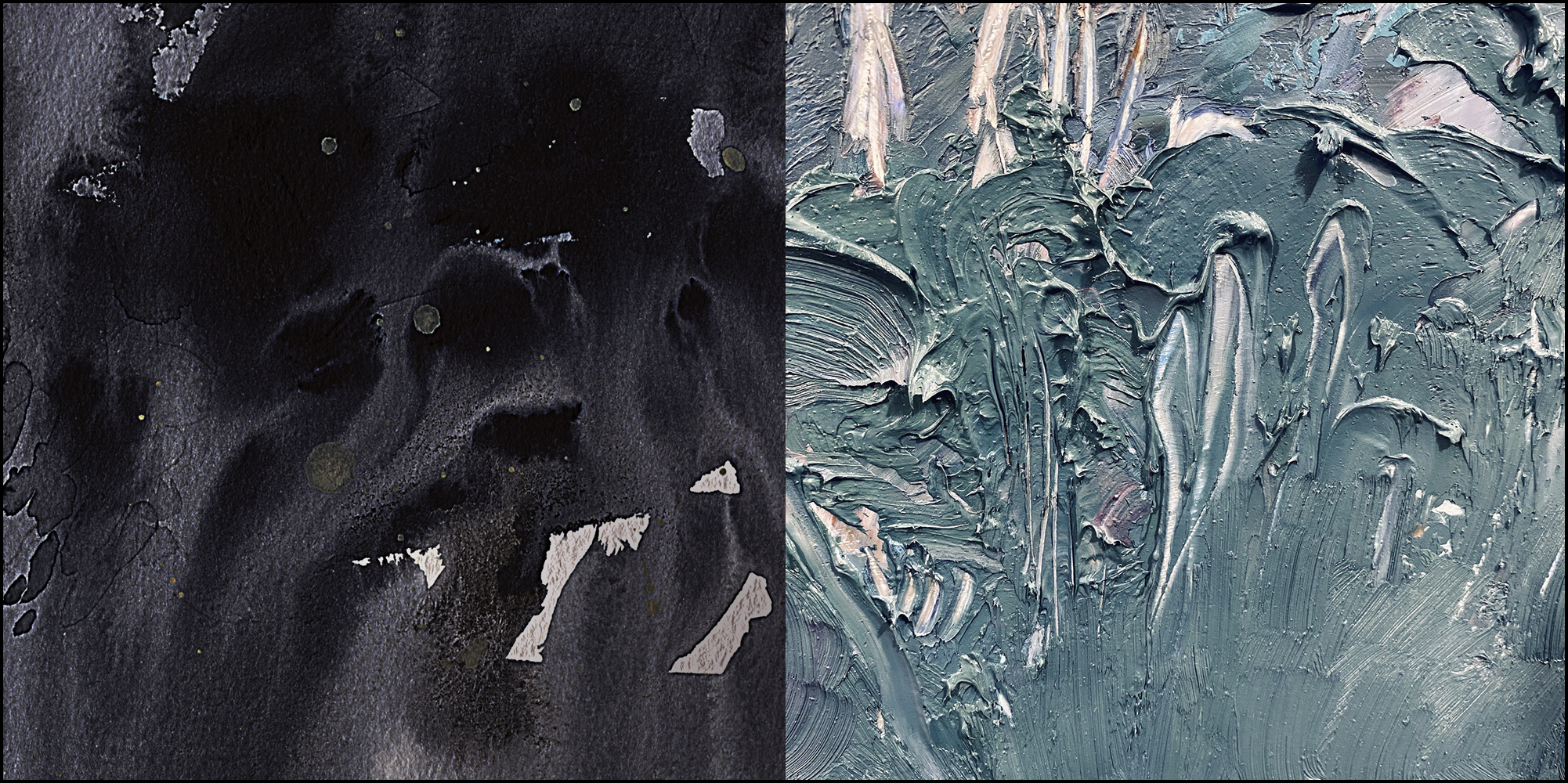
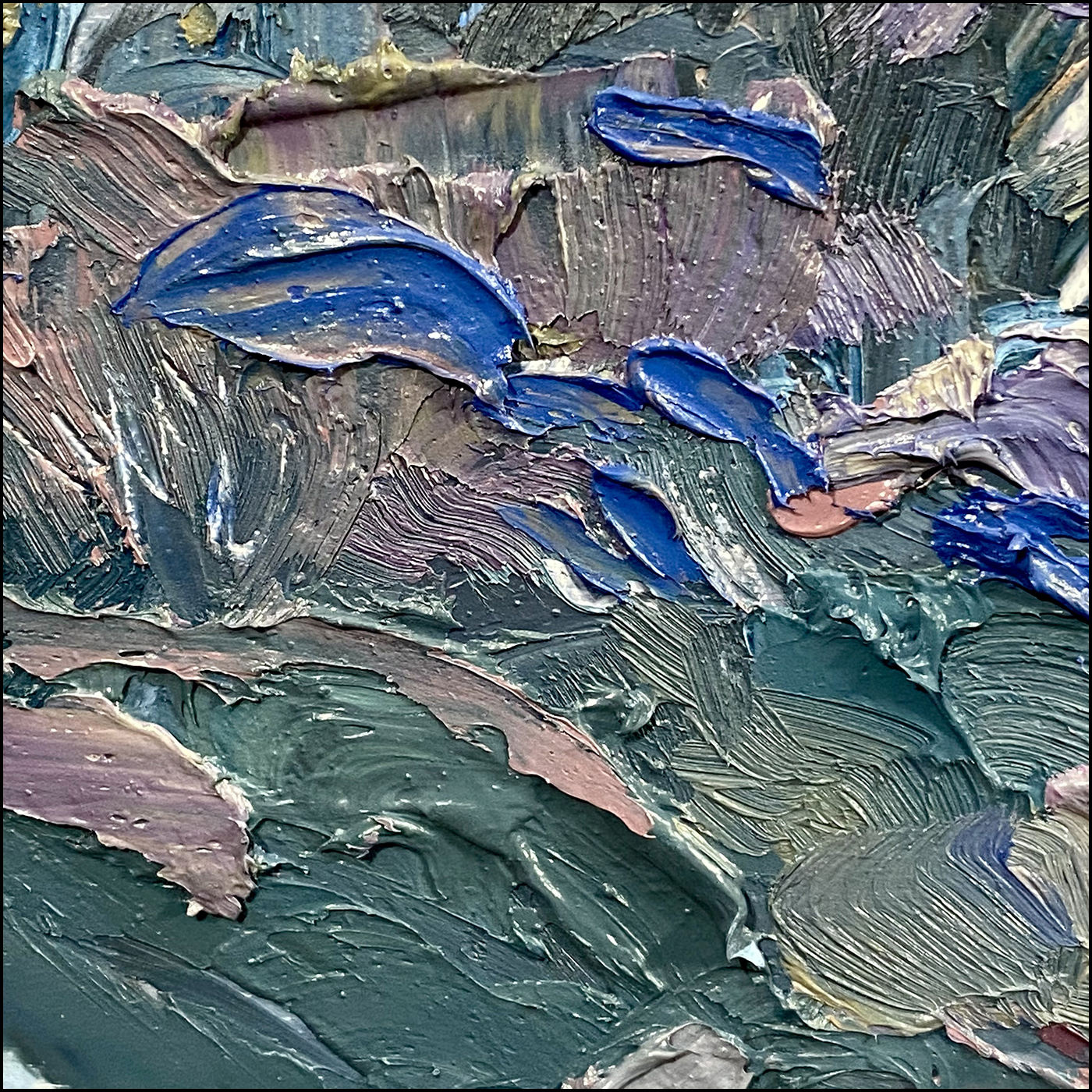
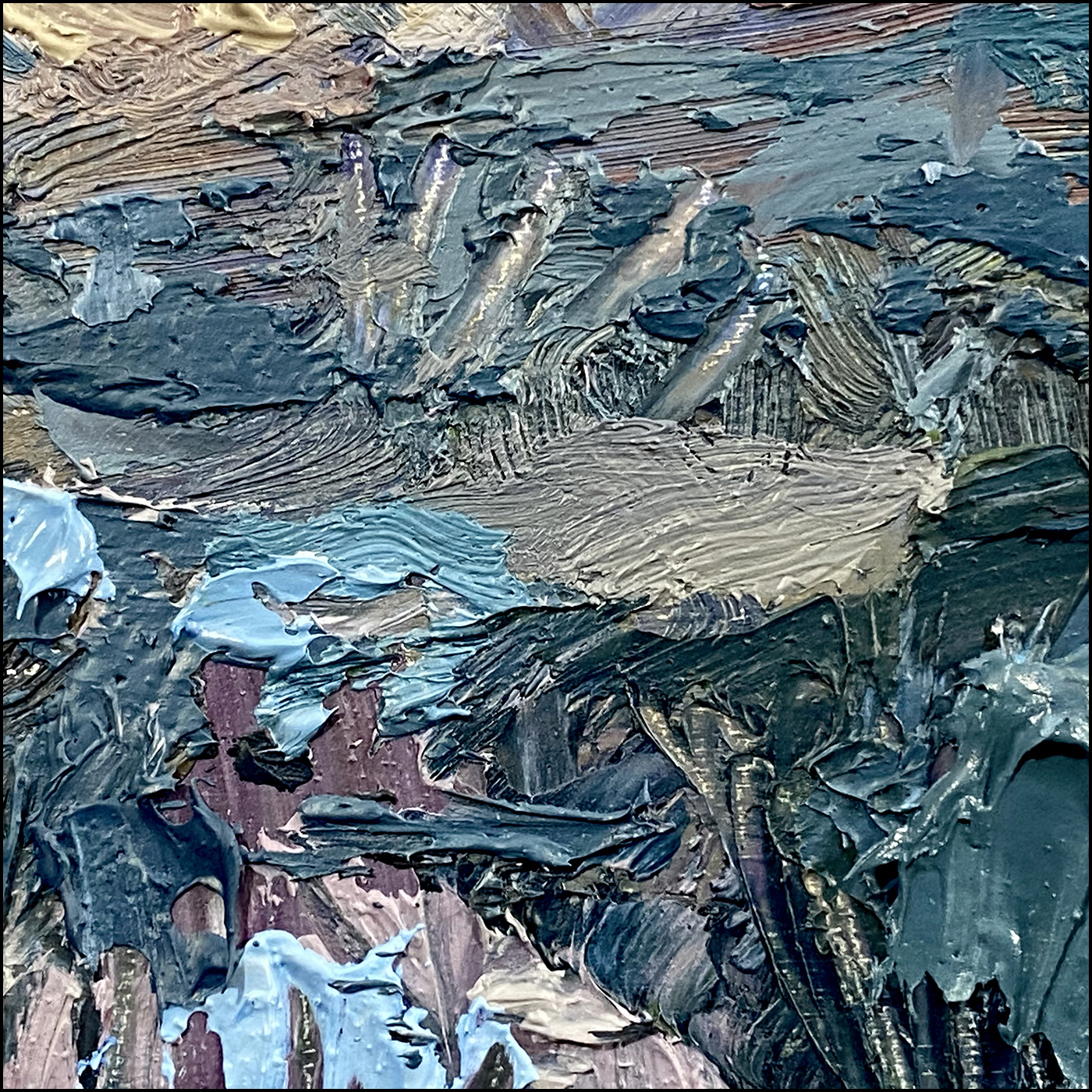
Here’s some scraping with the palette knife. This is absolutely something that came from my oil paintings.
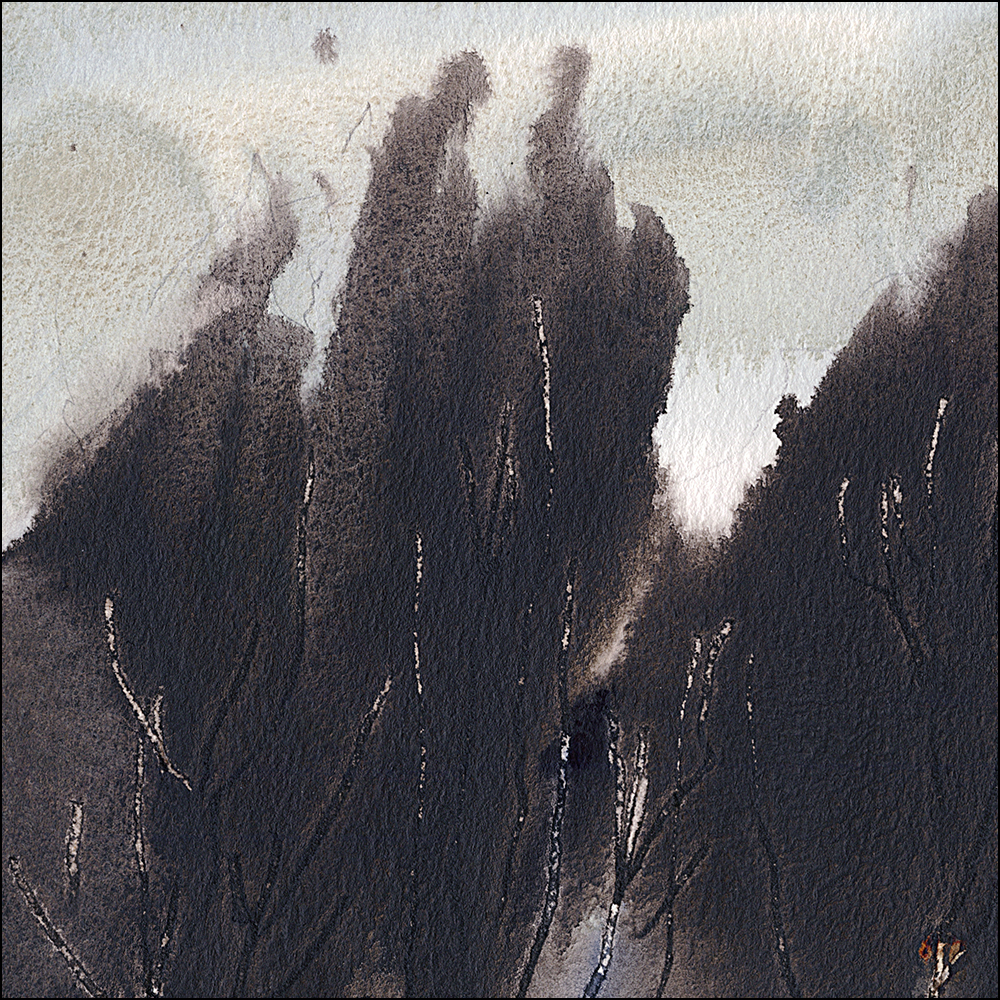
More scraping. If you do it when the paint is wetter, the pigment invades back in and turns the scrape into a raised line.
OK! So that’s my Day 15.
I’m very excited here. I really think this is one of the best water-thing’s I’ve done in a while.
I absolutely understand if it’s not your cup of tea. It’s kind of an intentionally ugly painting :) But I like it! This is something I’d hang on my wall.
This is the big deal with #30×30. It’s a true testament to the power of daily painting. If you can carve out the time to do this – and it *is* a big deal – who has this kind of time? But if you can make it happen – working every day, letting your brain sleep on the paintings, and going right back to it the next day – it works at an entirely different level than once a week painting – or worse, doing only a handful of big paintings a year.
This is my personal belief anyway. I know my brain isn’t the same as every brain – but hey, I can feel it working! So I can’t help but shout about it :)
So Okidoke – thanks for reading – let’s talk more tomorrow.
~marc
#30×30 Day 14 : Best of Both, Worlds Apart
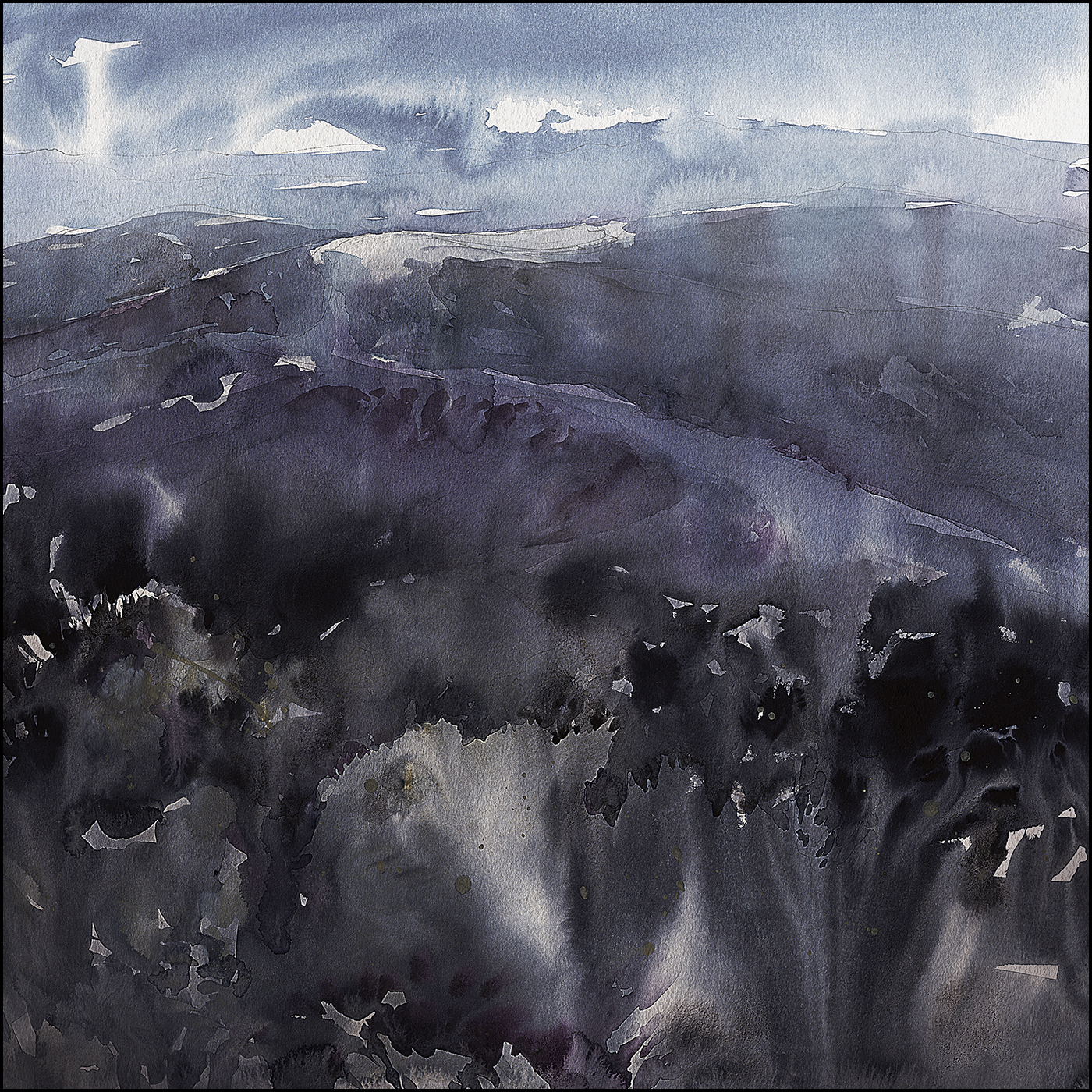
As much as I enjoyed making those previous winter scenes – I was also a little – I don’t know, bored (?) with the results after a few days. Looking back – sure, they were made in watercolor, but they were not FULLY utilizing the effects of water.
This one here, is an experiment. Not a real piece – just a test. A study of what would happen if I pushed the values and the wetness. I couldn’t get to a place of complete satisfaction with this test. I tried a couple renditions that got scrapped. In the end, this version is tweaked digitally – I had to push the values down to where I wanted them.

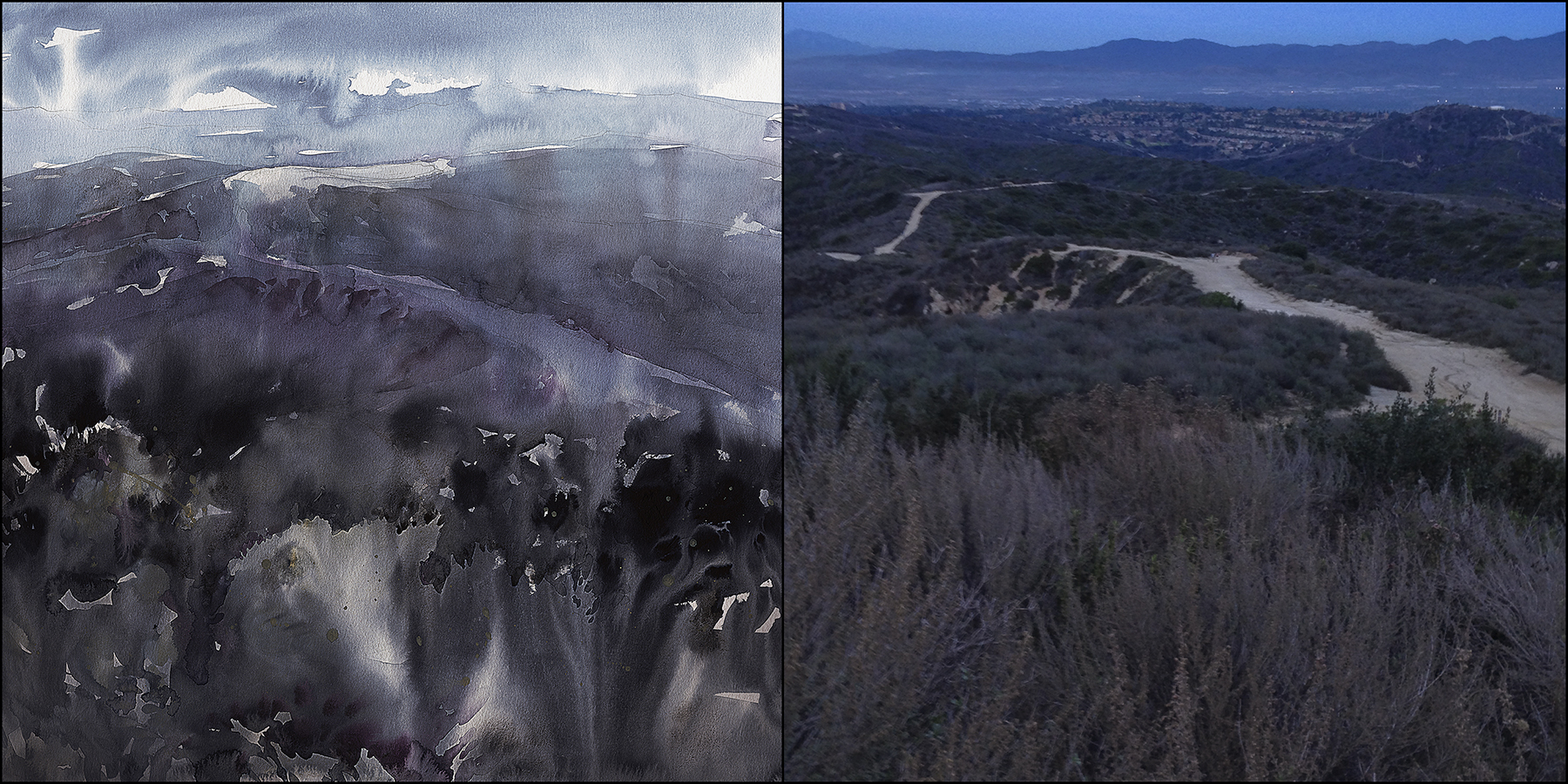
I expect for many people, this isn’t something they’d put on the wall. It’s kind of dark right?? Probably too abstract.
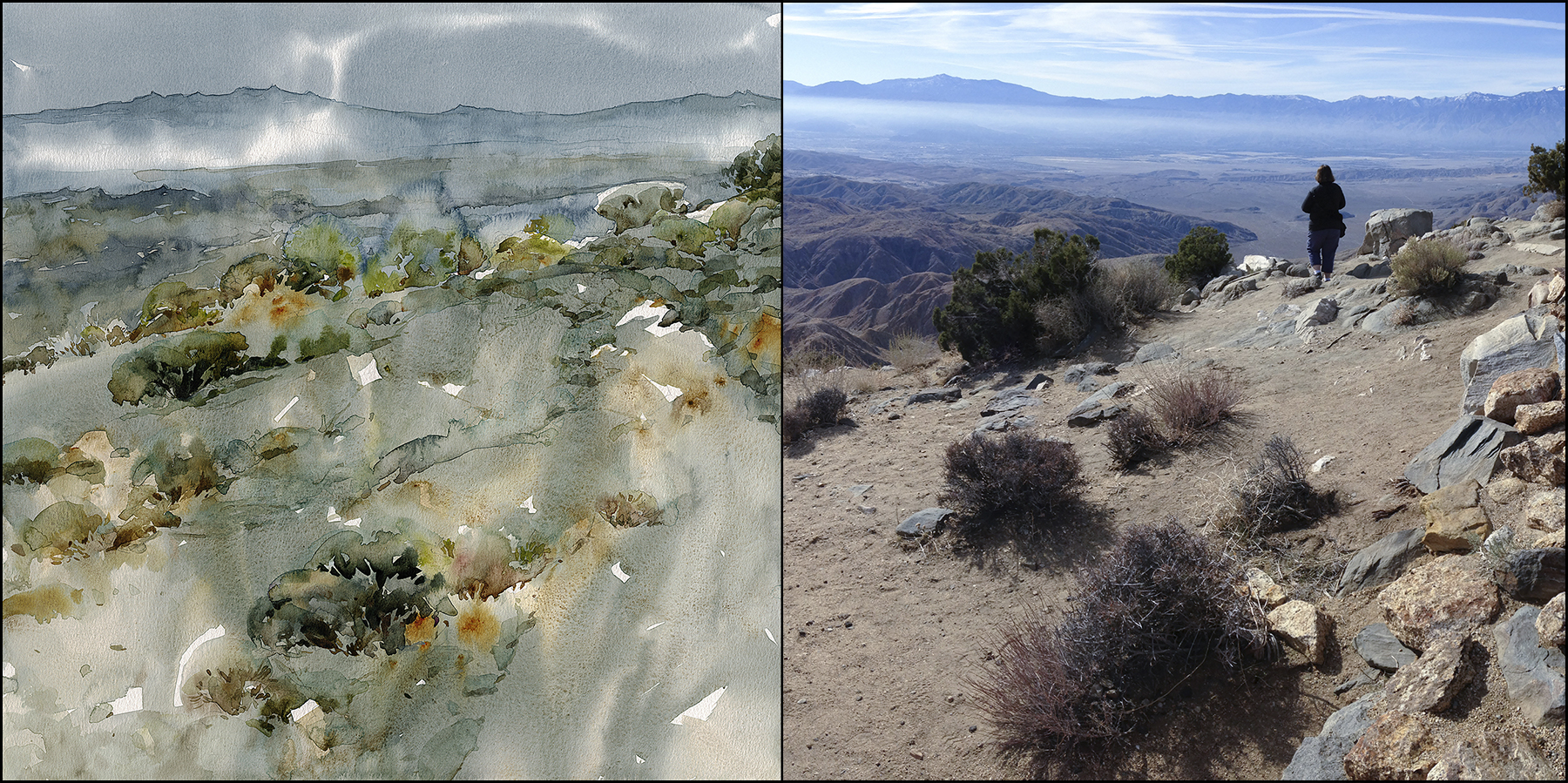
But – I was looking at this old photo. It’s a place called Top of the World, very near Laguna Beach. It’s kind of a favorite spot in that area. I’ve painted it about five times before in various different ways. I wanted to try another version that was both 100% watercolor – and – as different as possible than all my previous takes on the scene.

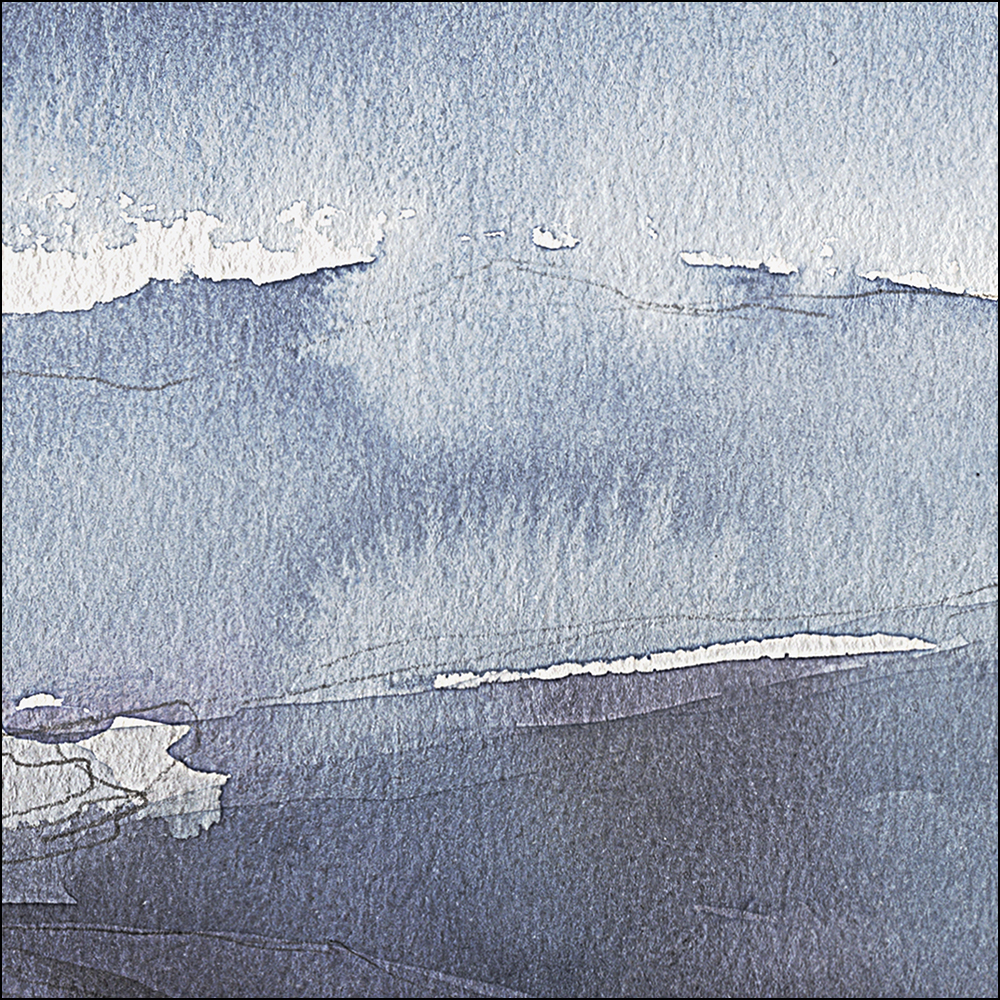
—
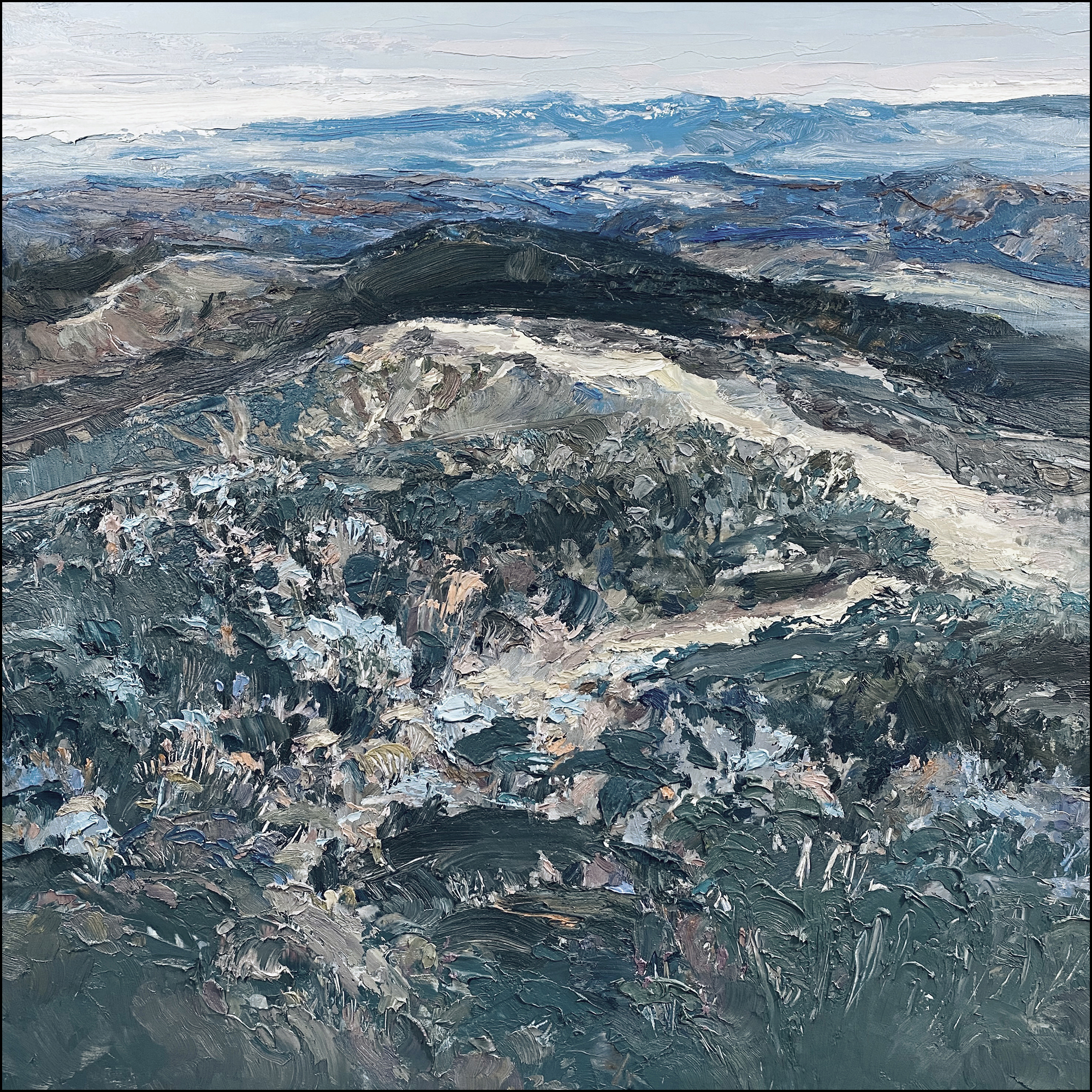
The last time I painted this scene it was an oil. I took the early morning shot and made it into a kind of pre-dawn fantasy.
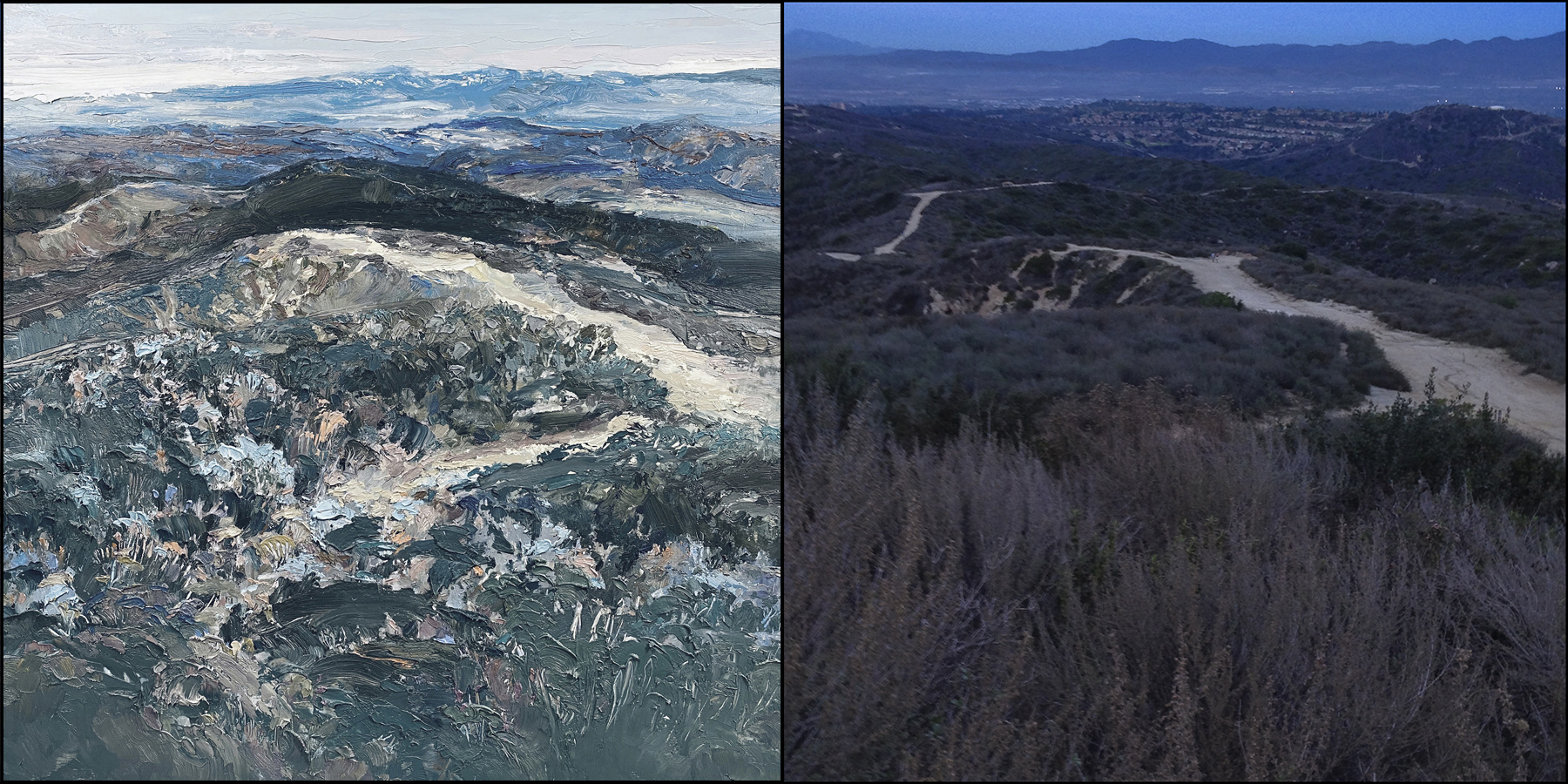
As much as the watercolor is pushed into darkness, this oil is shifted into a imaginary light. I don’t know what kind of lighting that is in the painting – maybe it’s how a nocturnal animal sees the pre-dawn. Just an invention of a place – only loosely based on what you see. But the basis of the invention is brushwork – dabs, scrapes, broken color.
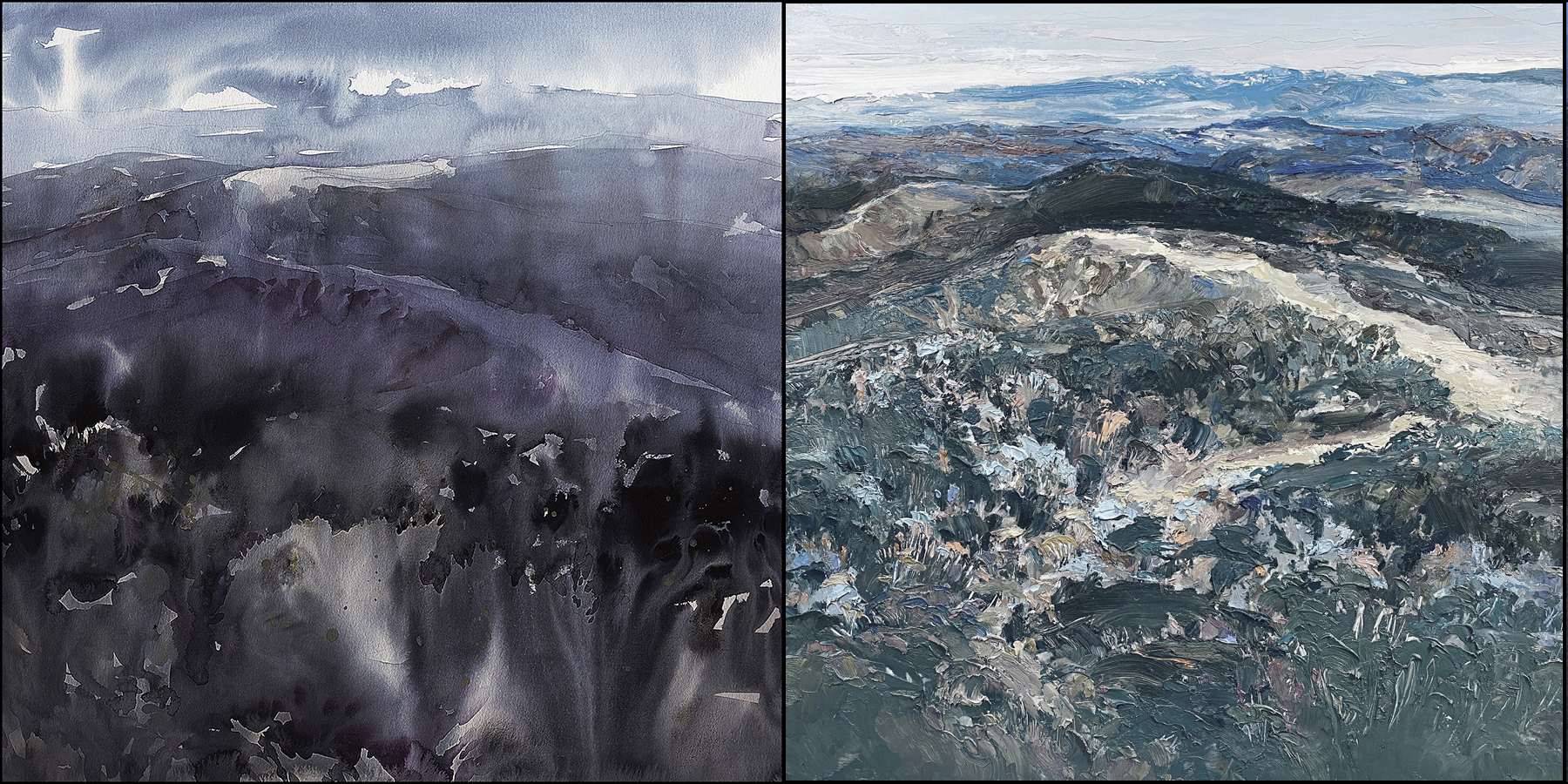
It’s hard to believe these pieces came from the same starting point! Or even from the same artist!
#30×30 Day 11 : The Road to Minimalism

This piece was started on Day 09 (you can probably tell – it’s a lot of the same colors in the cups) but I went back and finished it today.
I was looking back at photos of Baie St. Paul, and I thought – this one is a great example of leading lines.
The patterns of the fields – they should be perfect for one of my ‘high horizon’ paintings.
But, when I got started, I kind of lost interest in the foreground. Even though it’s what made me choose the picture in the first place. I think – A: the motion of the foreground isn’t quite ‘inward’ enough – and B: it’s a bit too much like one of my paintings :) It’s a bit like – I’ve done too many of these exact sort of things.
As much as I feel a person’s paintings should be consistent, (to make a body of work that stands as a whole, but also, to recognize what you are trying to make, and continue to improve on it), I also feel, they should not be repetitive.
You don’t want to become a cliché of yourself.

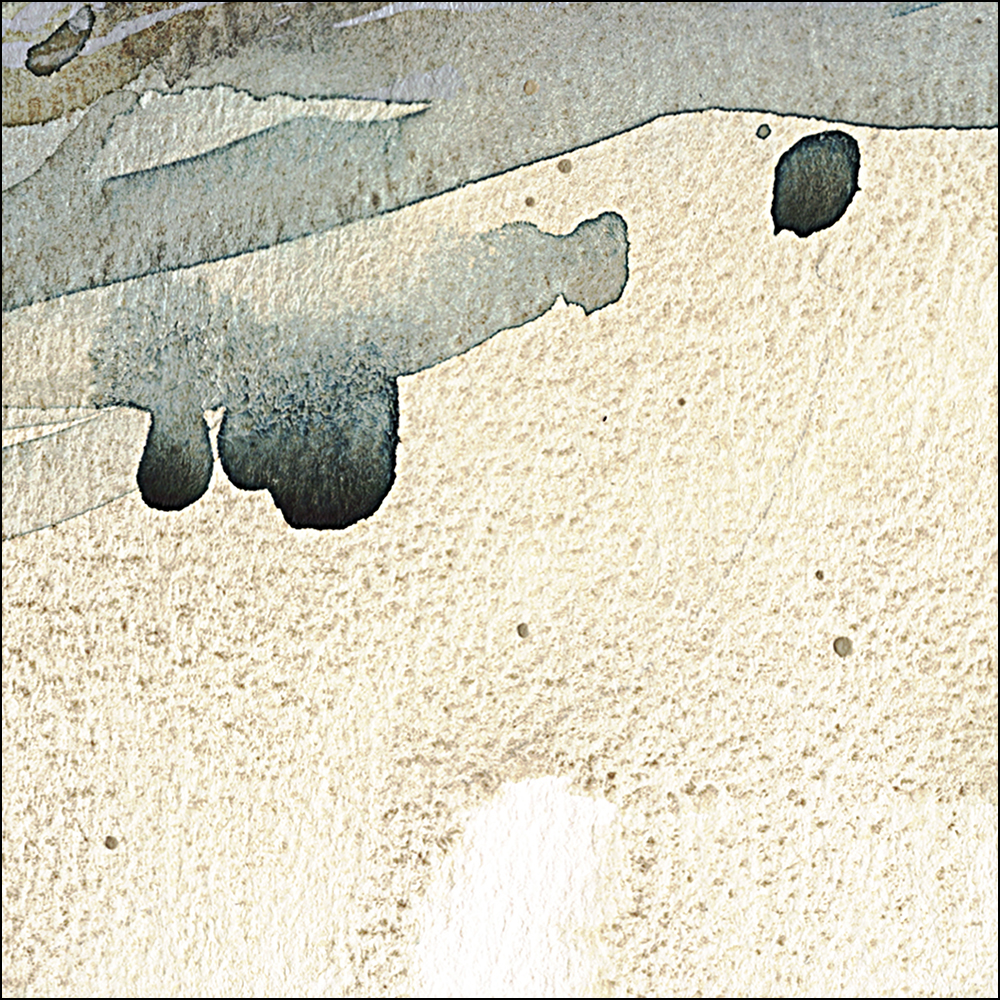
So – this is what I ended up with. I came up with these little dots – maybe they’re bits of grass, or shrubs.
Really, it’s a complete abstraction, starting with the real world, but ending up in a stranger place.
Out of context this might be snow, but it might equally be a desert. Or some alien planet.
I think it’s possible I’m losing focus here on Day 11. I’ve been painting at least two, sometimes three paintings some days, even if I don’t take all of them all the way to finish.
It’s quite normal to ‘burn out’ on the marathon around the mid point. I kind of enjoy this, because – I can feel myself getting annoyed, and that is always the stage where the next few paintings become a breakthrough.


#30×30 Day 10 : Winter Blues


Here’s a change of pace! April in Quebec!
I’ve been painting all these landscapes of New Mexico, Arizona, California – because these are the sorts of places you go when you’re escaping Canada in the winter. That – and my own natural inclination towards vast, open landscapes with very little in them.
But in fact, I do have a few winter paintings.

There’s a group of artists who used to meet every April in an area just north of Quebec city. We’ve gone a few times to paint along with them. This was very early on in my experimentation with impasto oil painting – as far back as 2015.
Looking back at a favorite piece from these trips, I see the same landscape. This was very nearly the same view. Within a few minutes drive anyway, somewhere near the town of Baie Saint Paul.
I think you can recognize the fields with the winter stubble, and the view of the bay in each, but, in the oil I’ve chosen a careful crop that avoided any trees. There’s no foreground at all – because of course, that kind of subject with a lot of intricate detail is very difficult to do with a palette knife – especially at 10″ tall.
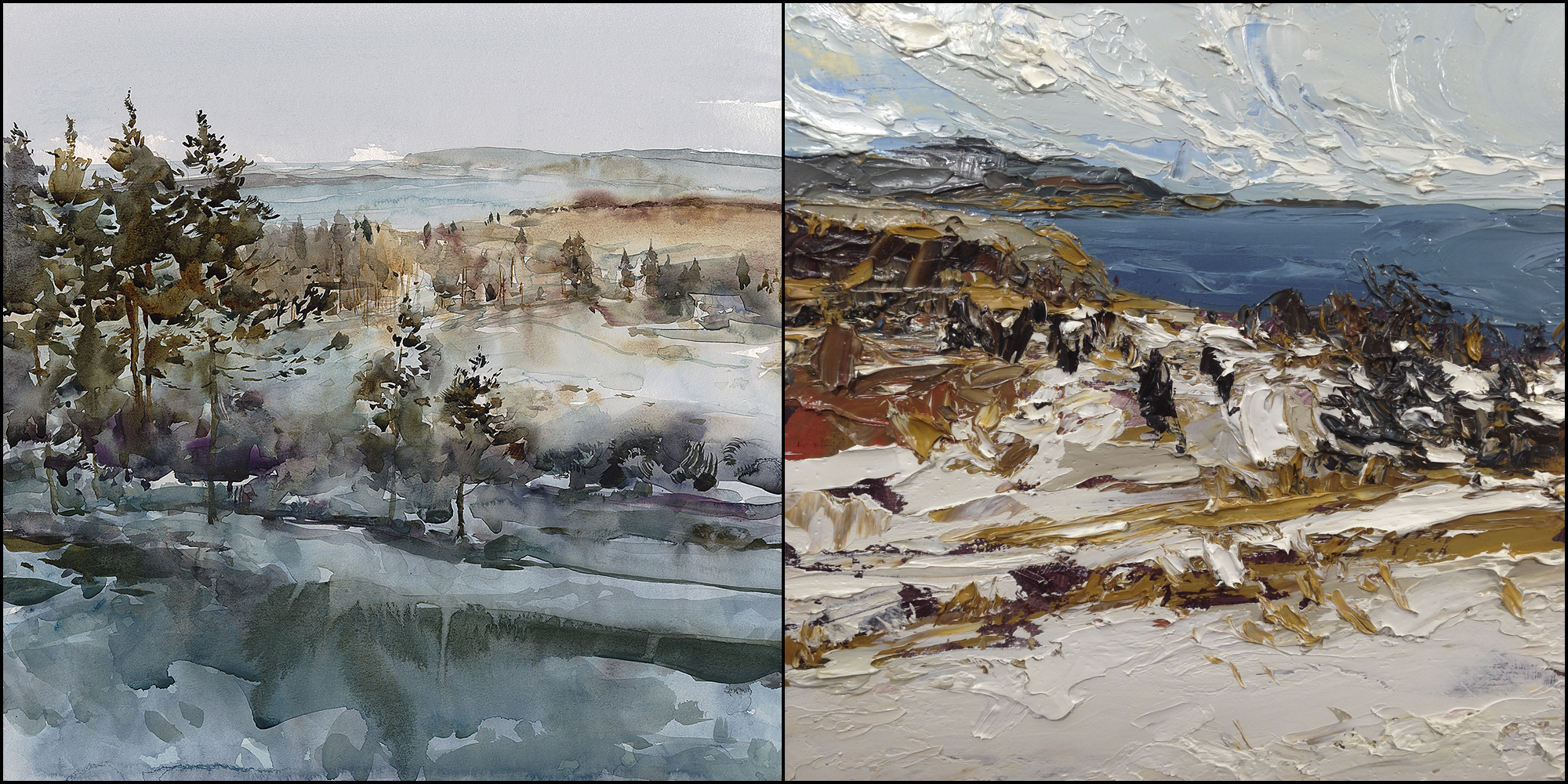
It’s kind of a trade off – as much as I enjoy the powerful simplification in these small oils, I also love the opportunity to do calligraphic brushwork like these pine trees. It’s so much fun to get down into the details.
This is like the time back in 2016 when I was debating Drawing vs. Painting :) Now I’m debating transparent vs opaque, delicacy vs boldness, brush vs. knife :)
I guess I’m not going to come to any conclusions right now! But this is the purpose of the experiment I suppose :)

Oh, one last thing!
Look at that sky! I finally learned to make a flat wash!
You would think I’d have gotten around to this before now hey?
But honestly, in all my years of painting, this isn’t a skill I found necessary.
I’ve always worked small-ish, and with a very small travel palette, and always just mixed color as I go – often, just mixing on the page.
It’s only now that I’m getting around to learning how to do this kind of flat under-tone.
It’s not hard – you just need to take the steps. Mixing enough pigment in advance (I use little 30ml disposable medicine cups – because I inherited a few hundred of them). Pre-wetting the paper – but maybe waiting a bit till the gloss starts to fade and it’s not soaking wet – otherwise you get drips! And then painting in one quick passage across and down – and never never never going back and touching the wash. Never touch it! You will get a bloom!
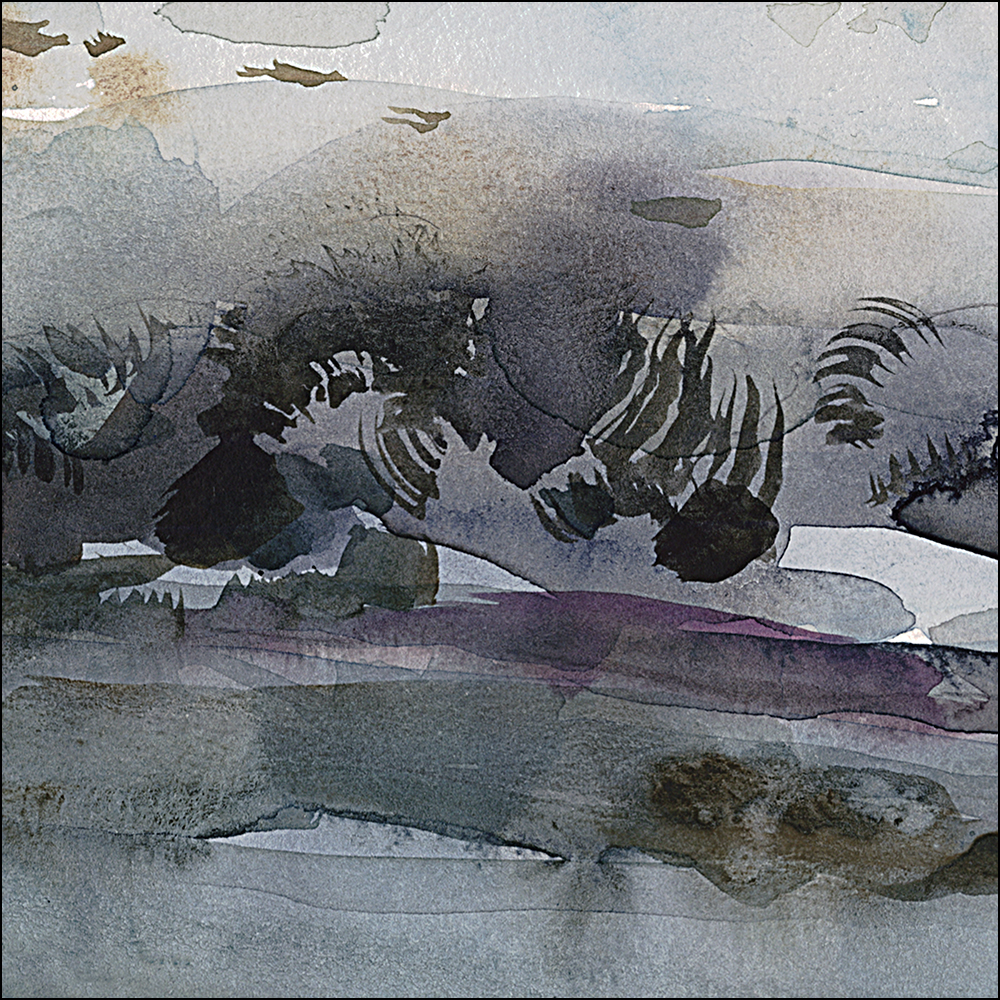
So then you have this flat wash, and the undertones are there to show through the gaps in the other brushwork, making the whole painting more consistent, more ‘of a tone’. Otherwise, you will have pure white showing in gaps – which is great for some things, but not an area of shadow.
In any case, after this prep, it’s back to Direct Watercolor as normal.

By the way – I’m working on loose sheets now, which I don’t bother to tape down. They do buckle significantly with this ‘pour’ stage.
Now that I’m using so much more paint, I can’t rely on taping. In the past, I was a more controlled painter, so I didn’t get the tape wet. But, after a certain point, it’s just too much moisture and it loses its grip. So I’ve given up on tape entirely for studio work, and thus, sometimes I need to dry and flatten the loose paper before continuing to paint, and sometimes again after the whole thing is finished. (You can’t skip taping for location work though – no time to flatten – and more important, the wind is just annoying if your paper isn’t locked down.)
When you dry the painting with a hair dryer, it may curl up into a tube. I paint clear water on the back, and sometimes lightly mist the front, so the paper goes limp again. Usually the image is safe to mist, unless there is particularly thick paint – which will sometimes stick to the blotting paper, but that’s not normally a problem in an ‘impasto’ area. Ideally you won’t have a thick bit of paint on a person’s face or in the midst of a delicate flower.
If so, you might want to any thick highlights after pressing (even though I just do it and live with the results).
So yes – I put the now limp painting between many many sheets of cartridge paper, like, a half inch both above and below, to serve as blotting paper. It will wick the moisture away, and also press flat without impressions from the weight. I’m using newsprint moving paper meant for packing dishes. Then a sheet of plexiglass on top for superstitious reasons (it’s smooth), and a stack of books, or even better, plywood drawing boards on top, since, I have a lot of plywood boards from the days I used to staple paper down.
Leave it like that for a few hours and it comes out perfectly flat. Mostly. Sometimes there is a faint wrinkle, but you can do the process over again, or just live with it.
So that leads to another admission! I’m calling this Day 10 – but in fact, I’ve taken to doing the initial colored flood and leaving it to flatten. So, I’m actually starting an image on Day 08 or 09 and finishing it on Day 10, unless I happen to get a first wash done early in the day and can get back to it that evening. Many times, if the flooded wash goes too badly wrong, I will just tear it up at that stage and not even flatten it. Usually the issue is it’s too pale – or – I might have picked a wrong pigment and the wash is simply too intensely chromatic. Or – I just get a huge bloom in the wrong place. Many things can happen!
My advertised theory of Direct Watercolor is ‘as little preparation as possible’. Which is a mealy-mouthed kind of rule, because you can say things like – well, I really am doing as little as possible! Even when you are cheating like hell.
So that was way too much information! But that’s my writing style and I guess you’re used to it by now.
Take care and see you tomorrow!
~marc
#30×30 Day 09 : Dry Brush, Arizona
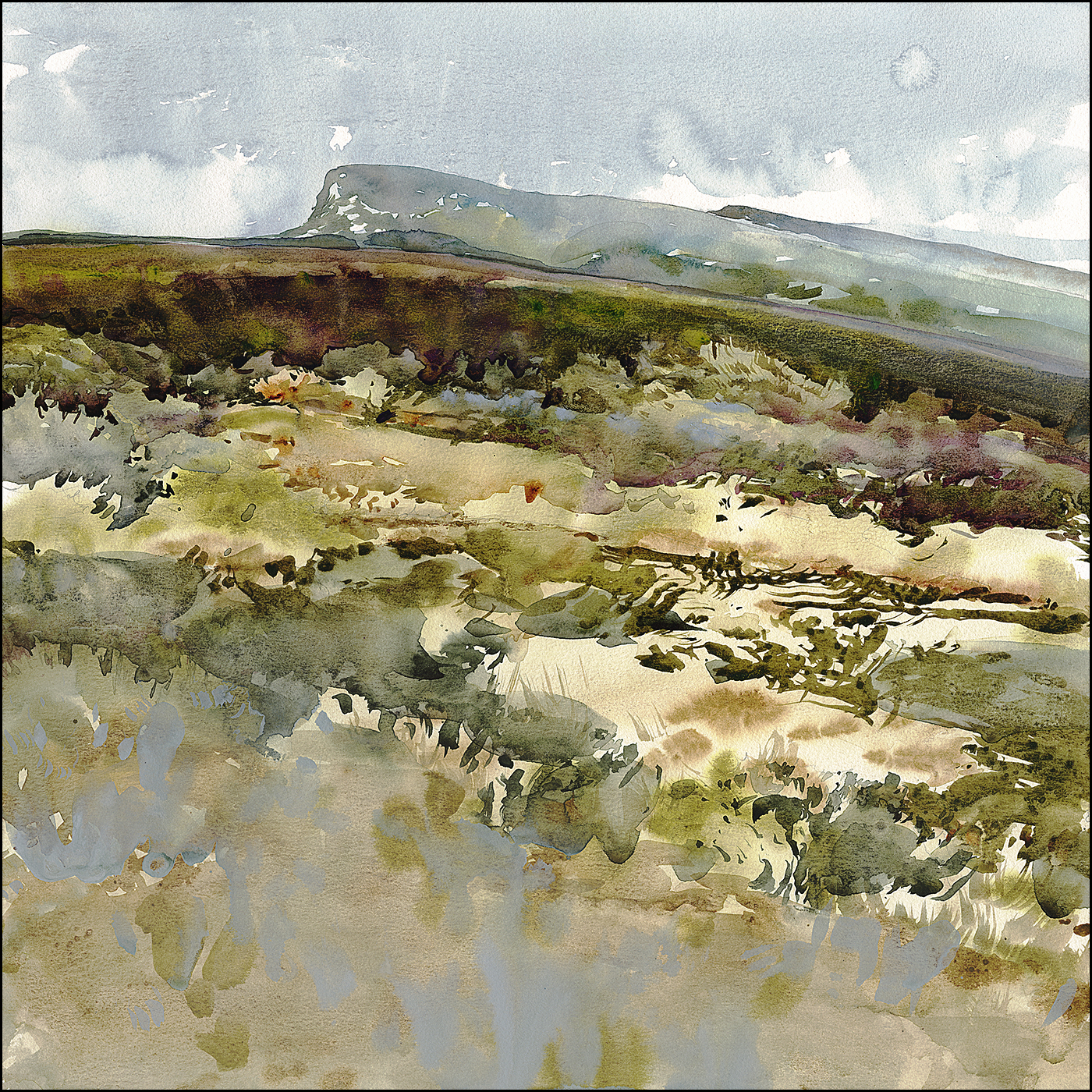
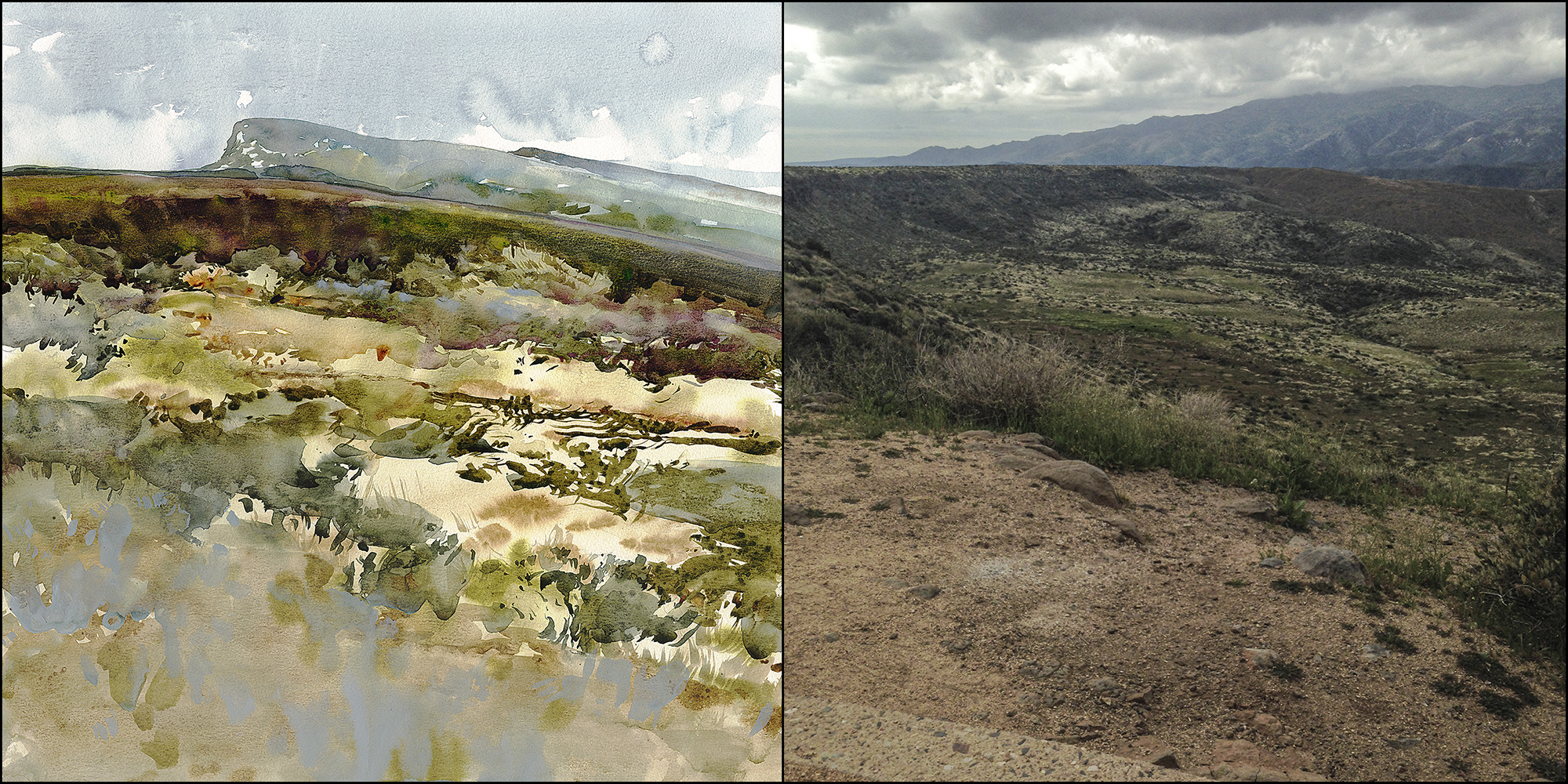
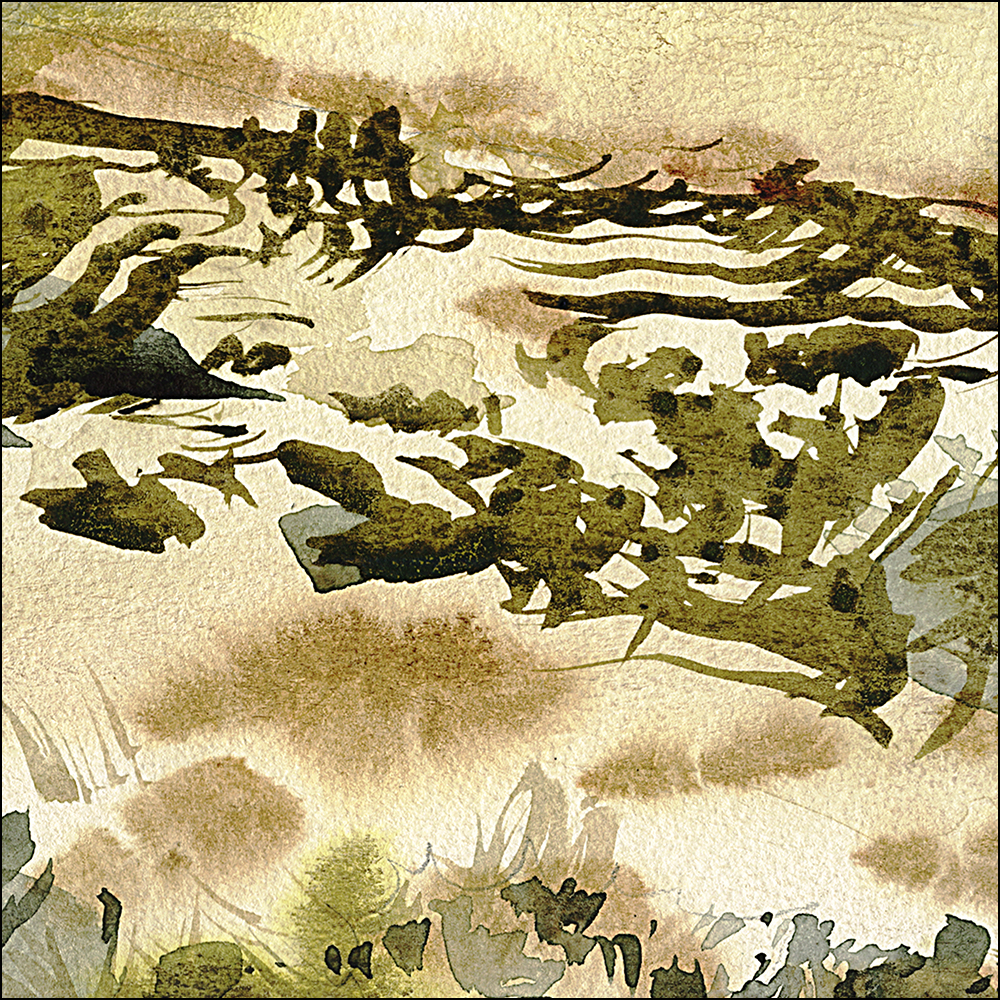
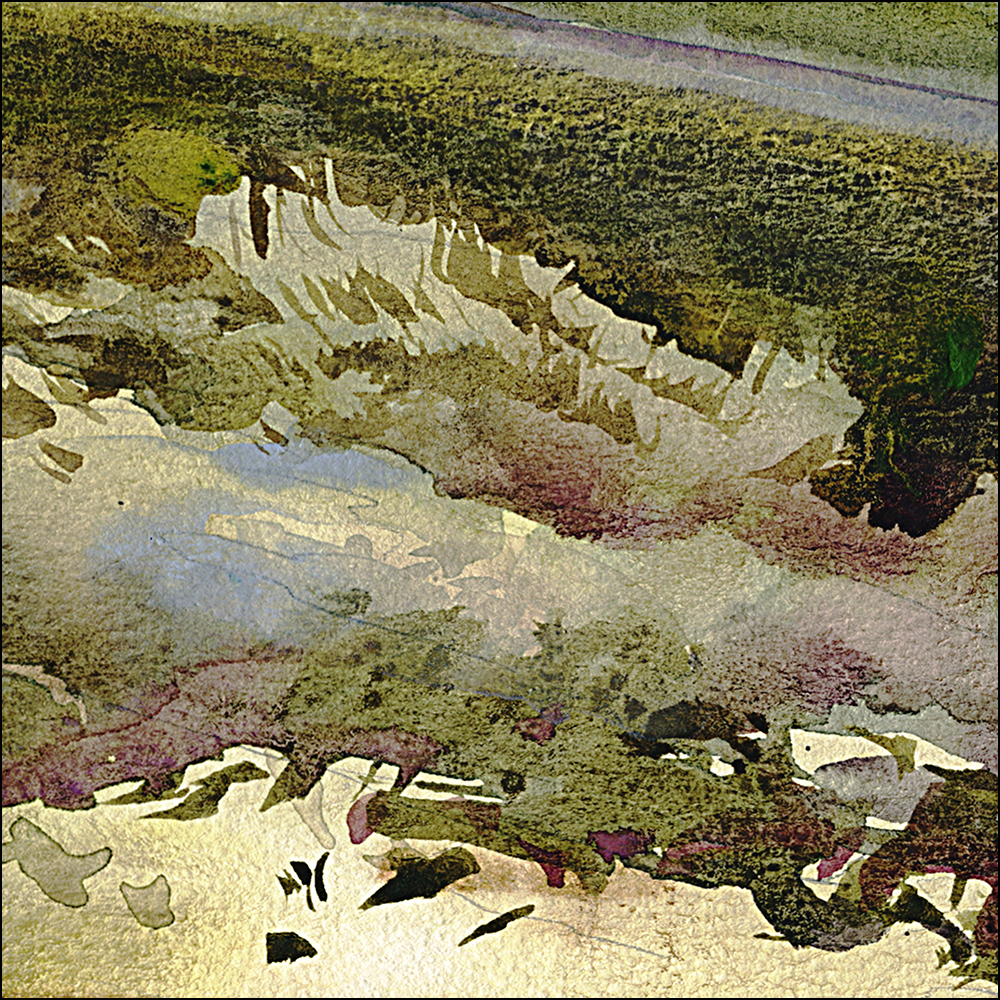
Today ends up being a study in making vegetation out of wet-on-dry brush marks. And also, ways to use color and value to break up shapes and revise lighting.
I’ve often said, you need to change color, temperature or value – at least one, sometimes all three, when you bring two shape edges together. So it makes a puzzle of interlocking shapes – even when an area looks uniform in real life – it doesn’t need to be boring in the painting.
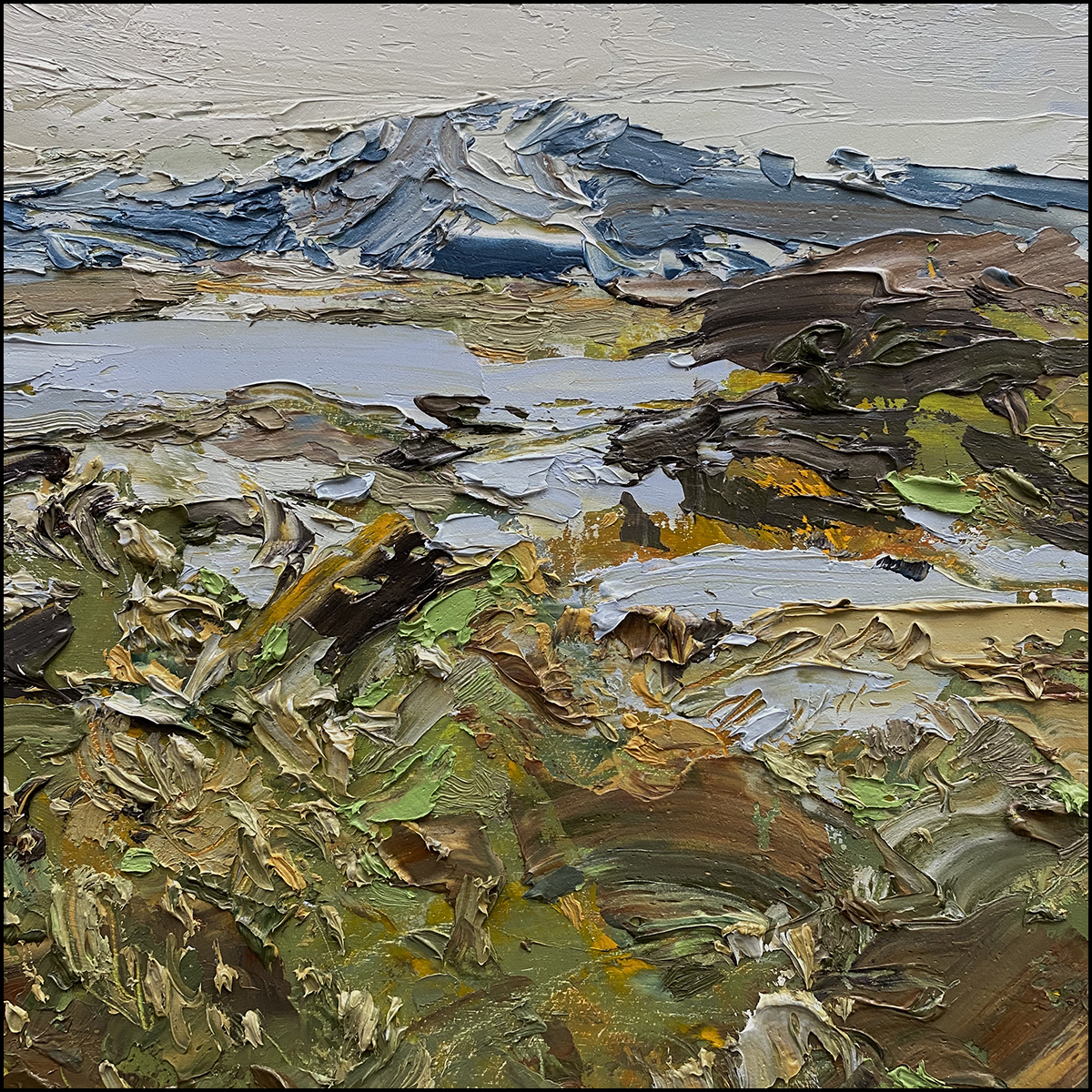
This is my 10×10″ oil, “If You Look Really Close, It’s Just Paint“. It’s not really a direct inspiration for today, but it does share the spirt of turning reality into broken brushwork.

#30×30 Day 08 : Day in the Park!
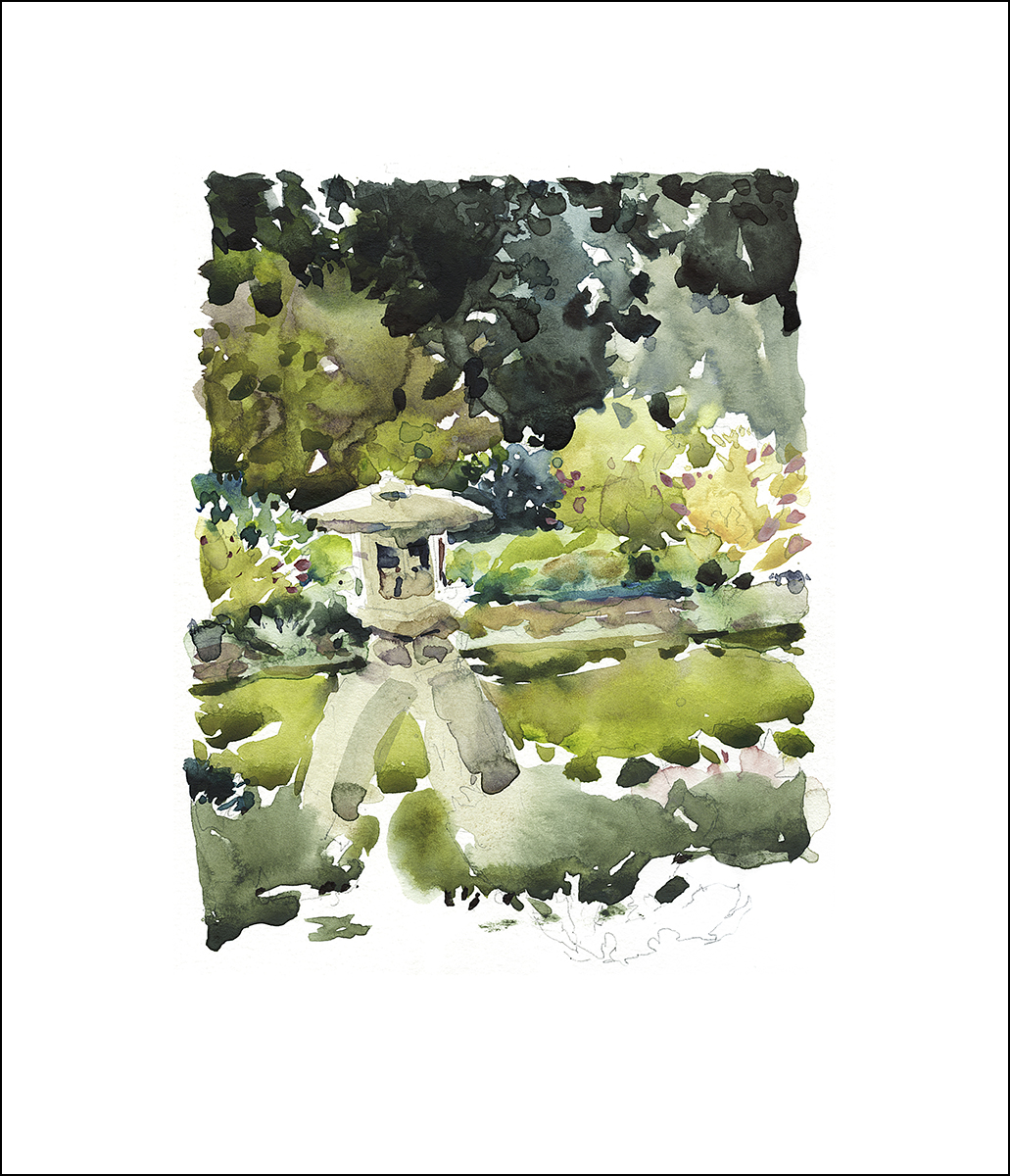
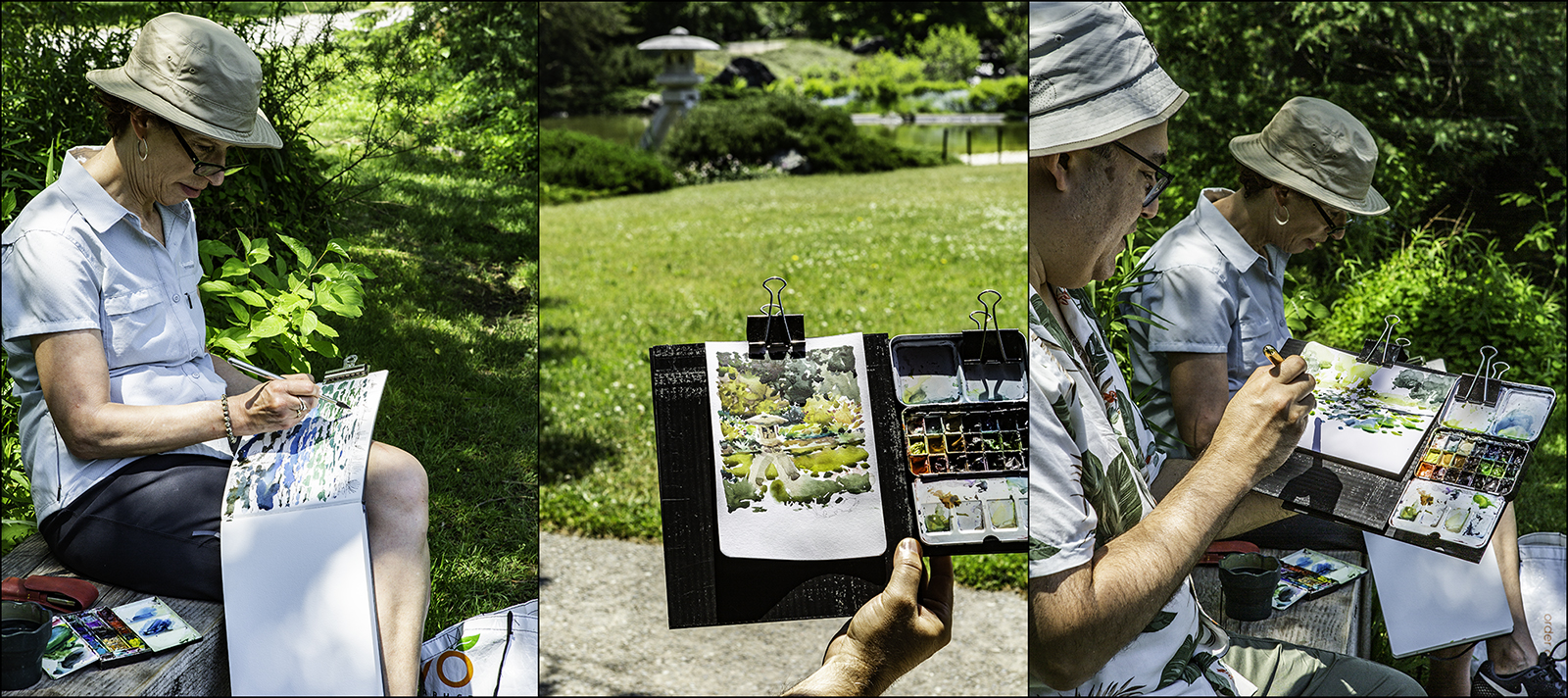
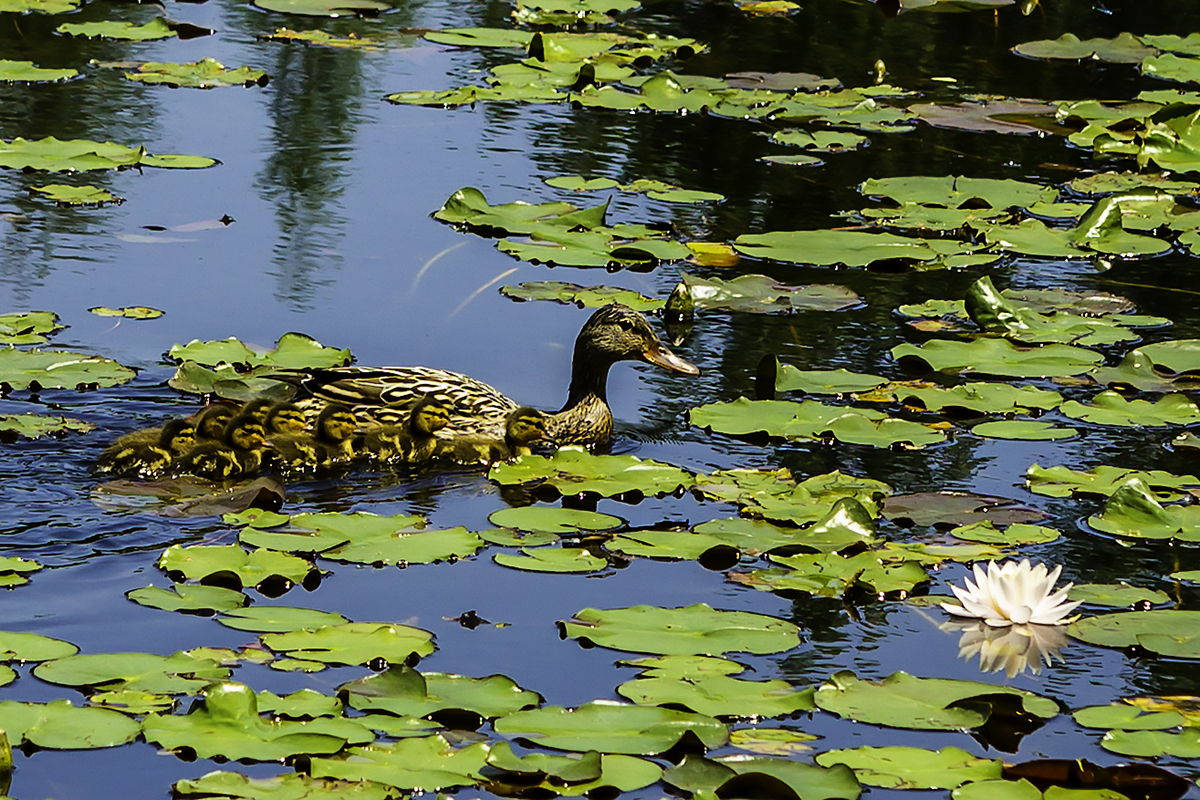
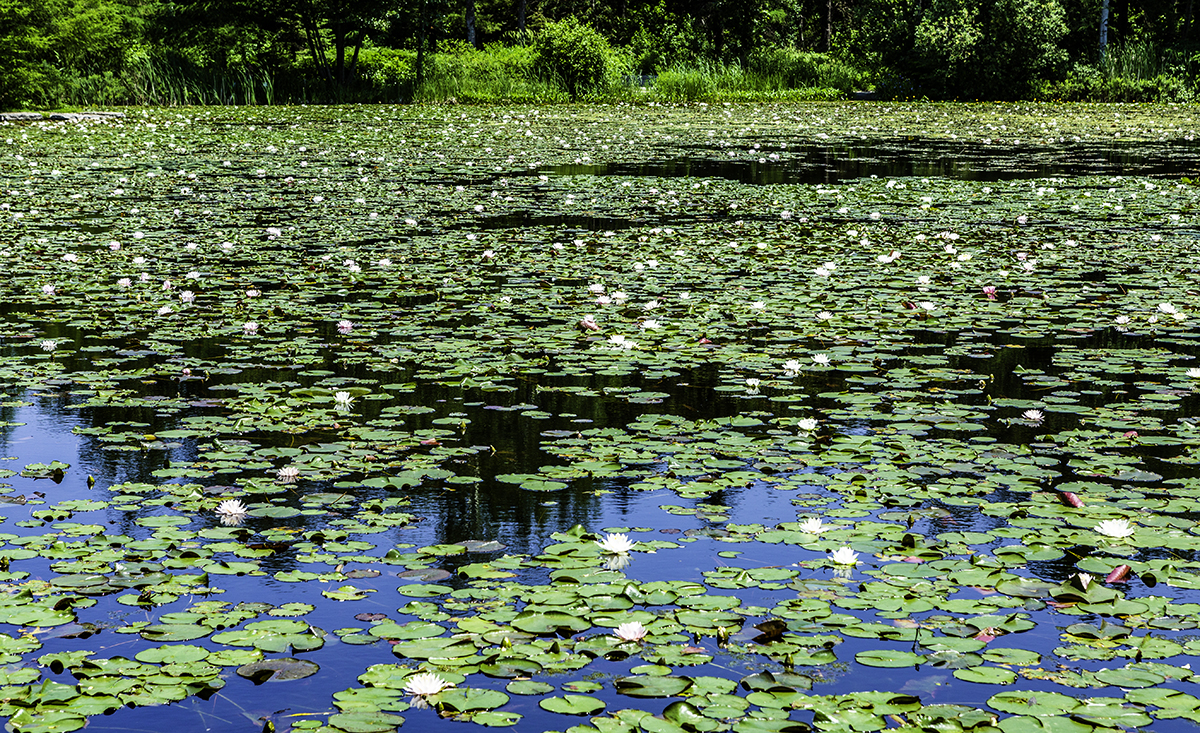
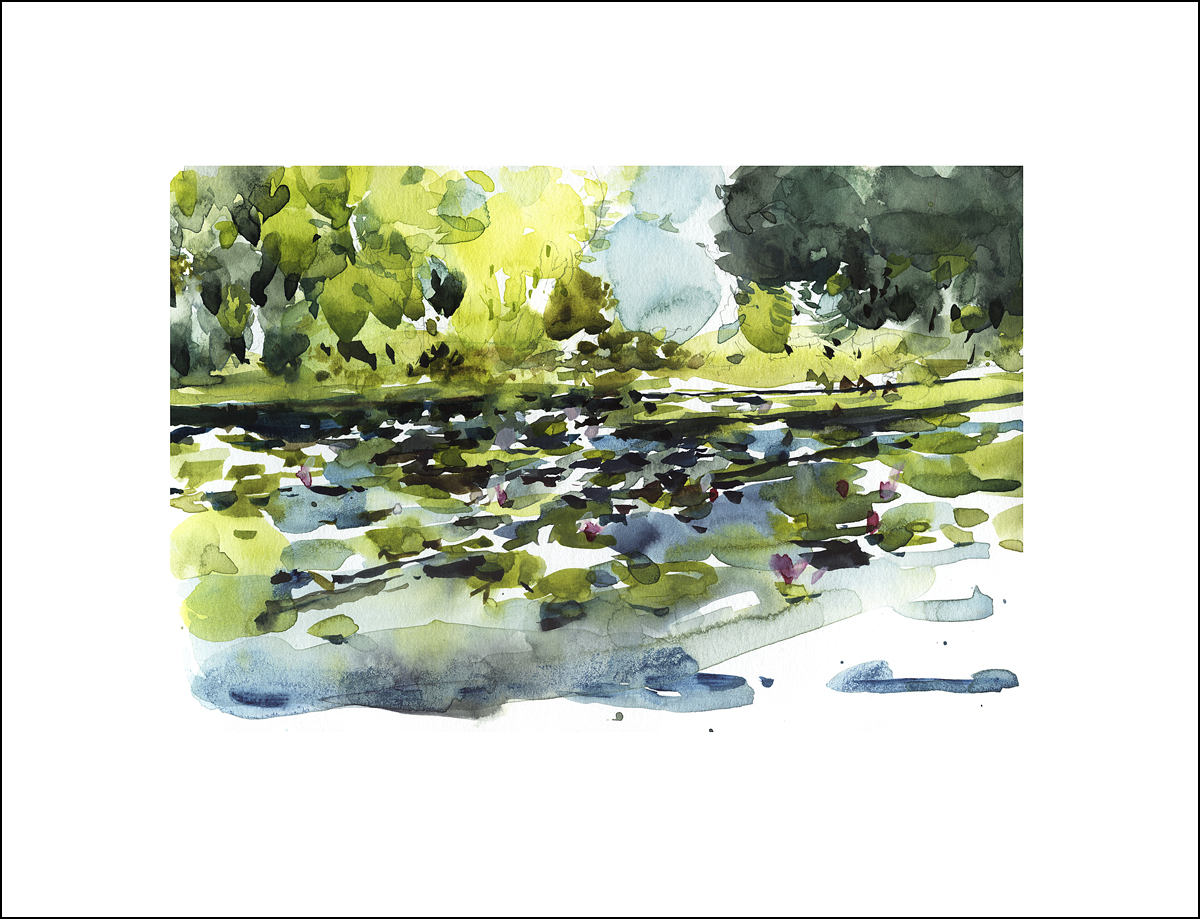
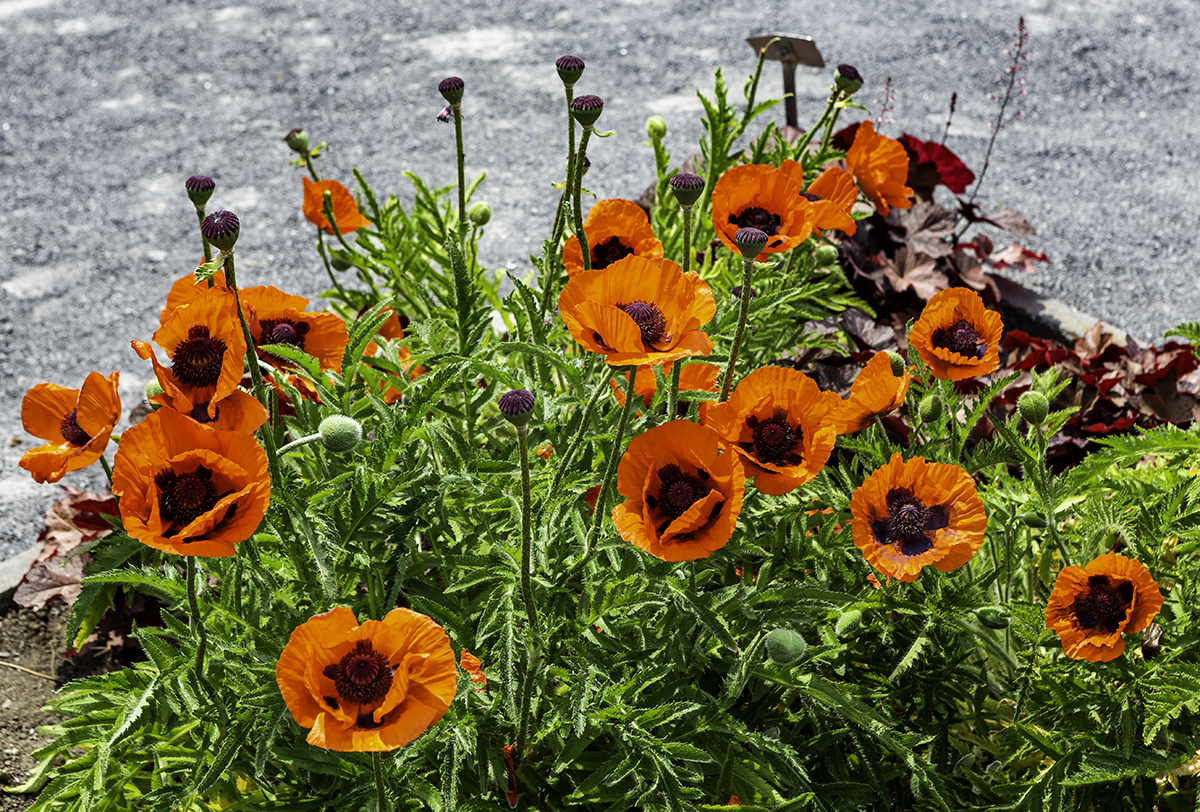
We’re just back from a day sketching in the park with our old friend Shari Blaukopf!
It’s been at least 450 days since our lockdown began, and longer still since we’ve had a chance to sketch together.
Today was a huge reward! Sunny with a bit of breeze, if a little hot (30C / 85F, which is pretty warm for Canadians!) but it’s the height of summer, everything is in bloom, and we could finally get together to paint at an old favorite, the Japanese garden at the Jardin Botanique.
You just can’t beat a day spent making art with friends!

Of course, I’m showing off studio work for #30×30 this year, and I’ve gotten very ambitious with the paintings – which is rewarding – pushing yourself – but let’s not forget this kind of small sketch. Just having fun! That’s how I learned everything I know today.
I always say, the most important thing an artist can do for their art, is the thing they love to do. Whatever you can enjoy, day after day, year after year – building one sketch on the other, gradually becoming more fluent, more aware of your abilities. That’s the only way to stick with art for the decades it takes to see your potential.
Today was a great reminder not to take everything too seriously! Enjoy the artist’s life when you get a chance :)
#30×30 Day 07 : The Wandering Path

I didn’t have a specific painting for inspiration this time, more like, a kind of composition I find myself returning to.
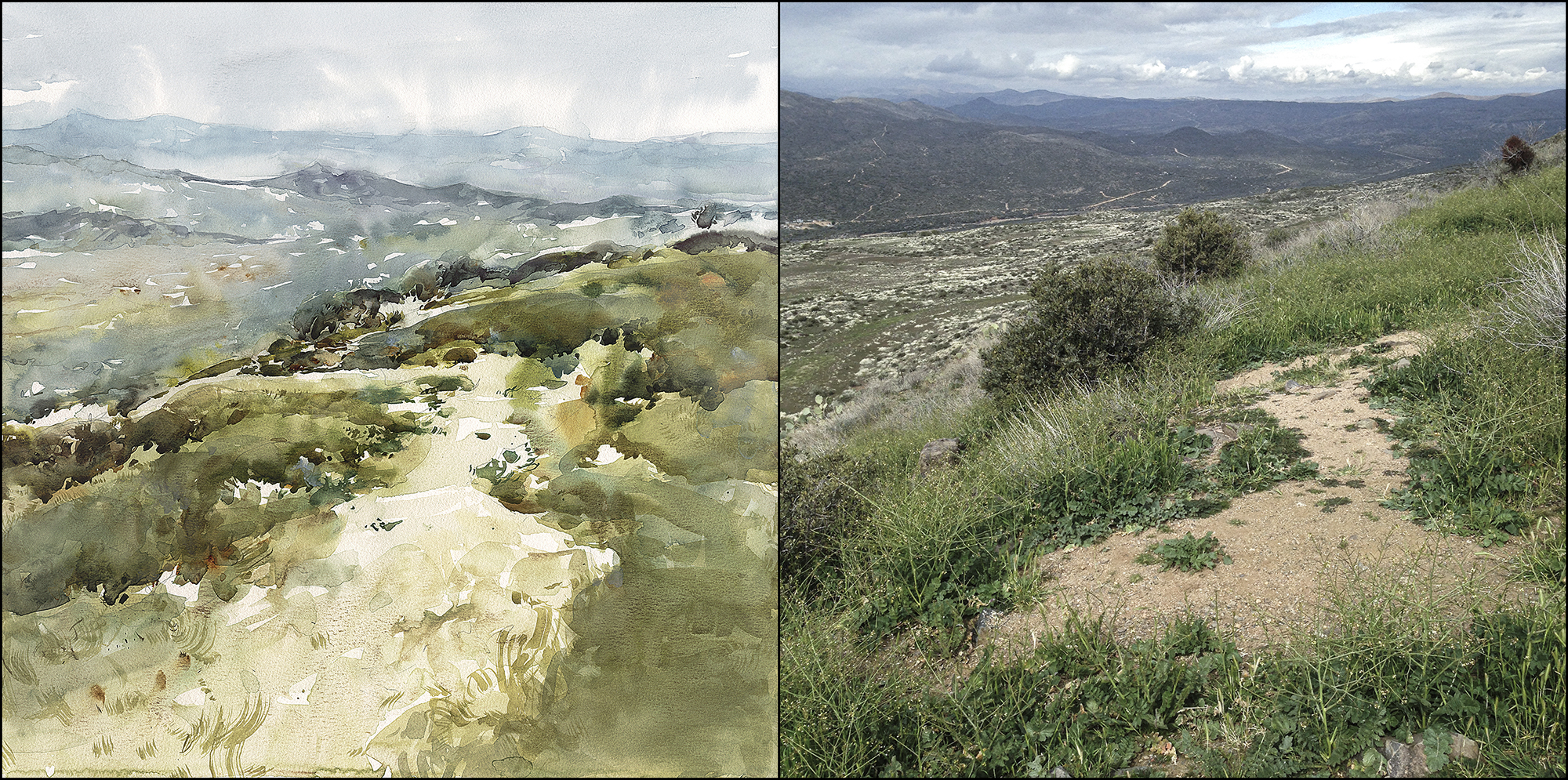
This is a classic device – the idea of shaping the landscape to make a wandering path which leads the viewer into the painting. It’s something I do all the time these days. You might think I’d get tired of it, but I never do. I love to look back at my pictures and follow these pathways out to the horizon.
Maybe it’s there already – after all, you got to the view somehow right? You were probably following a walking path already. Sometimes you just need to take what’s there, and make it a little more obvious. Clean up the edges, make it a little easier to see the path.
Combine that with distance planes, made by desaturating and blue shifting the color in clearly defined bands, and you immediately have the illusion of depth.

All righty! I hope you’ve had a great day of painting. See you tomorrow!
~m


#30×30 Day 06 : Green as Broken Glass

These sea-green shallows are from a rocky beach in California.
My ‘inspiration oil’ is one of my very early impasto paintings, painted in 2017 after visiting the Algarve in Portugal. We were there a bit too early in the season. It was much colder, much more stormy than I expected out of a trip to Portugal.
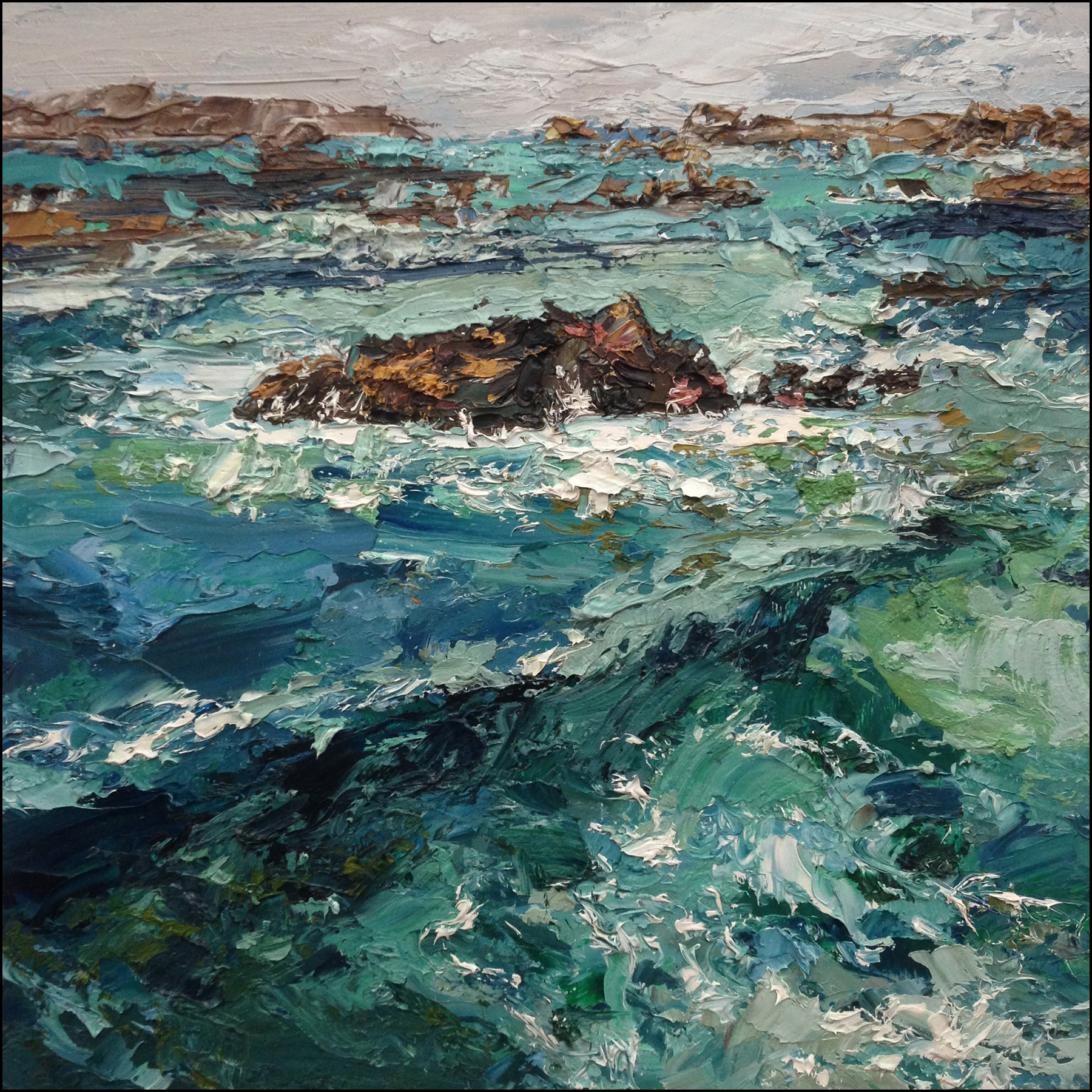
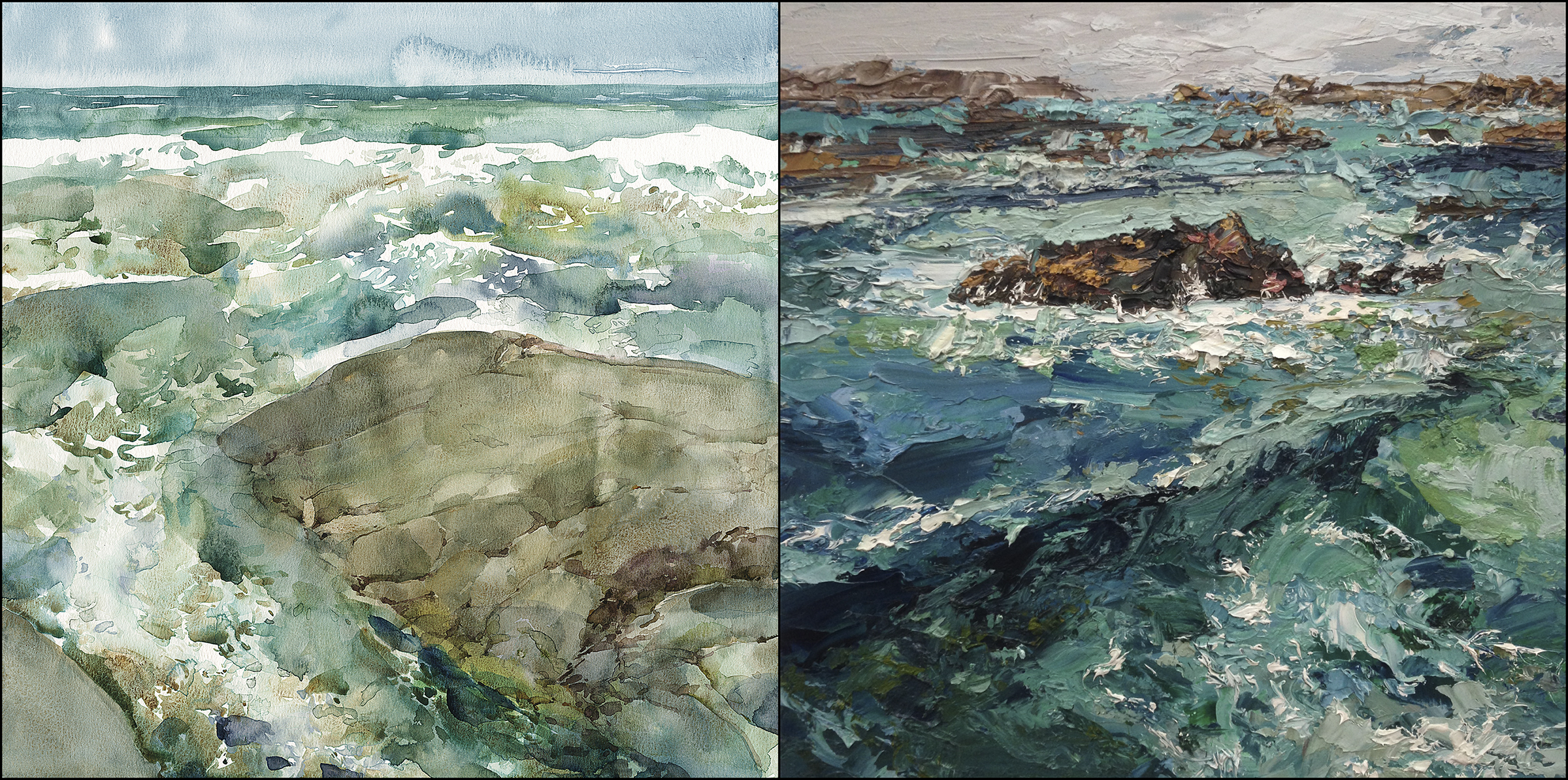
Here’s the paintings side by side for easy comparison.
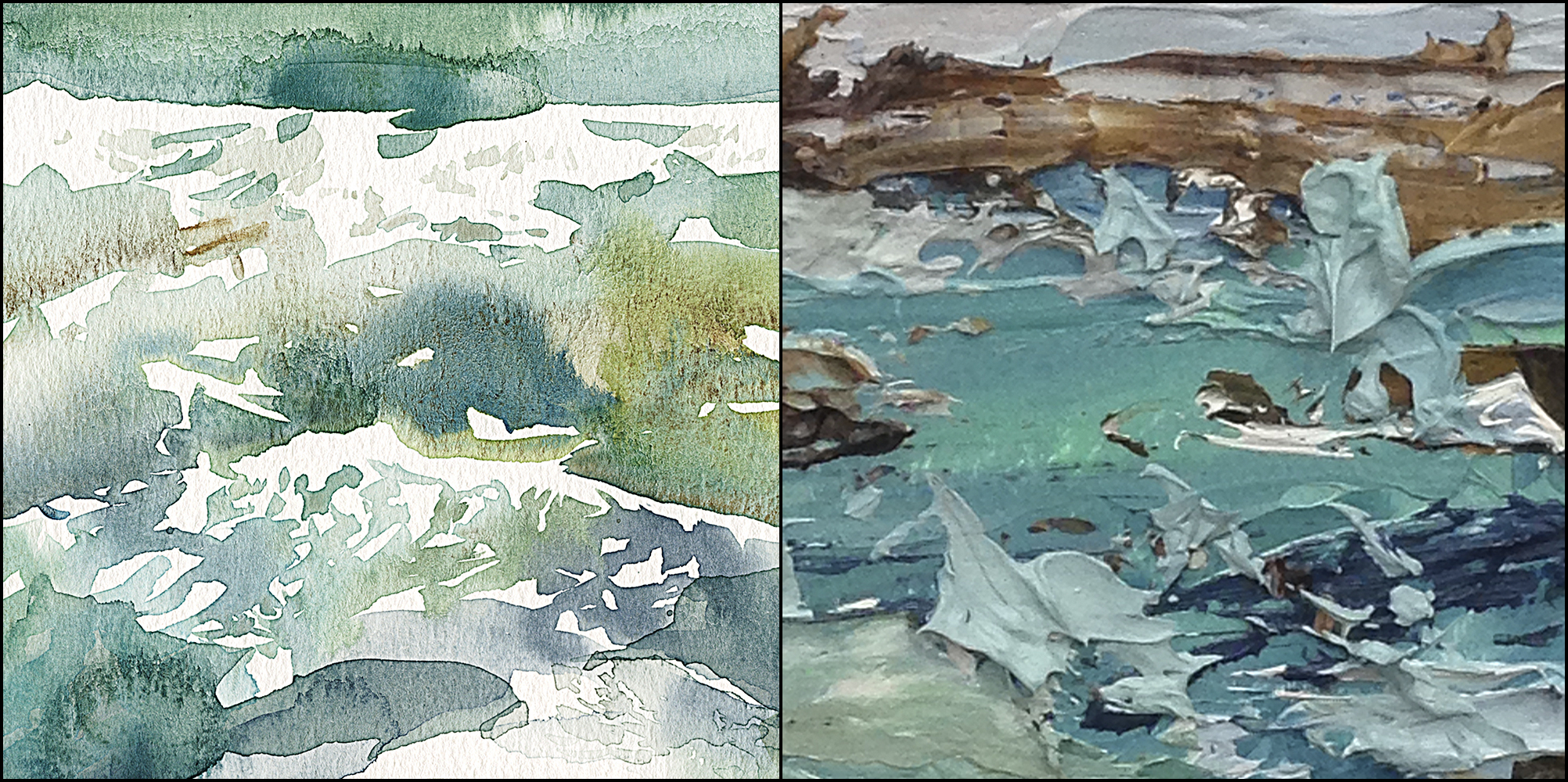
And here’s a close up detail.
Interesting hey?
They are very different in feeling and effect – but, I see the same impatient gestural hand at work. My painting-brain is the same, even if the surfaces are day and night.
In the watercolor, I love what the floating pigment creates. Blooms of lighter weight pigments, versus the sedimentary effect – the settling of tiny grains of sand, dropping out of the water, accumulating in the low spots in the paper. It’s almost a model for the real sea.
In the oil, I’m enjoying the freedom to make flecks of sea spray or jagged bits of rock, without having to play the careful dance of negative painting. The leaving out of highlights – all that thinking ahead like a chess player. With this particular painting, I remember coming back and re-working it a few months later. Something that’s impossible with watercolor.

Yet somehow, a watercolor can be a light and breezy sun-washed thing, that so far, doesn’t happen naturally for me in oils.
I realize there is nothing stopping me from making high-key oil paintings. But, it’s this question of what is the natural strength of each media. I have been striving in my personal work to make watercolor more dramatic. More moody, with greater intensity. Perhaps, that’s going in the wrong direction! Maybe the watercolor should stay here, in this happy place, and leave the stormy seas for the oil paintings.


#30×30 Day 05 : Death Valley, Nocturne
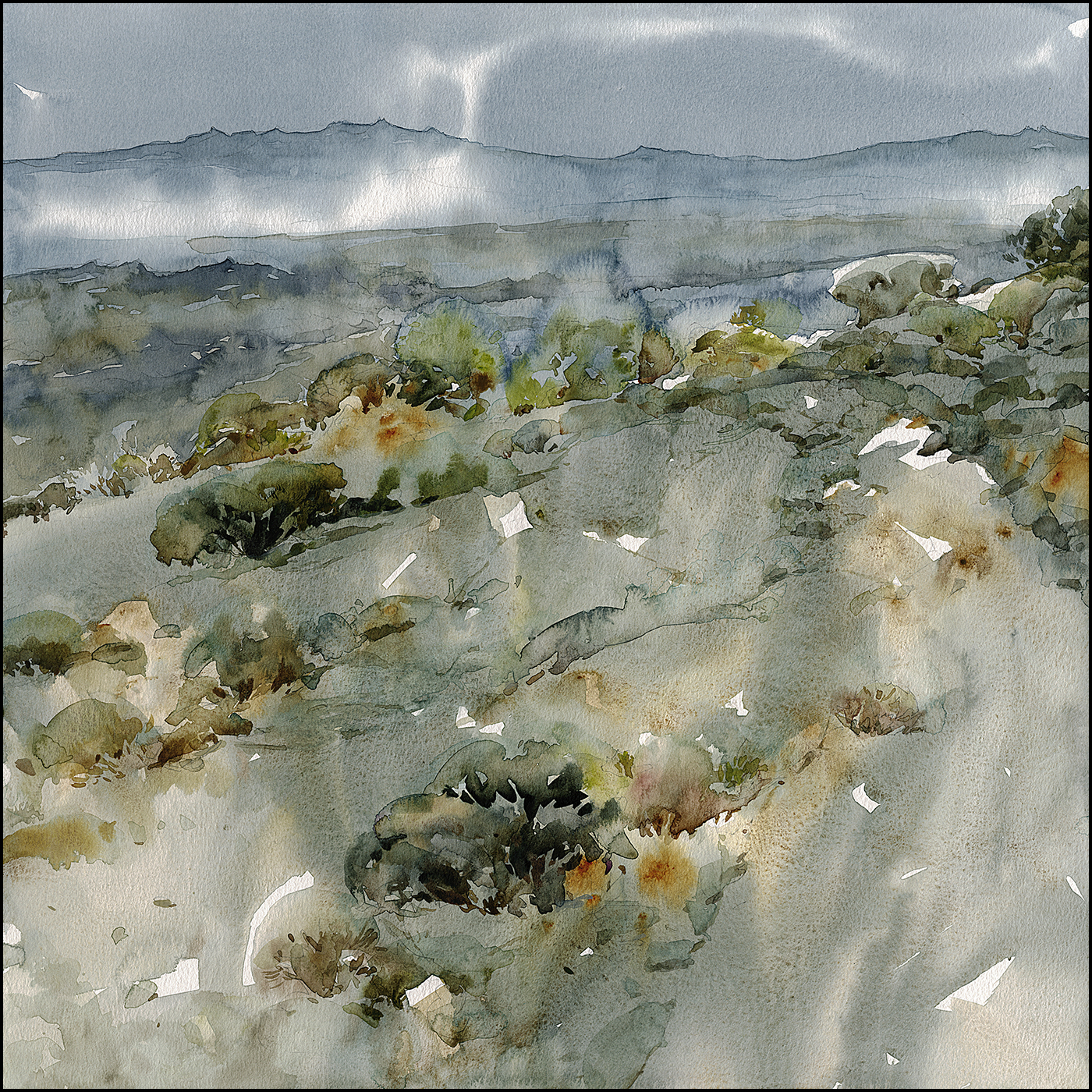
Ok this is something. This is something.
It’s a bit early yet at Day Five – but this might be my favorite of the year. We shall see!
Whenever we are in the area (which, I have no idea when that will be again), we make it a point to go to Death Valley. It’s really quite a fantastic place. This isn’t exactly the best view of the park – but it’s the kind of desert painting that I love. The strange desolation, decorated with dried skeletons of plants.
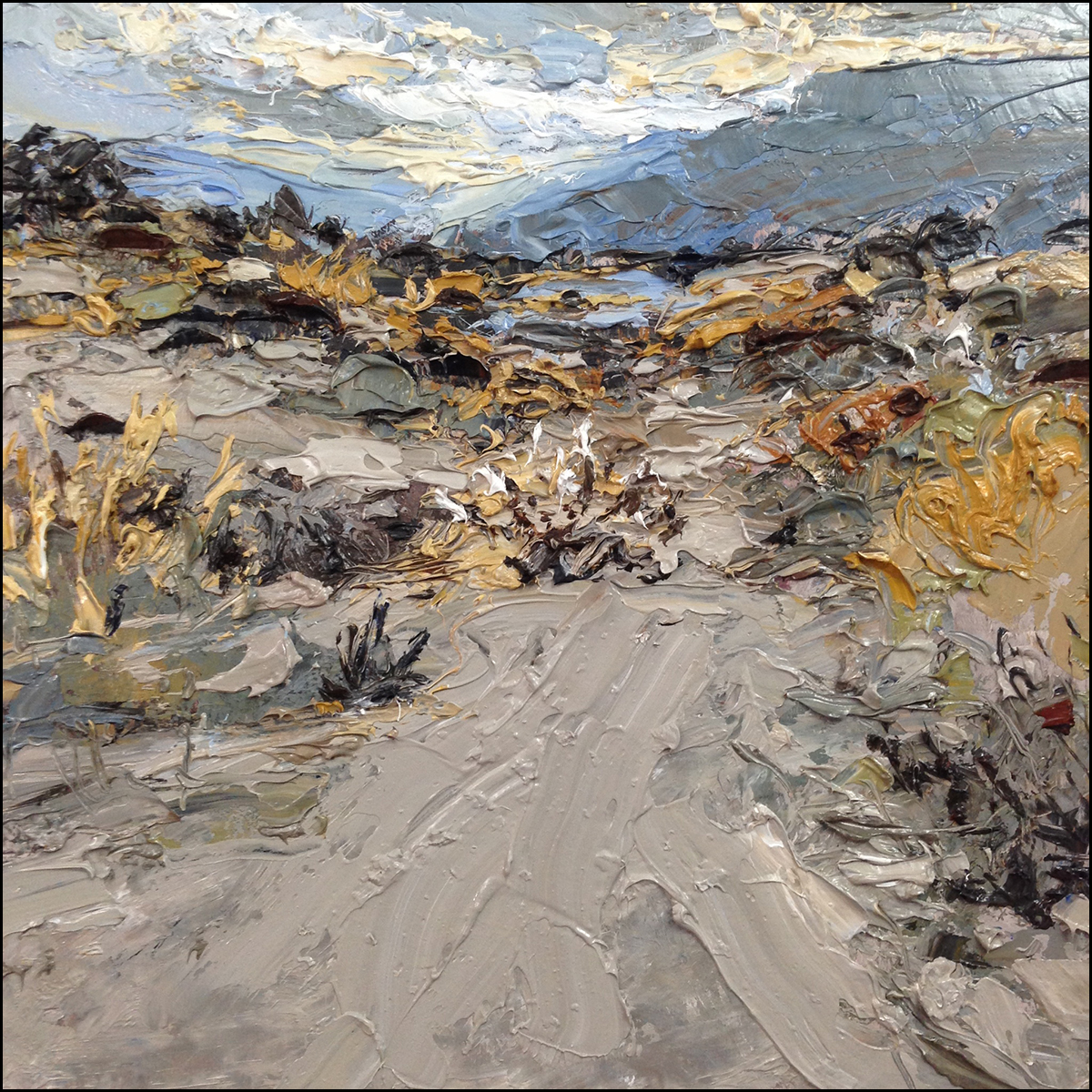
This is the inspirational oil, Pull Over Anywhere and Make Art which was painted from a ditch on the side of the road half way between Laguna Beach and Joshua Tree.
Again – I’m not really trying to duplicate the oil – but to make a watercolor with a similar spirit.

I started this watercolor with a grey blue sky that washed down into a cool sandy color.
This is breaking my own rule – intentionally creating an under-tone! That’s not alla-prima!
But – Always be Breaking Rules is a personal motto. And motto’s trump rules, so it’s ok.
I know the whole thing about the desert is the heat. But if you’ve ever been in Death Valley, it’s freezing at night – and especially when you get up for your wife’s early morning photo expeditions.
This Blue-to-French Grey undertint created a magical ‘desert nocturne’ which I was able to use through the entire painting. There really is something to putting down an under-wash and painting over it (when it’s dry). This is as opposed to the purely Direct Watercolor method of working into the white paper. So – there we go, rule breaking.
This one would more honestly be be wet-on-dry, or Tea Milk Honey as I used to say quite a bit, rather than a pure Direct Watercolor, which would be alla prima.
I think I said something before about how I don’t really care for delicate transparent watercolors. But – every once in a while you come up with something that is quite amazing, and you have to admit – subtle isn’t always ‘weak’.
It’s possible that I say these things because I don’t really know any better.
Transparency – who cares! I like my aggressive drippy water experiments! Go bold or go home!
But then, when you get ahold of some new skills – like mixing more subtle greys, and pre-mixing enough pigment to pour the whole sheet (things I would never do in the past, when I was working in the field with a 3×5″ travel kit) – then you might find yourself changing your mind about things.
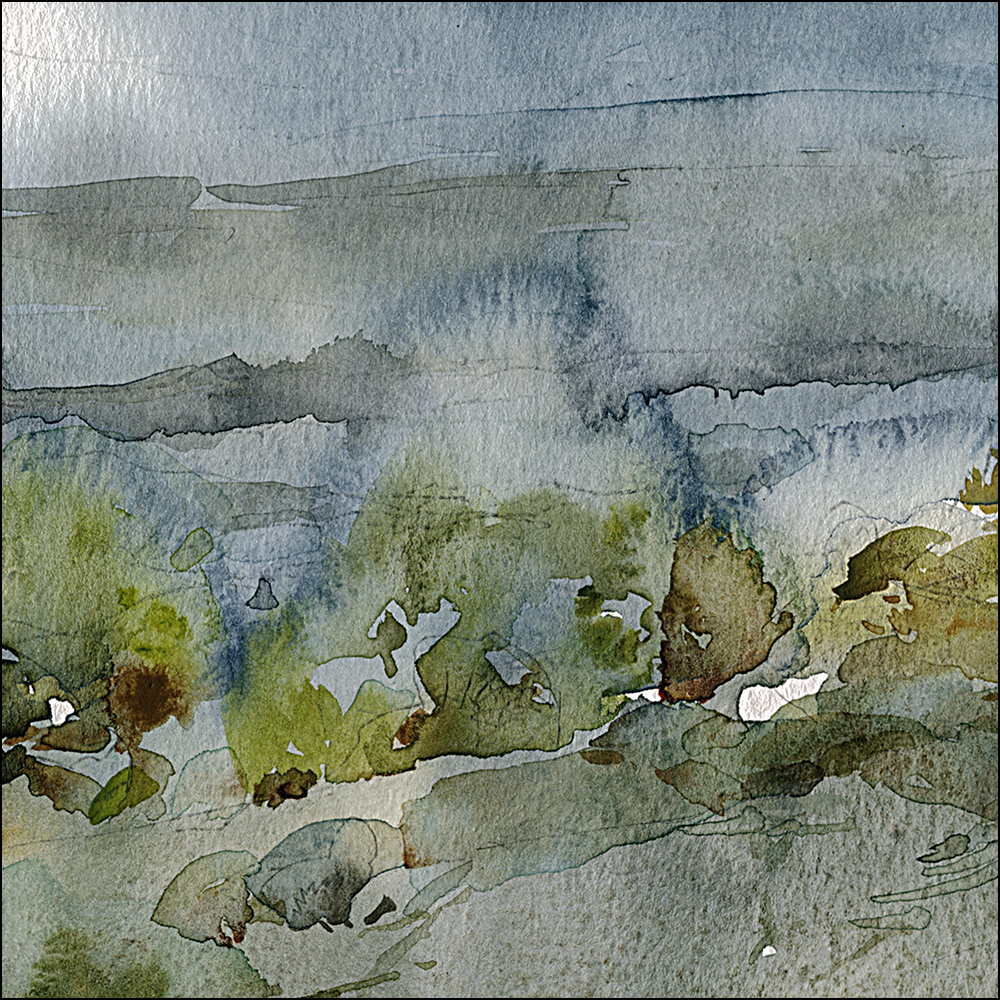
This is the heart of this painting for me. The ghosts of some desiccated bushes. If you’ve ever been out there in the desert, you’ve seen them too.
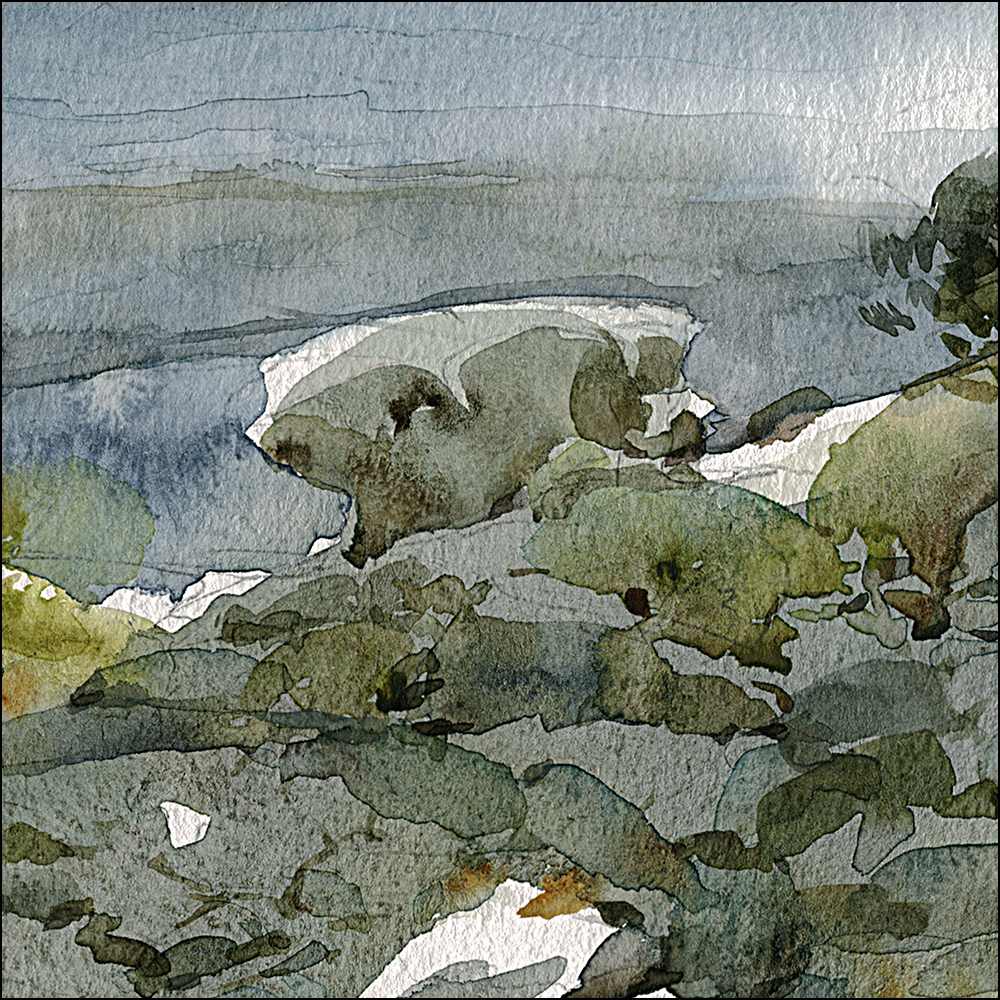
And here is a weird mushroom rock.
So that was Day Five!
Thanks for following this year’s #30x30DirectWatercolor. It’s already going places I did not expect.
~marc
#30×30 Day 04 : Cloud Shadows
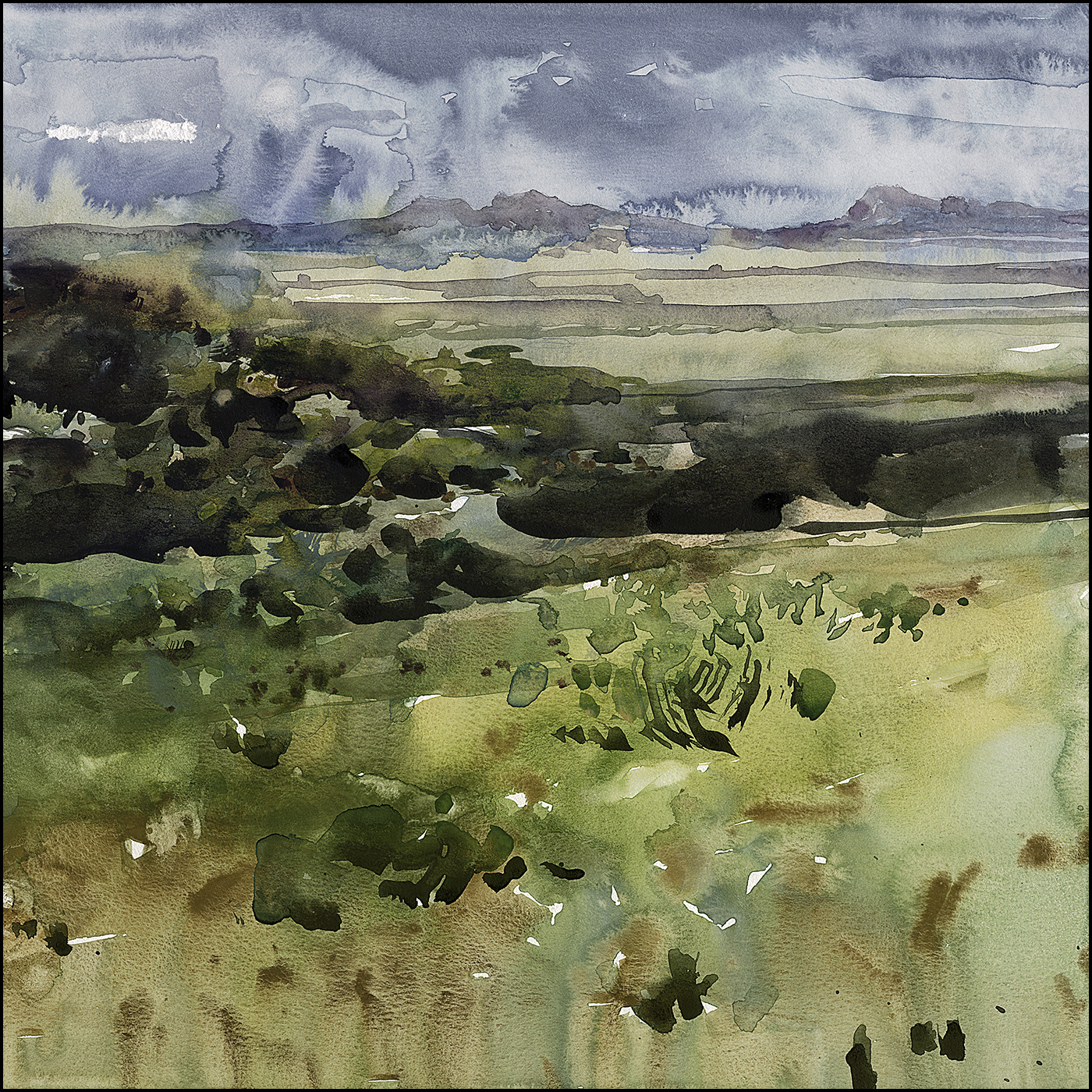
I think, this time, I forgot what it was I liked about the subject.

Here is The Watercolor vs. The Photo vs. The Oil Painting.
In today’s watercolor (on the left) I’ve accidentally emphasized the hill in the foreground. In the oil painting, (far right) I made the correct choice – to melt the hill away, and emphasize the dark passage of cloud shadows in the distance.
That dark ribbon pulls you into towards the horizon.
In the watercolor, the dark hill is a stopping point in the mid-ground, which I don’t like as much.
I should have looked at the title for the oil: Cloud Shadow Runs a Black River. That would’ve been a reminder why I liked this view. We went out more than once to this location. There’s a huge red mesa behind us – a giant castle of stone. It’s an impressive place, worth photographing in different light – and a fun place to hike. But I always preferred turning around and looking over the vastness of this plain.

I do have to say though – nothing beats a sky done in watercolor!
I’m a person who paints intentionally sharp edged paintings in oils. I don’t go out of my way to blend colors. I’m more interested in placing strokes.
A watercolor has a beautiful interior softness that you don’t get in impasto.
There’s no reason I can’t have the best of both worlds – and one day I will! But today, this sky is one comparison that shows watercolor at it’s best.
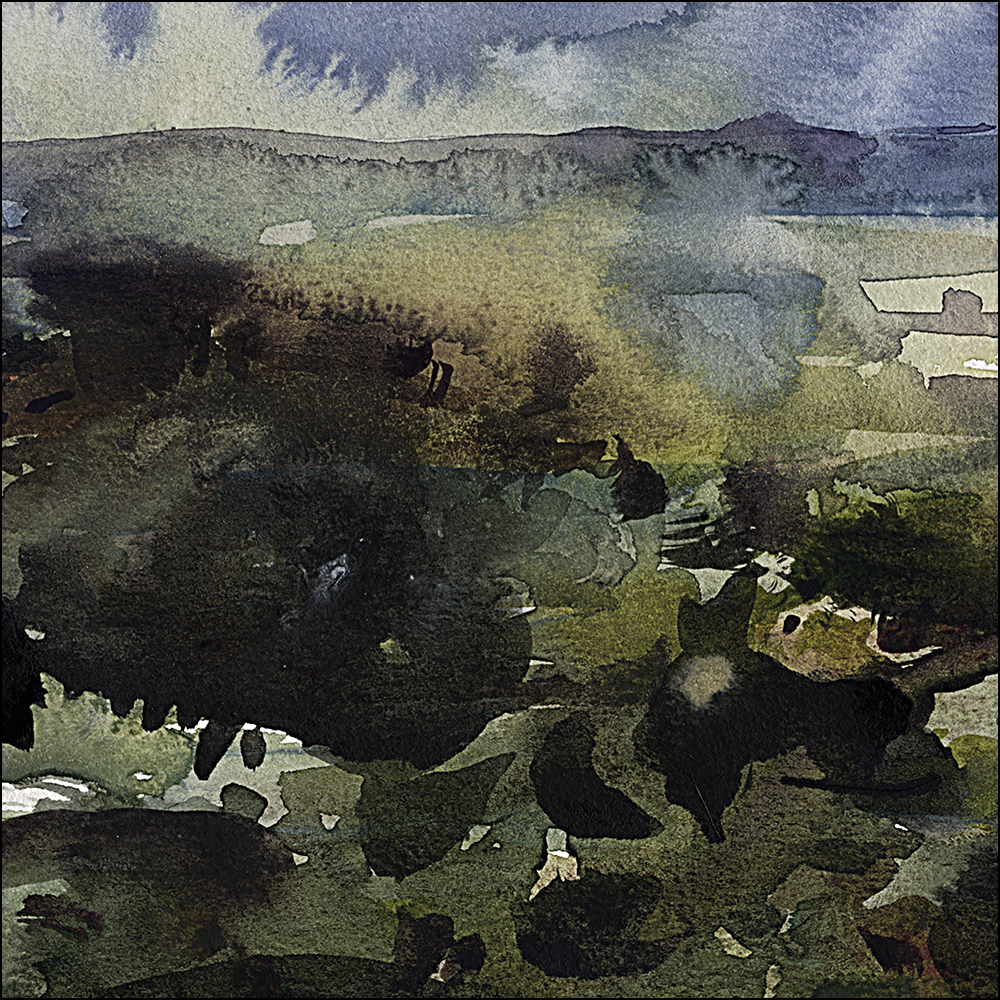
Ok, I’ll show myself out with some close up details of my Day Four. More abstractions found inside the landscape!
~marc



 Citizen Sketcher