Using Color Notation for Speed Sketching, Jasper Parkway
So the funeral is over and done with. Plus most of the paperwork required to make an orderly transition. Not much fun to be handling these things right now. Those that know us, can guess that my wife Laurel did it all.
These recent days, I find myself keenly aware of our finite life span. I felt every ticking second being wasted in meetings with funeral directors. It’s been a reminder to me to get my own affairs in order. I’m leaving a directive telling those vultures exactly what they can do with their satin lined boxes.
I’m sure everyone wants to say what they’re thinking to those guys. I think I’ll pay in advance, so I can say it in person. I don’t get how anyone can do that job in good conscience. There needs to be a website for ugly brass urns so nobody has to be the sales person.
But. Enough about that.
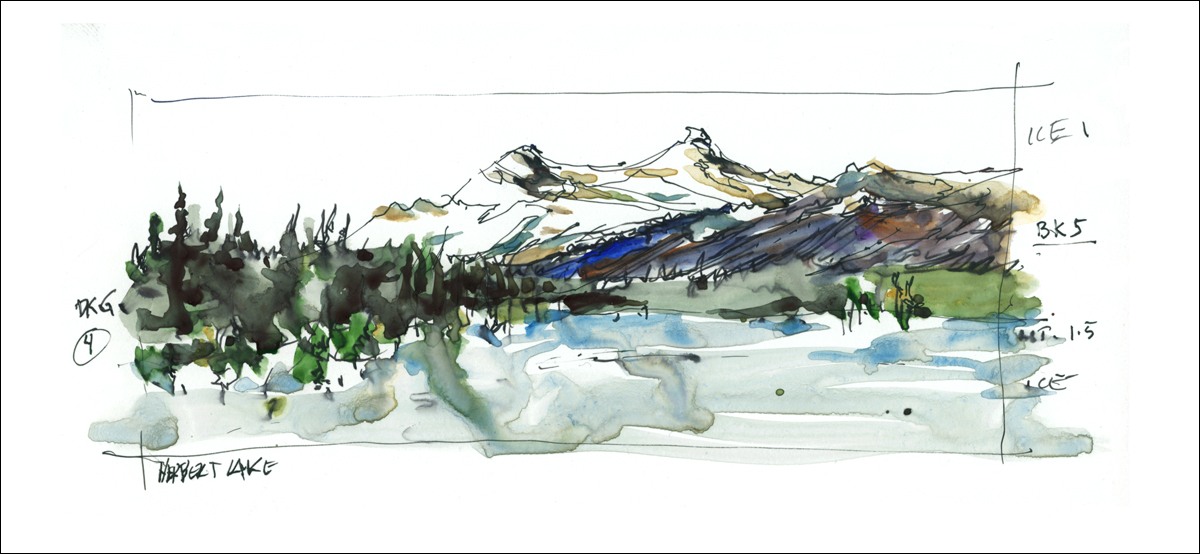
We had a day before the flight home. So we took a drive up north, past Lake Louise and towards the Saskatchewan River Crossing. The same route we took this summer in fact – but this time, suitably shrouded in ice and fog.
Seemed like it fit the occasion well enough.
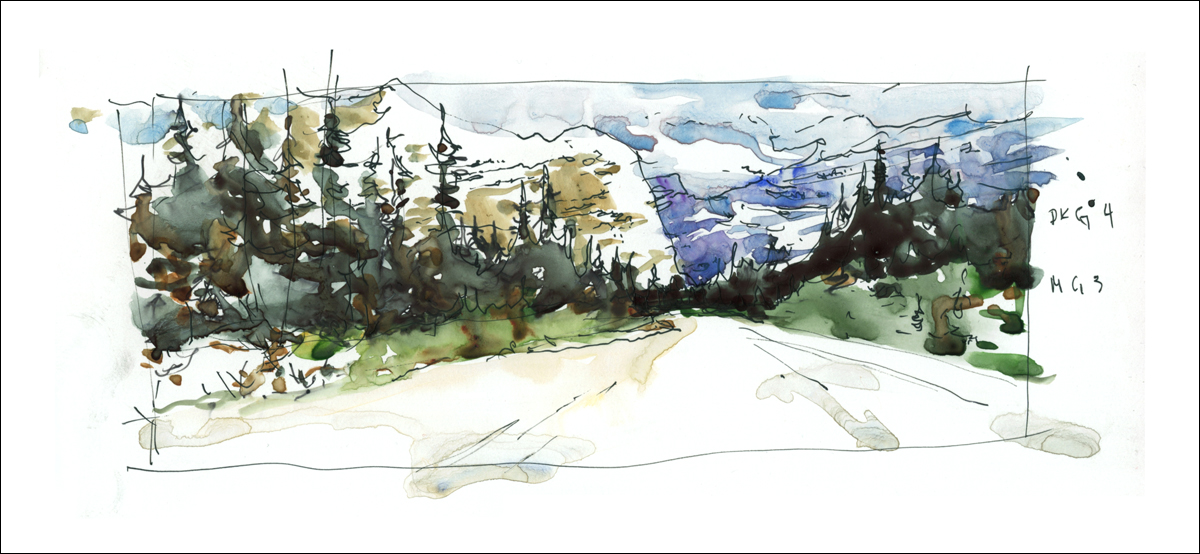
We chose to ignore the fact our rental didn’t come with snow tires. It mostly worked out. Got stuck briefly. Had to get a snow plow driver to loan us a shovel and some gravel. You should probably respect the posted warnings about tires. Don’t do what we did. There’s no phone signal up here.
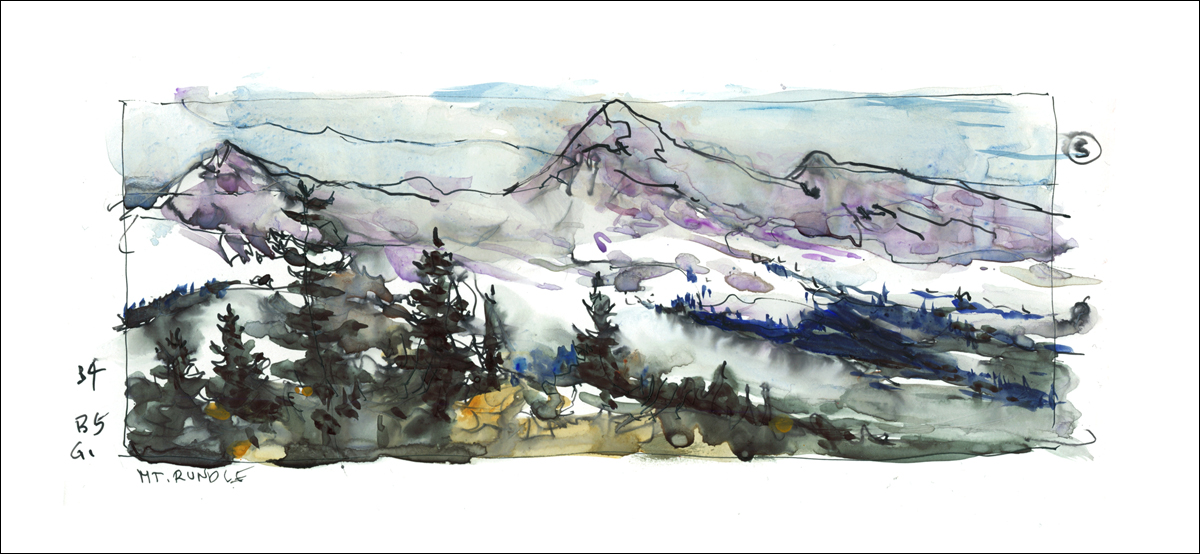
There were people that we probably should have visited in town, but I felt we should take a day to recharge, see some nature, make some art. I expect nobody will mind all that much. Who wants to sit around talking about funerals.
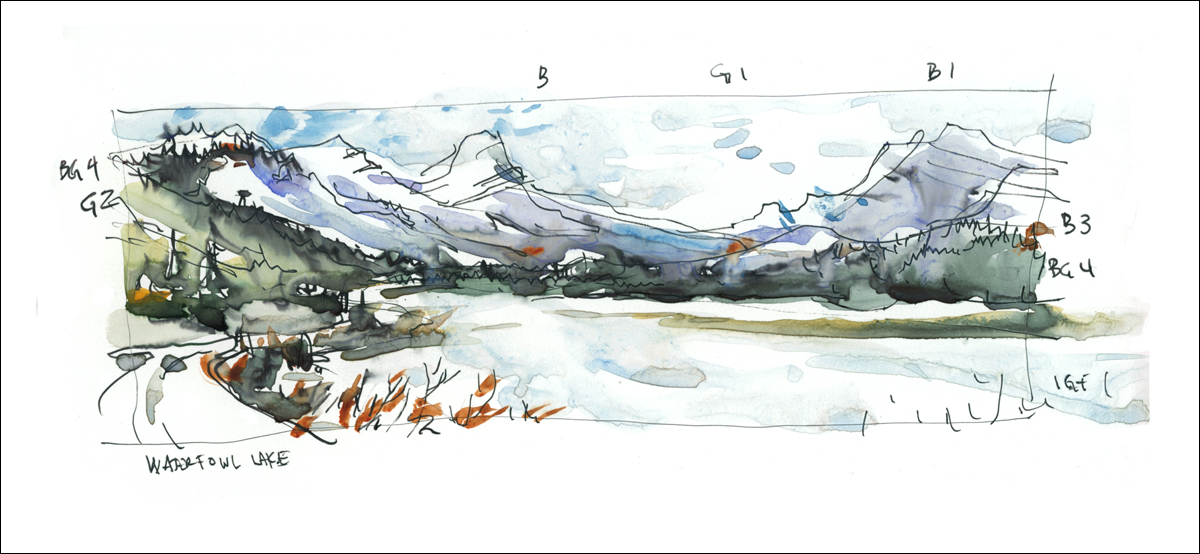
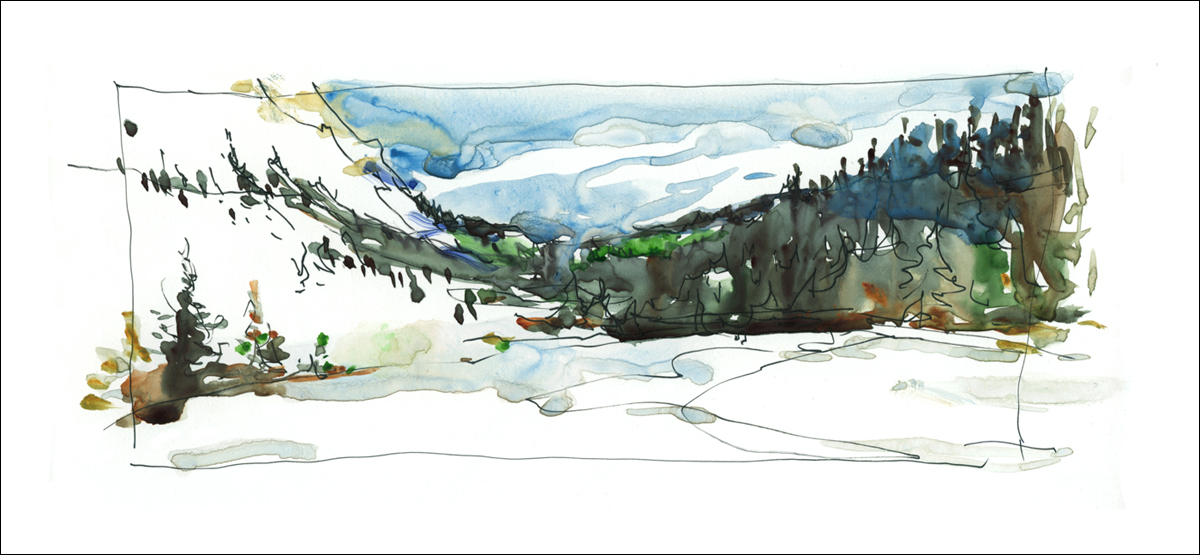
These are quick sketches, captured from the car while Laurel was walking up and down the roadside taking photos. Perhaps 5-10 minutes at a go. They’re done in a mix of water-soluble and water-proof line – two fountain pens, alternating – planning ahead which lines I wanted to stay, which I wanted to melt. Color is the usual W&N pan watercolors, sketched in rapidly – a page of three sketches painted over in another 10 minutes, probably less.
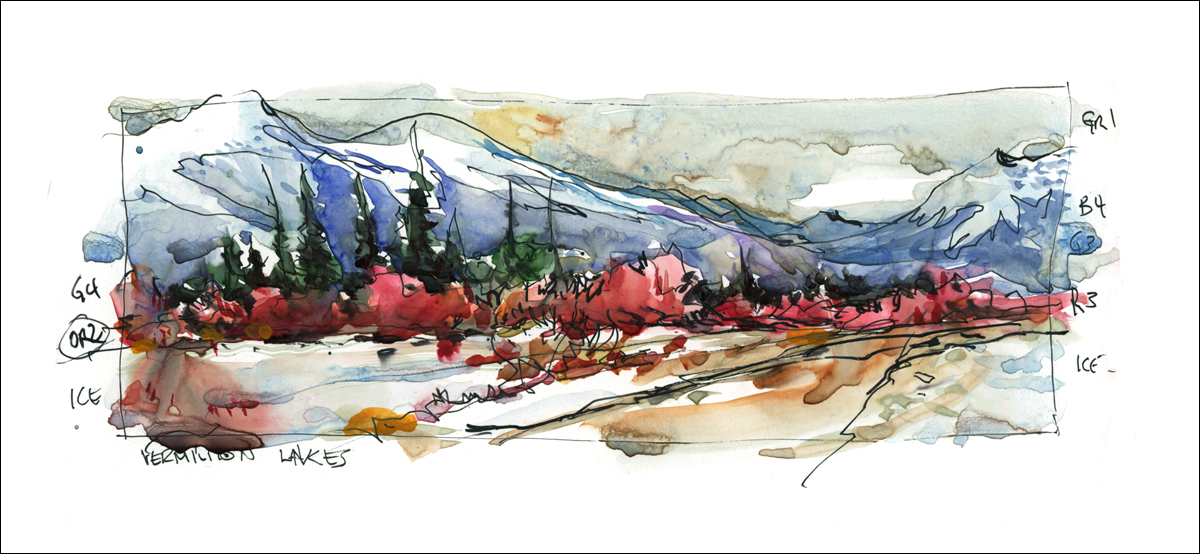
This last one is Vermilion Lakes near the town of Banff. The lakes are surround by marshy areas full of twiggy willow bushes with clouds of bright red branches. Quite a remarkable sight.
I had a pad of TerraSkin paper lying about, grabbed that when we flew out the door. Had just been given to me to test out recently. A tradesmen we had around the house turns out to be married to the Canadian distributor. So, I can say – it works exactly as advertised. The plastic-y paper is mostly waterproof – not rippling in the slightest when wet. Watercolor pools on the surface, but eventually dries down, and can be painted over without any lifting. As opposed to YUPO – which seems similar at first, but is really quite different in practice. If you’re going out in the field, on a sketching trip where you want to pack light – a pad of TerraSkin will definitely allow you to paint without taping your paper down. On the other hand, you will have to wait for it to dry before you can close the book.
Did you notice the margin notes – the small letters and numbers? Those are color and value notes (on a 5 value scale). I did all the sketches as time allowed – working quickly, being ready to move when Laurel was done shooting. I ended up painting in the car during the long drive, but in the past I’ve come back for color in the evenings. If I don’t do it the same day, I rarely get back to it.
So the notes, GR1 for ‘grey. value 1’ or G4 – for ‘green, value 4’ (pine trees), are to help me remember the colors. They’re a bit vague. You should probably note actual pigments you’d use. But they only needed to assist my memory for a few hours at most. I knew by context if I meant (G)rey or (G)reen. Also, I didn’t stick entirely to the plan. Many greys became blues or purples. Didn’t want to be depressing.
So in any case – there’s a trick for drawing fast and coloring later. Try it out, see if it helps? It’s an option when you don’t want to stop to take a reference photo. I’m drawing too fast in this case to be switching between pens and camera. Besides, the colors I see are not always visible to a cheap camera. Sometimes they’re not even there at all.
Modern Medicine
Here’s dad in the hospital. Heart attack while out walking. Unconscious for unknown time, phoned in by a passing Samaritan.
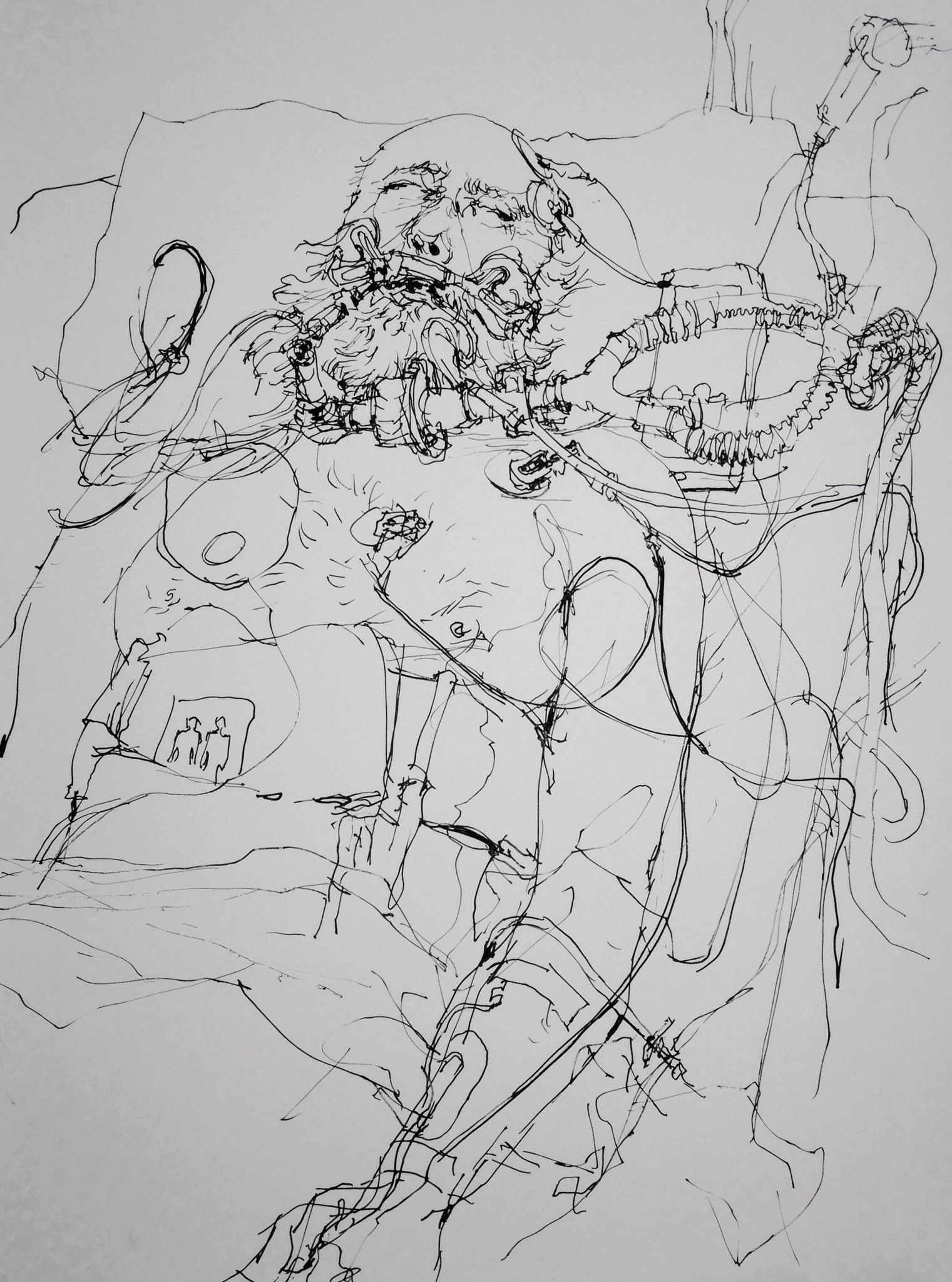
Machines to push the air, control body temperature. Drugs to tweak heart rate, blood flow, control seizures – really another kind of small machines – alchemical technology.
Only half the job though. The big question is the mind. Is there anyone in there? We’ll see about that in a couple days. Or not.
Epilogue : In the end, while the care in the hospital was excellent, Allen Douglas Holmes would never regain consciousness. Damage to the brain following his heart attack was extensive. He passed on Dec 9/14 at age 71.
Anyone who knew him would agree he lived his life on his own terms. That is the best lesson he leaves the world.
Thanks everyone, for the support and well wishes.
Workshop Announcement! : Exploring Cortona with a Sketchbook, June 2015

I’m excited to announce a one week sketching workshop in Cortona, Italy, to take place this upcoming June 8-15, 2015.
This will be my first time sketching in Italy, so we’re working in partnership with the art-tour operator Toscana Americana. We’ll be based in Cortona, with day trips to Siena, Lake Trasimeno and San Feliciano (day transportation included). Our hosts have arranged wine tastings and dinners each evening, and there are options for transport to and from the airport in Florence to the home base in Cortona.
Read all about it on the workshop page HERE:

Old Newfoundland Sketchbook : Redux
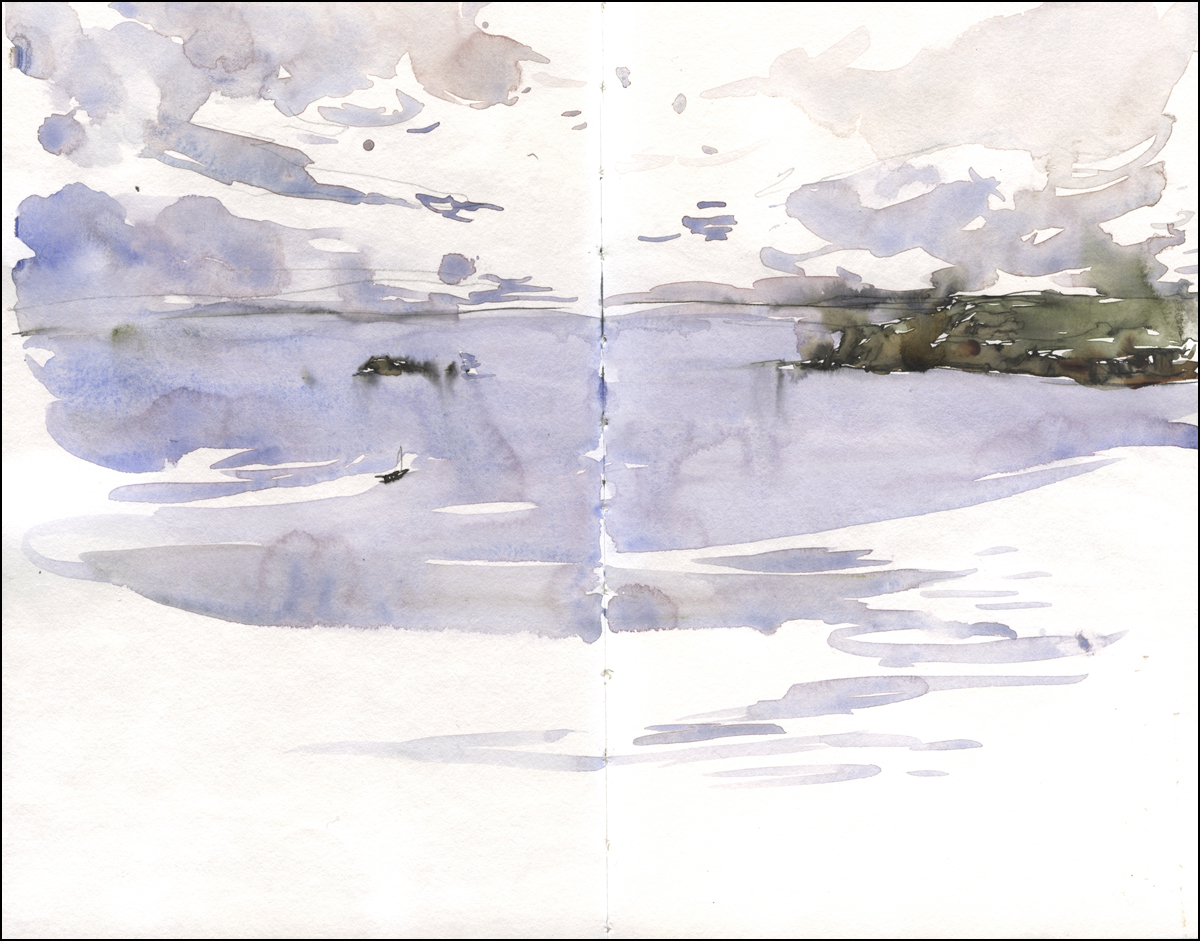
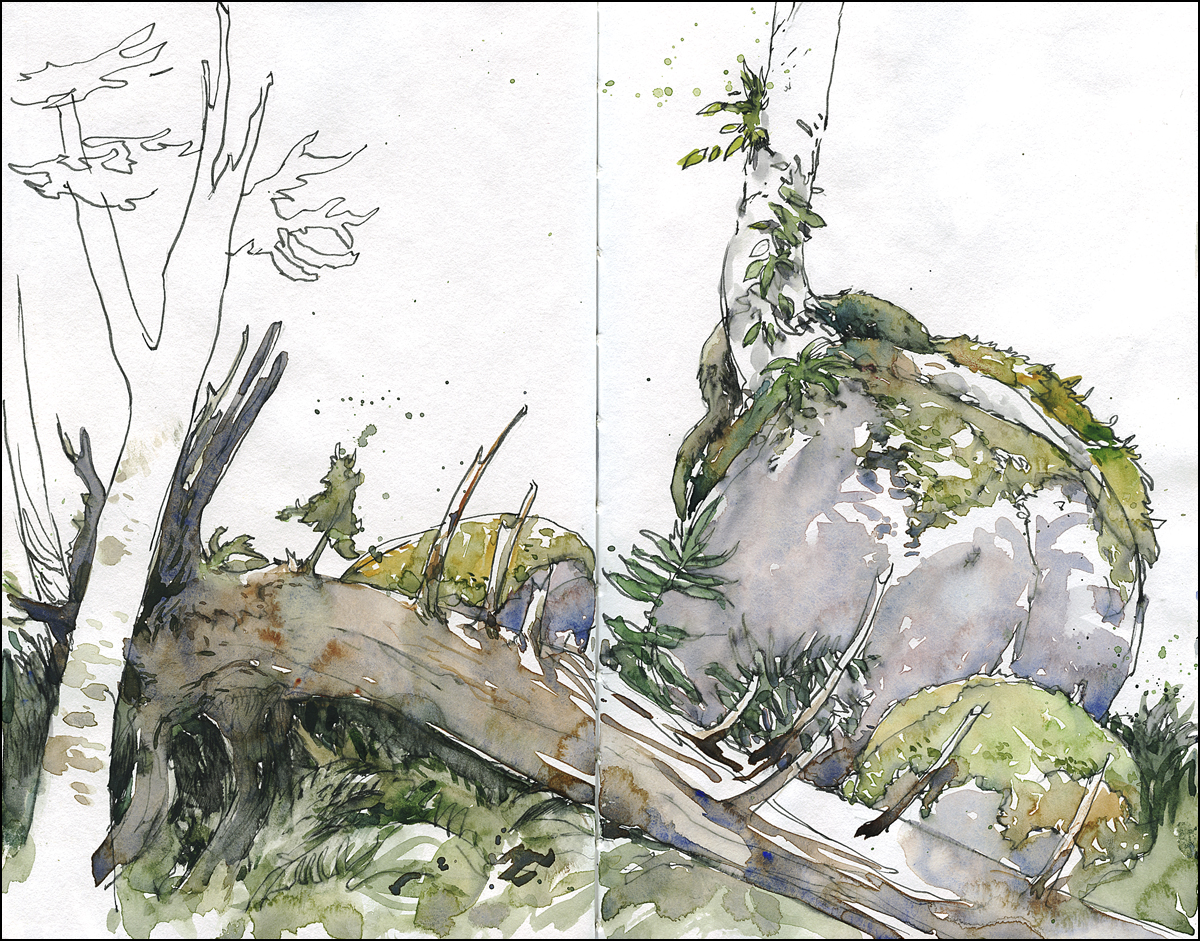
A few years back we did a road trip across Newfoundland. I was looking through my old sketchbooks, digging up reference images for an upcoming project, and I realized I’ve never actually posted scans from the trip.
I did a video flip through back in the day – which is fun and all, but I’m no videographer. It’s on the dark and grainy side. So here’s a better look at my first successful water-soluble sketches.
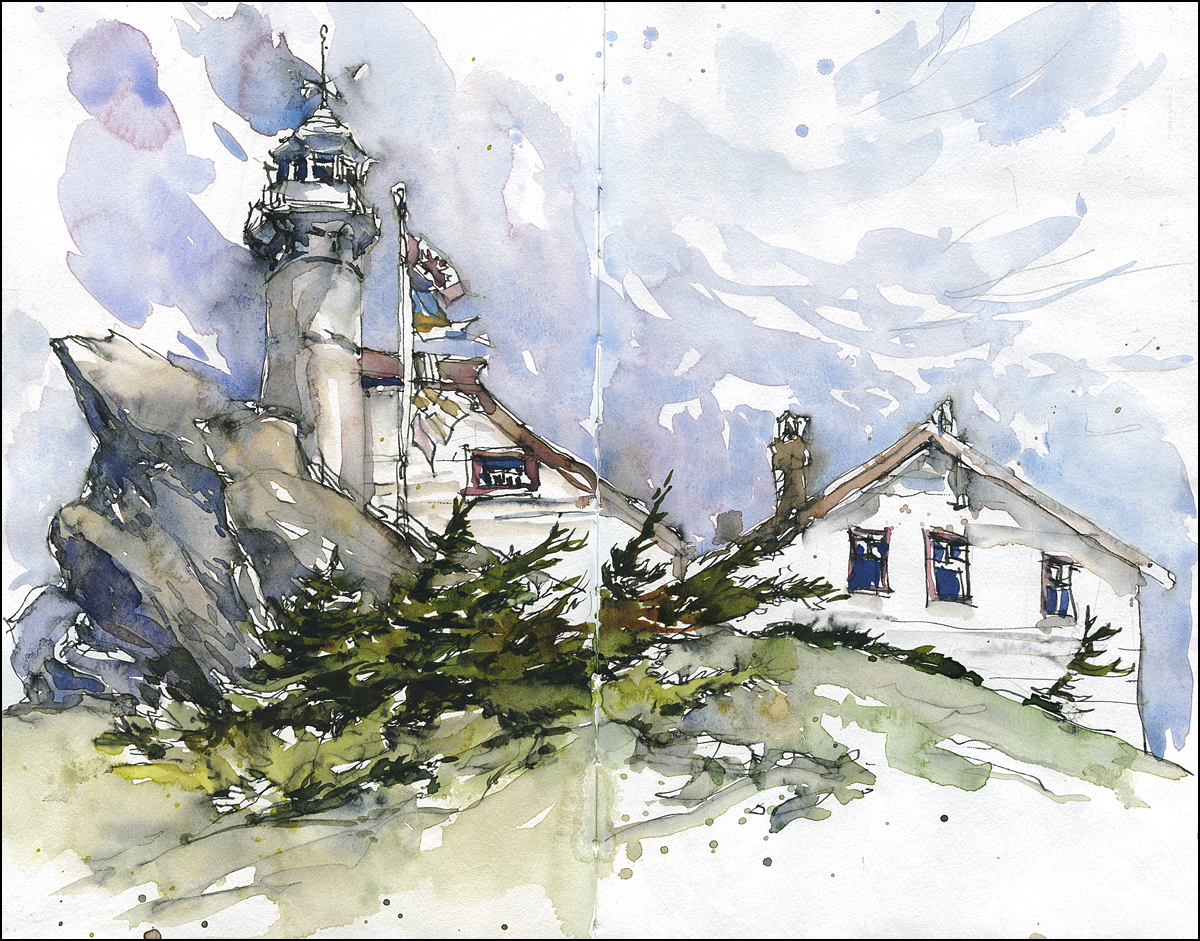
These were done with a Lamy Joy fountain pen, the name brand ink cartridges and a 6×9″ Stillman and Birn Alpha sketchbook. Tinted with Windsor and Newton Watercolors.



Tilting at Windmills : Painting Quebec History

This one is from back before the book release started to envelop all my available time. It’s from my summer watercolor sprint. The work I did just before heading to Brazil.
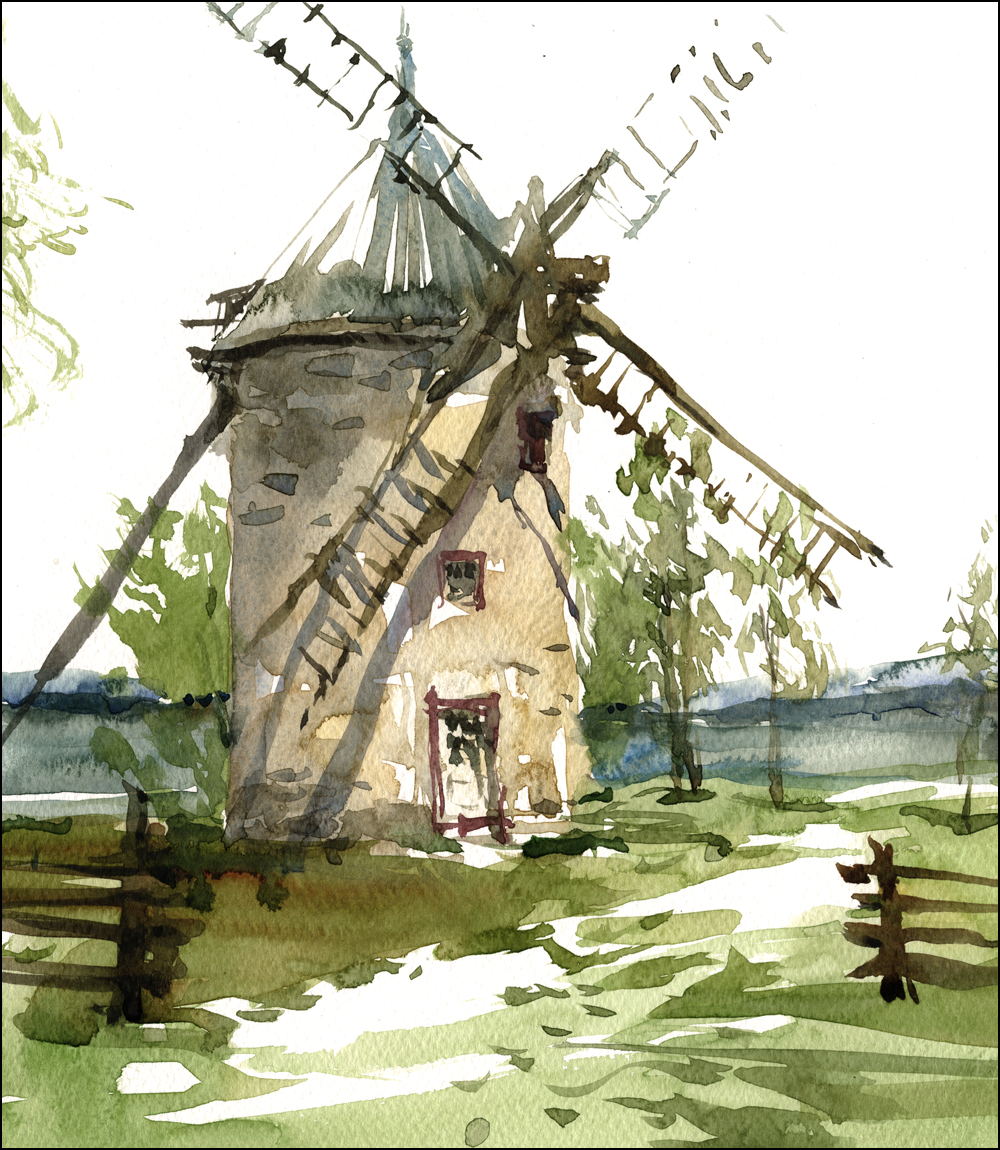
This quaint windmill is on L’Île-Perrot in the Pointe du Moulin – a tiny park on the south east tip of the island. In the summers they have a bit of historic recreation going on here, but I missed the costumed docents for the year. I did however, meet a genuine Voyageur.
While I was painting, a fellow beached his canoe. As I sketched, he proceeded to unload about 500 pounds of gear, and carry it, then his canoe, up the bank to the parking area. It was worth striking up a conversation to find out what was up. He told me he was just back from three months canoeing the great lakes – a few weeks of that being lost in terrible weather – trying to follow routes established by his grandfather. Not for any reason, other than to be closer to his heritage as a Quebecois. He was quite the physical specimen. Looked completely the part of the rugged outdoors-man. I didn’t doubt any part of his story, and was impressed to have met him.
That chance meeting is exactly why I love painting out in the world. You can never say what’s going to happen on a given day.

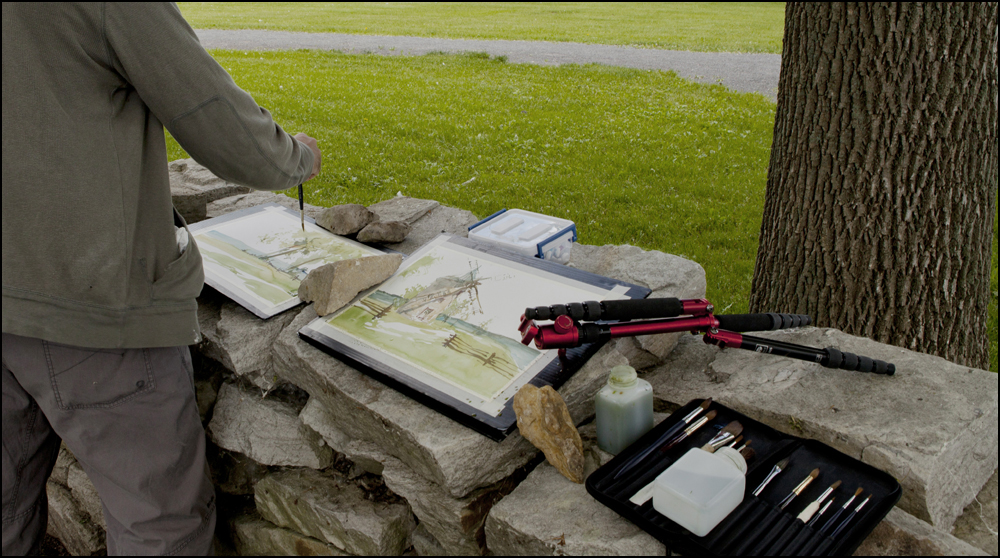
This outing, I’d forgotten one key part to my tripod. (The threaded bit where the drawing table attaches). Fortunately I could use this stone wall as a table. I did have to pile rocks on the drawing boards to keep them from blowing away. I think the unsteady work situation added some excitement to the brush work. That and all the spiders coming out of those rocks. I was careful not to jump around like a little girl while Mr. Voyageur was anywhere near by.
Webinar about The Urban Sketcher
I’ve just done an online lecture for my publishers video network (artistnetwork.tv). They’ve posted a recording of the webinar. [HERE] If you’re curious what’s in my book The Urban Sketcher, you can listen to me talk (while you see my powerpoint slides). I do a walk though of all the concepts in the book. It is, I will fully admit, a sales pitch – but I’ve tried to be entertaining.

I should also mention – they have a discount code, which is active for the next 28 days), use HOLMES10 at checkout! (Only on North Light Store, here).
How to shoot a Sketcher : Photographers at a sketchcrawl
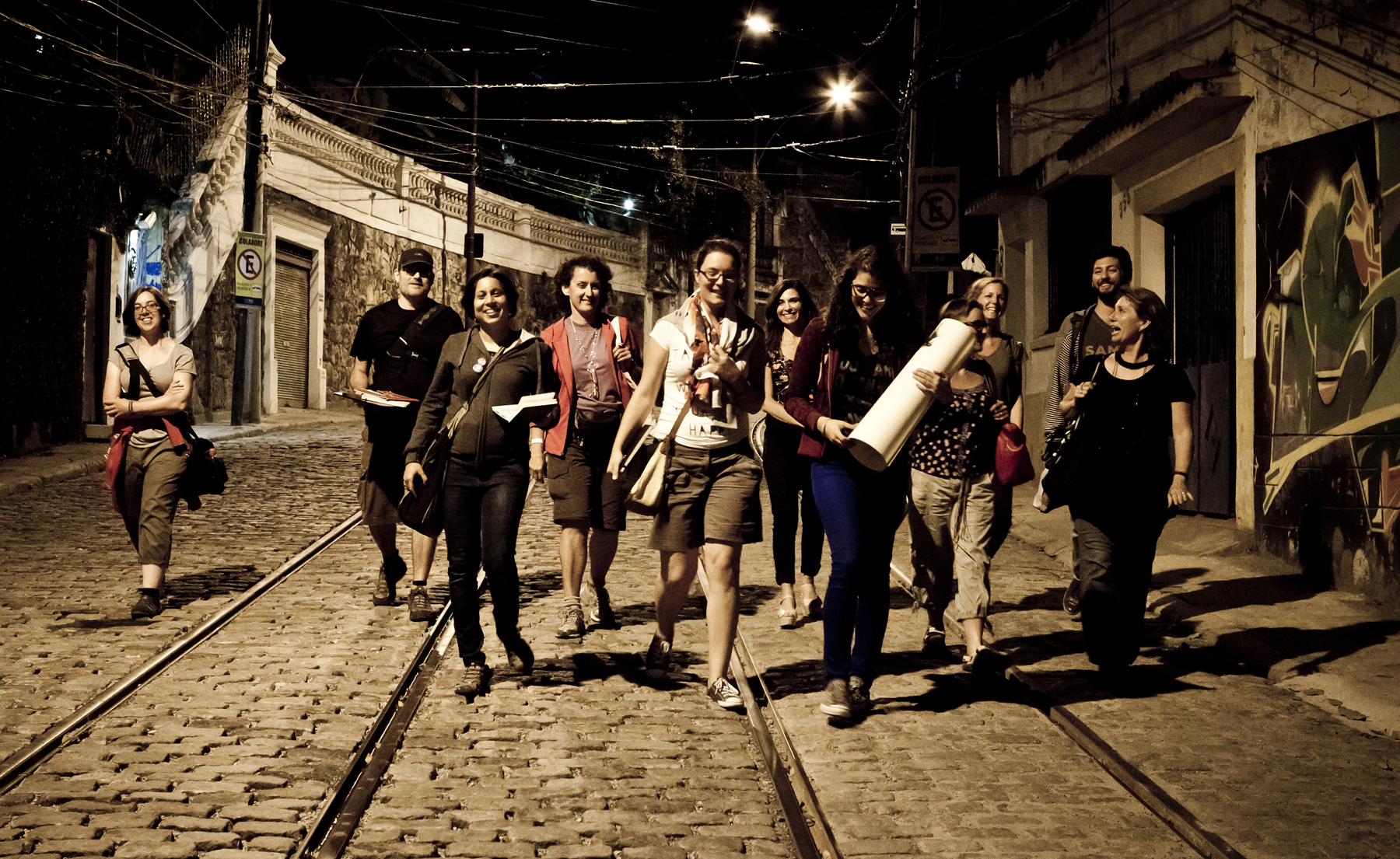
I have the great fortune of being married to a photographer. It’s really the best thing for an Urban Sketcher. To have a partner who is always available to photo your events. I expect I’m not the only one who has a friend that doesn’t sketch, yet would still enjoy coming out to a sketchcrawl.
Here’s a set of photos from Laurel Holmes’ coverage of Simo Capecci’s workshop in Paraty, Brazil. We can use these to show some tips on shooting sketchers, and sketching events. These kind of shots aren’t always high art – but they’re the kind of reportage sketchers love to see after the fact. The documentary footage of how the drawings were made.
You can read about Simo’s class on Reportage, in her own words over here.

The Establishing Shot: Set the scene – show the sketchers arriving on location. Give people a sense of the adventure, and the time and place.

Stalk the Instructor: Naturally, it’s important to get some footage of everyone, but try to be focused on the instructor (at least during the intro lecture). It gives you shots that emphasize the key concepts being taught, and it’s nice PR for your instructor, who is often a volunteer at a USK event.

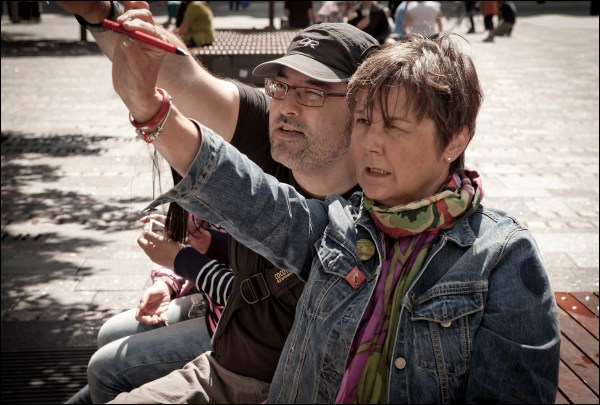
Sketcher’s Eye View: Looking over the shoulder, to see what the sketcher is seeing. This works especially well when paired with the sketch later. In some cases you can even get the drawing in the shot as well as the subject.


View of the Sketcher: The reverse angle is great too. A portrait of the sketcher at work, with some implication of what they’re interested in. Hard to get when the subject is far away, easier in this example. This can be done with two shots pasted side/side as well.

Teaching Moment: Get the instructor and students in some one-on-one interaction. It’s a good memory for the student.


The Crit: Always shoot the Critique – the time when people are sharing and learning from each other. Usually these are good documents of who was there on the spot, and how much work was done.

The Sketcher in Portrait: Ideally, you’ll be able to get one of everyone – sketchers always look so studious! Try to wait for good posture, and not catch us squinting, please and thanks :)
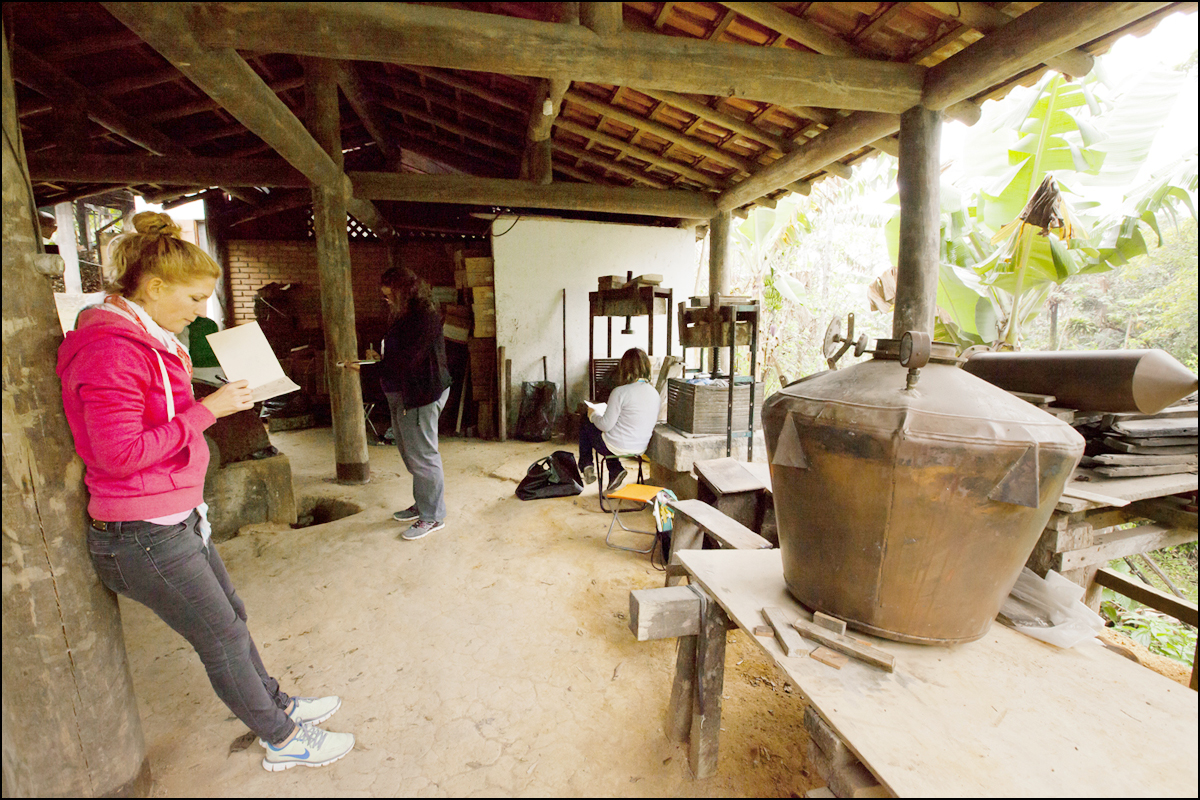
The Wide Shot: If you can get a few people in, with the context of what we’re sketching, it helps to underscore that Urban Sketching is a team sport.
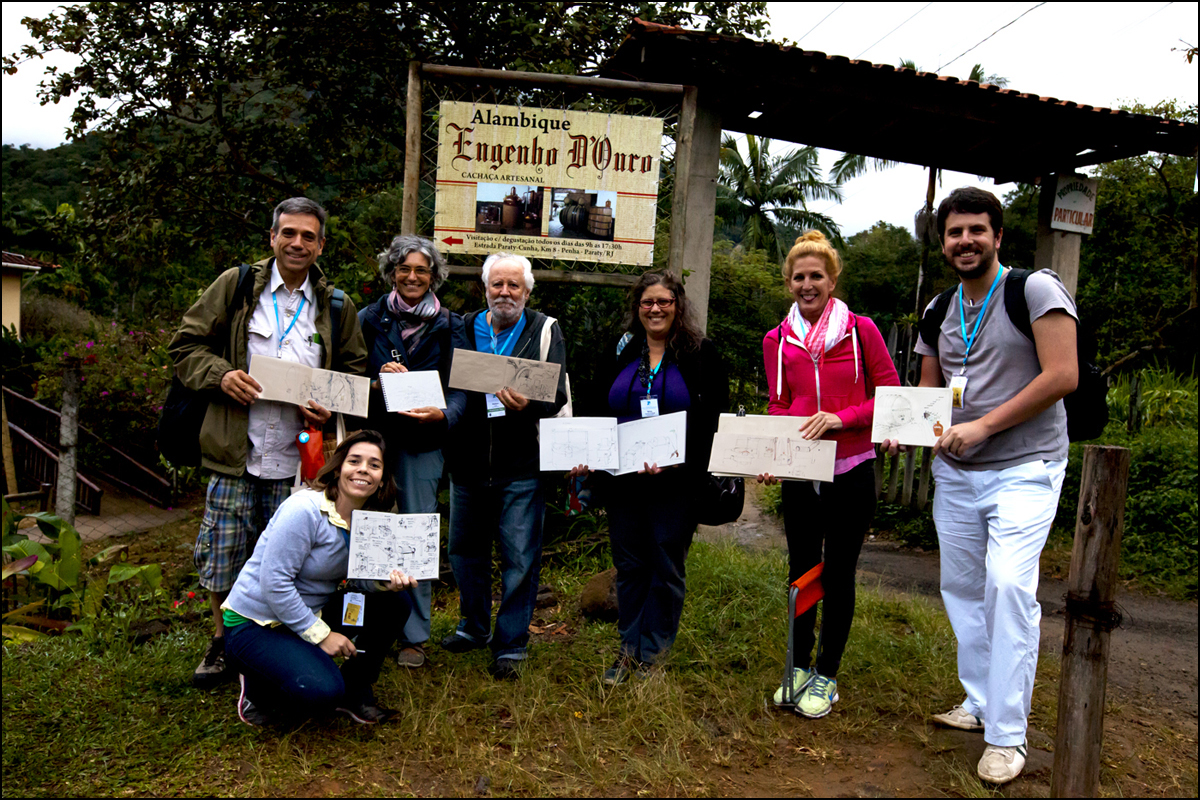
The Group Shot: This is the least ‘artful’ kind of shot – but come on, you need one of these. Years later, you want to know who was there.
Then fill it in with some ambiance – shots that include sketchers, and the subject matter, with some emphasis on people having fun.
That’s about it. Thanks for reading, and I hope more of us can bring photographer friends along to their sketchcrawls!


Art Now : Free Lecture Series
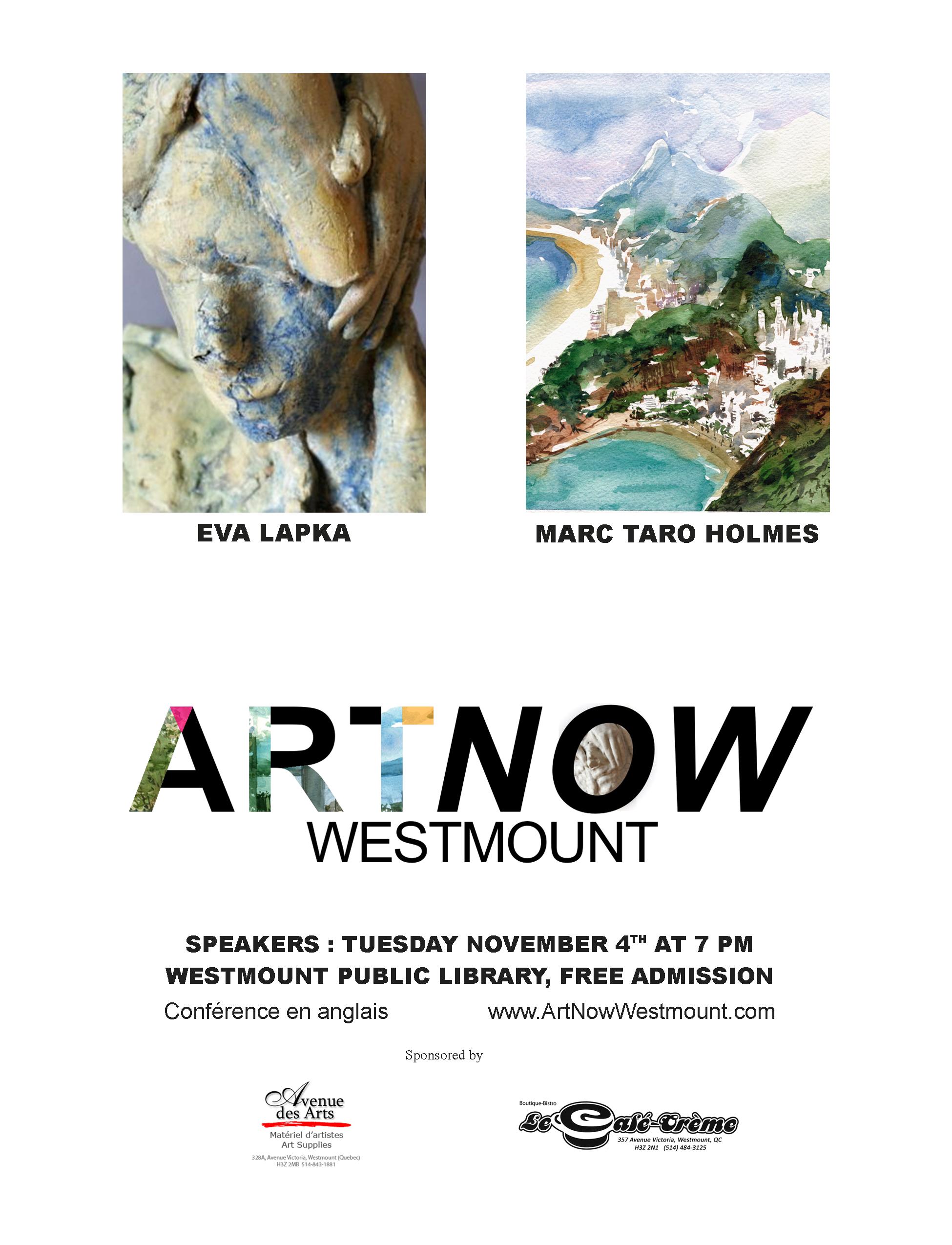
I’ve just come back from speaking about Urban Sketching at Art Now. Maybe a few of you were there?
I’m bringing it up, because I hadn’t heard of it before – probably you already know, but I’m the new guy in town.
Every First Tuesday, at 7PM at the Westmount Library here in Montreal, they have two artists give a slideshow talk about their work. There’s a gallery next door that might have a show to take in. We saw some wonderful oil paintings from Catherine Young Bates. Plus you can spend a few moments in the neat little conservatory/greenhouse attached to the library.
The event is sponsored by Avenue des Arts, my favorite art supply shop in Montreal. They’ll have the latest info on upcoming speakers.
There is no Cure for Grandmother : Sketching on Location for Science Quebec Magazine
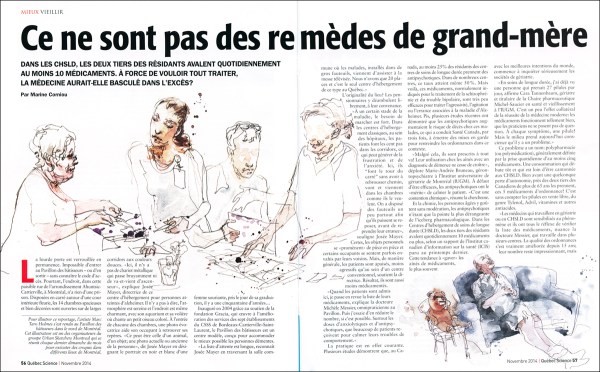
I’ve recently been drawing on location at a residential home for people with Alzheimer’s disease. I was there on behalf of Science Quebec Magazine, gathering drawings for their article There is no Cure for Grandmother. You can order the issue in e-format [here]. (In French).

I spent a day with the residents, sitting with them and seeing the daily routine. Most of the day are the normal things; having meals and taking medications. Getting a blood pressure checkup. Therapists visit at various times of the day, doing brain-training exercises that range from picture puzzles, to helping residents garden, or even visiting with pets.

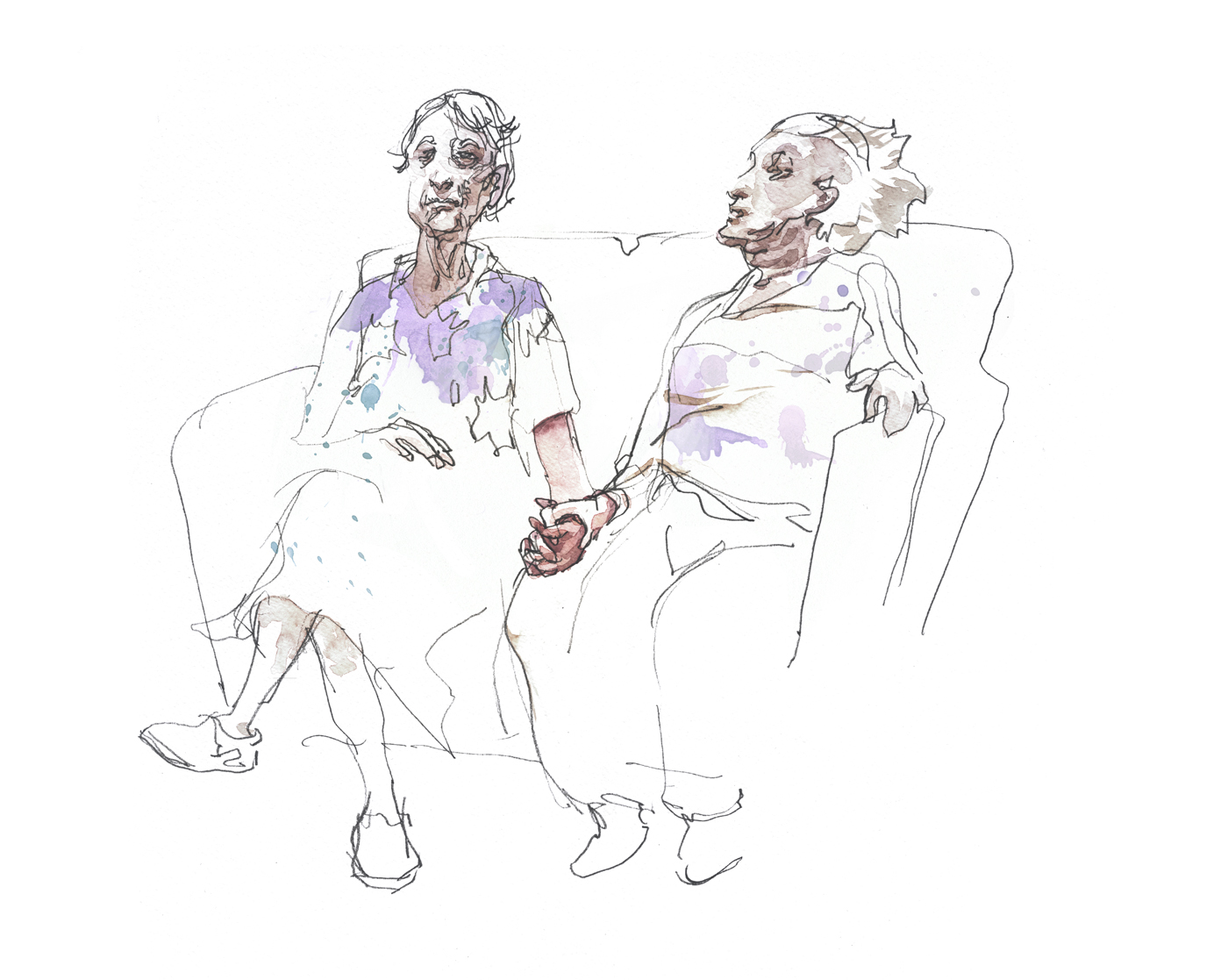
I sat in a sunny living room with the residents, while they napped, watched Celine Dion singing on DVD, and quietly moved around in their own little world. Only some of them seem to be aware of each other as people. Talking occasionally, even if their friend did not talk back. One lady would speak only in Spanish, one of the staff who was fluent would answer her when they were nearby.

The residents were interested in what I was doing, and of course I showed them my drawings, pointing out who I was sketching. But I couldn’t be sure how much they understood. One fellow was very happy to meet me, shaking hands and introducing himself, even though he only spoke French, and I only English.
The reality of their life was brought home, when he introduced himself to me again 10 minutes later and then again a third time. Just as happy to meet a new person each time.
I was left with the impression he was quite a salesman in his day. Had a charming handshake and hearty greeting.

One of the ladies enjoyed walking around the inner courtyard, and would casually take your arm and walk you around and around the loop. She knew I was a new visitor, as she refused to walk with the other staff while I was there.

For the artists who will likely ask – these are pencil sketches in a 11×14″ drawing pad, transferred by scan-and-printing to watercolor paper and painted in the studio. I did not do color on location, partially because they were for print, but mostly I didn’t want to bring paints and water into the house. I have done some color adjustments (fading back a bit), and added the thrown paint spots digitally.
The Urban Sketching Handbook, by Gabriel Campanario
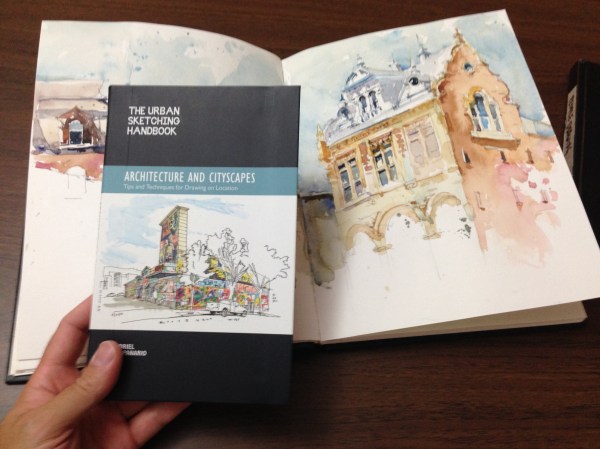
This arrived the other day. Gabriel Campanario‘s new book on Urban Sketching. It’s one of a pair of small format, sketchbook sized books. This volume on architecture and environment, is the companion to: The Urban Sketching Handbook: People and Motion: Tips and Techniques for Drawing on Location
It’s great to see my piece from this 2013 post on The Gradient of Interest included in the book.
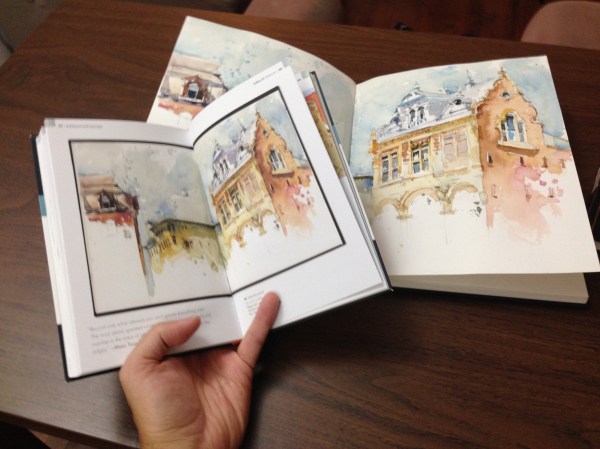
Gabriel Campanario is the founder of urbansketchers.org, and has been a tremendous (no, unparalleled) inspiration to our community of sketchers world wide. I think his unique position as a journalist, an artist, and a European in America made him a kind of human tipping point. He was thinking all the right things at just the right time and became the spark that ignited our international drawing phenomena.

The global nature of Urban Sketchers, and the great diversity of styles and approaches found among artists in the community are well represented in this ensemble volume.
You’ll find one or two favorite sketches, and one key idea, from each of 45 sketchers, tied together with Gabi’s own advice. I find when I take a workshop, I tend to come away with one great tip every time. It’s like, my brain can only learn one thing a day. So this feels a bit like carrying a USk symposium around in your pocket.
But it’s not just about the tips and tricks. The variety of drawing styles packed into this slim volume gave me a shot of inspiration. When you see someone pull off a great drawing, you just want to dive in and try it yourself!
I’m going to bring my copy to the next USk world wide symposium and see how many pages I can get signed by the artists :)


By the way – if you pick up your copy clicking over from my page, I get a little tip from the Amazon Affiliate program. So thanks! Even these little things help keep me blogging :)~m


 Citizen Sketcher
