#30×30 Day 27 : Gauguin, the Colonizer

I came across this rather horrifying picture of Gauguin, and felt I had to leave a few more of his own words next to this painting.

“All the joys—animal and human—of a free life are mine. I have escaped everything that is artificial, conventional, customary. I am entering into the truth, into nature.”

“The self-esteem one acquires and a well-earned feeling of one’s strength are the only consolation in this world. Income, after all, most brutes have that.”
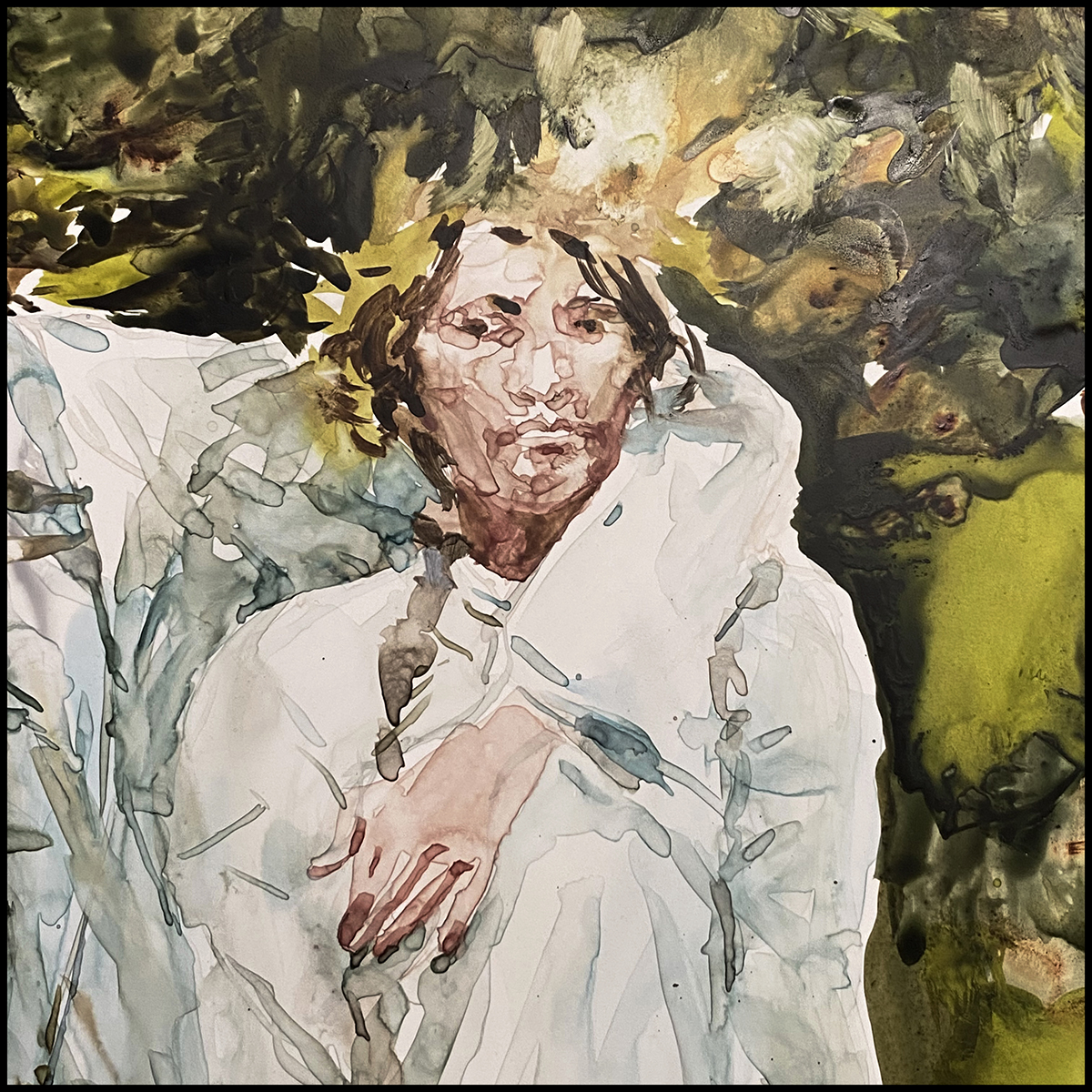
“Life being what it is, one dreams of revenge — and has to content oneself with dreaming.”
#30×30 Day 26 : Francis Bacon, on Art
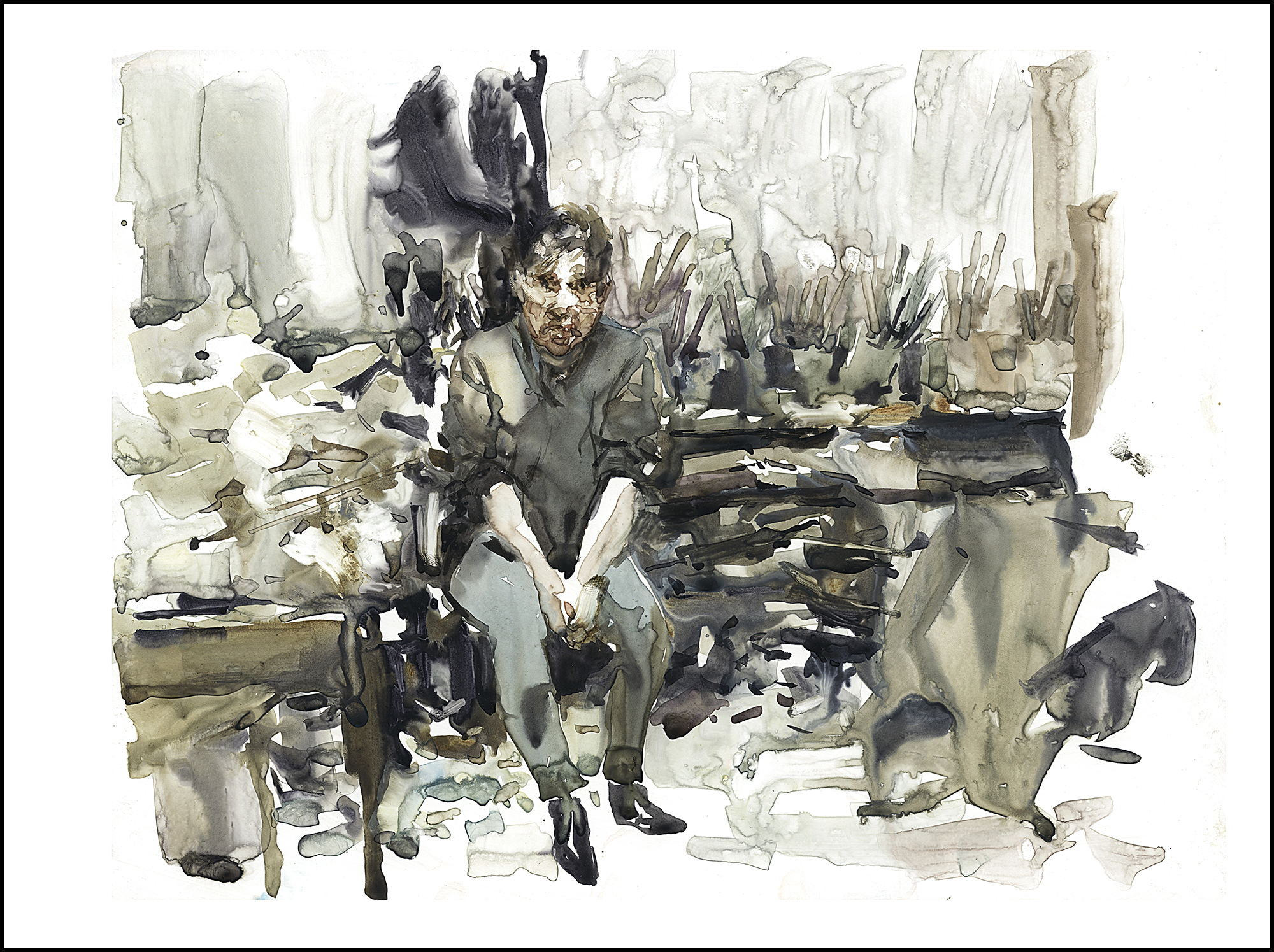
“In my case all painting… is an accident. I foresee it and yet I hardly ever carry it out as I foresee it. It transforms itself by the actual paint. I don’t in fact know very often what the paint will do, and it does many things which are very much better than I could make it do.”

“Some paint comes across directly onto the nervous system and other paint tell you the story in a long diatribe through the brain.”
“All painting is an accident. But it’s also not an accident, because one must select what part of the accident one chooses to preserve.”
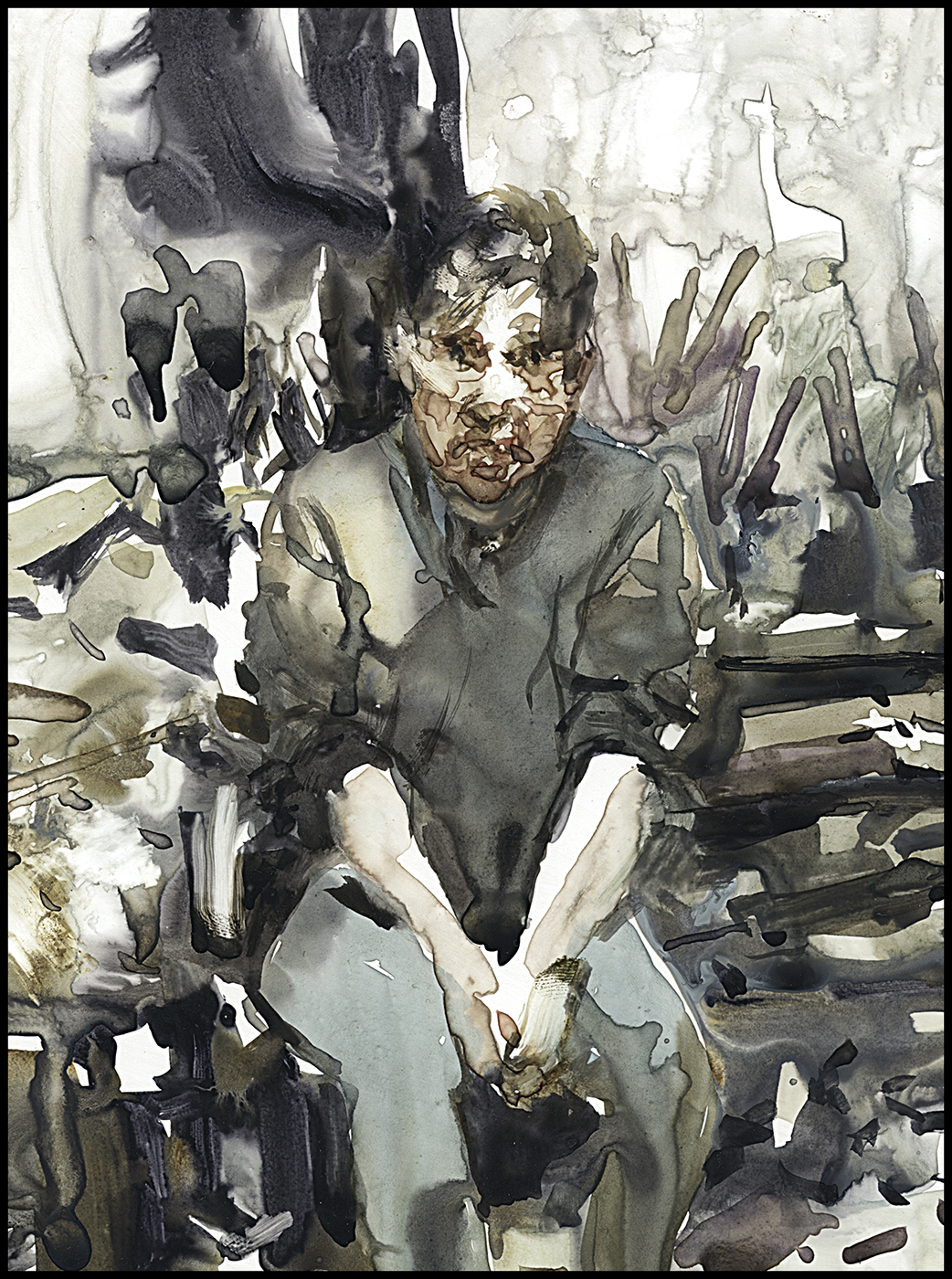
“How can I take an interest in my work when I don’t like it?”
“I want to make portraits and images. I don’t know how. Out of despair, I just use paint anyway. Suddenly the things you make coagulate and take on just the shape you intend. Totally accurate marks, which are outside representational marks.”
“The job of the artist is always to deepen the mystery.”

“I should have been, I don’t know, a con-man, a robber or a prostitute. But it was vanity that made me choose painting.”
~ Francis Bacon, Oct 1909 – April 1992
#30×30 Day 25 : Van Gogh and Gauguin, in Their Own Words
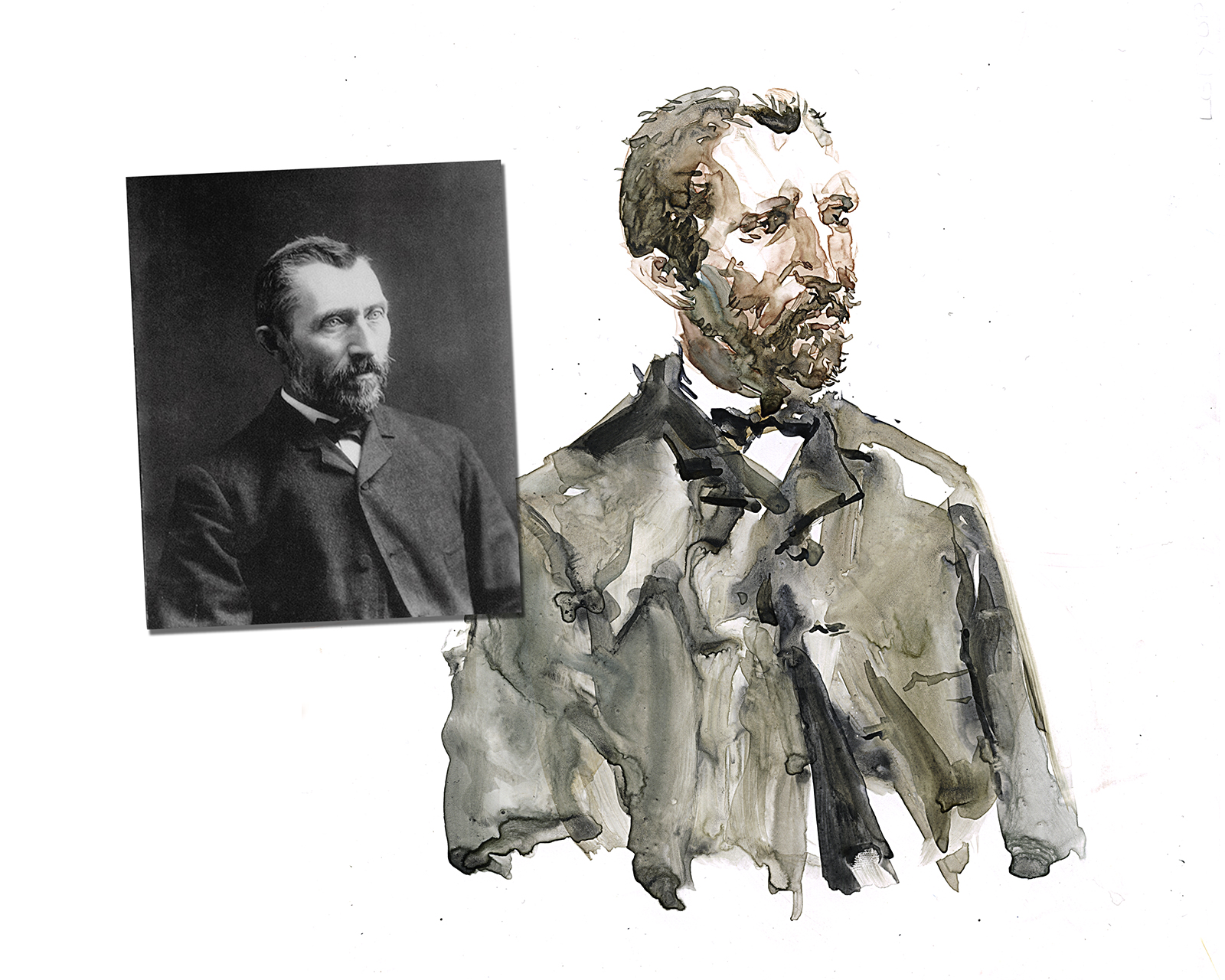
“There may be a great fire in our soul, yet no one ever comes to warm himself at it. And the passers-by see only a wisp of smoke.”
“Real painters do not paint things as they are, they paint them as they themselves feel them to be.”
“Great things do not happen by impulse, but as a succession of small things linked together.”
“I put my heart and my soul into my work and have lost my mind in the process.”
~ Vincent van Gogh, 30 March 1853 – 29 July 1890


“In art, all who have done something other than their predecessors have merited the epithet of revolutionary; and it is they alone who are masters.”
“There is always a heavy demand for fresh mediocrity. In every generation the least cultivated taste has the largest appetite.”
“The history of modern art is also the history of the progressive loss of art’s audience. Art has increasingly become the concern of the artist and the bafflement of the public.”
“Many people say that I don’t know how to draw because I don’t draw particular forms. When will they understand that execution, drawing and color (in other words, style) must be in harmony with the poem?”
~ Paul Gauguin, 7 June 1848 – 8 May 1903
#30×30 Day 24 : Be Like Water

Hey all! Back for another day with the material YUPO.
It really is amazing how much flow you get from this synthetic surface. Once you grasp that in fact the water will continue to flow down to the lowest wet edge it can find – you can begin to harness this effect.
These silhouettes of Japanese traditional costume are some examples of thinking primarily about the outside shape, and letting things go crazy inside.

There’s a second aspect about YUPO, which is that you can wipe away any amount of paint, and get completely back to a white surface.
This sketch had a blotchy black background which I partially removed by wiping with a wet paper towel. It’s a bit like wiping our an oil glaze with turpentine.
I wanted to leave the streaks here, but if I’d kept going, it could be completely clean. I have other sketches that were in fact the third or fourth painting on the same page – just wiping completely down and re-using the sheet immediately.
If you look at the figure, in the center, on the chest, there’s a horizontal white mark. That’s another wiped-out shape. Just a small reminder to myself, you can draw-by-erasing.

As you get used to the combination of making wet-on-dry shapes and lifting out after it dries, or just redrawing with wet paint, you can begin to adjust silhouette edges and reposition shapes as you go.
There is never a point where you can’t wipe out – even the next day, or I expect, even months later you could just start painting on top and erase what went before. You end up with a final shape that looks as spontaneous as the first pass no matter how many times you repaint it.
You can probably tell, after all the serious thinking about watercolor this month, I’m having fun with the rest of my marathon!
Next time I will dispense with these ghostly faces, and try some little portraits.
See you then!
~m

“You must be shapeless, formless, like water. When you pour water in a cup, it becomes the cup. When you pour water in a bottle, it becomes the bottle. When you pour water in a teapot, it becomes the teapot. Water can drip and it can crash. Become like water my friend.” ~Bruce Lee
#30×30 Day 23 : The Great YUPO Experiment
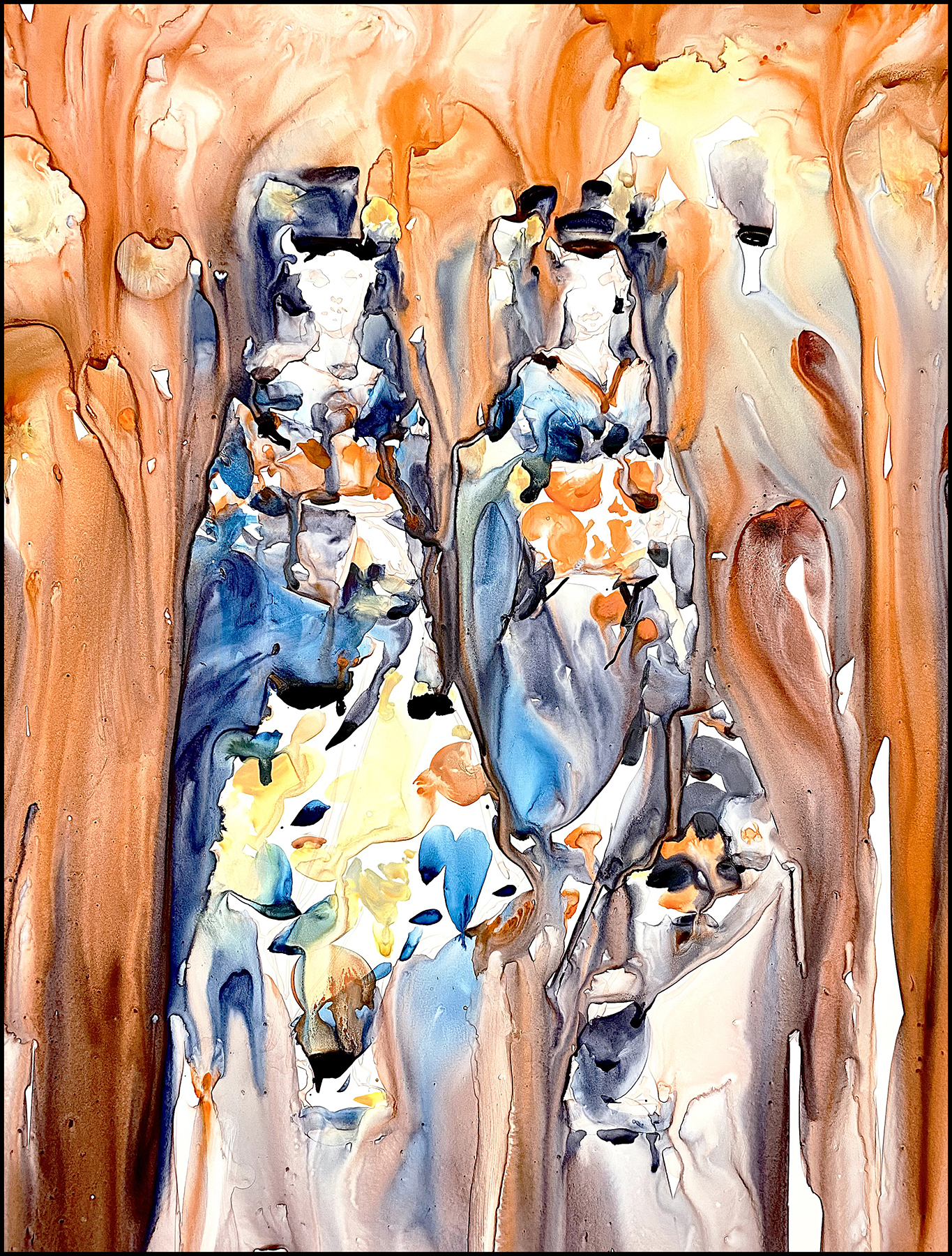
Two Kimono – Watercolor on Yupo, 20×26″
I’ve just recently made two pieces for an upcoming show, Beyond the Edge, which is a proposed exhibition by the Canadian Society of Painters in Watercolor with a focus on experimental works in water media. (Including a variety of mixed-media approaches that are not normally allowed in the annual competition). I haven’t heard yet if I’m accepted. We’ll see! < EDIT < Turns out, yes! I did get one of these pieces in. Thanks CSPWC!
These are both watercolors, on 20×26″ sheets of the polypropylene surface, YUPO.
At this stage of the marathon, my short attention span is taxed to the limit! It’s normal for me, when I’ve been working steadily, to need a new subject or a new material to jumpstart my creativity.
I had these sheets on the shelf for a while now, and thought – no time like the present! Lets dive in.

Yupo, if you have not tried it yet, is nothing like paper.
It’s a sheet of plastic, which is actually a little bit water repellant, a bit like the surface of a waxed car or a rain poncho.
Water will bead up into droplets, and slide off in rivers. If you work with a tilt, water will sluice off the page making these distinctive kind of floods.

The principles of Wet-on-Dry painting still work – you still can draw with silhouette shapes and use wet/dry edges to make lines, but even the smallest shape will always show a hard edge – an outline – as pigment flows to the edge of the puddle, and accumulates there. It’s like the soap ring in the bath tub, where the particles collect at the water line.
I don’t mind hard-edged shapes, but for now, it is a little odd that I can’t soften a shape by pulling edges. Perhaps I will get the hang of it? Or possibly it will be hard edges all the time on this surface!
Much like a smooth (hot press) paper or a cellulose paper with a lot of sizing, on YUPO the color will flow with gravity. It is so frictionless, the amount of movement can take you by surprise. Everything is turned up to eleven. Everything flows faster, and further. The only limit is the edge of the sheet.
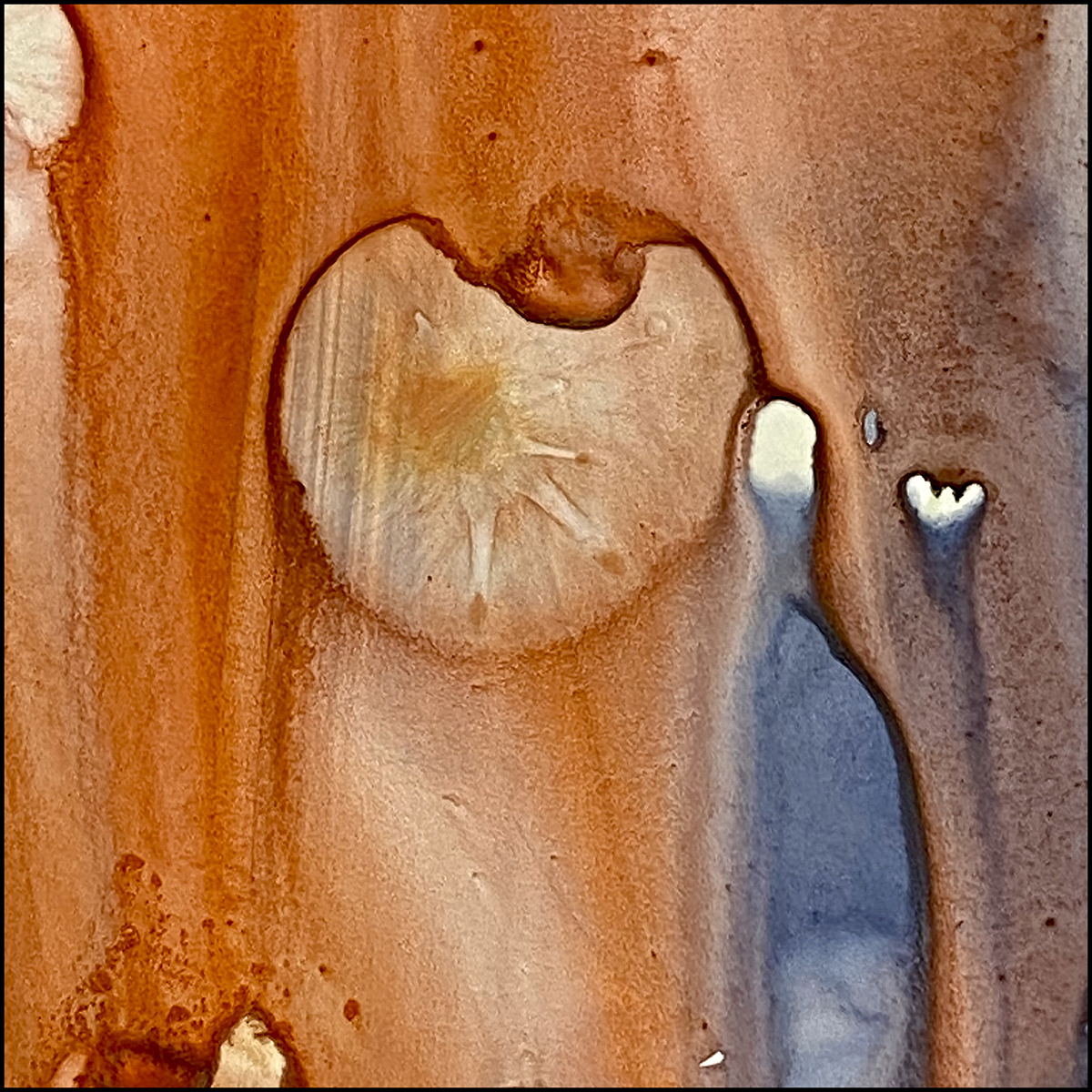
At times there will be odd occurrences – such as this bubble – which might be caused by skin oils on the surface? But – of course I don’t mind these things. It’s part of the nature of the material.
One thing you will not get – as far as I can tell right now – is blooms. I think that a bloom or a backwash will not happen here, with no paper fibers to wick up the paint like little straws. Again – more experimentation is required to say for sure.

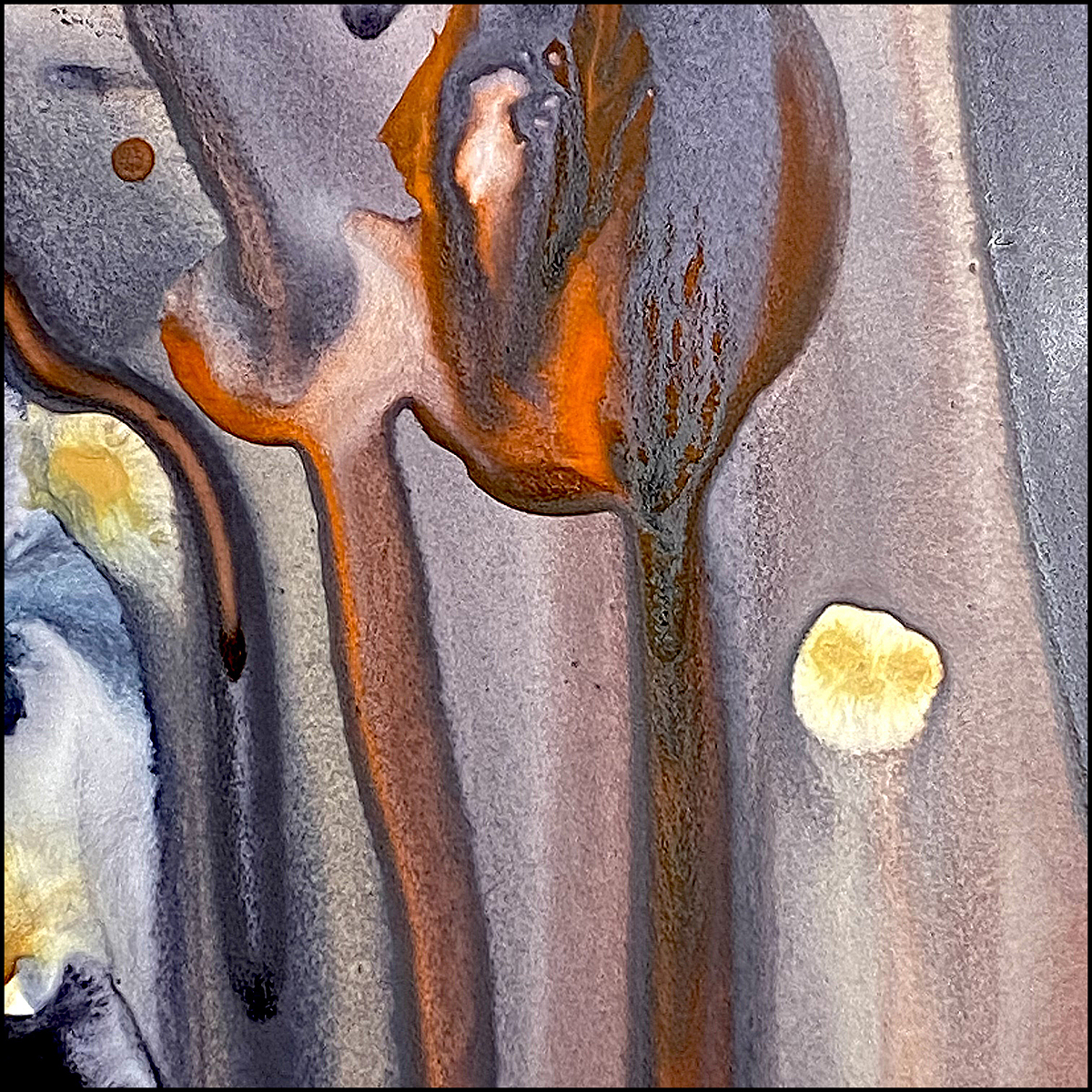
Paper Lanterns – Watercolor on Yupo, 20×26″
I chose this theme of brightly colored traditionally Japanese clothing, as it seems to fit what I can do with the material right now.
These costumes are covered in bright patterns, which are often so complex as to appear random at a distance. As well, the white face makeup of traditional Japanese performers makes for a useful stylization for a first attempt. I can simply avoid trying to paint a small face – until I get more of a handle on things.
So – these are a few of my experiments with painting as freely, or directly as possible with YUPO!
Over the next few days I’ll be seeing how much further I can take this artificial surface.
~m


#30×30 Day 22 : Gone Sketchin’

Took the day off from all the thought provoking art-making to go sketching with Shari Blaukof!
We had about the best weather you could ask for. It was such an amazing day, everybody going by was in an excellent mood. All kinds of good vibes from people happy to see artists out on the waterfront.
Kind of makes you want to get back into street sketching! I’d forgotten how much people like to stop and chat with sketchers.

Another advantage of sketching with a friend – I had forgotten to add the masts reflecting in the water, and – probably wouldn’t even have known how to do it – but I saw Shari put them into her painting with these confident squiggles – and so – bingo! Water reflections! That was 30 seconds work that made the sketch 100% better.
She also loaned me a Gelly Roll (white fine-liner pen) so I could add a little rigging and a few white masts. Initially I refused out of stubbornness – but they’re actually kind of handy.

Shari pointed out these interesting boats. They’re Martin-16’s , which are designed to give people with mobility issues the freedom to sail. Pretty great idea! There are some that have been outfitted with mouth control (sip and puff), making them one of the few (only?) opportunities for quadriplegics to be out on the water on their own – though, there is a second seat for a passenger if they want to take a friend.


I’m just out here having a great day, not training hard-core, so I used a single line sketch underneath this painting of the boats in the yard. If you zoom in, the drawing is visible underneath.
This might seem like a mixed message from me. Like, I’m offering up this technique of ‘Direct Watercolor’ then not even using it religiously. Well – here’s the thing – the goal is making your work easier. Getting free of *unnecessary* planning. I’ve used Direct techniques to teach myself how little drawing I actually need.
Once you know you can do it with nothing but the brush – it’s tremendously freeing. I used to draw everything. Every window, every fencepost. I used to draw lines around clouds or reflections in the water! I was a line-addict! My sketches were stiff and overworked. I used to draw individual leaves on trees for heaven’s sake! Don’t do that please. Life is too short :) The trees here are a good example of using direct painting and drawing at the same time.
So – Direct Watercolor – it’s not an eleventh commandment! Go ahead and use a line if you feel it helps set up proportions.
Drawing boats is hard!


And here on Day 20, we are now up to date with my artistic production!
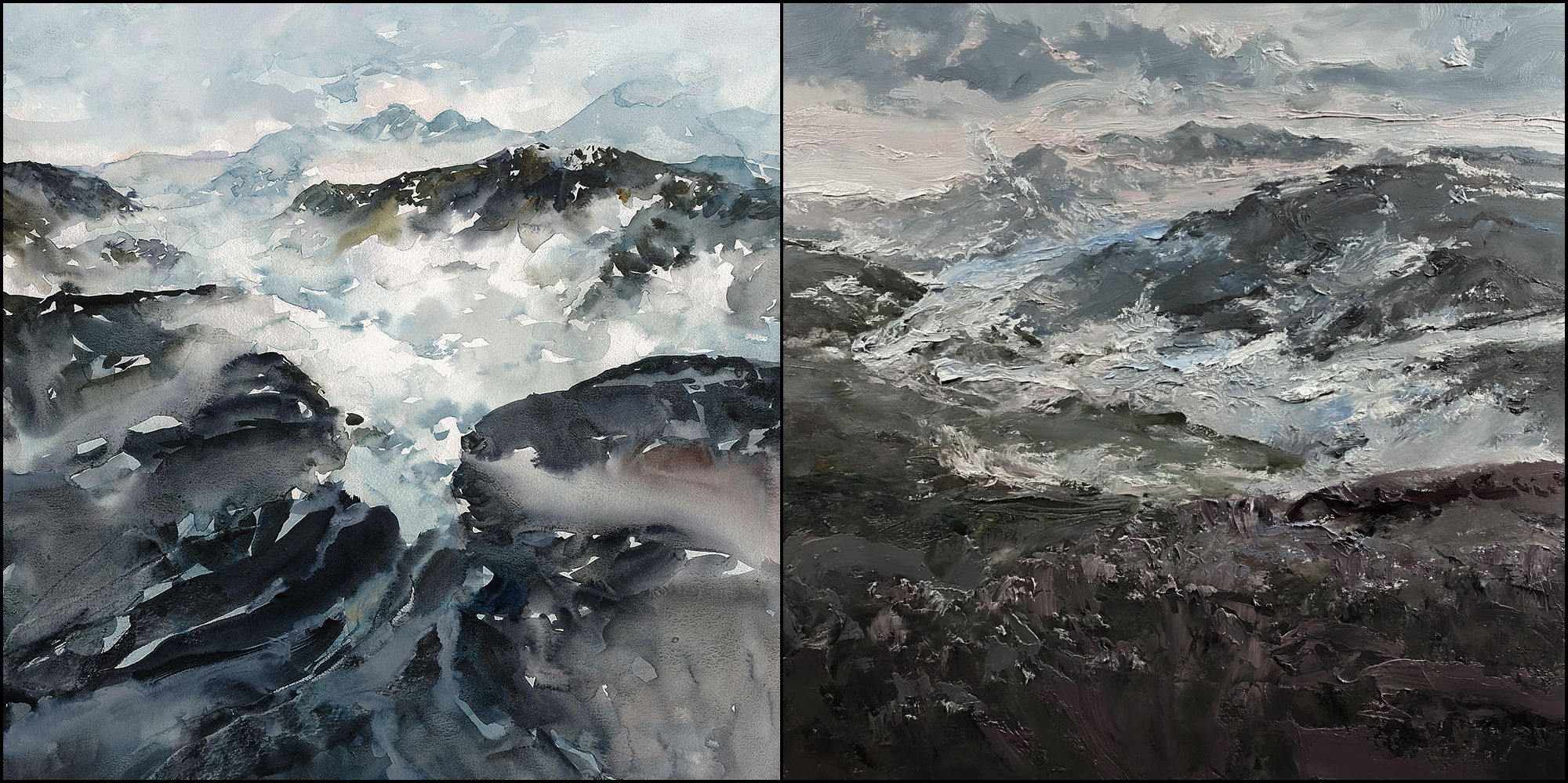
This is the watercolor derivation of my very-most-recent oil painting, Glide your Fingers Though Granite, He Said which, incidentally, is a derivation of the work of @TwinTheWorld, which is two swiss photographers who post some epic views to their Instagram.
In the watercolor version, I took the chance to double down on my title. The physical process of painting was almost like finger painting. Even the marks in the composition took up the movement of the title.


Much like yesterday – I feel like I’m at the peak of my #30×30 marathon. The point where you’re tuned up, and maybe just a little more tired than you’d like – and that’s breaking down your inhibitions. The point at which my reflexes and sensitivity are at an unconscious, almost telepathic level. You know instinctively what the moisture on the paper will do. You can pick up the right amount of pigment by instinct, almost by weight and feel, certainty not by measuring. That’s impossible.
It’s a strange feeling of power. Just imagining an image, and your hand makes it appear before you.
I think there’s no other way to feel this with watercolor – only painting every day, for many days in a row, for months, going into years – it’s the only way to make it enjoyable simply to paint. Much like a musician, who realizes they are finally enjoying listening to themselves play.
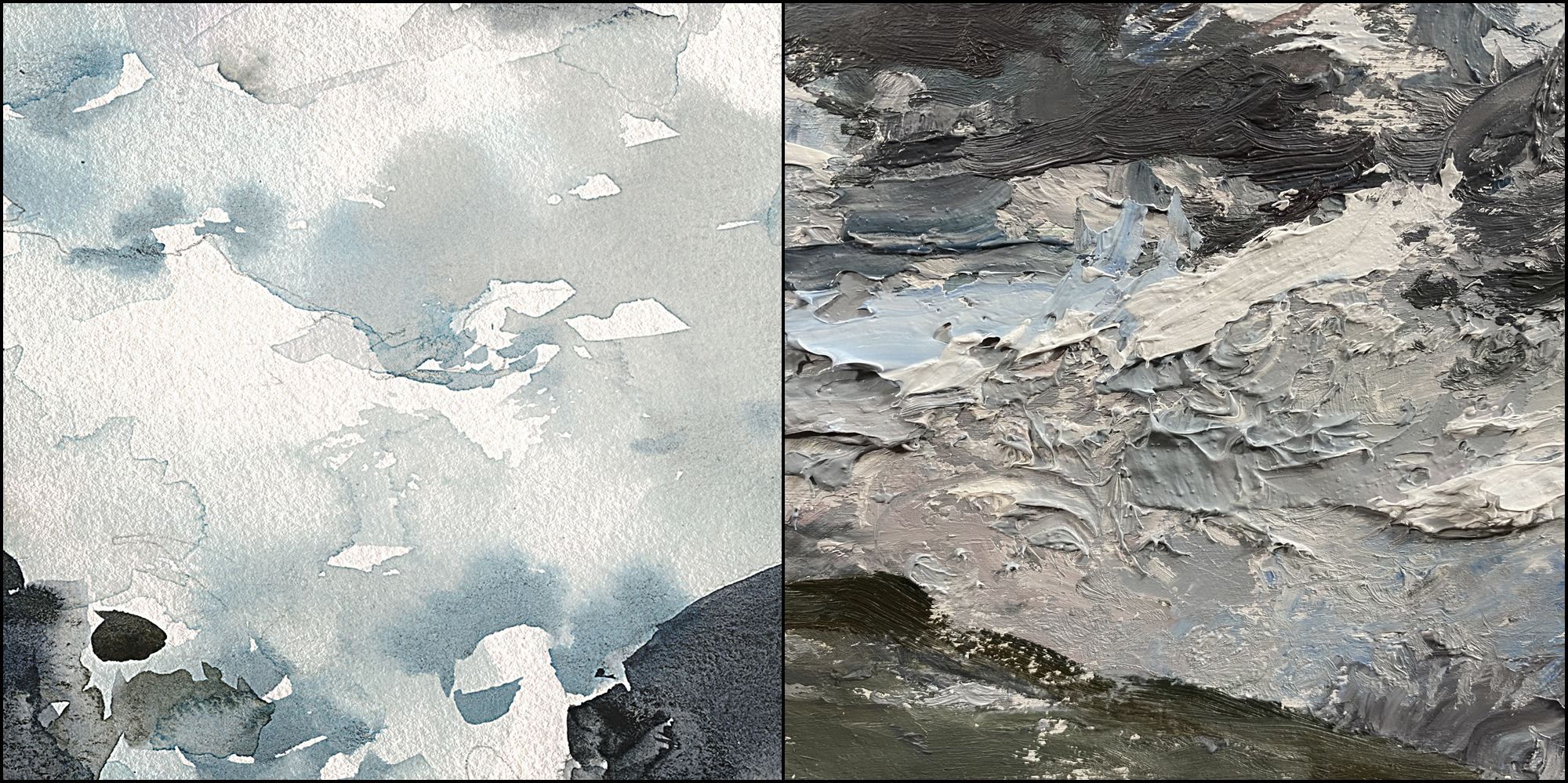

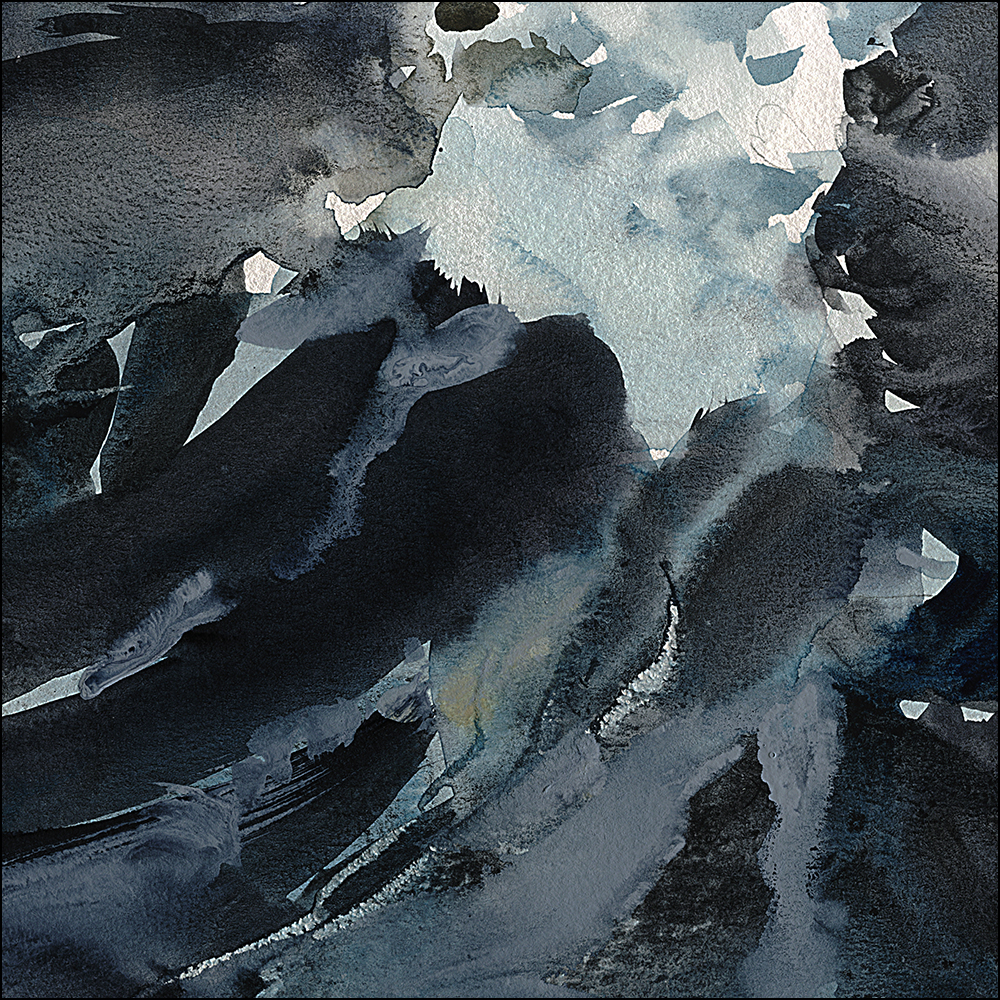
#30×30 Day 19 : Black Hills, White Water


I’ve been saving this one. I’ve been looking at this one for ages wanting to try it in watercolor, but held off until I felt ‘tuned up’. It was worth the wait!
I feel like this one is the best example so far of something that is 100%, absolutely, equally, good in both media, despite being completely different in feel.
That’s what I’ve been waiting for! Something satisfying about that!
I had a terrific time painting this one. All the elements clicked. The pigment and water were moving under my brush like dance partners. It was a joyful painting to make – regardless of the dark ominous colors. I enjoy the drama, and don’t find these wintery images depressing at all. I have one of these near-black paintings hanging over my desk right now, and I look at it every day with great enjoyment. It’s not stark or cold, it’s dramatic! Operatic! :)
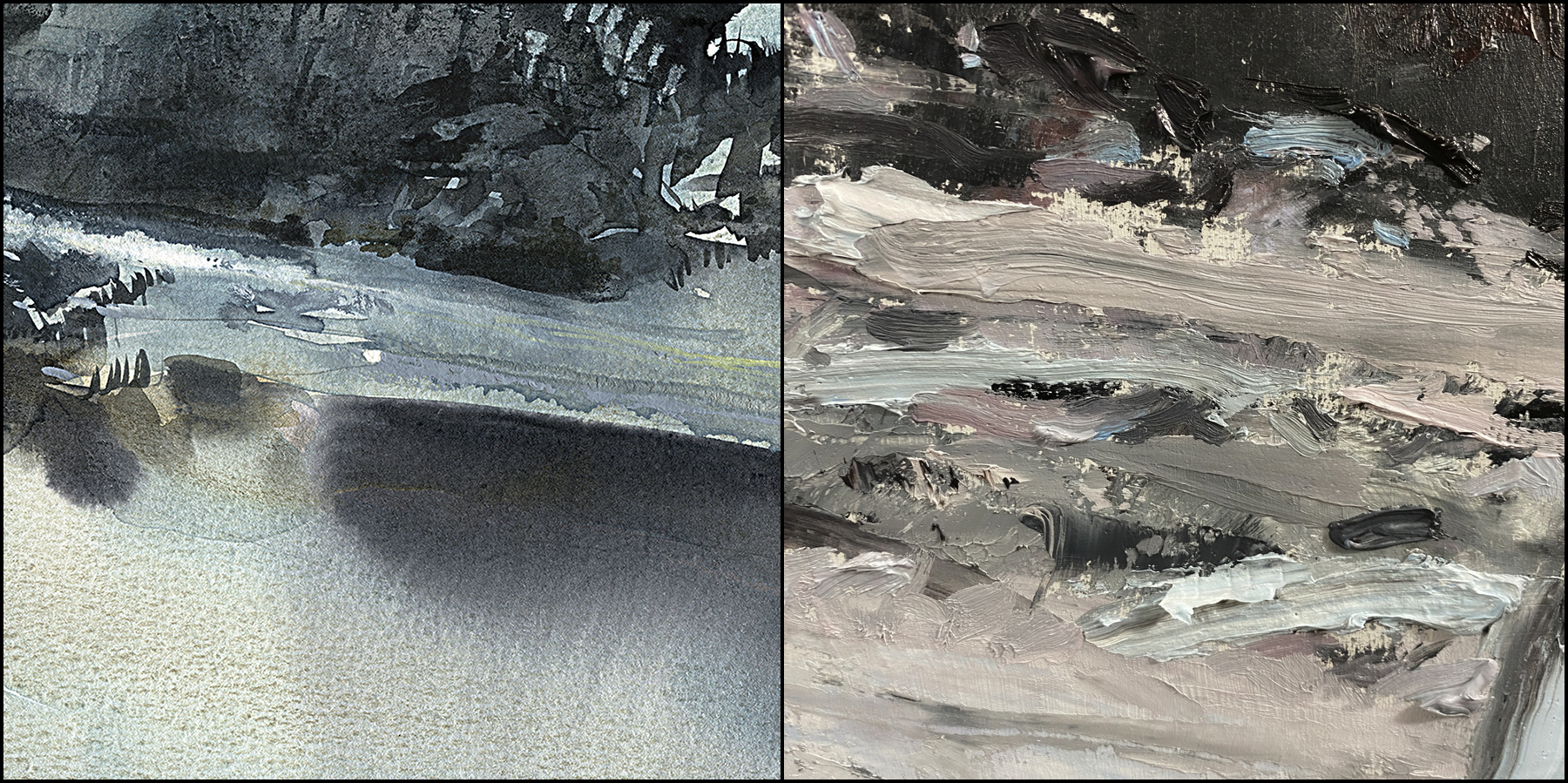
I might want to frame these two and hang them side by side. It’s quite fascinating to look back and forth between them.

So, just in case anyone’s interested, here (below) is the digital collage I made to paint from. Both paintings, oil a few months ago, watercolor today, are done from this sketch, which was done in Pro-Create on the iPad using screenshots of various found images.
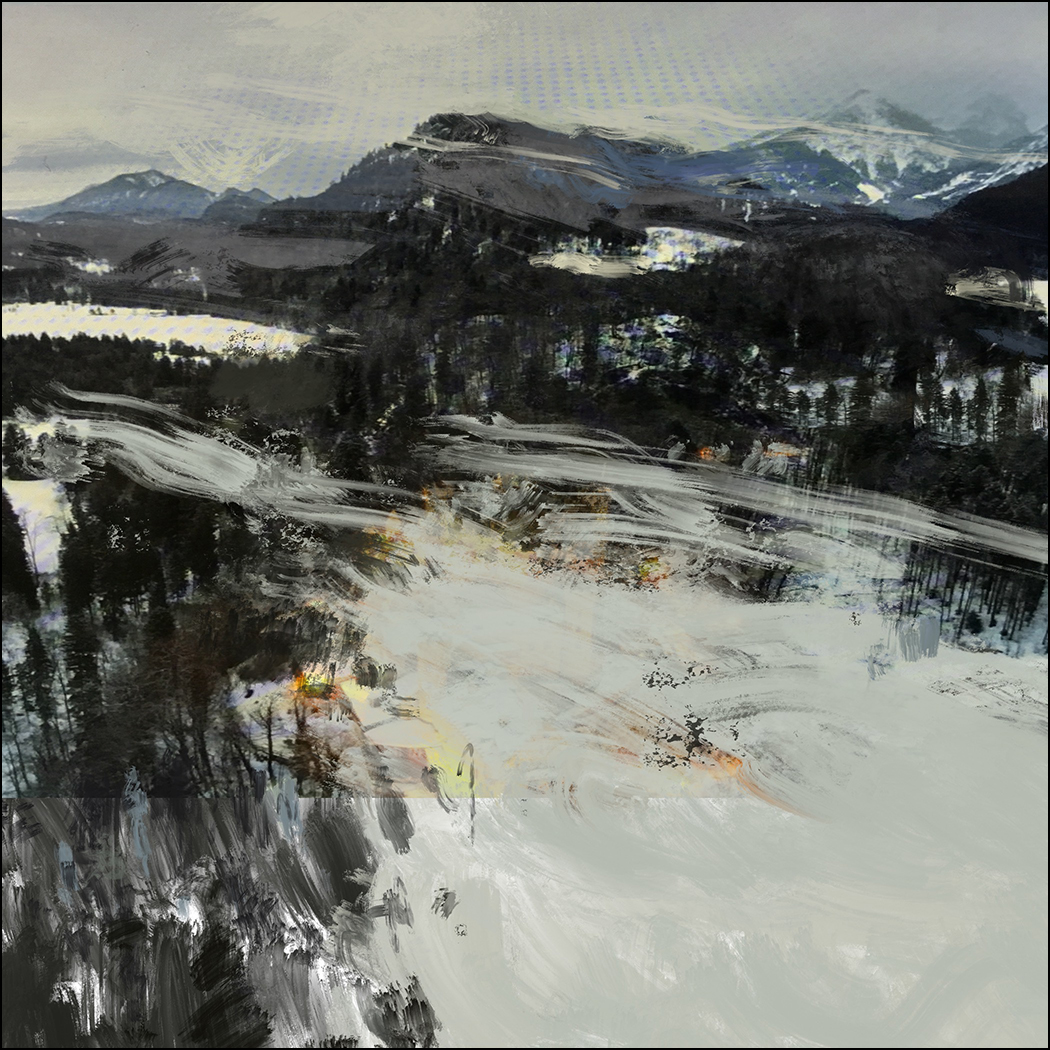
I think it’s fascinating how, when you’re just making an image to paint from – a digital collage (with some paint-over) is not meant to be ‘finished’ so you can be quite creative with shape and design.
This step – making the ‘mockup’ on the iPad – was essential for finding the composition. Watercolor is not like oil or digital. You cannot be 100% free to experiment. So the ‘finding by doing’ has to happen in a different media, or, in smaller ‘throw away’ sketches.
In some ways – despite all the odd artifacts in this quick photo-bash – it kind of says all the same things as the final painting. I have to ask myself sometimes – why even bother to make the finished work? You could just print and hang this on the wall! From across the room, I promise you, it has the same feeling.
Unless of course you get inherent satisfaction from the act of the making.
I think that’s my take away from digital art. You have to enjoy the process of making the thing. You have to have internal motivation, a deeper feeling of creativity, or kind of life-affirmation from art making. Watercolor does that, in the nearly magical way it moves and develops as you watch. It’s a kind of alchemy, a kind of magic, that isn’t there in any other kind of painting.
That’s worth remembering, and experiencing for yourself! Otherwise, the specter of digitally automating all your hard work is always there, offering you the easy way out.
#30×30 Day 18 : In the Fog of Art
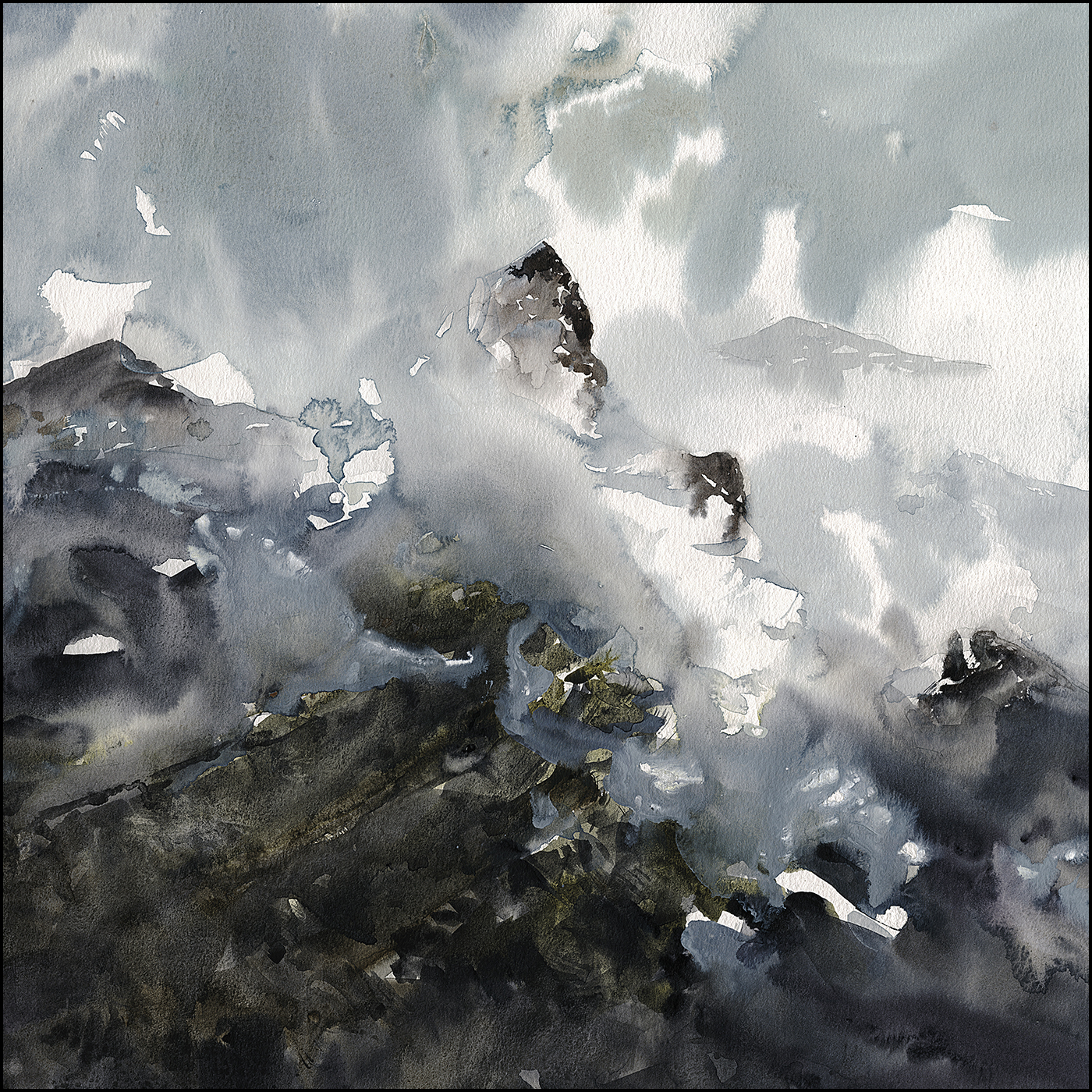
Here is another experiment in my quest for watery effects!
I’m not sure how much there is to say about this :) It’s in some ways a very simple painting. Almost no color, and almost no drawing. Just a matter of splashing down the pigments. And I suppose, knowing how the water will move.
The art here is more about knowing what composition you want – here it is a graphic diagonal, almost a yin yang. (Which I never realized is a symbol for the cycle of day/night – moon and sun – eternal cycle – I suppose that’s obvious when you say it, but I just read that online. )
It’s like dealing with a difficult boss or a willful child. You can make suggestions and the water will take them under consideration. But you know their habits, so you know what kind of suggestion might work today :)
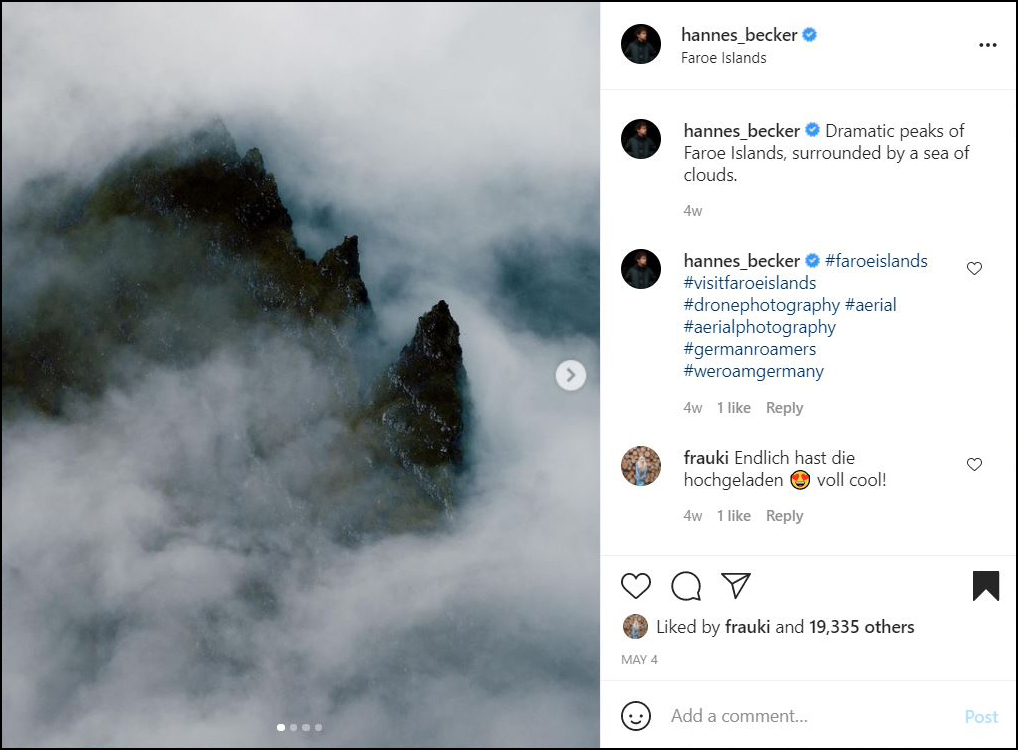
Well, there is one thing I’d like to say – which is that this painting was inspired by a photo by @Hannes_Becker, on Instagram.
This is probably going to get me into trouble, but – I’m just in the process of applying for some watercolor competitions, and this question of Derivative Works is on my mind. Specifically the fact they are almost universally NOT ALLOWED in the big watercolor society competitions.
I’ve talked before about how I’ve done a complete turn-around from what was taught in the 80’s and 90’s.
I no longer think that derivative work, (that is, making new work that begins with another person’s art – usually a photograph) is artistically ‘weak’ or ‘cheating’.
I realize we’re gaining something from the other artist’s color sense, or their composition, or even their choice of subject – but at the end of the day, this is no more than we would gain by looking and thinking about art.

And – aside from something silly like tracing, or printing-out and drawing-over, each artist has to develop their own hand skills before they can make a derivative work in the first place. So, whatever we have borrowed is very small in comparison to what we had to do on our own.
And yes, we are taking advantage of the time, energy and money photographers spend getting to locations and bringing back images. I admit – this theft of time, or poaching of access to locations, this is less defensible – but – ultimately – I have to choose art over commerce.
Because, that is not an argument about infringing another person’s artistic rights, but more about them protecting their business investment.
While I see the point, that it’s very expensive to be a photographer, I suppose I have abdicated that concern. Paintings have to get made, and I am getting too old, and my time to paint is slipping away every day. It is equally expensive to be a painter, and the photographers borrow equally as much from art – where do you think composition comes from? It’s not a law of nature, it’s a cultural practice. A tradition.
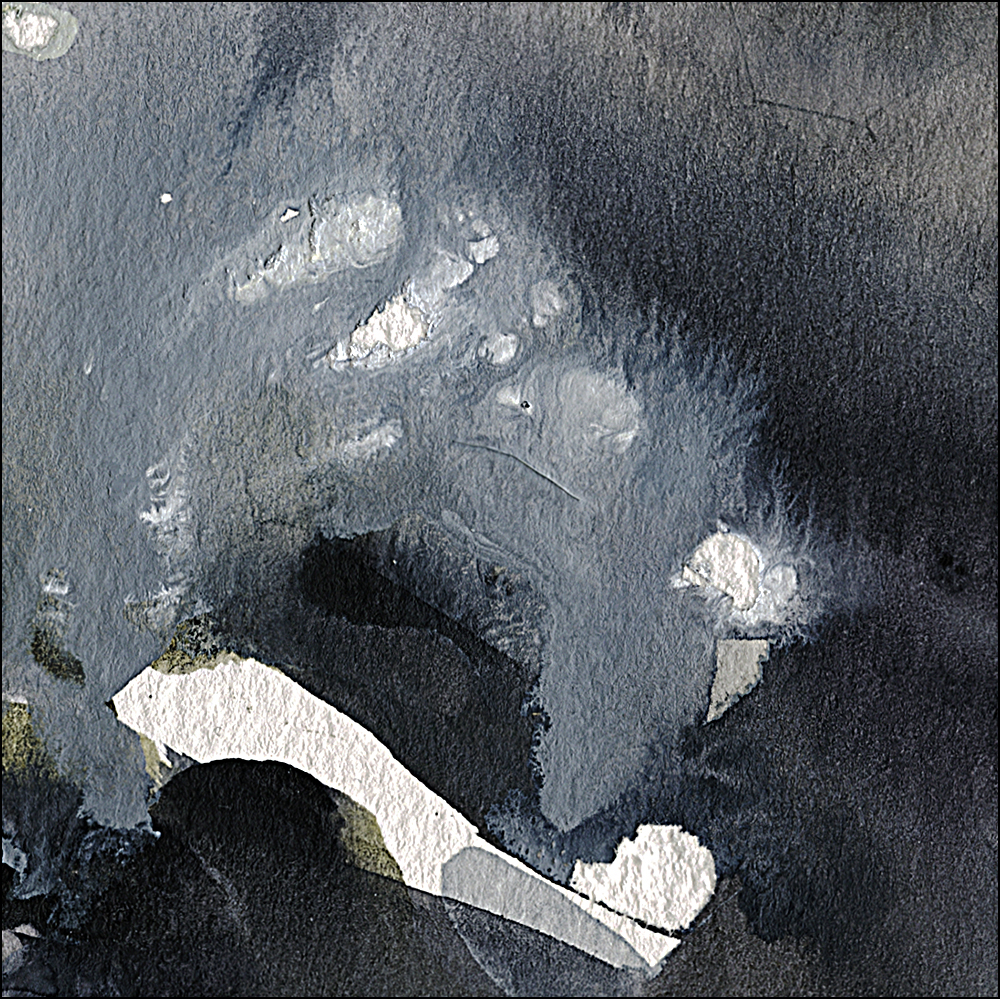
In any case. I feel that if nobody was allowed to paint a thing they have never seen in person – well – what we would lose in paintings made, and artistic talent developed, is greater than what the photographer loses in this situation.
At the end of the day, I’ll just say – let’s not be so worried (or embarrassed) about making derivative art.
And I hope we can put an end to banning it from colleges and competitions, and simply critique it, or jury it, as you would any work.
If it’s Bad Derivation you can say so. If it’s Good Derivation, you can ALSO say so.

There’s nothing about painting from found (or researched!) inspiration than is any less creative than standing in a garden and painting yet another flower, or going in the studio to paint yet another portrait.
If you accept the values of traditional art (hand skills, formal painting concerns) – which the big materials societies by definition do – the watercolor clubs and the pastel societies, the oil painters associations and the figurative painting leagues – all of these bastions of tradition clearly accept that art is derivative of history. As traditional artists who paint and draw, we have accepted rules about composition and color theory, we have techniques and tools that have been used for centuries – all of this is handed down from the past, in the same way as subject matter is handed down.
It is rendition that is unique to each person, not the art form or the language of art. Just as every musician might start with the same sheet music, but every performance is unique.
So, that’s my thoughts for today!
Here’s Wikipedia on the definition of Derivative Works if you want to gain from a informed opinion on all of this.
And, thanks very much for posting your images @Hannes_Becker!
~marc
#30×30 Day 16 : #NoMakeup

So I’ve just finished a little digital tweaking on this one.

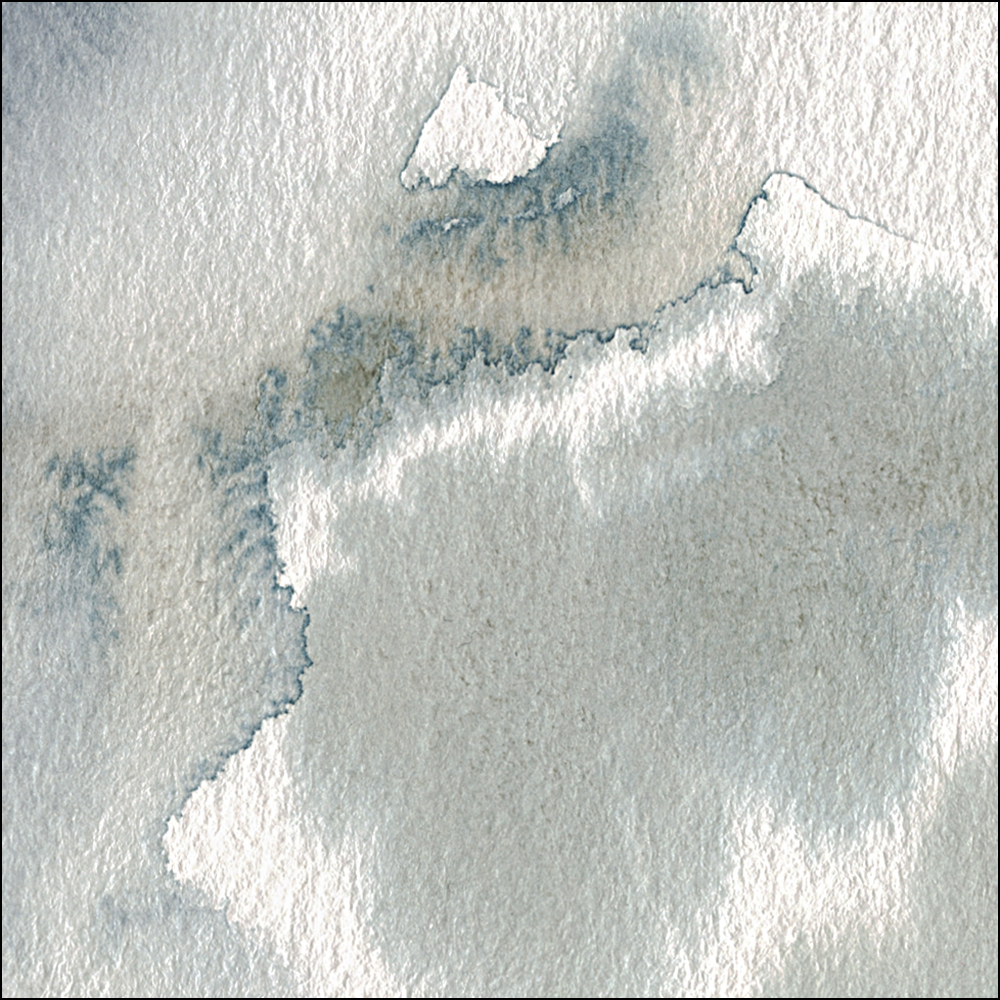
Ok – maybe more than a little :) This is what the original painting looks like.
This is the result of a complete miscalculation on my part. Mixing with far too much water, and completely the wrong pigments.
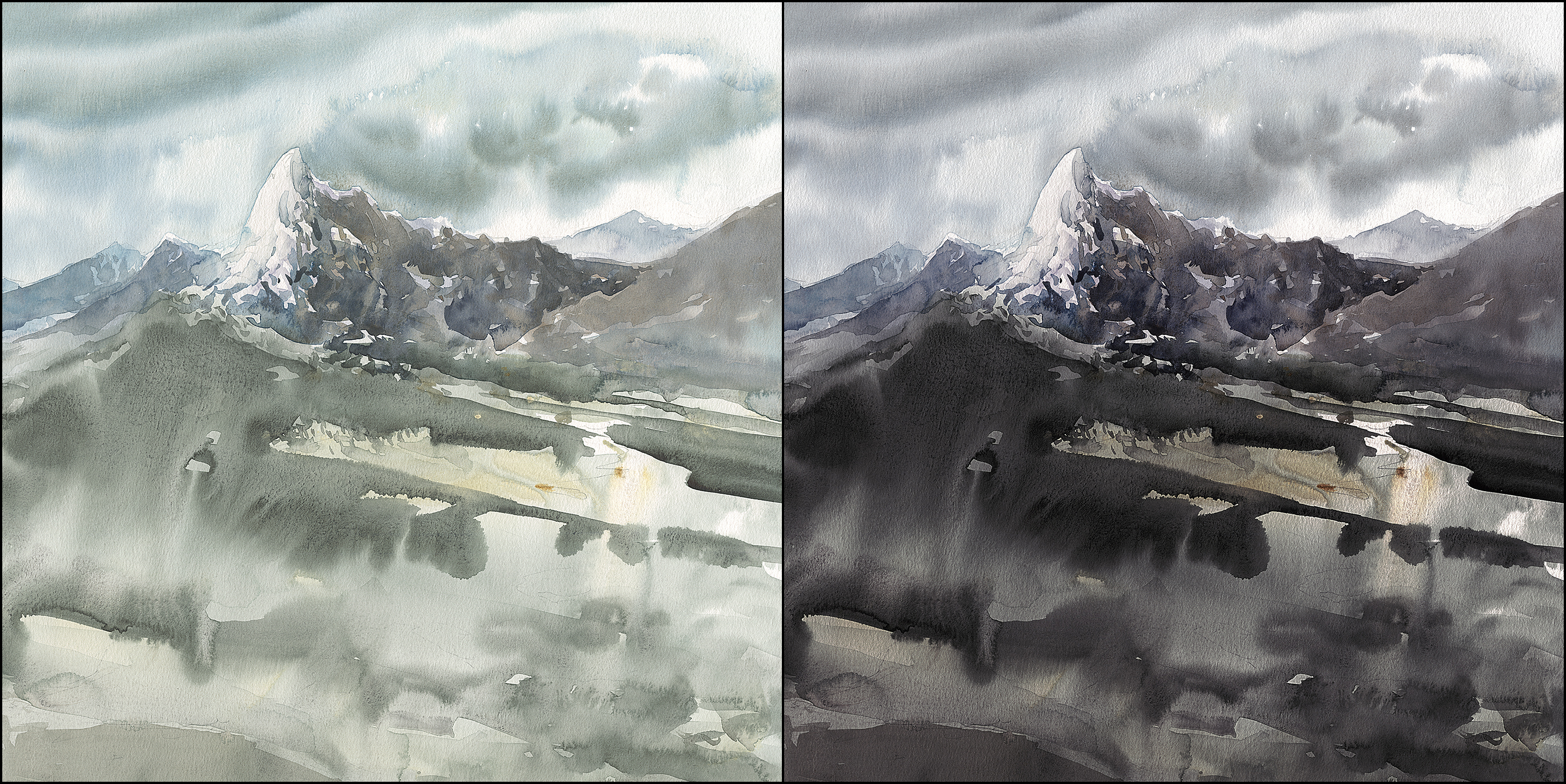
When I first started in watercolor. this used to happen all the time. Things turning out significantly lighter than I wanted. Turns out this was just inexperience. Too much water, not enough pigment. It’s a classic error.
After all, you are told these are water paints, so you put in a lot of water!
That’s what I did today, because I was premixing, and – I don’t know, I wasn’t paying attention, so there you go.
Back in the day, even though I was quite frustrated, I said to myself – I know it’s possible to fix this. I’ve seen all the old master’s watercolors – Sargent, Homer, etc. They can get the deep, rich color that I want. I just have to get over this problem.
Which, in the end, was eventually solved by only using fresh tube paint, keeping it misted with an atomizer bottle – and most importantly – making an agreement with myself that I’d use enough pigment, no matter what the perceived cost!
You can’t be afraid of using up a tube of paint! Otherwise, you might as well not play this game.
Well, that – and I also added a whole range of darker pigments to my paint box. I use five shades of black these days, depending how you count it. (Here’s my list of pigments).

But – there was a time in between when I still trying to figure out what I didn’t like about those pale paintings.
I was a professional digital artist long before taking up watercolor. so it was second nature to turn to the computer to diagnose the problem.
I would take the paintings, like this one above, and start building up contrast adjustments, hue-shifts and saturation changes.
You can do some of this on your phone these days – all phones have some basic controls for manual editing color and contrast by value range. Change just the shadows, or only the highlights. You might use an iPad app like ProCreate, or – I use Photoshop on my PC, because I’m used to it from my old day job.
Either way, this kind of image editing is a great way to see exactly what you want out of your painting. And, gf course, the same thing goes for cropping, or cutting and pasting and creating a new composition via collage.
Once you can see what you want, it’s much easier to redo the piece – and maybe break away from any problems with your original reference.


 Citizen Sketcher
