Finally I can show these sketches from Barcleona!
So, right after coming back from Barcelona last summer I happened to be talking to a writer at The Artist’s Magazine.
Actually this is a funny story, so I will digress. Our group USK:MTL was sketching musicians at an event for historic re-creators, and there was this guy with a lute. I didn’t actually recognize it as such, I’m just sketching away and I think to myself “I don’t know what that instrument is – I could just make up some nonsense and nobody would care”. But, I’m a well trained Urban Sketcher so I drew it exactly as I saw it. Soon after I get a message – “Wow, my friend is a lute player, and I never see drawings of lute players, can I purchase that sketch?”. So that is a little tale of why it’s good to get out and draw the unexpected things life shows you.
Anyway one thing lead to another, and it turns out the lute fan is a writer for The Artist’s Magazine. This leads to me doing a small interview about the Barcelona Symposium, and giving them two of my watercolors from the trip. So finally, the short article is out in the world. (Appearing right next to a short bio on Kansas correspondent Cathy Johnson, which is another small-world thing). Here’s the issue if you happen to see it on the stands:
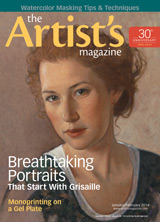
So that means, hurray! I can finally show you guys the paintings! It’s always unexpected, what with the world of blogging, how long it takes to see things in print. Our expectations change so fast hey?

[Casa de Les Punxes, Barcelona, 12×16]
I didn’t know what to expect out of BCN – but it certainly was not these ‘witches hat’ buildings. I had no idea this was a thing. But they’re seemingly everywhere in the city, and they’re always charming to see. Such a whimsical bit of architectural nonsense. Barcelona, of course, has the world crown for whimsical architecture.
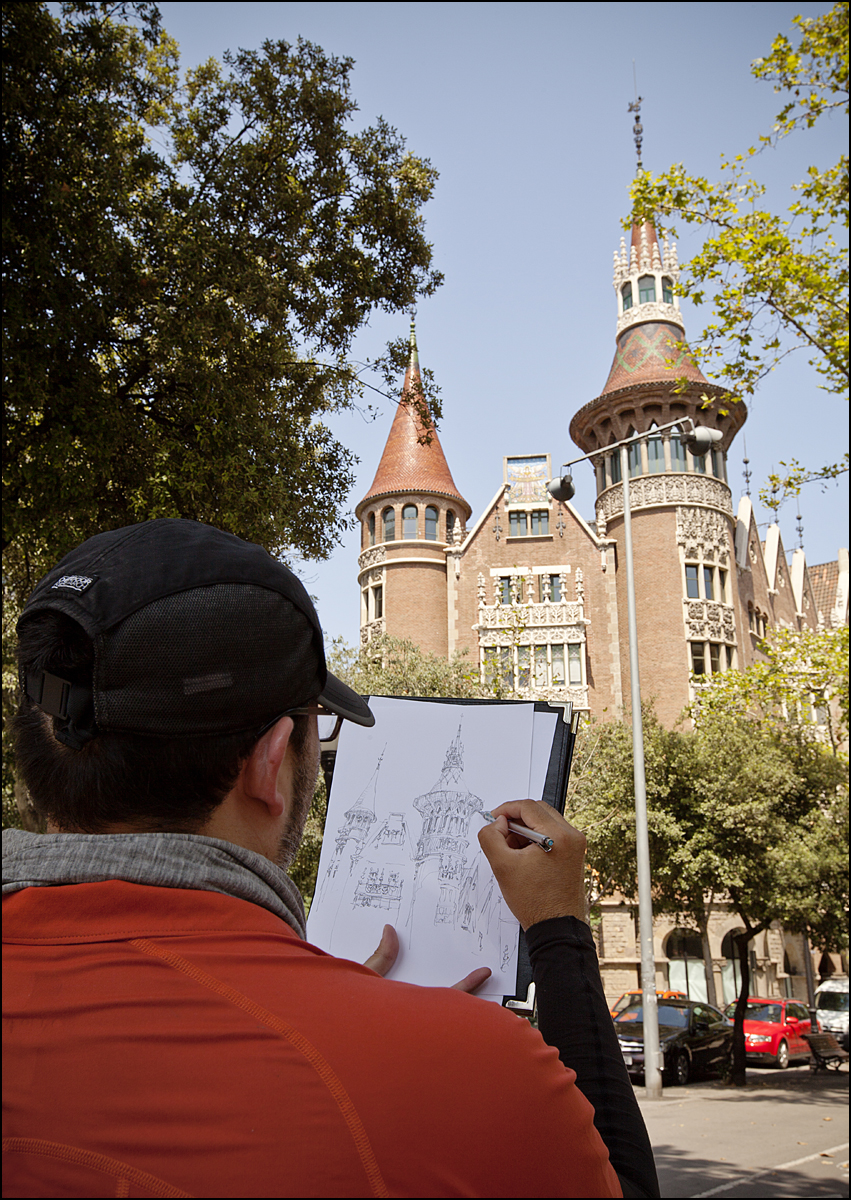
Here’s the drawing in progress on location.
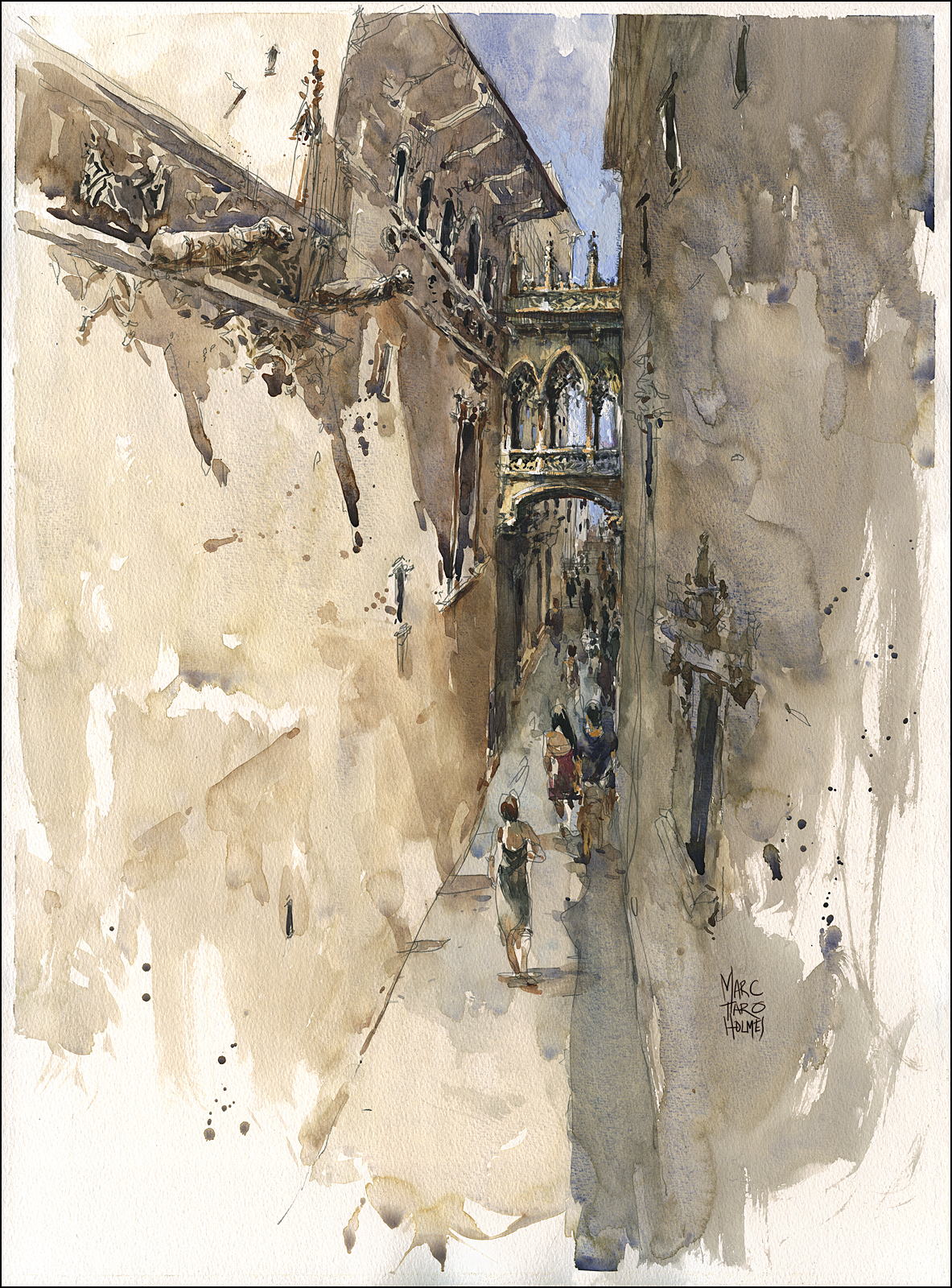
[Bisbe Street Bridge, Gothic Quarter, 12×16]
This little bit of fun is in behind the cathedral in the Gothic quarter, and is probably the most photographed bit of the city. Because it’s so cute! How could you not love a style of architecture called ‘Flamboyant’.
Wikipedia has an interesting side-thread on the authenticity of this area. I gather there was a strategic policy in the 1920’s to insert some history into this neighborhood. A plan to improve the image of the city and attract visitors. I would bet that has been an excellent return on investment. Architects are divided as to if this sort of faux-history is valid. I personally like it – why not? It’s an artistic response to the past. I’m ok with seeing reproductions, especially if the alternative is seeing functional modernism.
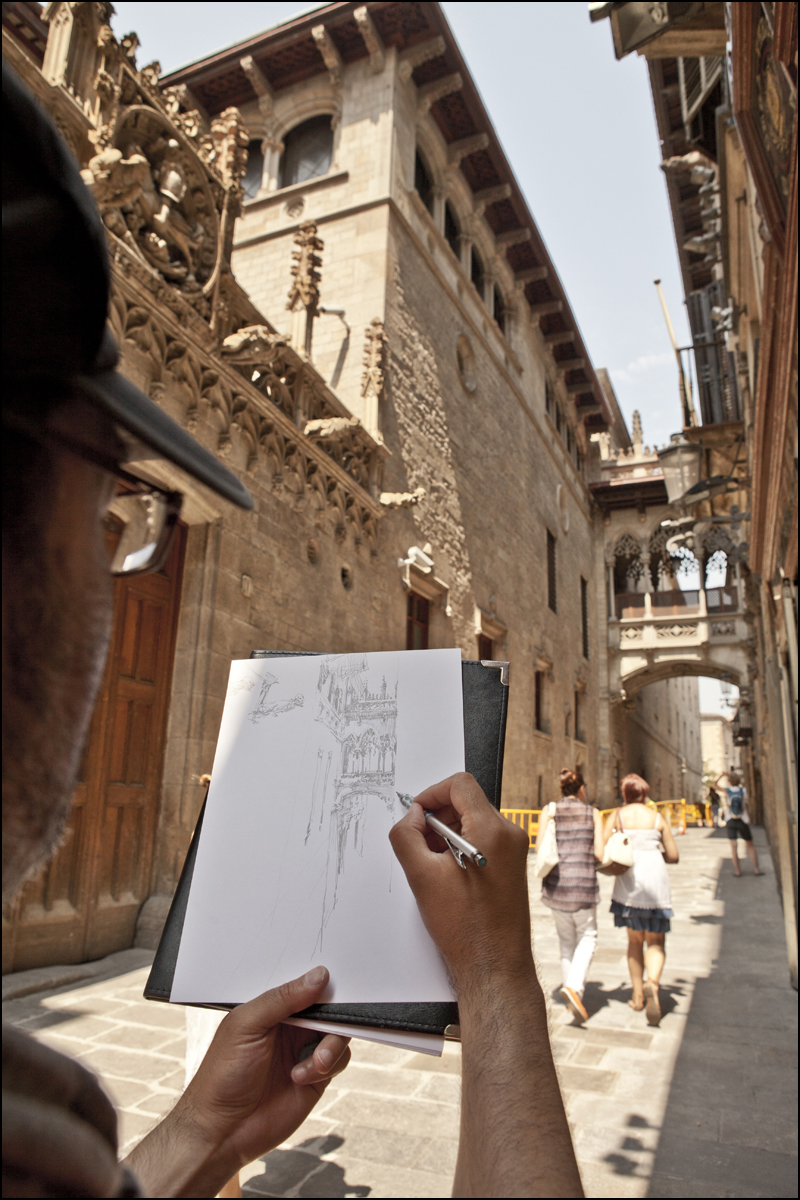
I drew this with Liz Steel on one of our post-workshop rambles. I always get the best stuff by hanging around with the architects. They scout the spots so well. For some reason I didn’t get a good shot of her drawing. Next time, better reporting skills!
TIP’s And Tricks Here! >>>
Just a side note for those interested in the process. This trip I was sketching multi-page drawings on location, (the trick shown here, and here) printing them onto watercolor paper back home, and painting in the studio.
There is an interesting discussion to be had as to how true to ‘Urban Sketching’ that process is :) We have a desire to draw on location, from observation, which has so many advantages I won’t even get into it. Of course, we’d prefer to do the whole painting on the spot as well – it’s easier, and the results are always better if this is possible – but it’s a trade off isn’t it? Do you spend three hours on location getting one painting, or do you get as many sketches as possible and paint them later?
I’ve done it both ways. This trip I opted for sketching like mad and finishing later. There was so much to see in such a limited time, I’d kick myself if I came home with only eight paintings, instead of this stack.
Street Drawing Tip! >>>
The other deciding factor was the high incidence of pickpocketing and theft in this area. Unfortunately we had a number of street-crime incidents before, during and after the workshop, so I decided on the-better-part-of-valor and carried everything on my person in a very small bag. I hope to do more painting in Brazil this upcoming 2014 symposium. I should think Paraty would be more laid back than downtown Barcelona. <Edit – yes it was!< Check out the paintings :)
Quick Dash to the Redpath
My friend John Wright, (Ottawa) was in town for the afternoon – we ducked into the Redpath Museum (McGill Campus) for a quick bit of sketching and jawing about the life of the traveloguer. (Spell check says that is not a word. Seems like it should be.)
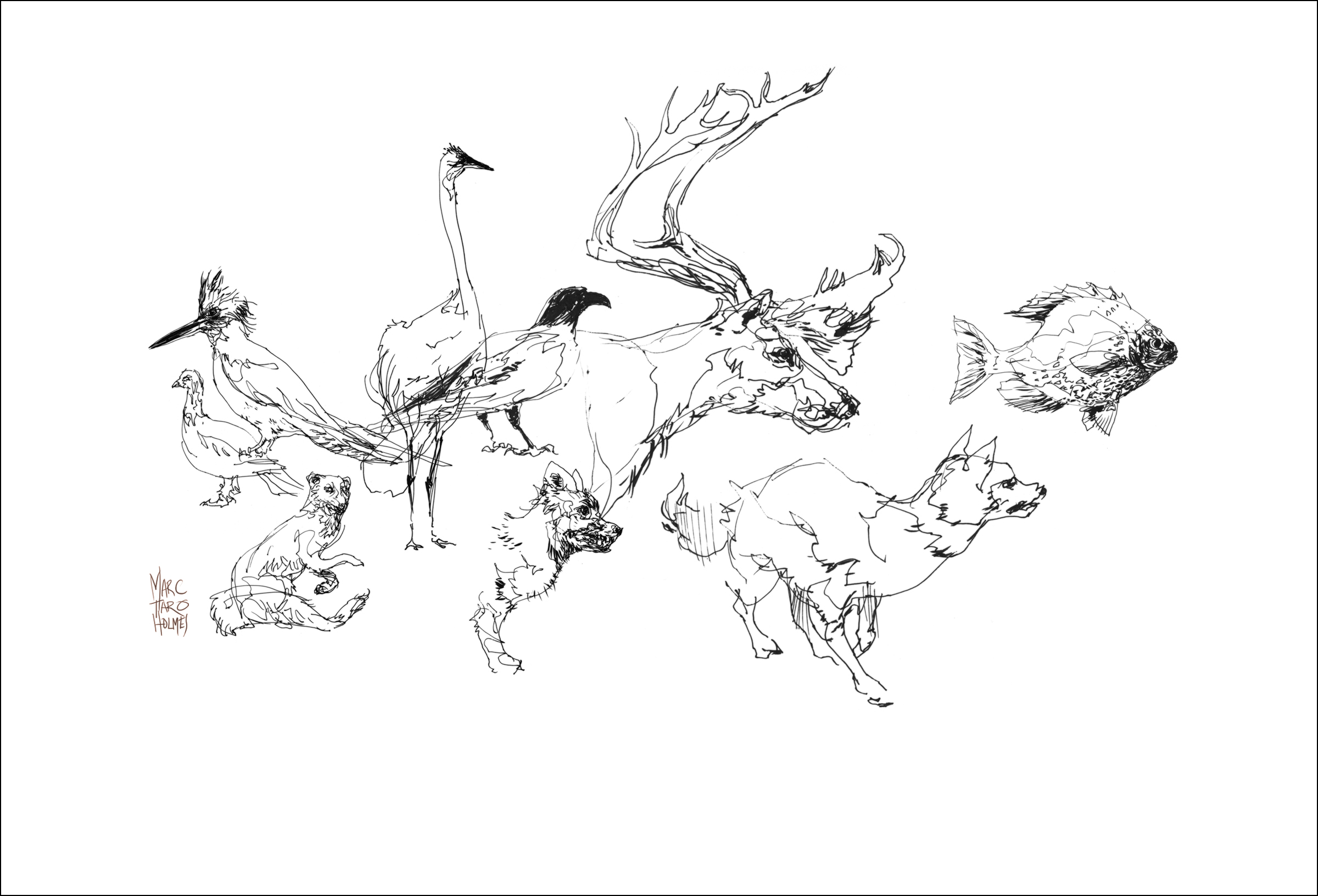
[Ballpoint and Brush Pen]
I’m planning to go back to the Musuem in January for the USK:MTL open sketching Sunday. Maybe I’ll see some of you there? I’m always sketching the stuffed animals, but there is something to draw there for every taste.
Class Demo: Sargent Copy
As part of my watercolor class at Syn Studio (which I am hoping offer again next January: five spaces left I believe: register here). I had the students doing a master copy, (or a work from a photo, their choice).
I found some time to do my own – a copy of a Sargent. I wasn’t attempting to get the drawing perfect, this was only about an hours work, demoing in class. Mainly I wanted to see if I could reach the same values in three Tea, Milk, Honey passes.
Achieving sufficient contrast is an obsession with me. I love contrast. Comes from many years of drawing with pen and ink I suppose. I’m always feeling watercolor is at risk of looking pale.

Things I would do if I wanted to really get this right:
1: Work from a better reproduction. I just had a jpg to work from.
2: Cotton paper with more texture (Arches 300 probably). I was using Canson Montval machine made paper. Which is fairly slick, lacking texture.
3: Sables. I am always telling people Sable brushes are not absolutely necessary. Now, in trying do some of the dry brush that I’m seeing Sargent’s sketch, I’m really noticing synthetic fibers don’t do the job. They don’t splay out as naturally, and don’t hold a ragged shape when ‘stabbed’.
4: Deeper pigments. I think I’m seeing Indigo blue? something other than the Sap Green/Prussian/Burnt Sienna I used for my dark
5: Practice. Of course, goes without saying. My own brushwork is clumsy by compare. But if I might be so bold – I can tell if I invested effort in this, it would be possible someday. That’s good enough for me for now.
Here’s a larger shot:

USK:MTL Portrait Party
This month USK:MTL needed a place to sketch indoors. It’s officially too cold to sketch in the streets. It seemed like a great idea to do a Portrait Party.
Even if you’ve never been to one, it’s pretty straightforward hey? Just invite a bunch of artists, sit around a big table and draw whoever is sitting across from you. Nobody is supposed to worry about accurate likenesses or being flattering. Anything goes as far as media or style. You shouldn’t be a perfectionist, approach it with a sense of fun. You are donating your own visage, in return for borrowing another person’s face.
In order to loosen up for the night I sketched a few students in my watercolor classes. (Which still has a few openings next session :) They were working an ‘open’ assignment, doing their own thing, so I stole some high speed impressions in between my walk-and-talk critique rounds. (Ballpoint and Kuretake #13 Brushpen).

After last week’s drawing day at the Higgins Armory, some of the artists headed out for dinner. Immediately (without even asking) we brought out sketchbooks and began drawing each other.


Here’s Greg Shea, James Gurney and Gavin Baker.
The week before that I’d gone to a Montreal Drink and Draw party – and brought back these – done with Private Reserve water soluble inks.

So, what with all these social drawing situations I was thoroughly warmed up for USK:MTL’s official portrait party.
I brought three Canson 9×12″ watercolor blocks and just rotated through the sketches – switching whenever the paper was soaked, so they’d be mostly dry by the time I got back to the top of the rotation.
It was quite cold at our location – (you’ll see everyone is wearing scarves indoors). A chill always slows down drying time. I think that was actually an advantage – I ended up working more wet-in-wet than I would normally, which is handy inside the flesh tones. Though, strategically speaking, I’m still mostly following my wet-on-dry, Tea, Milk, Honey method of three passes of gradually richer washes.

[Benedicte]
I think these are all good examples of my philosophy about drawing eyeglasses. Which is – as much as possible – don’t draw them at all.
I try to indicate the frames with open shapes – dashed arcs that do not close the outline of the lens. Hint at the thickness and the distortion of the glass, but don’t over emphasize the frames. Even when they are the chunky dark kind that are in fashion these days. Also, consider how the eyebrow often merges with the frame. And, don’t forget the cast shadow. Just like drawing the hair line, the arms and nose-piece might need a subtle, descriptive shadow.

[Lucy]

[Suzanne}
Sketching at the Higgins Armory
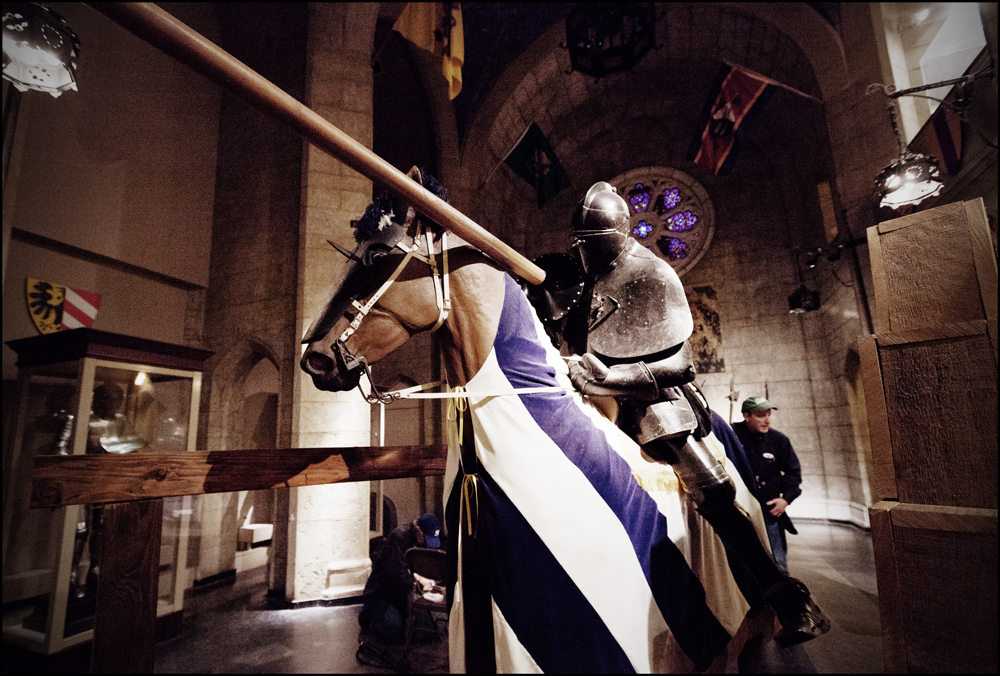
We’re recently back from the Higgins Armory in Worcester MA where we spent the day painting and drawing historic steel arms and armor. The Higgins is closing its doors at the end of the year – just til the end of December to see their world-class collection of period weapons and plate armor. (Info here.)

Our day at the museum was organized by Greg Shea, a Senior Preparator at the Yale Center for British Art. (His sketch above). Greg was able to bring together an eclectic group of artists including illustrators, game designers, fine artists and muralists. Great fun sketching with these fellows. We were able to watch both fine draftsmanship and bravura painting happening around us.


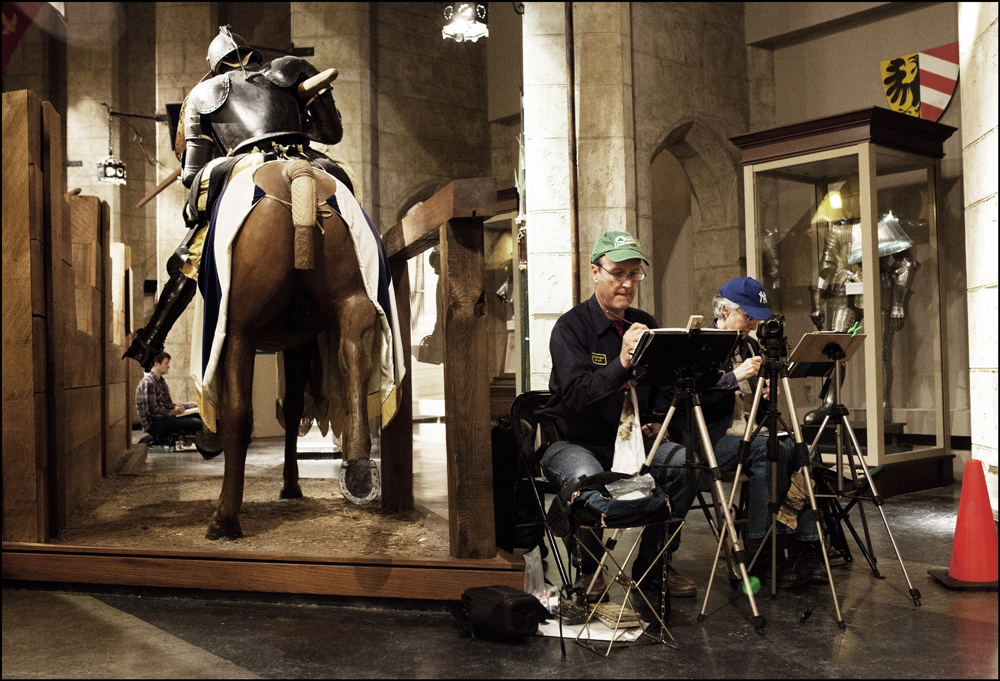
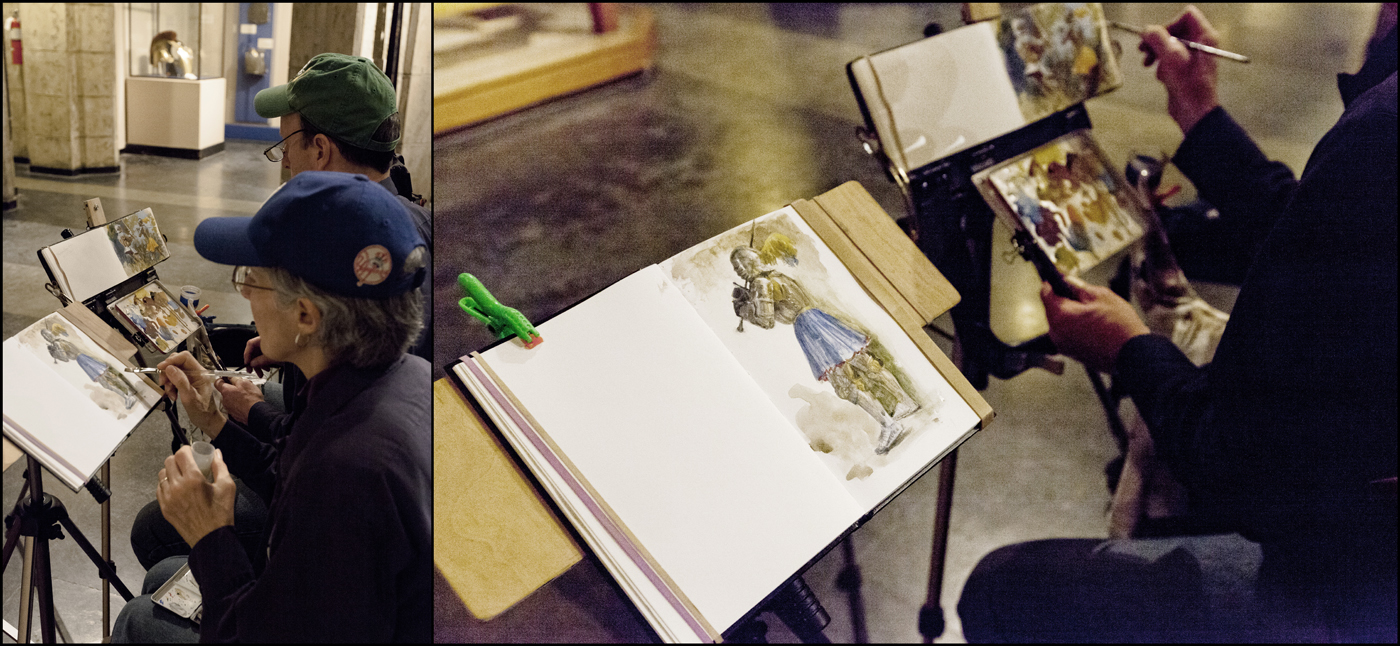
Illustrator/Author/Educators James and Jeanette Gurney were on hand painting in watercolor and casein. James has links to most of the other artists work on his blog [Gurney Journey], plus, a mini-documentary up on his Youtube.
We had a 6 hour drive from Montreal, so I was a fair bit behind by the time we arrived. I had about 2 and a half hours for my sketch. I knew I would only get one image, so I went right for the most dramatic thing I could find: a pair of jousting knights.


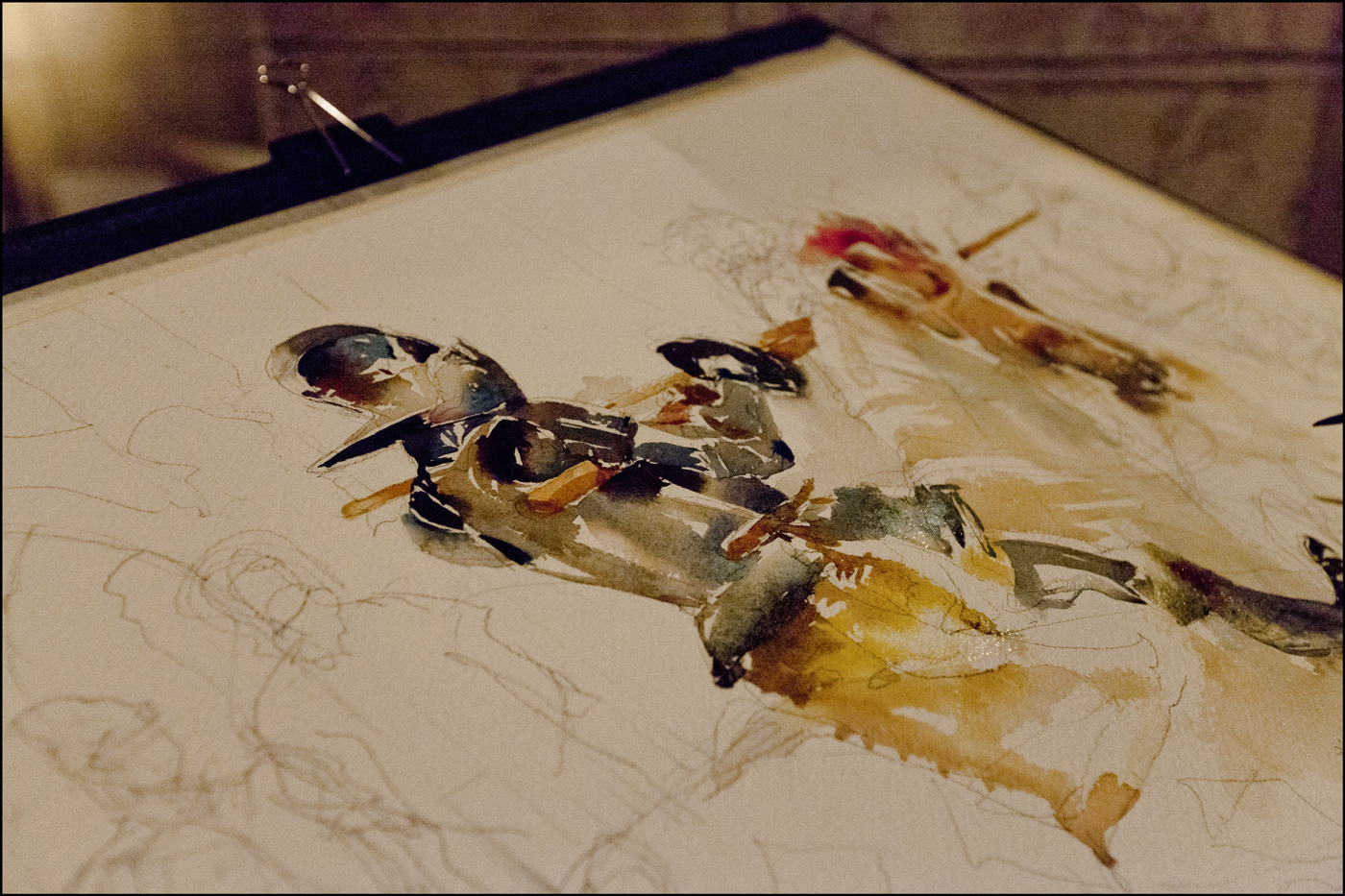

So, that’s it for the Higgins Armory – soon to close its doors forever. At least I got to paint there this one time. I hear some of the items will be acquired by the Worcester Art Museum – but it won’t be the same without the grand hall Higgins built for his armor. I’m sure many SCA re-creators and historical fencers will lift a tankard this new year’s in memory. We did our final salute in the parking lot.

Sketching at the Montreal International Game Show
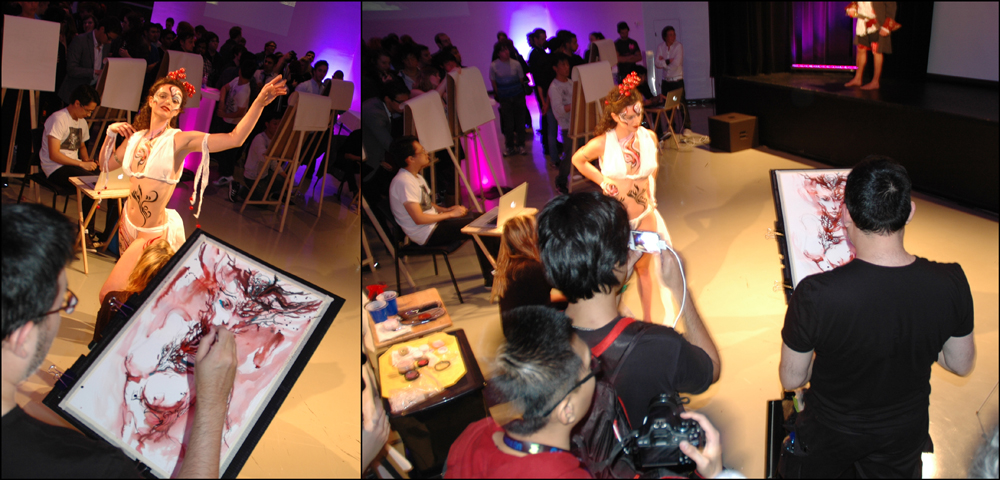
[Photos: Daniel Rabinovich]
I got an invite Monday night from Anthony and Daniel at Syn Studio to come sketch at the Montreal Int. Game Show. I was drawing the models being body painted by makeup artist Lisa-Marie Charron before they went up to pose for the audience.
Up on the main stage stage digital artists and matte painters painted on laptops projected on the big screen. Other industry pros, students and people from the audience were invited to step up to an easel and join in.
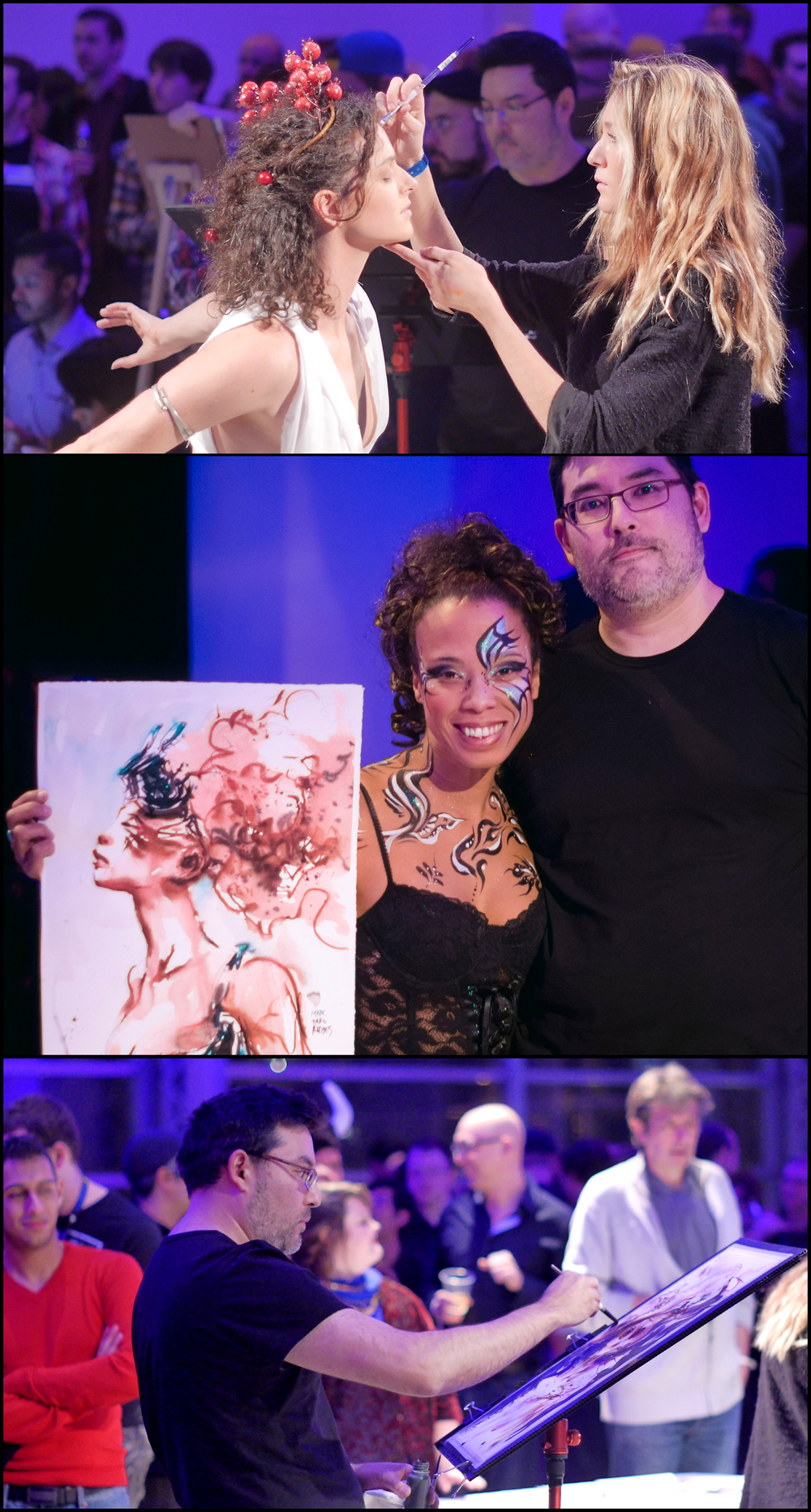
[Photos: Karolina Szablewska]
DJ Slim was on hand, providing us a mix of epic soundtrack and 8 bit video game tunes. Sketching with pounding music can become an interactive thing. I find myself making brush marks with the beat.

[Photos: Daniel Rabinovich, Karolina Szablewska]
Sketches were done with Private Reserve inks washed with clear water. (Same approach as these life drawing poses). Sorry no close-up scans, gave the drawings away to the models, Pascale, Karsten and Phylactere.
Water-Soluble sketching with Private Reserve Inks
The other day I was substitute teaching for Max Douglas’ Dynamic Drawing class. They’ve been focusing on sketching the figure in motion, which is always a favorite sport of mine. But as I’m currently teaching a watercolor course (Taking sign up’s here!) I thought I’d stay on theme and have them sketching the model with water-soluble ink line and clear water washes.
The washable properties of fountain pen ink are a useful half-step between drawing and painting. A nice transition for a person who is more of a linear sketcher, but wants a taste of painting.

It happens I’d just received a shipment of fountain pen ink samples from Private Reserve Ink. I was inquiring if they had any charts of which colors washed best, and they very generously offered me a chance to test a range of colors. Good timing for the students as I was able to give out some small testers to try in class. My quick experiments the night before showed they have excellent ‘release’ even after the ink is dry to the touch, making them ideal for line and wash.

Private Reserve offers an interesting selection of colors. I’m particularly partial to Vampire Red and their somewhat electric Daphne Blue. I’m quite sure these colors are not light fast over the long term, but if you are sketching for pleasure, or for reproduction/illustration rather than the gallery wall, that’s not a problem. Even so, any color fading that might occur will only serve to create an ‘old-masters’ drawing :)

Over our one night workshop I had people sketch fast poses with some disposable Staples.ca ballpoints that happen to be water-soluble – just to get them thinking about sketching shadow masses as ‘internal contours’ which they will melt with water.

Following this warmup we moved to the pen and spotting darks with the fountain ink – which we turned into paintings simply by melting with clear water. I can’t get enough of this magic trick.

Then adding in a third value with black Pentel Pocket Brushes. I’d have recommended the Kuretake #13 (first tests here) which has washable ink cartridges, but I couldn’t expect people to be ordering those pens on short notice.

I encourage anyone who wants to transition from figure drawing into painting from life to try out this exercise.
Syn Studio Watercolor Class, Long Pose
Last night was the end of the figure drawing section in my 10 week watercolor workshop at Syn Studio. We did three days; fast sketches, portraits, and then this long pose. We were working with photographer Rebecca Carins as our model. I’ve become an instant fan of her work. And, in fact, she’s just released a book – the opening is tonight in Toronto if anyone is at large in the city.
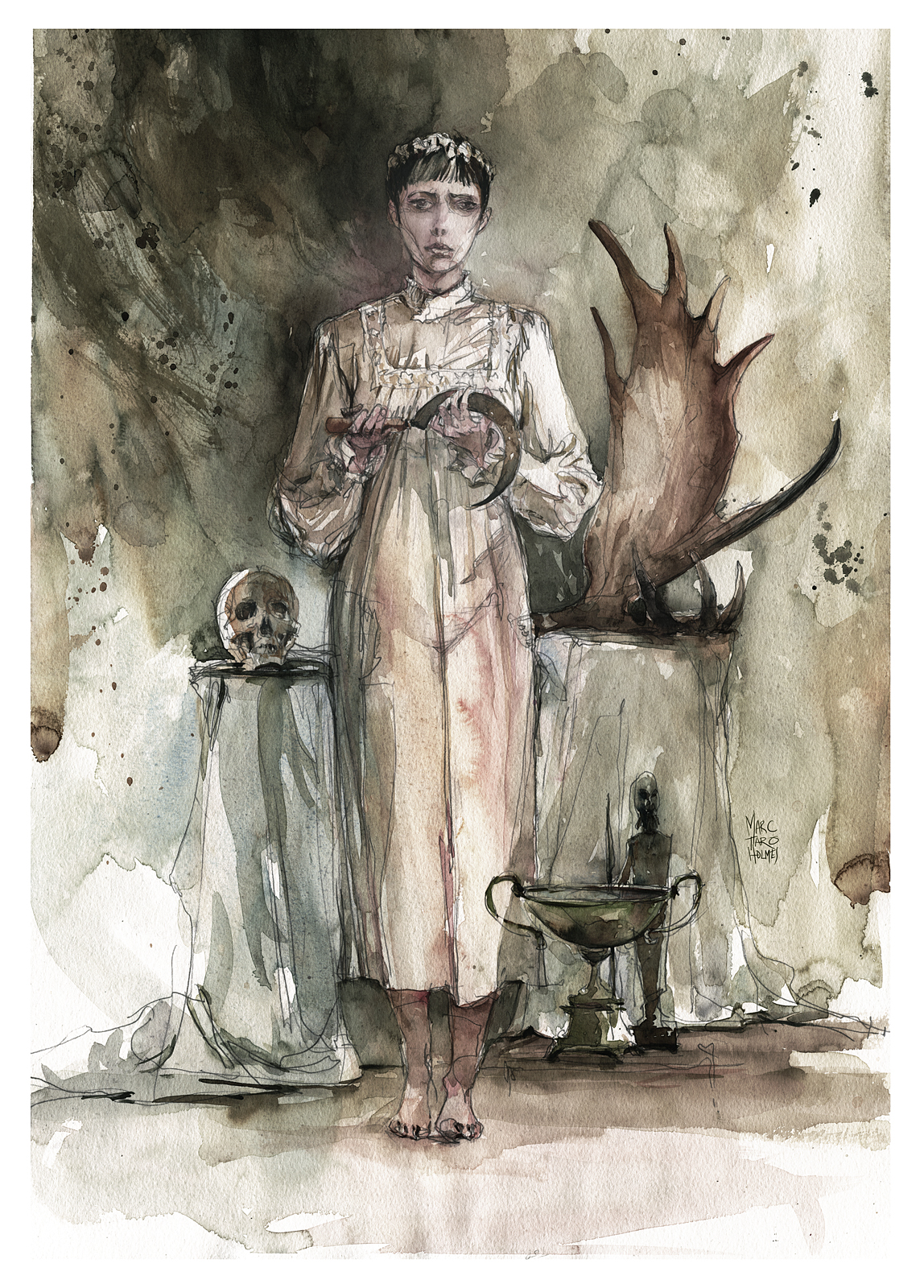
I’m seeing some solid progress among the student work as we continue to invest in the process. Everyone was able to complete this complex setup in 3 hours, and in general this mix of tight drawing and loose washes is starting to click with people. If anyone’s interested in the course, we’re running it again in January. Here’s the info. (Syn Studio)
The Watersoluble Pens
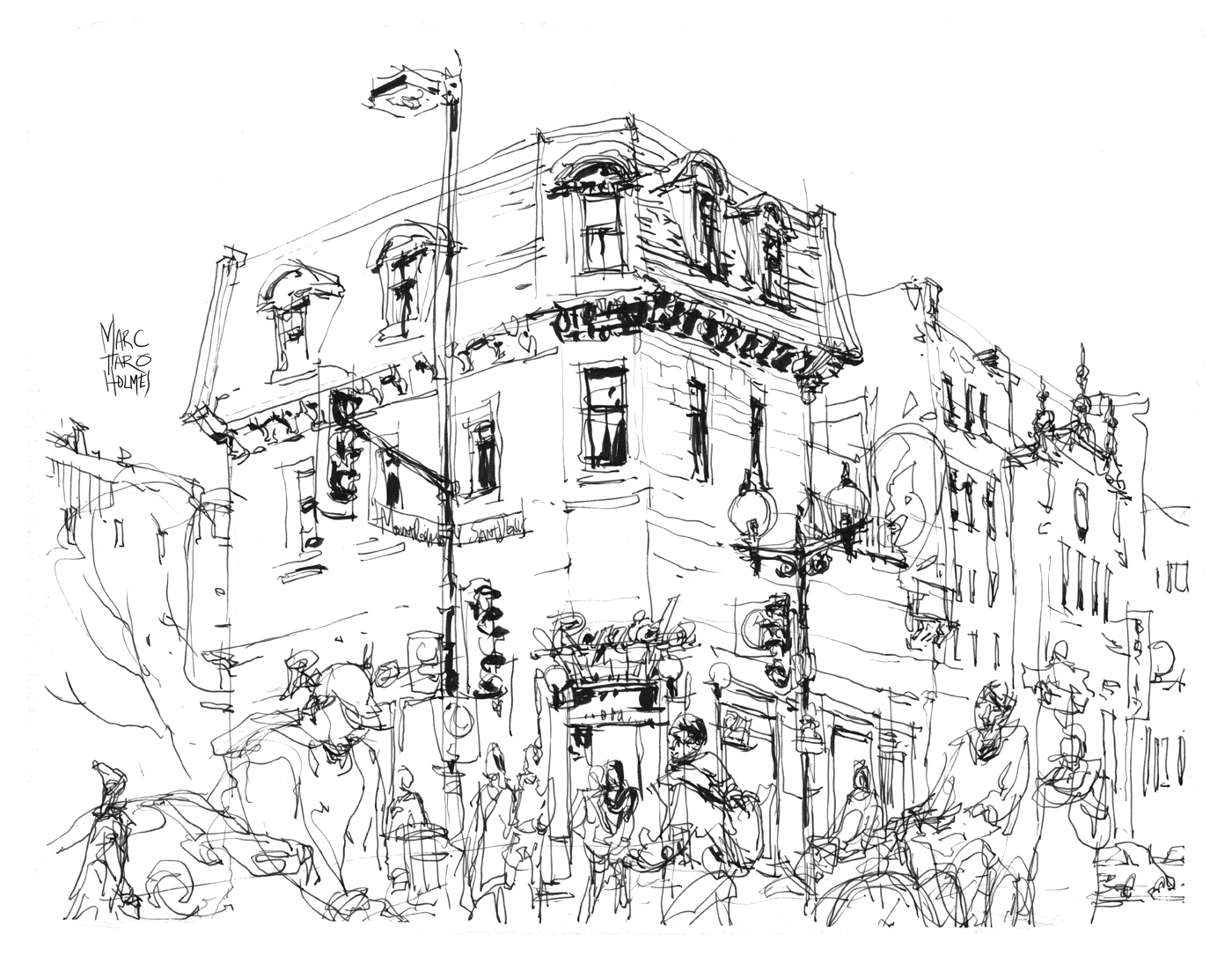
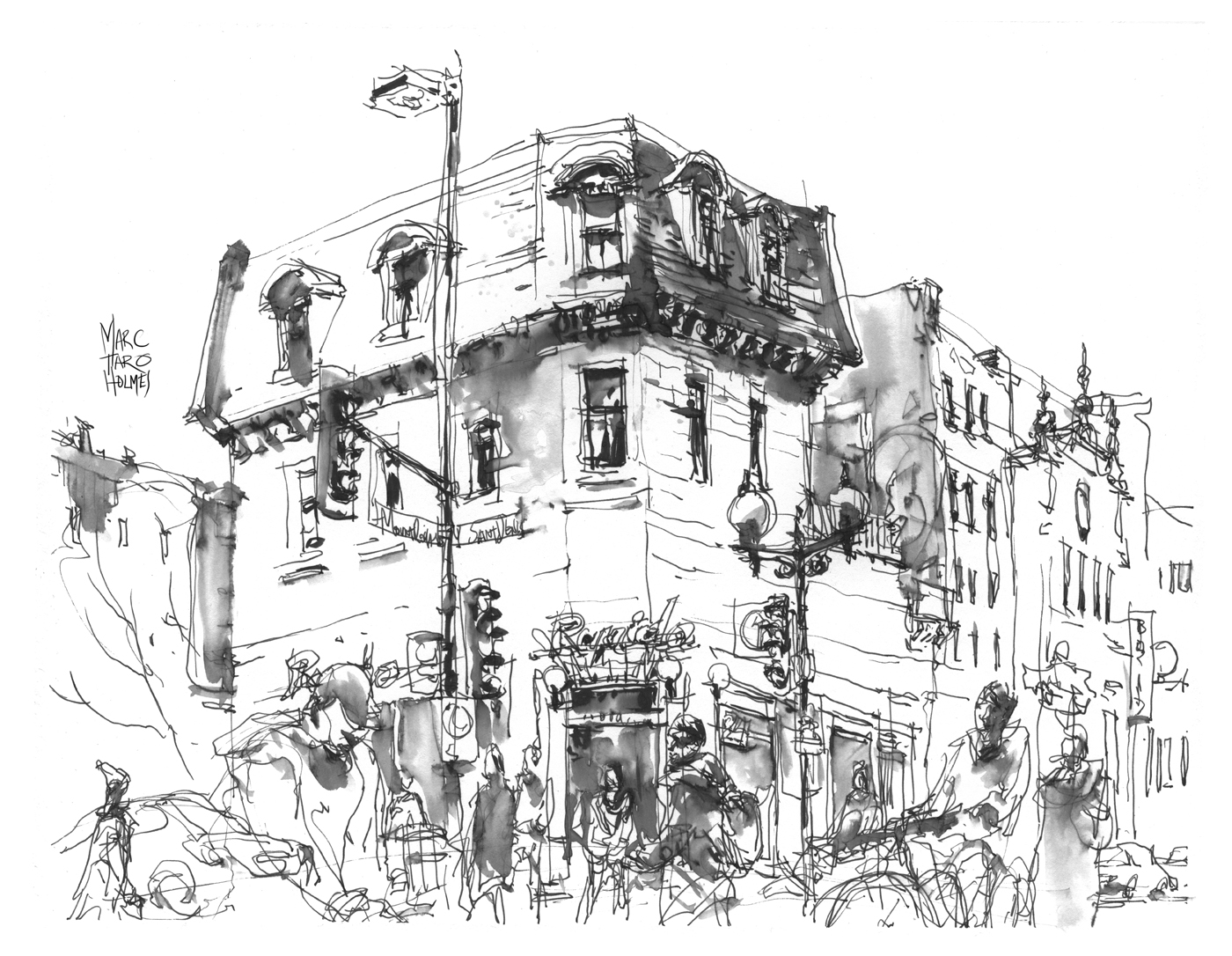
Went out sketching the other day with the MTL:USK group. Brought two watersoluble pens to the Mount Royal Plateau. My new Lamy Safari Extra Fine, and equally new Kuretake #13 brush pen. (Jetpens.com) I swapped out my usual Pentel Pocket Brush, in favor of the Kuretake, to enjoy the water-soluble properties of their cartridges. Here’s some lines, followed by clear water melting. It’s a neat magic trick. World’s most convenient watercolor kit.
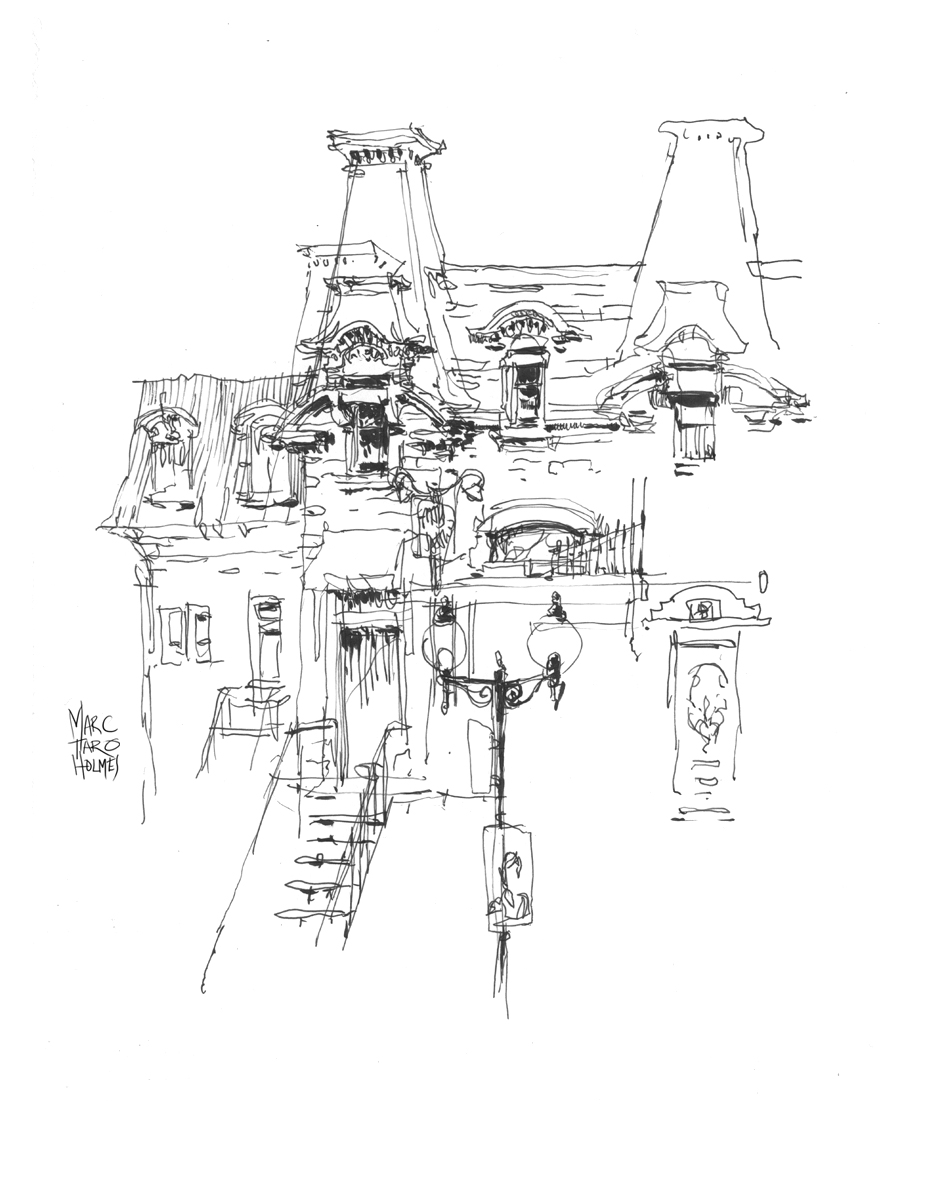
I can also report, the Kuretake is capable of much finer work with the point (vs. the Pentel GFKP Pocket Brush). It’s about twice the price however, so there is that. As well, the K#13 has a metal barrel, that I find quite slippery, so that’s a bit annoying. But you can’t have everything! You have to love the convenience of a convincing ‘real’ (nylon?) fiber brush in a fountain pen format.
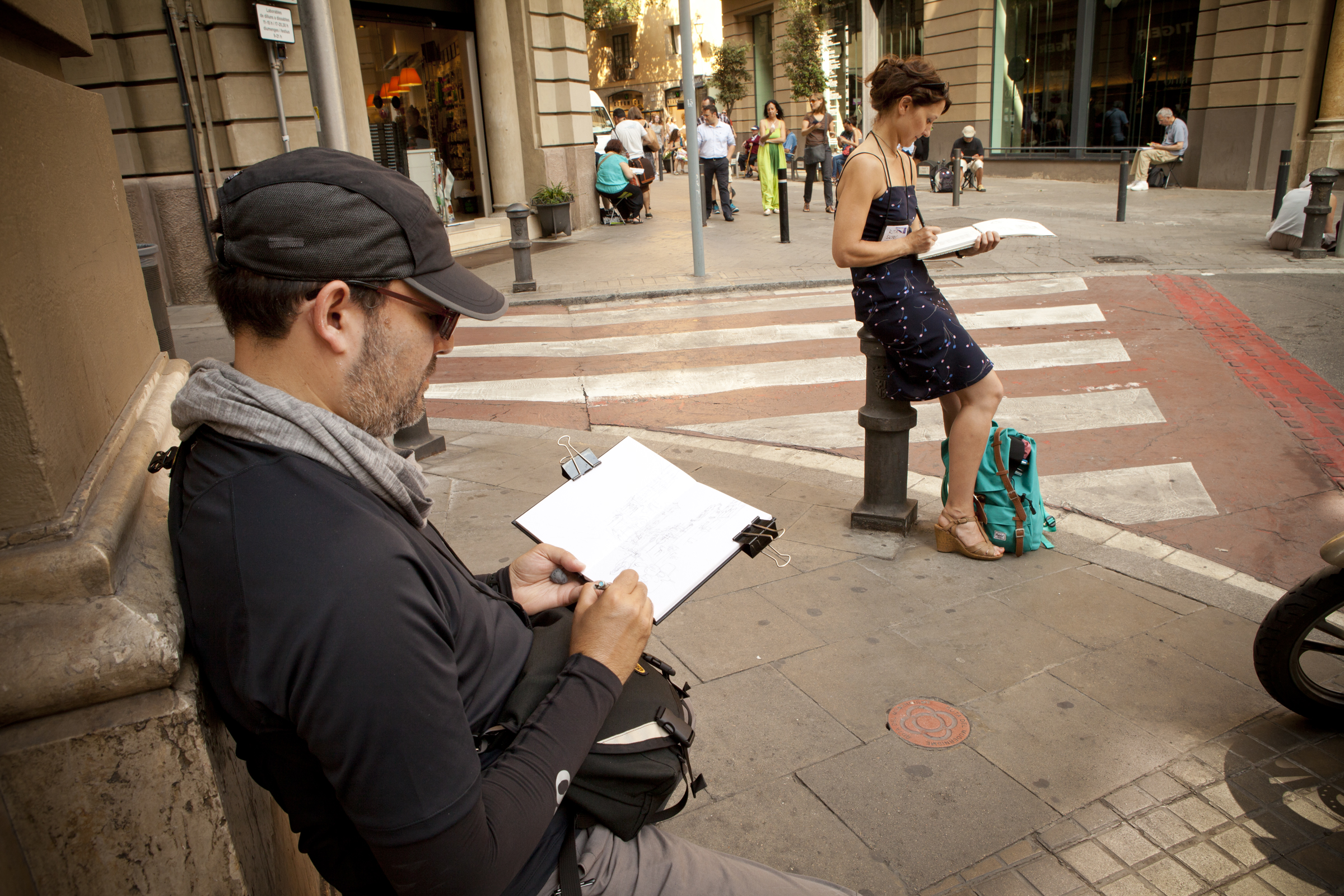
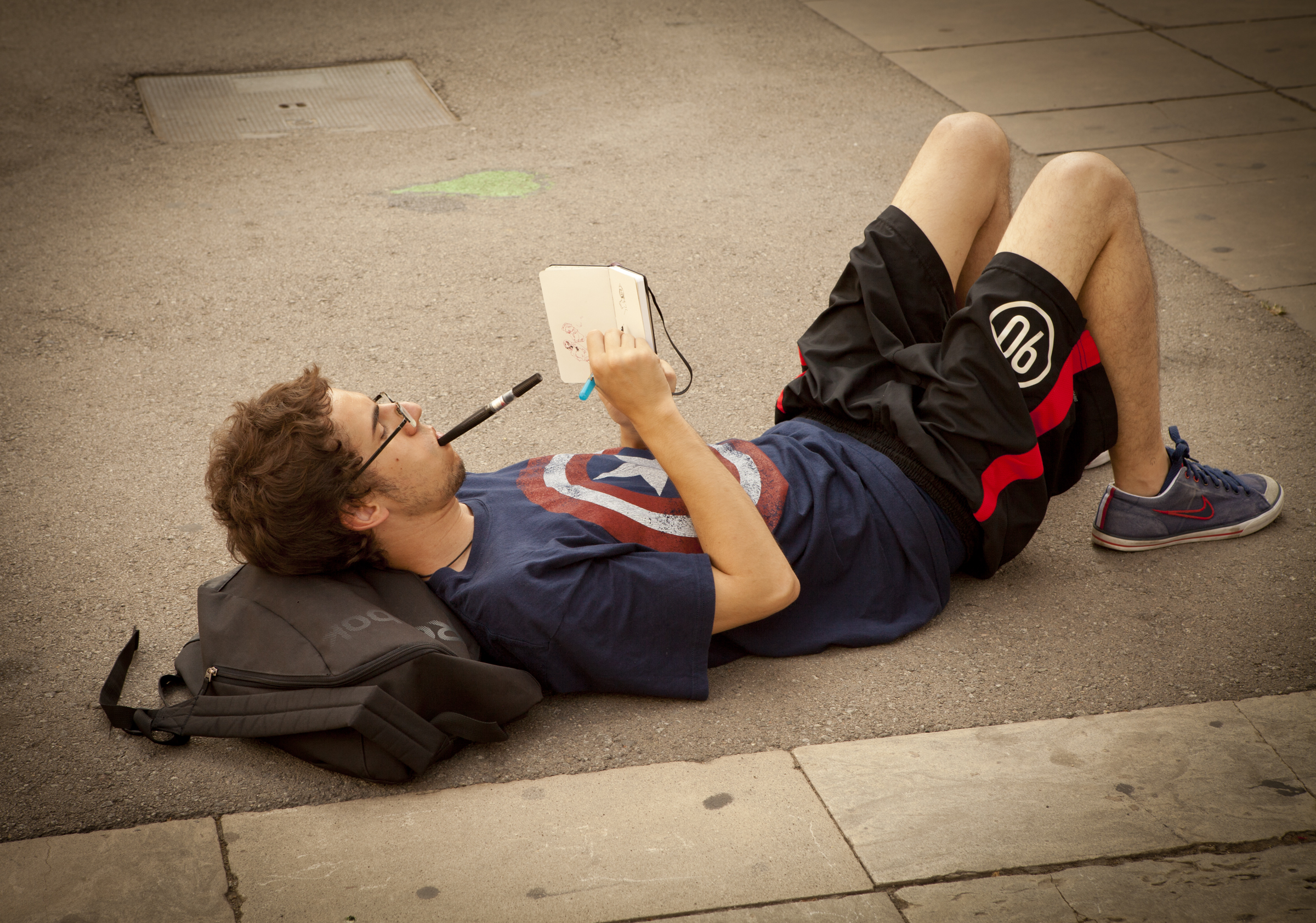
Pics from Barcelona USK 2013
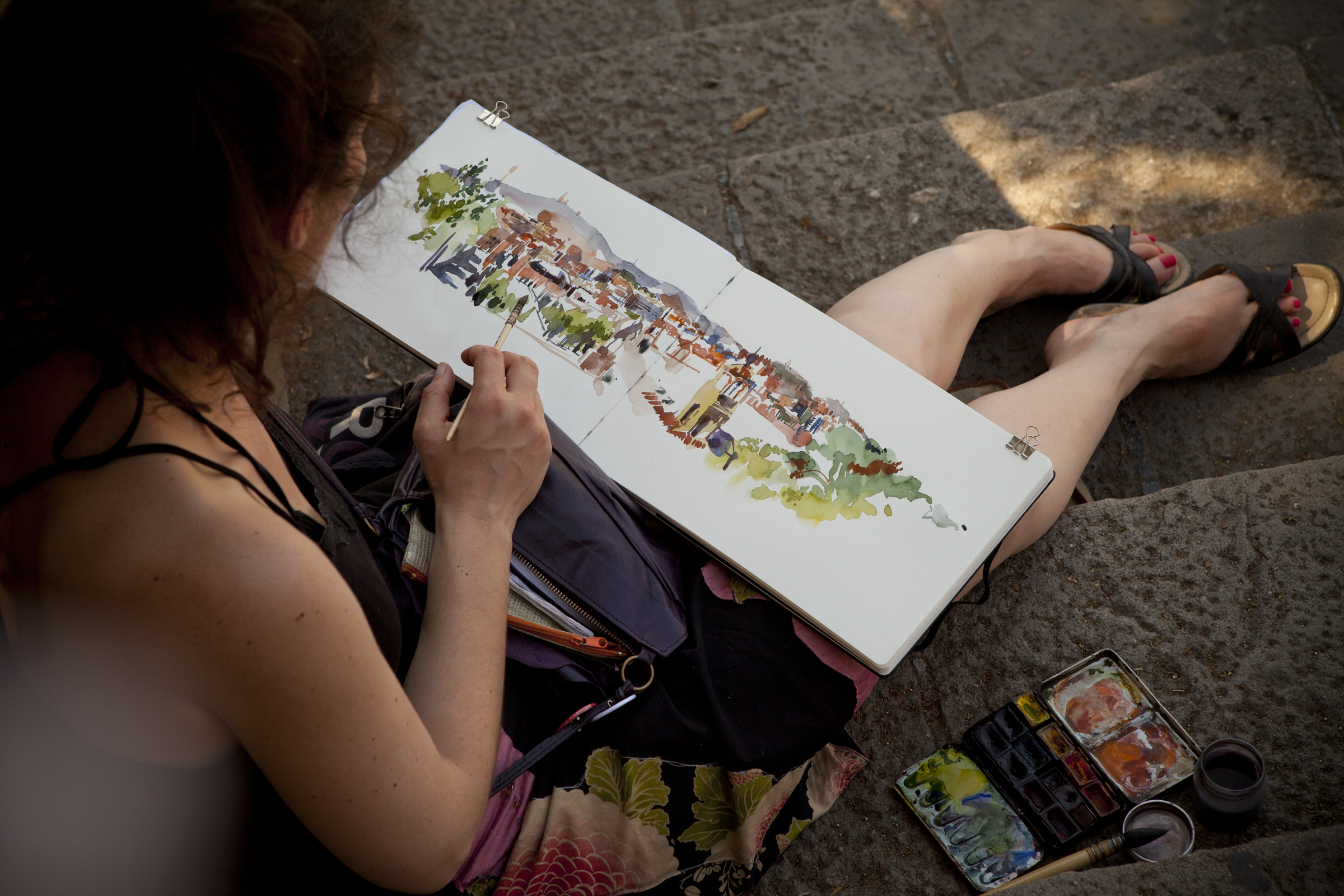
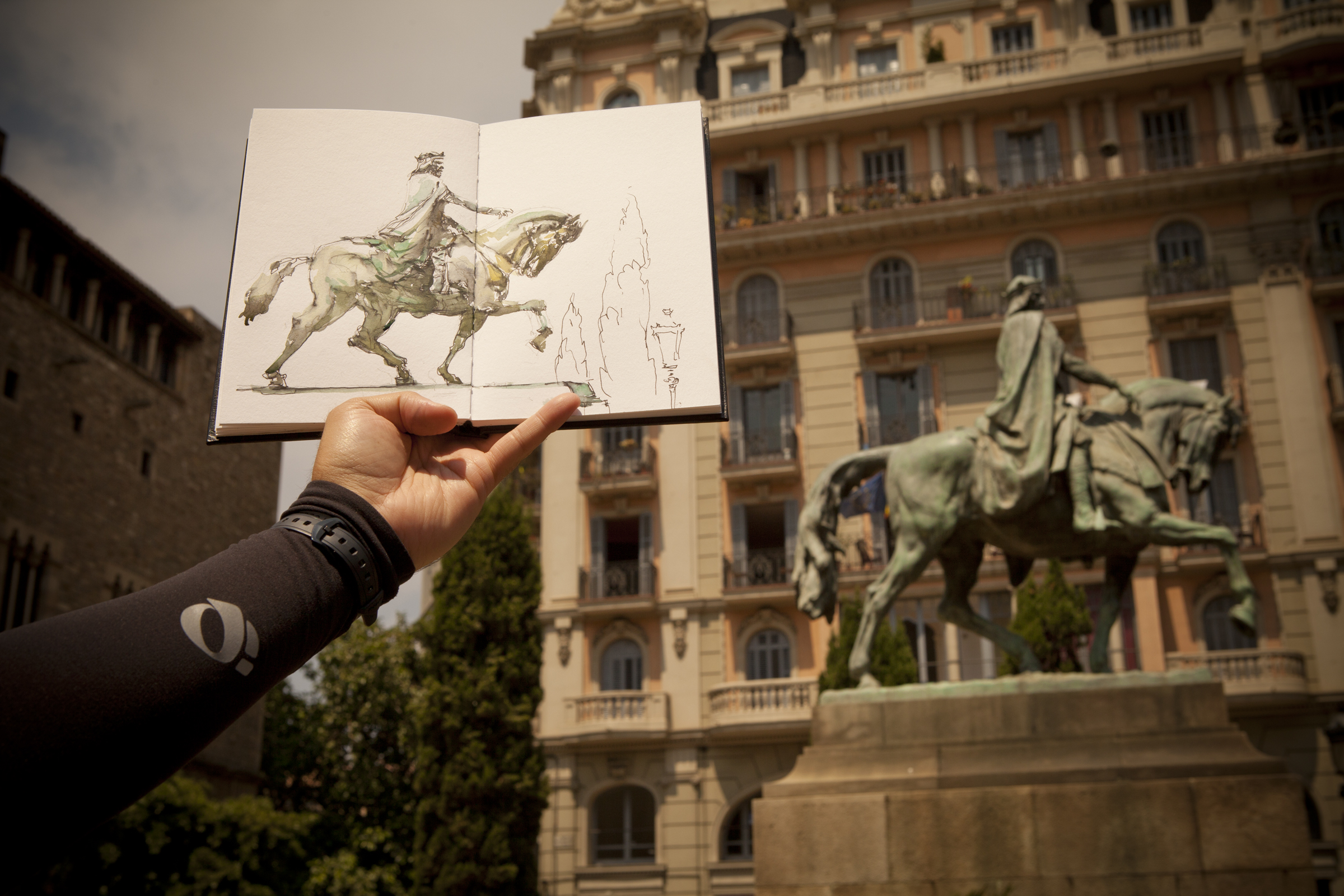
Wow, things have been busy, and it’s been a long while since Barcelona 2013. I’ve finally uploaded some pics of the event. We had a great time, and are looking forward to Paratay in Brazil, 2014. Mini-Gallery up on my Flickr (Here).

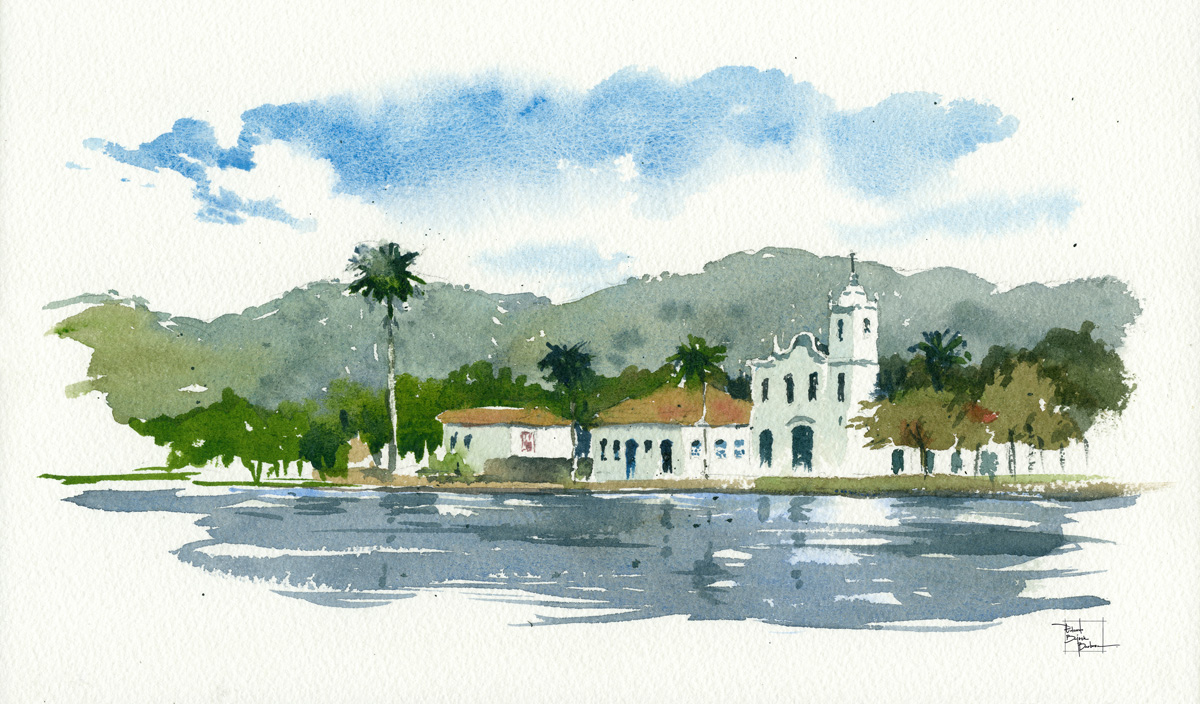
Looking forward to Paraty Brazil 2014. Here’s a sketch from Eduardo Bajzek, who has scouted the location for us.


 Citizen Sketcher