Good Question of the Week: Desert Island Brush Choice
A person taking my Craftsy.com People in Motion class recently asked a classic question in a creative way.
“Hi Marc. I’m enjoying your course and so great to see you demonstrating your techniques after following your blog. If I can please ask you. if I had only one brush (to take to a desert island) what size and kind would it be?”
Short Answer: This is a great question – and very hard to answer. But considering you are asking about travel – I’m going say it would be a #10 Da Vinci Maestro Series 1503 Travel Brush.
(That’s an Amazon affiliate link, but you can find them at any major online retailer of your choice – they also come in a much more affordable synthetic line).
The thing I love about a good sable brush – it has both a super sharp point, and at the same time, holds enough water to lay on it’s side and make a big shape. You can do an entire painting with this brush, from biggest shapes to smallest detail – (as long as it’s a smallish painting – 8×10 sort of size).
Plus, you can rely on the Da Vinci travel brush for their indestructible PVC self-enclosing body. You can take this brush anywhere. Throw it in a bag and leave it there for years. Even carry it in a jacket pocket. The only thing to know is, even though there is a tiny hole in the cap for air flow, you do have to open it up and let it air dry overnight (especially if you’re in a humid climate), so the ferrule doesn’t rust.
I will say, this brush is hard to find in shops, and is a bit pricey because of price fixing cartels and international trade regulation on pure sable hair.
You don’t *have* to get the travel model – I often carry normal wooden handle brushes in a zip up brush case. But, that’s clearly not as portable.

Longer Answer: If I was allowed to add only a second brush it would be a Winsor and Newton Series 7 sable in a #2 long hair version. It is almost a rigger in length.
W&N also has a line called Artist’s Water Color Sable that is very good as well. Sort of a second tier of hair, that seems very nice, and comes in a similar long-hair style.
I use these for tiny linear details, such as tree branches, long hair, wrinkles in fabric, power lines, water ripples – whenever you are drawing something detailed and linear or dashed in nature.
So, one big brush, one tiny.
Bonus Answer: I am loving having a dagger brush. Great for foliage, water and skies. Very expressive to draw with. I’m trying this new synthetic called Princeton Neptune. It seems fairly nice for a synthetic brush. Very soft-yet-whippy. But I haven’t had them long enough to really say much yet.
I am also carrying a Princeton Neptune Oval Wash (sort of a huge filbert shape) in a 3/4″ size – for skies and large foregrounds of grass or water.
Quest for the Perfect Sketching Bag : Timbuk2 Especial
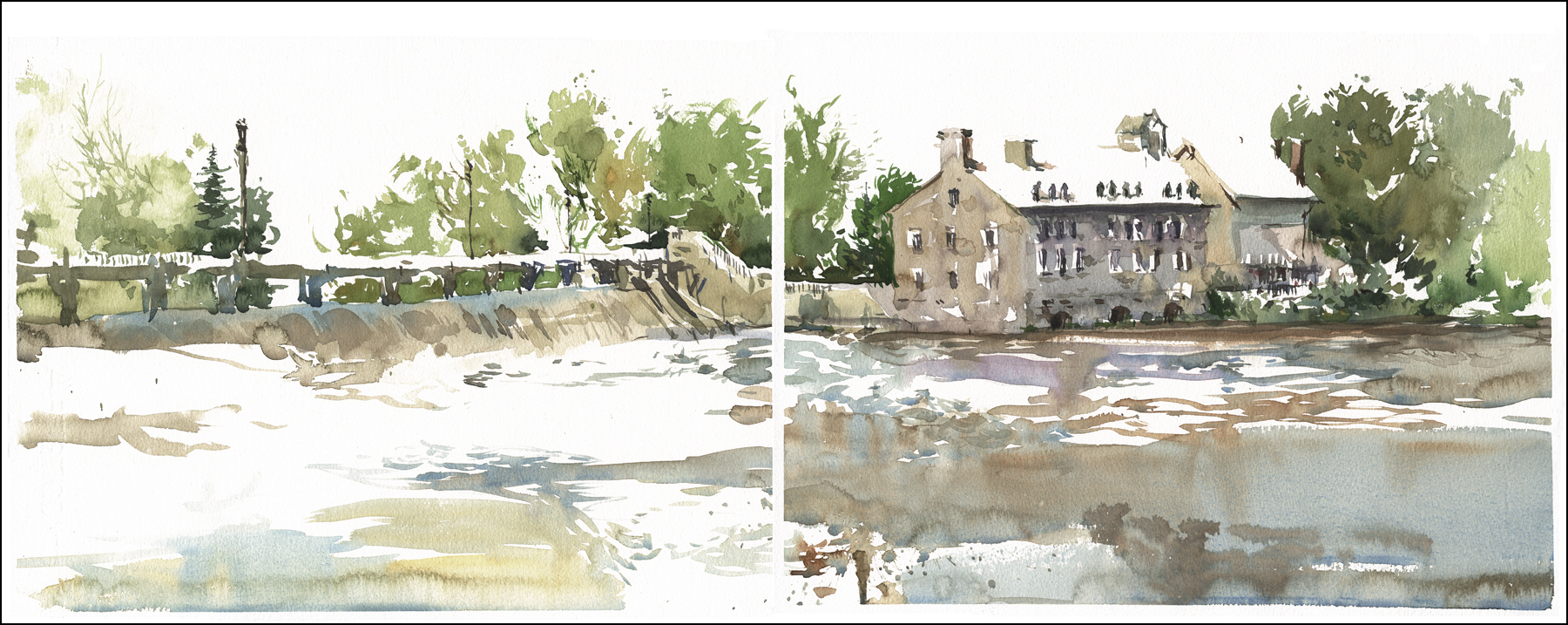
Last summer’s painting season I found myself doing a fair number of panoramic diptychs. I’ve been using two 1/4 sheets of watercolor paper (11×15″) taped to 14×18″ coroplast boards to give me a wider landscape format. I expect I’ll be doing more of these this year.
I quite enjoy the panoramic feeling – and it’s super convenient to do it in two panels. Much like a big sketchbook, being able to ‘fold them up’ allows me to easily carry a big painting like this to pretty much any location.
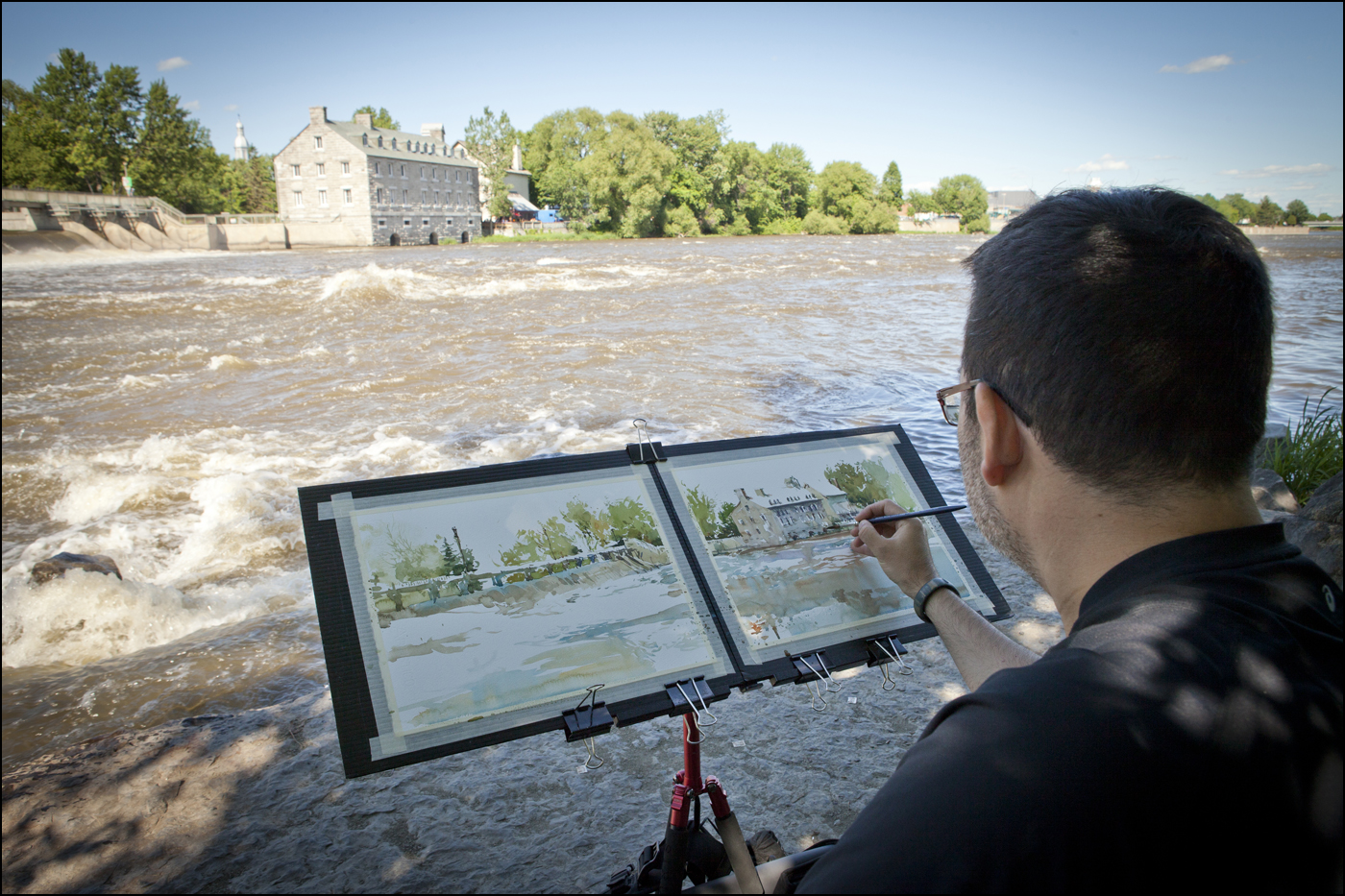
Oddly, one piece of gear that becomes a huge part of this trick, is my new(ish) shoulder bag.
It seems like a minor detail, but it makes all the difference to have just the right bag. I like to be able to setup and take down quickly. Sometimes you simply won’t get the shot if you don’t throw down your gear and get started. But I also like to keep most of my gear still in the bag at my feet – in case I have to relocate quickly. Like that time we were painting on a not-actually-out-of-service train track.
Here it is. My ideal sketching bag, the: Timbuk2 Designs Especial Cycling Messenger Bag

This expandable beauty fits my 14×18″ drawing boards like it was custom tailored for them. I can carry a fat stack of six panels, and still fit my Sirui Tripod
It has two well-positioned luggage handles on the short side, so on the subway or in a crowded restaurant, you can carry it briefcase style, and not bark anyone’s knees.
The shoulder strap is comfortable, and easily tightened to snug the bag to your body – and can even be re-positioned to change the angle on your back in case you’re a bit taller/shorter than average.

I particularly like the easily accessed side zip pockets (one on each side). These are designed to be reached without fully removing the bag from your shoulder. Great for your small sketchbook and pens, so you can instantly have a book out and drawing for those action shots. Or for your keys, so you can stumble through your door without having to dump your paintings on the doorstep.
So, there it is – a simple bit of kit, that makes it a little easier to do larger paintings out on location.
Biodome Redux : Big Ink!
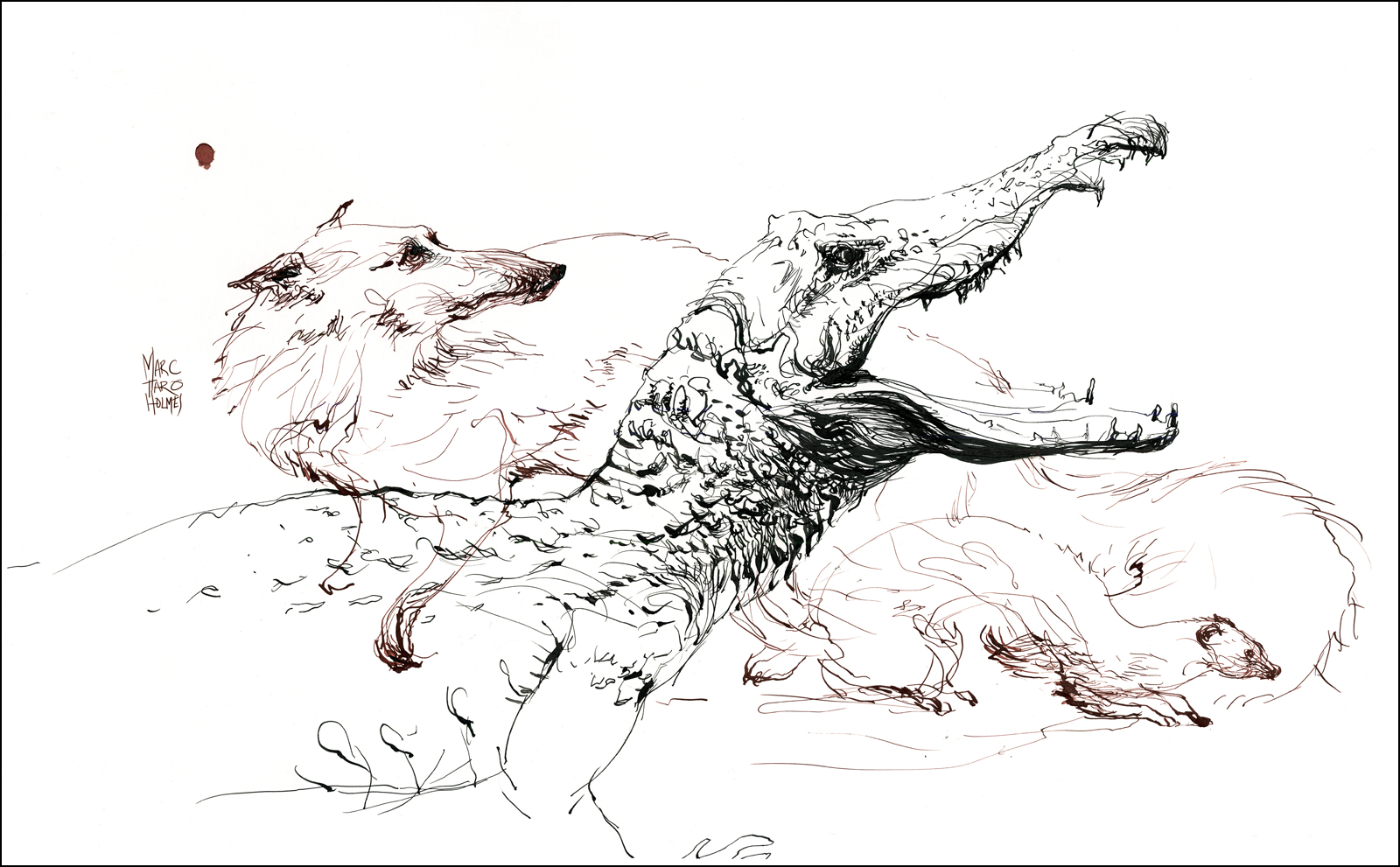
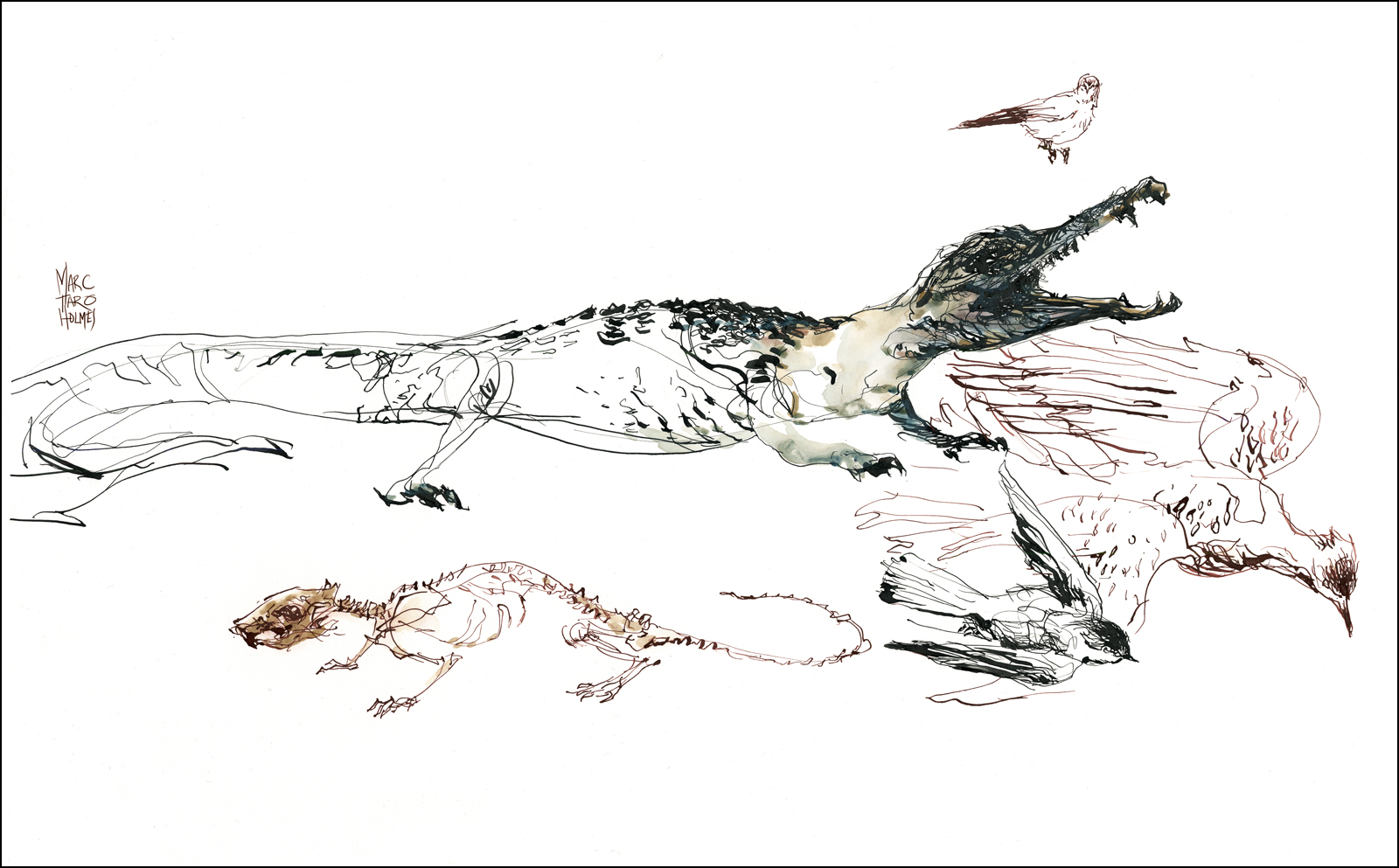
Here’s my sketches from the recent USK:MTL day trip to the Biodome Naturalia taxidermy collection.
Considering we had just scouted the place the week before, I wanted to switch up my technique. Last time was pencil and watercolor in a sketchbook. This time, large format (14×22″) ink drawings with the dipping pen. This format was probably too big honestly. I think 12×16″ or 11×14″ might have been fine. But it does allow you to crazy with broad pen strokes.

My main goal for today was becoming completely comfortable drawing with a bottle of liquid ink.
This might sound silly, but the fear of spilling ink has been the main thing holding me back from drawing with dip pens on location. I do love fountain pens, and they are a great solution for travel. But I’d rather be drawing with these more flexible nibs.
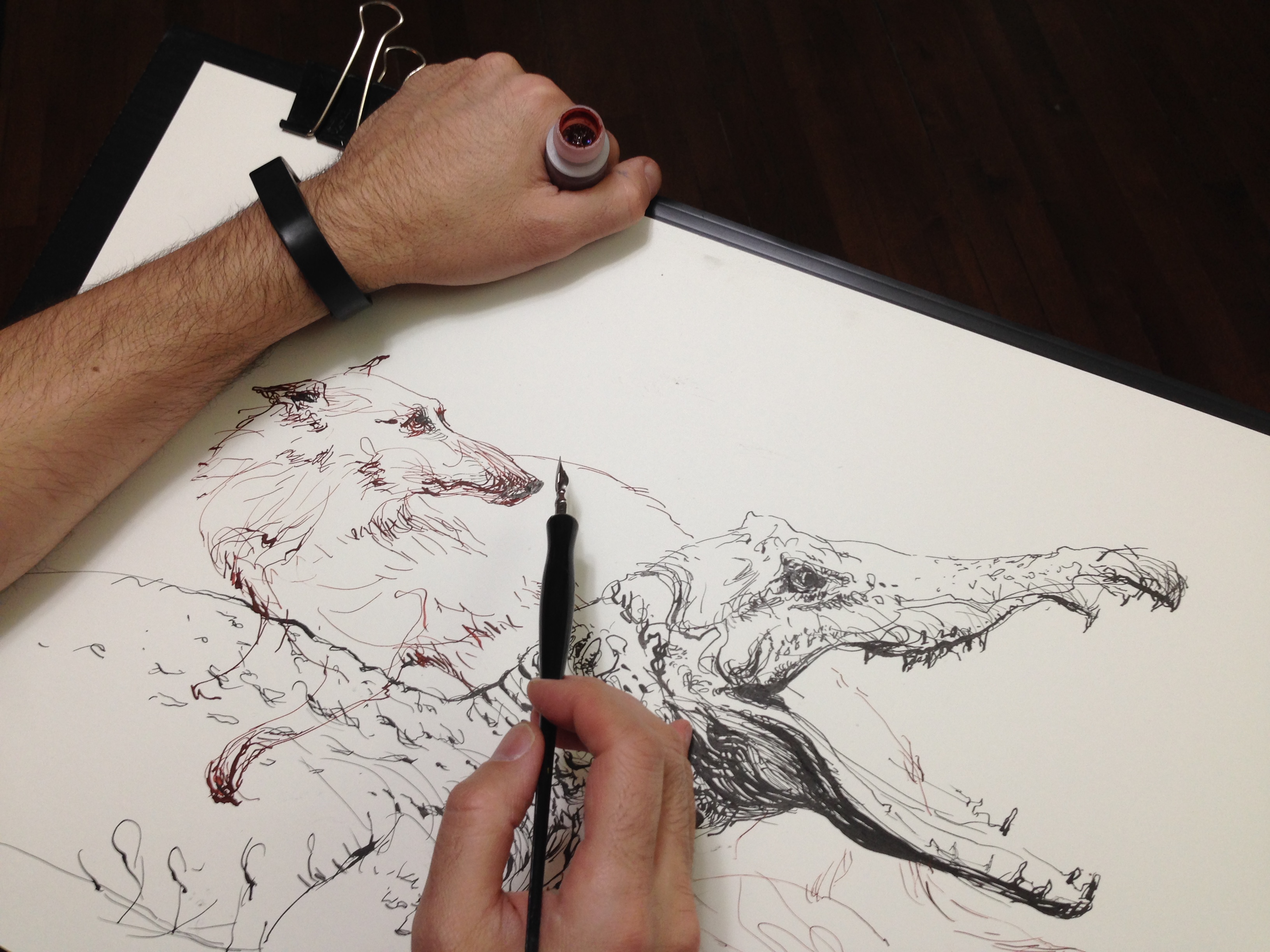
After some tinkering around, this is my current solution: I carry the ink in (very small!) 5 ml HDPE (Nalgene) bottles, and hold the bottle in the same hand that supports my stack of coroplast drawing boards. The vial of ink is safely clamped in the crook of my thumb. The bottom edge of the panel is tucked against my well cushioned body. It’s very stable while standing, even walking around while drawing. I think it’s pretty much spill-proof. Plus – it’s only 5ml. So if you did spill the whole thing, it’s not the worst mess.
One can easily carry a couple of these vials of ink in a pocket, trusting to the indestructible Nalgene bottle, which makes it easy to switch up colors as you draw.
I know, I know! This is some tedious stuff here – all this bla bla about how to hold a bottle! Yet these are the kind of things that are endlessly fascinating to urban sketchers :)

(French to follow:)
Call for Artists:
If you are a professional or an amateur artist and wish to take part in a collective exhibition to be presented on Mount Royal, Les amis de la montagne, in association with Urban Sketchers Montréal, invite you to submit your works to Draw-me a Mountain, an exhibition of drawings and watercolour works highlighting the beauty of Mount Royal and the talents of Montréal artists.
Send us photos or digital images of your paintings and drawings either showing views of and from mountain, or created on the mountain itself, by March 30, 2015, to smontigne(at)lemontroyal(dot)qc(dot)ca.
Technical specifications for submitting your works:
- one image per email (maximum of 5 works per artist)
- send digital files of 2 Mb (minimum) to10Mb (maximum) in size
- for each image, indicate: surname, first name, title of work, year, medium, dimensions
Works selected for the exhibition will be confirmed at the beginning of April.
Exhibition: Weekends, May 2 to 31, 2015
The exhibition Draw-me a Mountain will be on view as part of Mai 2015 – Mois du mont Royal, on Saturdays and Sundays throughout May, at Les amis de la montagne, in Smith House, in Mount Royal Parc. Public admission is free.
Art Day: Sunday, May 24, 2015
You are also invited to join Urban Sketchers Montréal for a day of drawing and painting on the Mountain on Sunday, May 24, anniversary of the creation of Mount Royal Park.
Find out more about our respective missions and activities: Les amis de la montagne | Urban Sketchers Montréal

Appel aux artistes
Vous êtes un artiste amateur ou professionnel et souhaitez participer à une exposition collective sur le mont Royal ? Les amis de la montagne, en collaboration avec Urban Sketchers Montréal, vous invitent à soumettre vos œuvres à Dessine-moi une montagne, une exposition de dessins et de peintures qui met en valeur les beautés du mont Royal et le talent des artistes de Montréal.
Si vous souhaitez participer à l’exposition envoyez-nous des photos ou numérisation de vos dessins ou peintures du mont Royal, des vues vers ou depuis le mont Royal, ainsi que des œuvres créées directement sur la montagne, au plus tard le 30 mars 2015 à smontigne(at)lemontroyal(dot)qc(dot)ca.
Données techniques pour la soumission d’œuvres :
- une seule image par envoi (maximum de 5 œuvres par artiste)
- taille du fichier numérique : minimum 2 Mb, maximum 10Mb
- pour chaque image, indiquez : nom, prénom, titre de l’œuvre, année, médium utilisé, dimensions
Exposition – les week-ends du 2 au 31 mai 2015
L’exposition Dessine-moi une montagne sera présentée dans le cadre de Mai 2015 – Mois du mont Royal, les samedis et dimanches de mai chez Les amis de la montagne, à la maison Smith dans le parc du mont Royal. Entrée libre.
Journée de création – le dimanche 24 mai 2015
Nous vous invitons également à participer à la journée Dessins et aquarelles sur la montagne avec Urban Sketchers Montréal le dimanche 24 mai, à l’occasion de l’anniversaire de la création du parc du Mont-Royal.
Pour en savoir plus sur nos activités et nos missions : Les amis de la montagne | Urban Sketchers Montréal
Inside Smith and Barber Sculpture Atelier

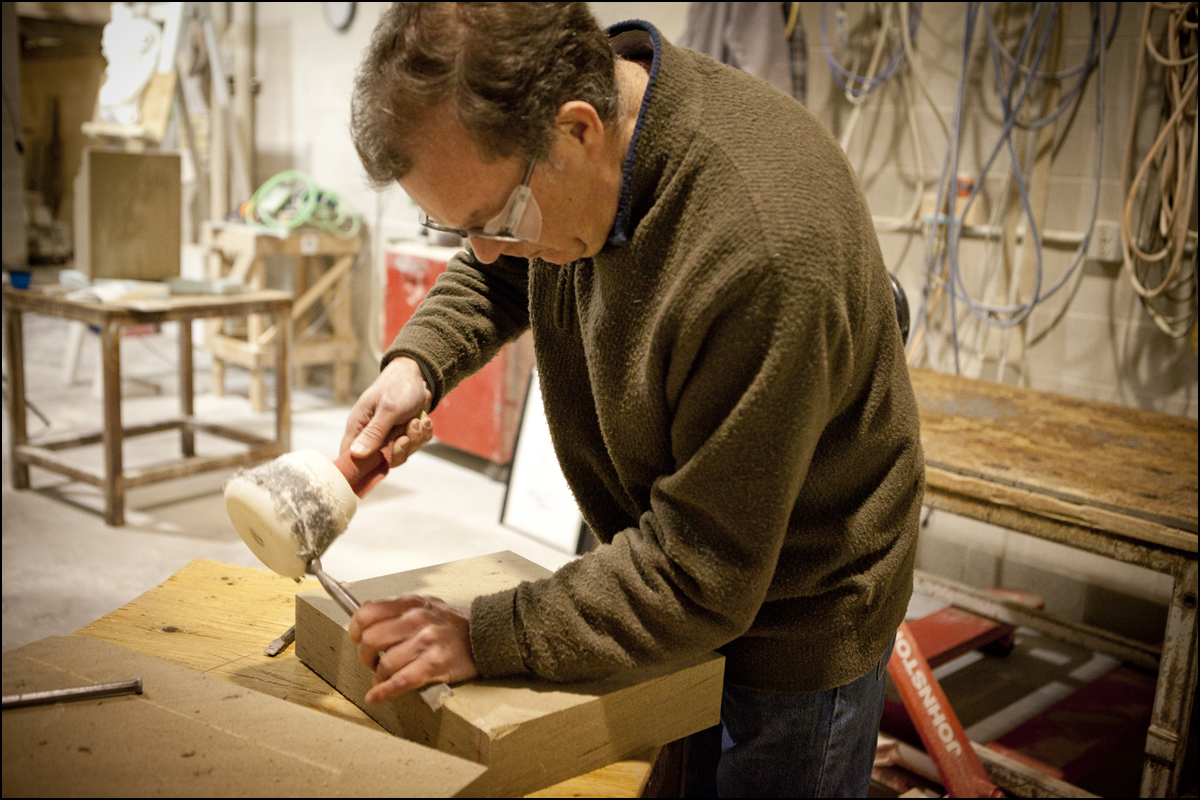
The other day my friend John Wright called up from Ottawa. His drawing group had lined up a fascinating opportunity. They were going to the Smith and Barber Sculpture Atelier. A local studio specializing in the ancient art of ornamental carving in stone.
Two hours drive to sketch in the workshop of these master craftsmen? Count me in! That, after all, is the whole point of location sketching. To get out and experience new things. To see the world through the lens of drawing.

Sure, I only managed a quick sketch. But at the same time, it was a chance to draw with the folks in Ottawa and meet Phillipe Smith, one of the two lead sculptors. He was more than generous with his time, hanging out as we pillaged his shop, regaling us with stories about his unusual art form. Everything from the dangers of silicosis to the origins of some of the irreplaceable blocks of stone they carve.

I was excited to hear Smith and Barber are also founders of the Canadian Stone Carving Festival – coming up July 10, 11, 12th 2015 in Gatineau QC at the Museum of History. I hope to make it out for that, and get a chance to sketch craftsmen from around the world in action.
I’ve enjoyed sketching ornamental stone sculpture from so many different time periods and places – to now have the chance to step into one of those workshops, well, that’s something worth dropping everything and making happen.
If you’ve had any great sketchbook adventures of your own, leave us a note in the comments. Let’s give people a tour of all the hidden places our pencils have taken us.


iPad sketching “Marvels of Orientalism” at MTL Beaux Arts
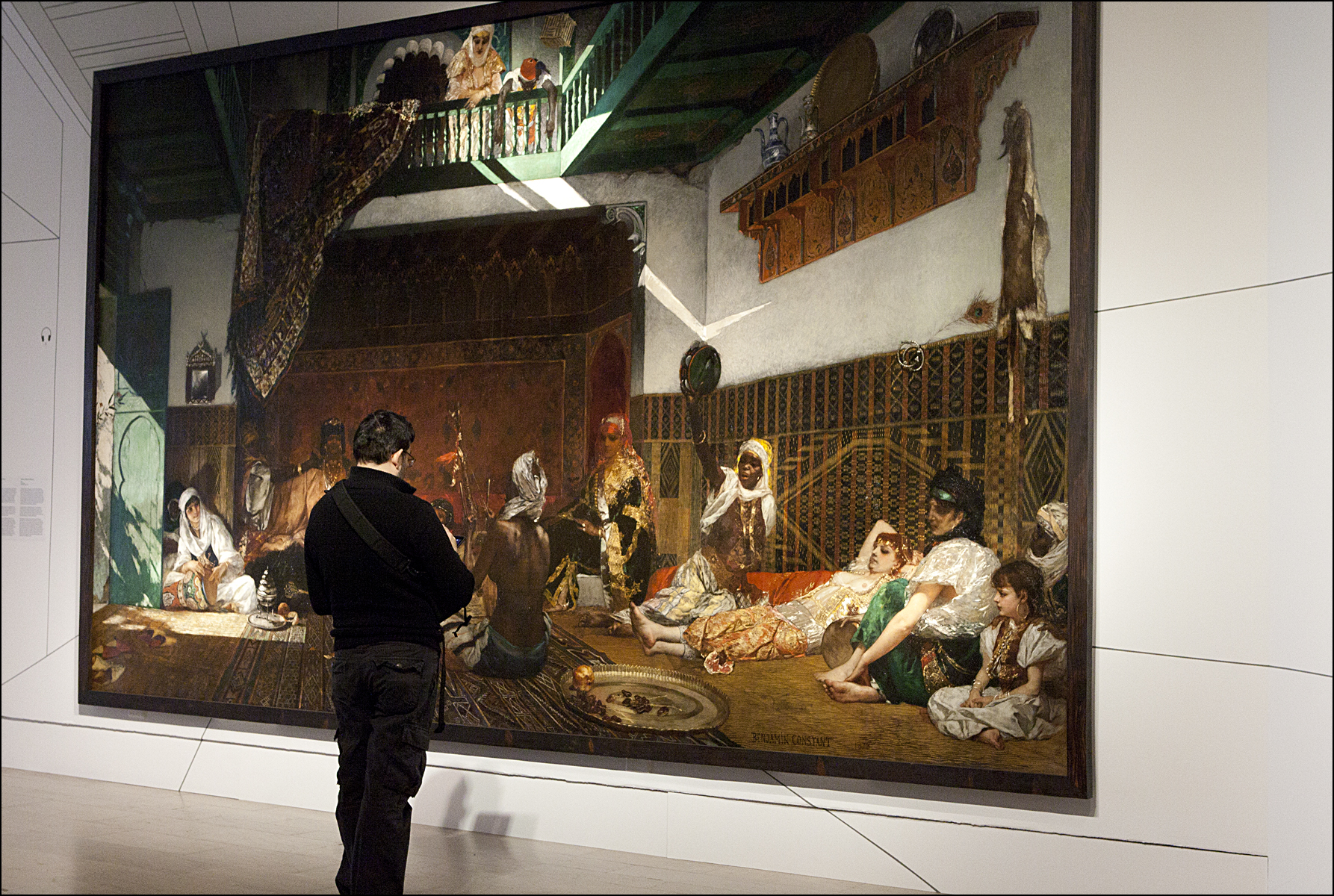
Right now through May 31st, at the Montreal Beaux Arts there is a major show on Orientalist painting (Marvels and Mirages of Orientalism), centered around Jean-Joseph Benjamin-Constant (1845-1902).
The primary attraction are Benjamin-Constant’s massive wall-sized travelogues of an idealized version of Marrakesh based on sketches and experiences from multiple trips to the near East. These are masterpieces of composition and brushwork, full of detail and some very clever texture and finishing effects. To me, Constant’s version of Orientalism is typified by flashy brushwork, almost overly reliant on special effects. But these are effects I love.
Bright metallic glints floating over dark grounds, hazy implied strokes making transparent gauze veils, ragged impasto textures conveying gold brocade and slashes of raking light.

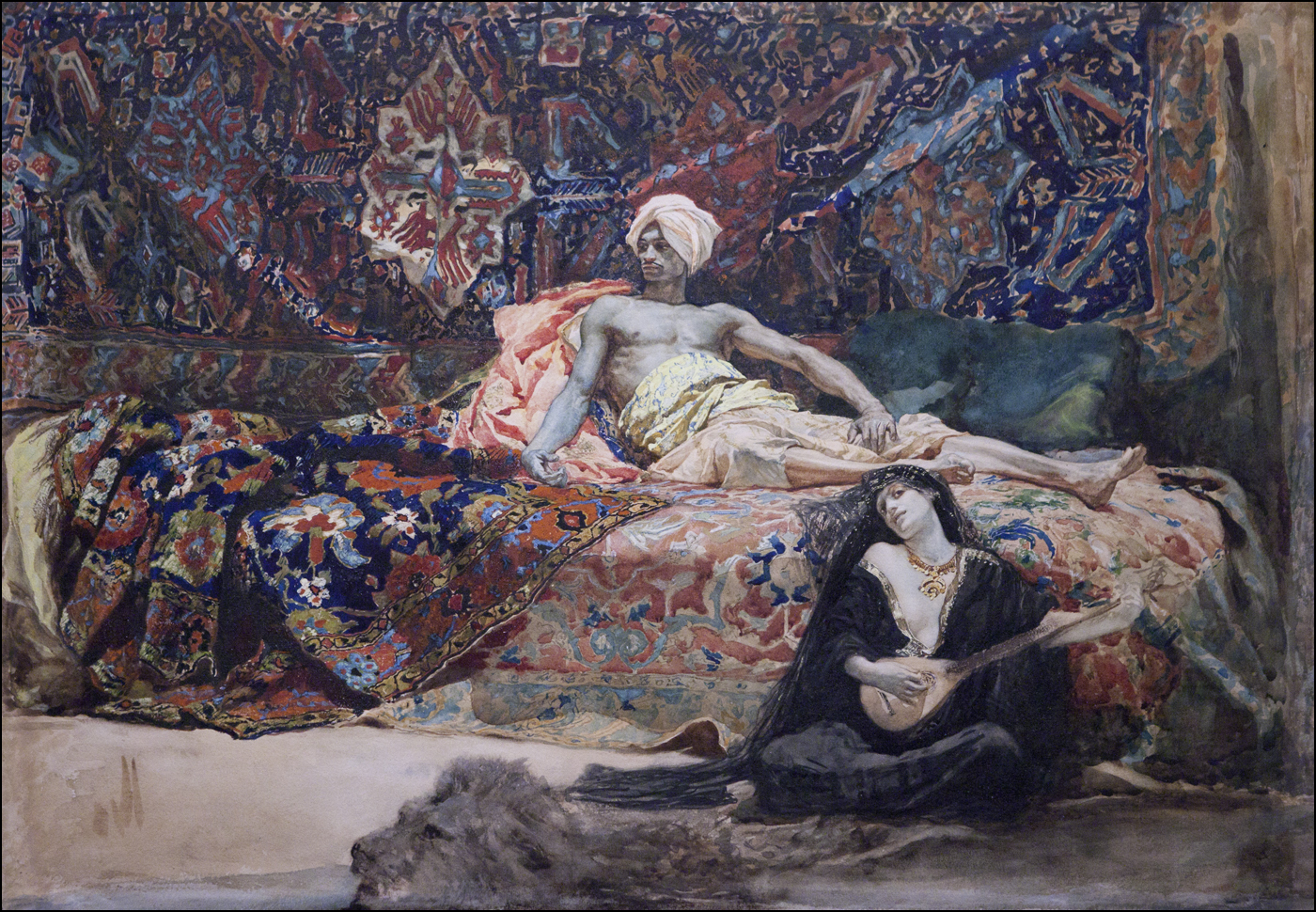
As well, we see some fascinating smaller works, including a pair of mind-bending watercolors by Henri Regnault. These are not the stars of the show, but have special appeal to me. In some passages this is transparent watercolor – but I think they are worked over with a gouache/watercolor mix. It’s handled so delicately you can’t even detect how it’s done. Truly remarkable.

At a guess there’s about 150 works of art from a dozen artists. You’ll also see books and engravings of the period, and some related contemporary work by women artists discussing the cultural fallout from this mileu of languid harem girls and ferocious warriors-eunuchs.
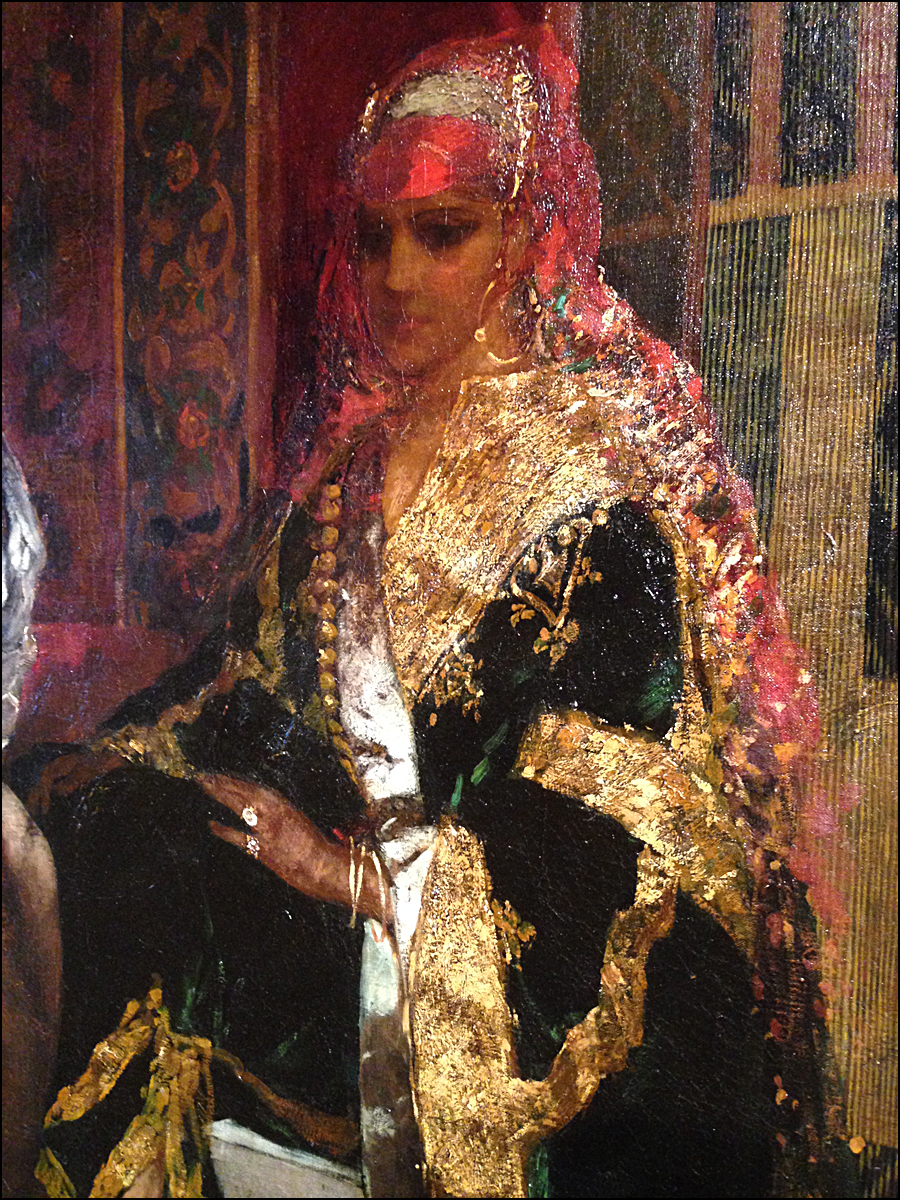
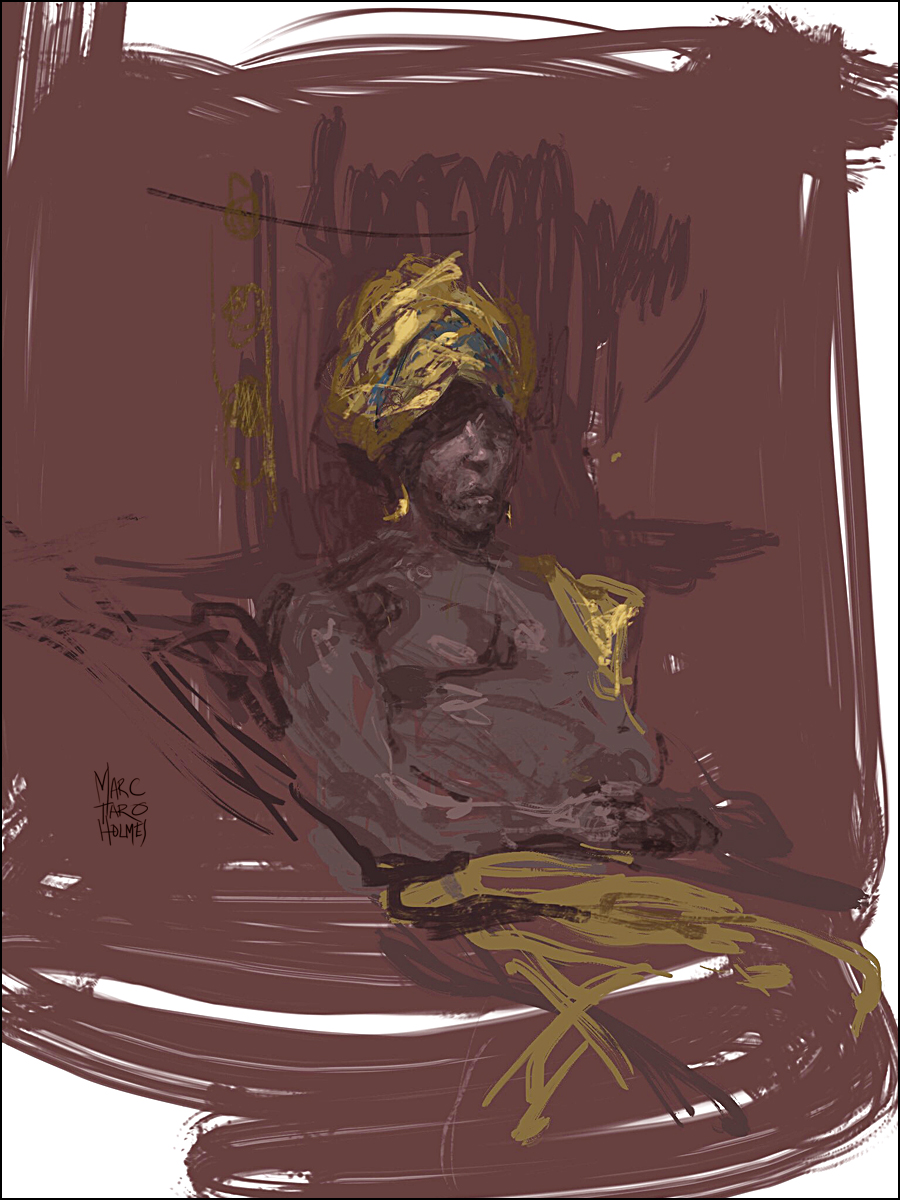
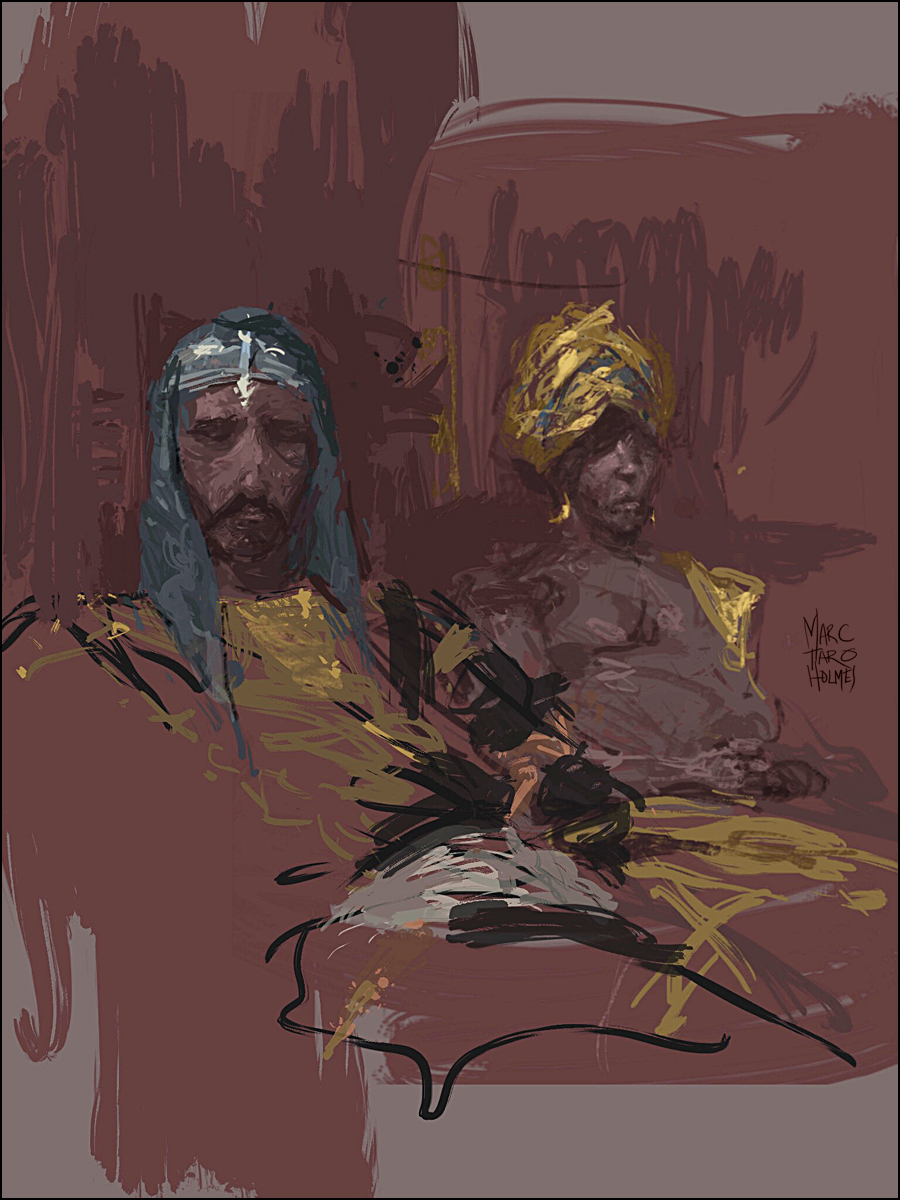
So – I know I’ll be back for more – but here’s my sketches from our first visit. Since these paintings are all about color and richness, I didn’t want to simply do line drawings in the museum. I haven’t inquired after permission to bring my water media into the gallery, and I know opaque paints are completely out of the question. Somehow I don’t see getting much traction there. For now I chose to make sketches on the iPad mini. These allow me to work in light-over-dark color, in a nice clean way that won’t get me kicked out of the museum.
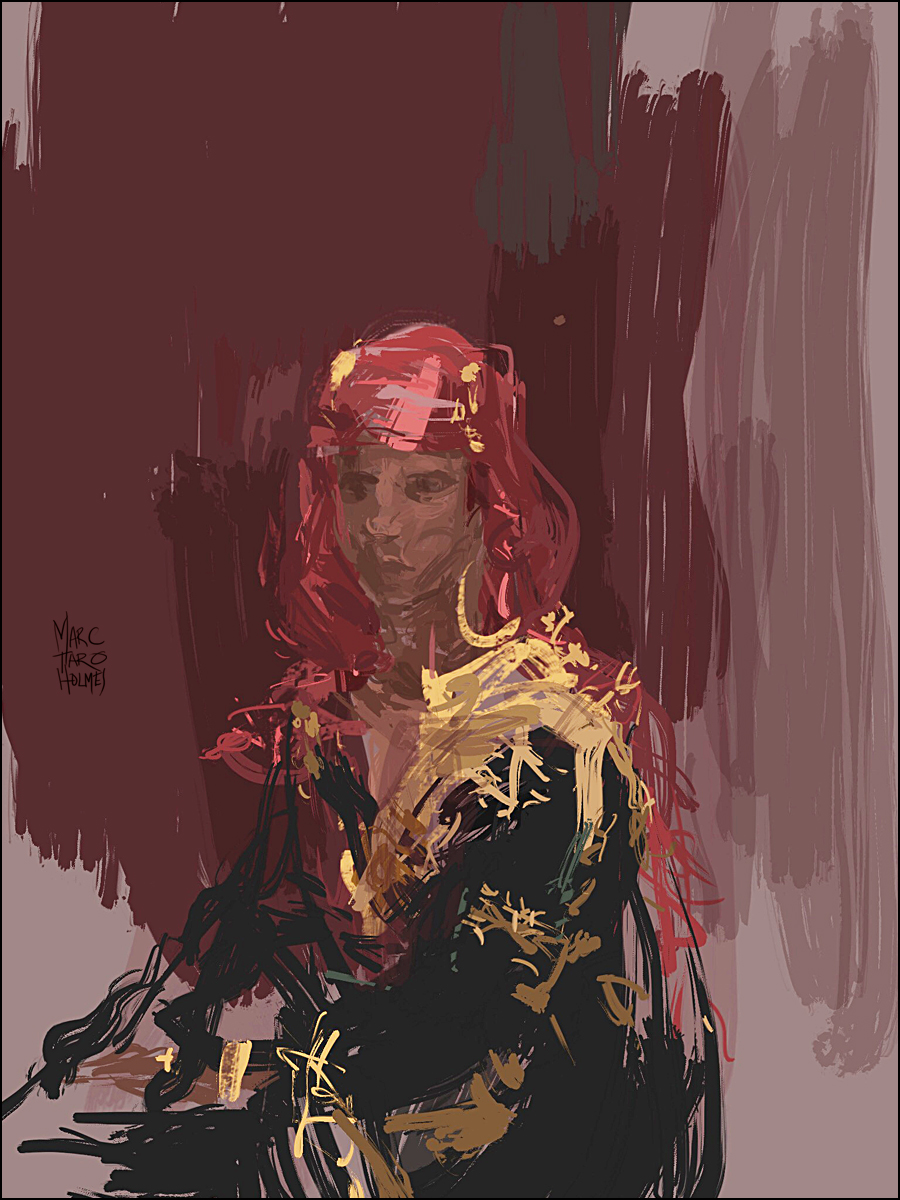
These are of course, purely studies. Despite its unlimited potential, I still feel clumsy painting on a digital tablet. But no matter – here I’m just meditating on this (to me) upside-down oil painting light-over-dark thing. So strange for a watercolorist. I’ve never made gouache work for me in this kind of way. I was inspired to try it after last year’s Sargent show – but to be honest, I haven’t delved in.
These sketches are in the iOS app Procreate, which I prefer over other iPad sketching tools I’ve tried, for its clever customizable brushes and an approach to layers that is very familiar to Photoshop users.
Welcome to the Biodome : Field Sketching in the Dead of Winter
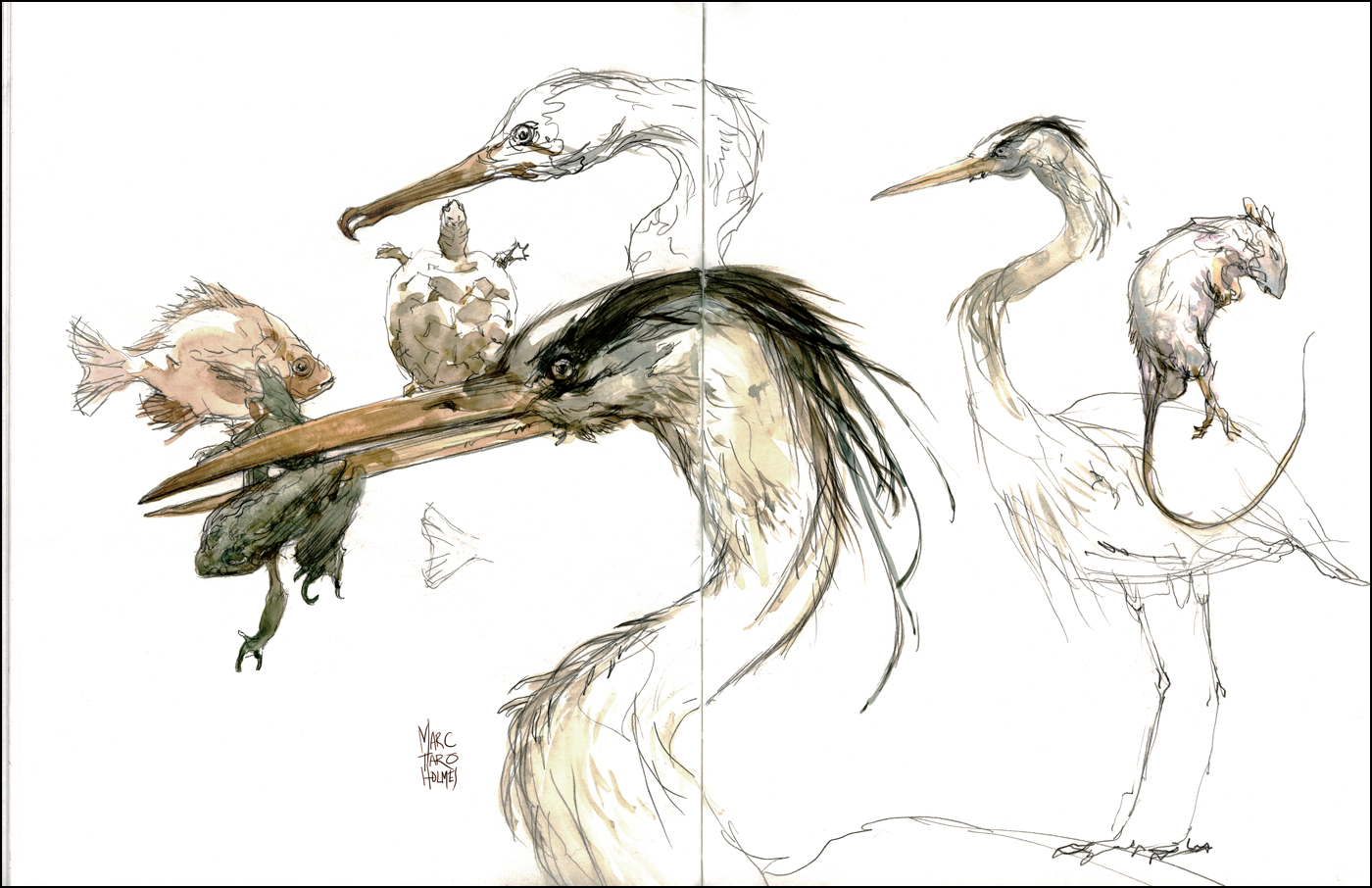
Was over at the Montreal Biodome, scout-sketching with some USK friends who introduced me to the Naturalia Room.
It’s an educational space aimed at schoolkids – but ideal for artistic practice. They have a large open space with tables and chairs surrounded with taxidermy animal mounts and biological specimens. All sorts of things for a person to study. I seems (on one trip worth of scouting) to be less crowded that the Insectarium, and with more variety of subjects. Even better – it’s free!

We’re going to head there with the full Urban Sketchers Montreal group on the 22’d. Anyone in the area is welcome to stop by. Opens at 10:30am, and is near the Viau station on the Green Line.

No matter what kind of artwork one is pursuing, I think this kind of study is the ideal foundation. If you want to capture a rapid gesture, or an impressionistic view, the first order of business is being confident with your drawing. This kind of studio work is just the thing to tune up observational skills. Hope to see you there.
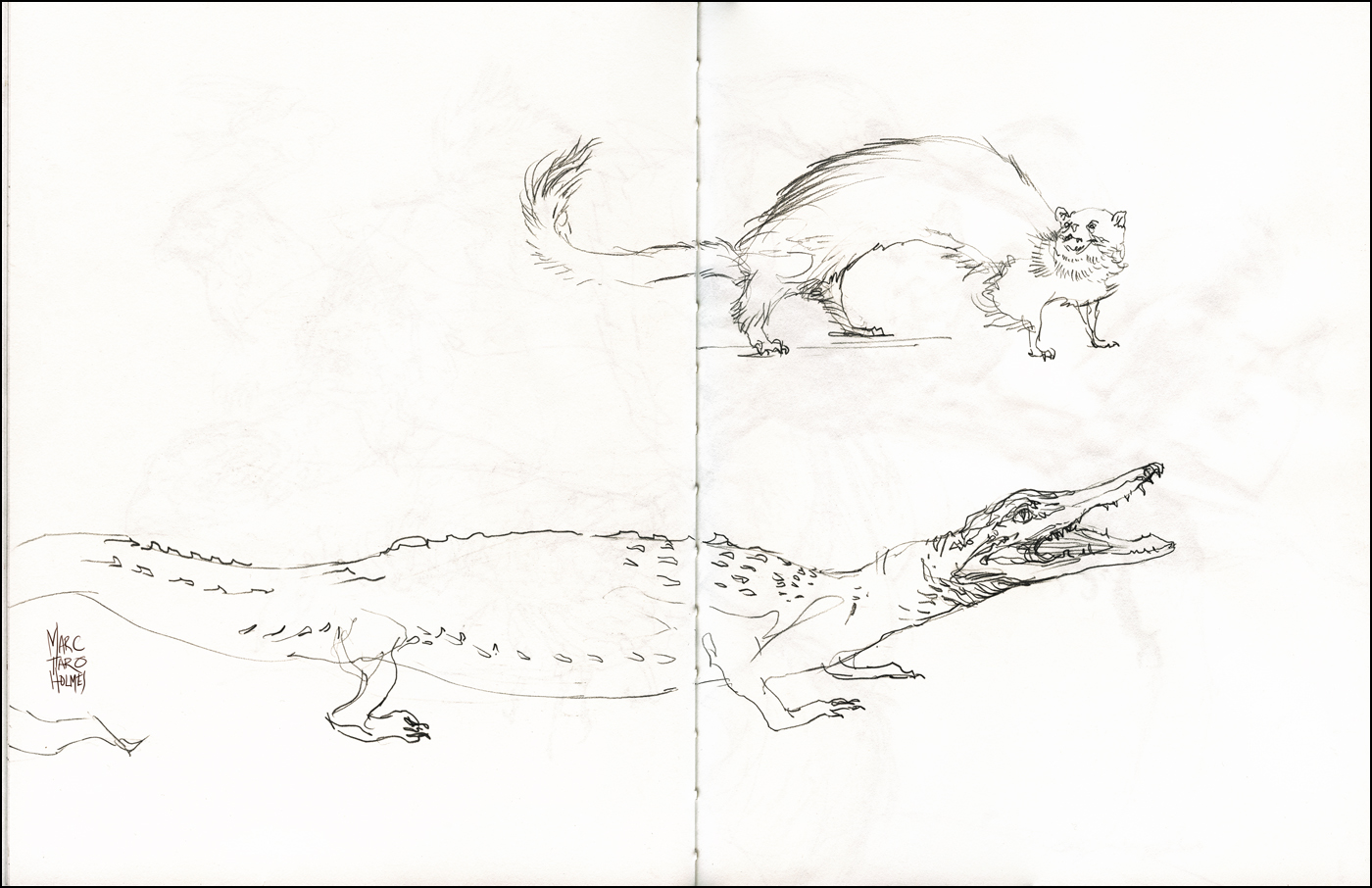
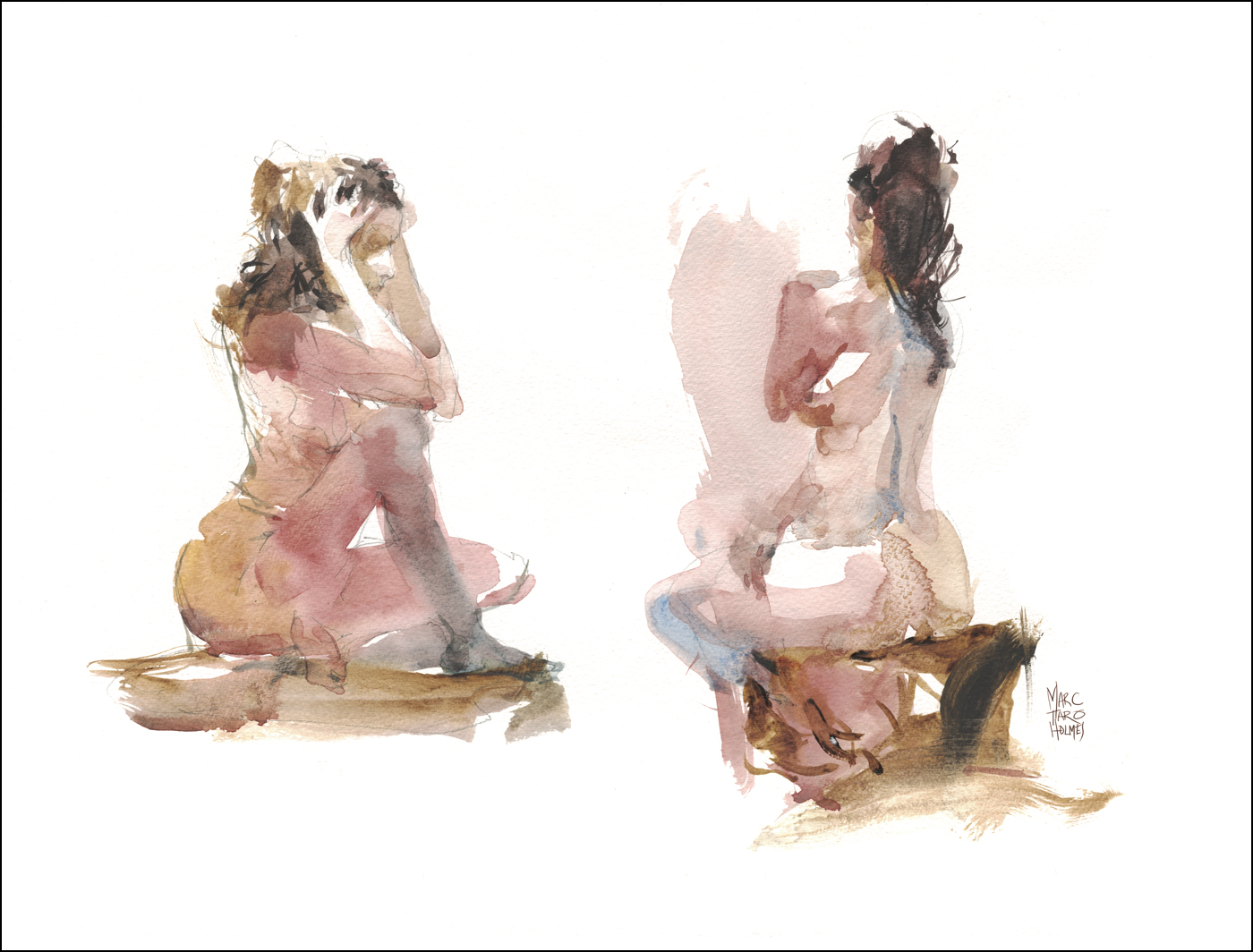
Testing some new colors : Plus, finally getting a nice portrait
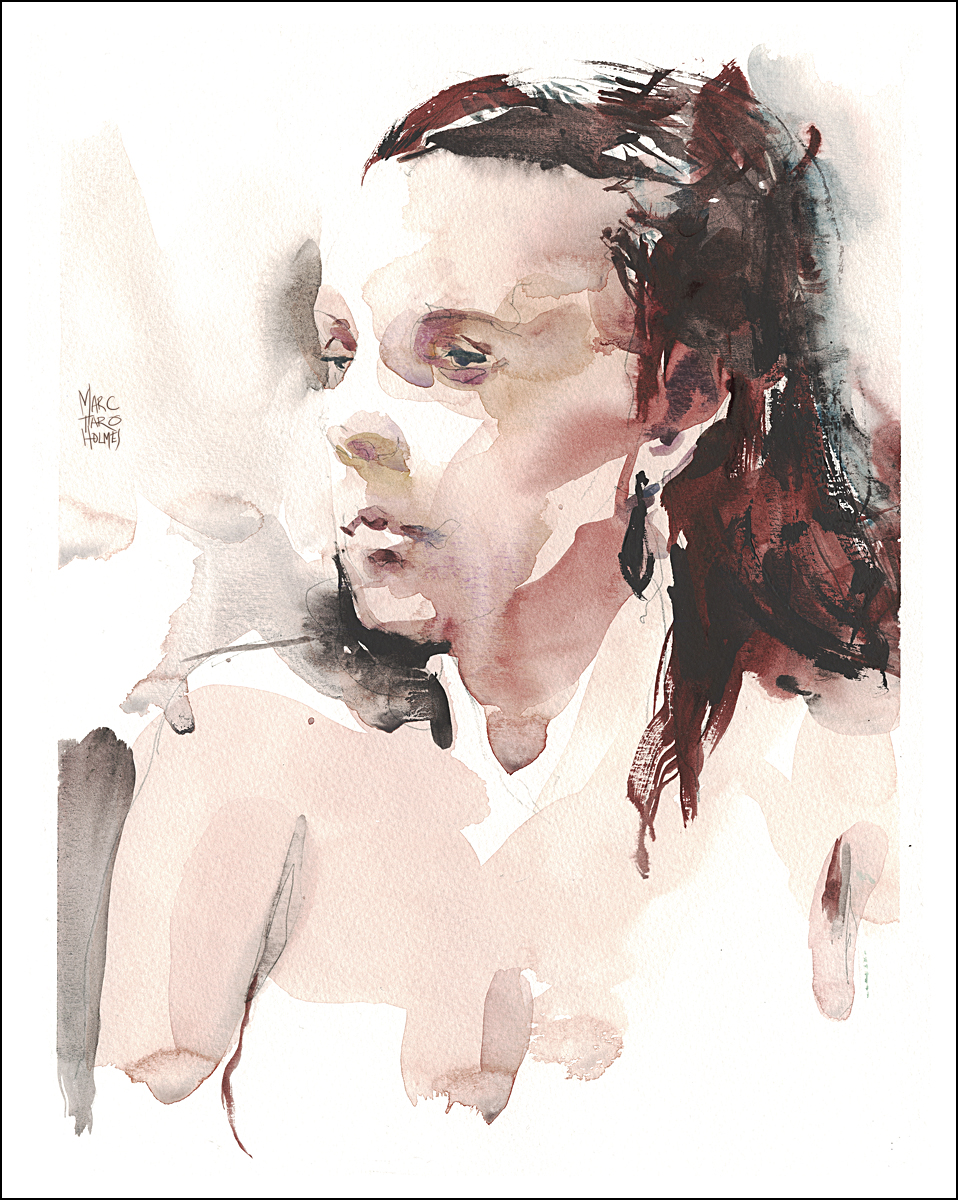
Trying out a new color: Daniel Smith Perylene Maroon.
I’ve learned this new term : Masstone. That is, the color when the pigment is applied full strength – as compared to when diluted. This pigment’s masstone is pretty damn nice if I might say. A deep purple/red that tints out into a fairly passable Northern European skin tone. This sketch is a good example I think.
This sketch is almost entirely done with the one color, Perylene Maroon. Using with a bit of DS Bloodstone Genuine

This may be the perfect limited palette for figure painting dark haired Caucasians.
I’ve been idly looking for a solution for the poor light-fastness of my favorite cool-red Alizarin Crimson, which is well known to be unreliable when exposed to the light. Much like the Caucasians it is used to paint.
There’s a pretty straight-up hatchet job of poor pale Aliz over on Handprint.com. After reading that I had to do something about switching.
The only thing that is a bit daunting about this Maroon is its powerful tinting strength. The DS version I’m testing seems to easily overpowering other colors. It’s almost like there might be ‘beginner’ and ‘advanced’ palette choices. Alizarin is a pliable color. It’s compatible with a lot of things. I normally mix with Ultramarine blue to make darks, Burnt Sienna and Yellow Ocher to make flesh – both of which this new Maroon can simply do on its own. But I also use Alizarin in foliage quite often. Being a nice complement for green. So. I’ll have to keep testing and let you know how I like it in situations other than the life model.
DS Bloodstone Genuine on the other hand is challenging in the opposite way. It’s a velvety dark in masstone – a rich warm black. But weak as a kitten in dilution. I actually really like it – but it’s very hard to use. You almost need to use it impasto to get any power from it when edge-pulling with water. But it made a beautiful sedimentary haze next to her left eye socket – and in the hair mass behind her jaw.
Oh, and yes – this sketch was another incremental break-though for me. I’ve painted with Elissa many times – but it’s taken multiple tries, before I can finally recognize her. I really can’t emphasize enough how hard likenesses are. I don’t think it’s possible to get a great rendition on the first try. At least not by me. I keep gaining respect for the real portrait painters out there.
Wintering Bikes
(This is an older post that got accidentally deleted – so, re-posting back up).
Here’s a slice of life in Montreal. The mournful sight of bikes rusting away in the snowbank.
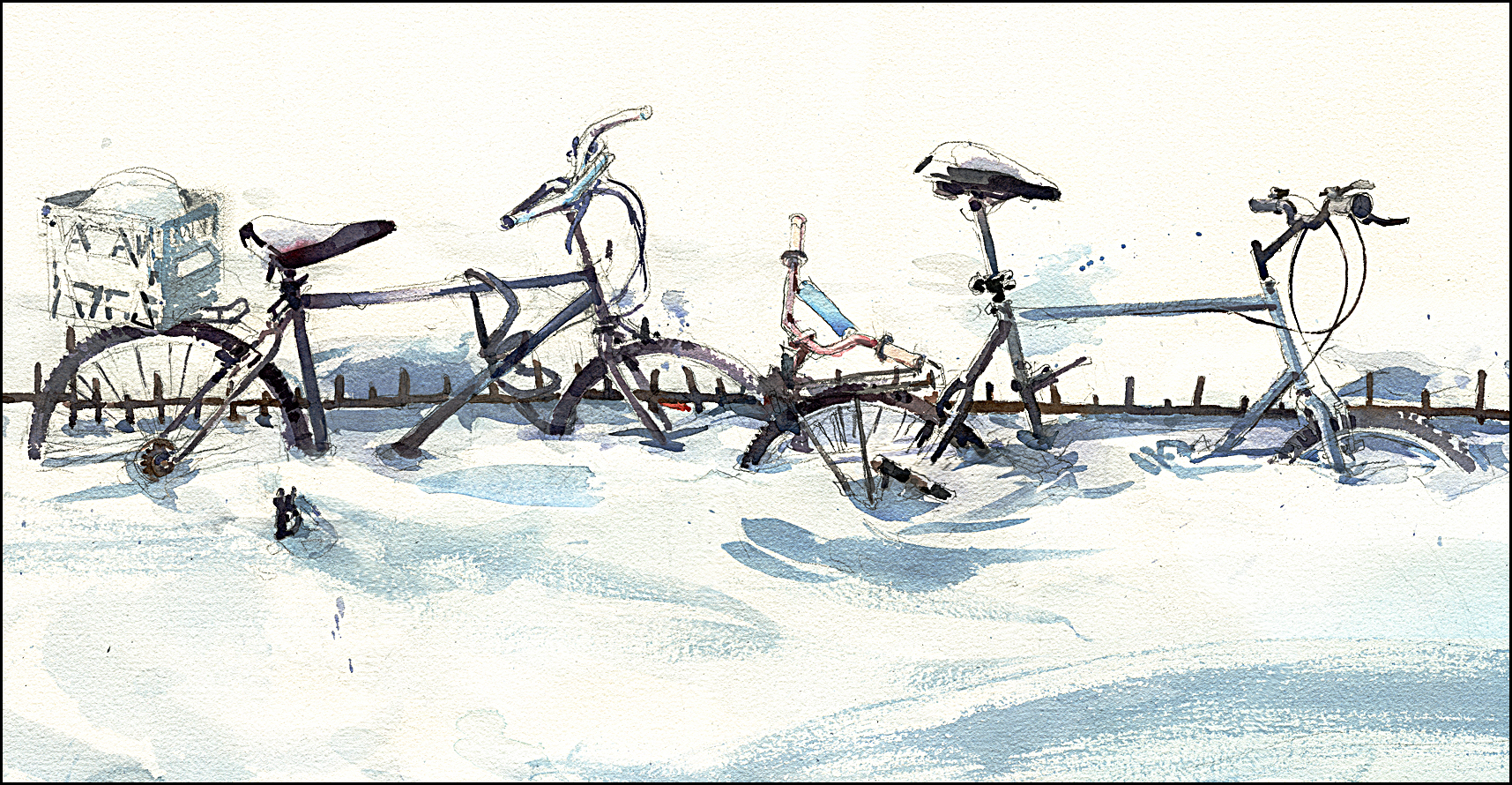
There’s lots of reasons to bike in Montreal. The bike lanes pretty much go everywhere, and there’s nowhere to park a car anyway. Plus it’s greener and all that jazz. So lots of people bike. Some ride all winter – snow and sleet be dammed. We’re Quebeckers! Mon pays c’est l’hiver!
Here on the Plateau, people live in these 100 year old buildings with precarious external staircases. There’s no place in your tiny apartment for a bike even if you didn’t fall to your death trying to take it upstairs. So you’re always seeing them on the sidewalk, locked to a little iron railing, axle deep in the snowbank.
After the melt the streets are littered with these frozen bike-corpses chained to posts. Many have been crippled by the snow plows crushing their wheels in to pretzels. It’s like the Russian front for bikes. Dead soldiers frozen into the ground. If you’re a bike, you do not want to get sent to Montreal for the winter.
Good Question of the Week : Why is there no Paper Texture in your Scans?
Oddly, two people just asked back to back, “why it is there is no paper texture in your scans? You can see what they mean in this one (windmill). When you click to enlarge you can see texture in the wash, but not in the white paper.

When you scan watercolor paper, the bumpy surface of the paper will show up as an undesirable grainy texture in the white areas. Or, simply have a grey or yellowish cast.
When you take a snapshot (especially a cellphone photo) the white of the paper can be quite dark – giving the whole thing a lifeless feeling. So yes, I do some color correction in photoshop to get it the way I like it. It’s not a big task – a few minutes on each image.
And you can in fact make some improvements to your painting. When I started painting, my work lacked for color – and I used these kinds of photoshop color corrections to teach myself what I wanted in a real painting.
Keep in mind – scans will never look exactly like an original. A lot of complexity is lost – especially in the lightest tones. And further, you never really know what people are seeing. Everyone’s monitor is different. I know my iPad looks desaturated compared to my desktop, and many of my things look neon to when seen on expensive iMac monitors. (I’m PC by nature – being a video gamer).
SO! Here’s how I get rid of any left over paper texture in a scan.

The untouched scan, as it comes in with paper texture. Scanner is an Epson Perfection V500 Photo.
If the paper is rippled from water, this causes shadows, and you may have to be more heavy handed with the following adjustments. Or resort to some manual erasing.
I use a stack of books to press the paper during the scan. Sometimes I leave the book-weighted painting under a sheet of plexy for a few days prior to scanning. See – expensive art books are good for something!
Also, if the painting is larger than the scanner bed – scan it in overlapping pieces and used File>Automate>Photomerge to join up the pieces.

A CURVES adjustment layer (the blue row in the layers palette – shown in the adjustments panel below) – to keep the mid tones stable, but bring back some of the darks and the lights. Each piece is slightly different – but you will see it’s a matter of clicking points on the curve (line graph) and pulling them down towards the histogram (bar graph). You can just twiddle those little points around, and see how you like the changes. Nothing is permanent, so just play with it, watch what it does.
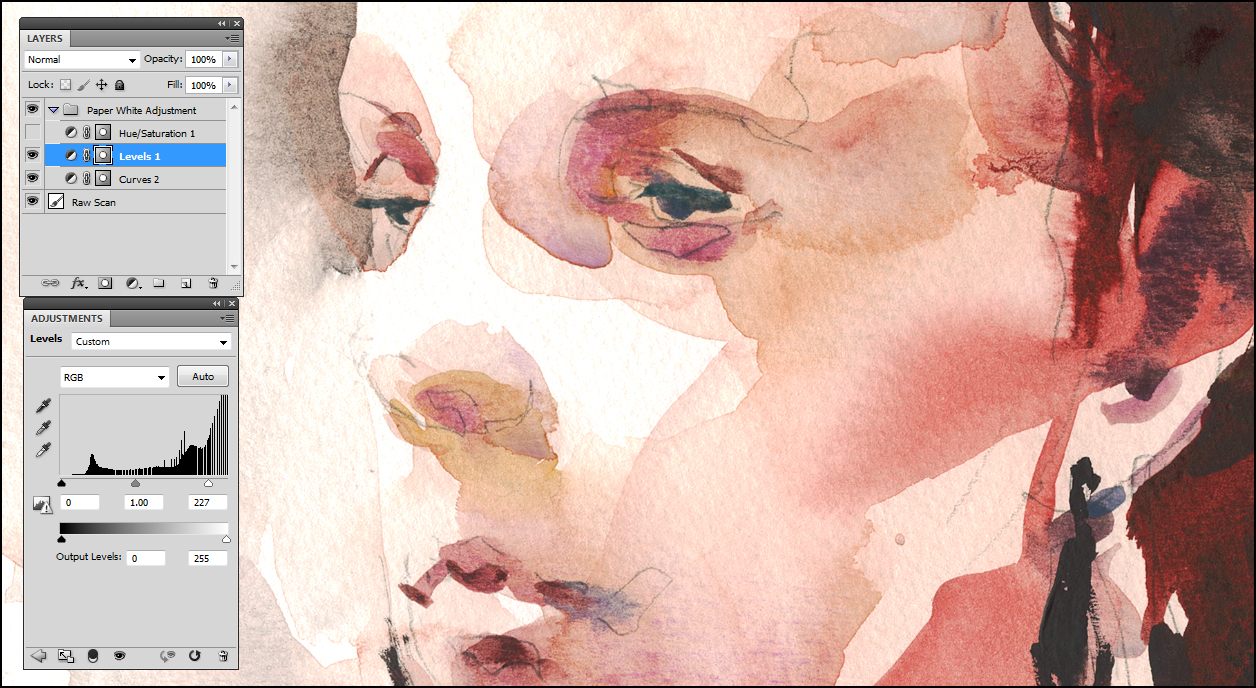
A LEVELS adjustment layer to bring the white point in considerably. Everything in the graph to the right of the white ‘carrot’ on the slider will be pushed to pure white. Values to the left of the ‘black carrot’ will be turned 100% black. This is, I do believe, called ‘clipping’.
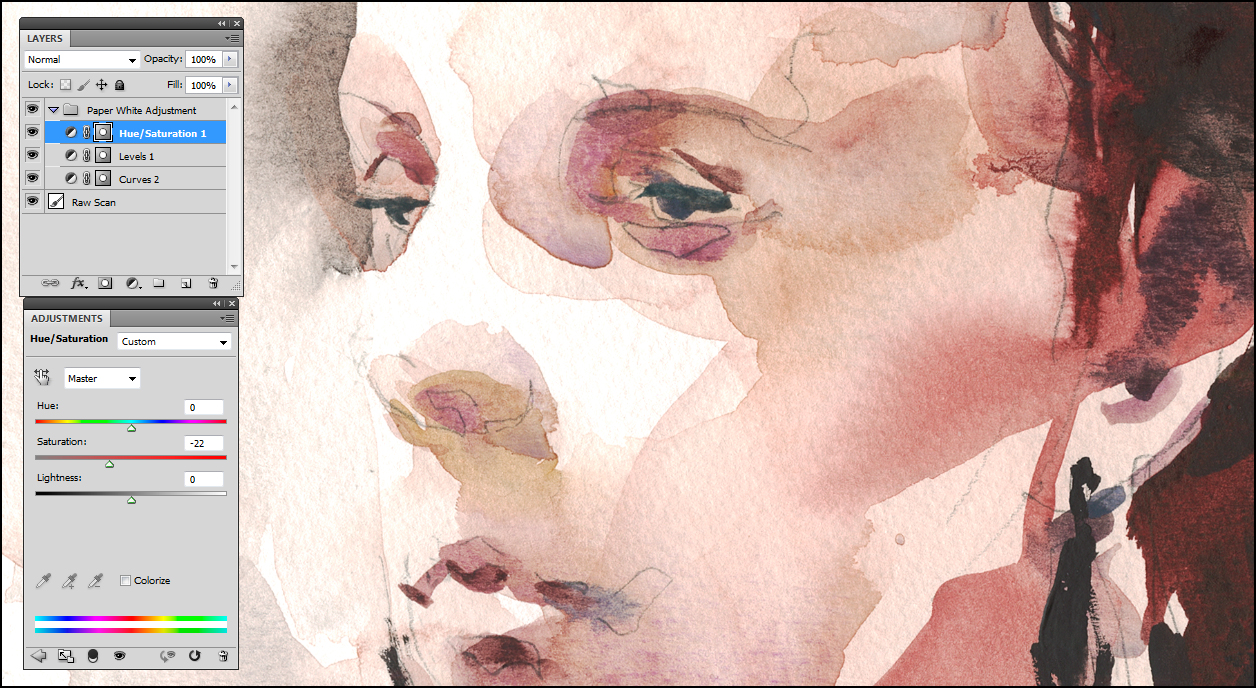
The last adjustment SATURATION ( in this case, taking it DOWN -22) – because the previous process exaggerates the colors.
If you open the first and last images in two different tabs, and flip back and forth, the effect is more visible.
This is not a perfect color match to the actual painting, but it’s within the 80% rule.You can go out to a photo printing service and get better resolution and color quality – but even then results vary. For most uses, this process should work fine.
I have been known to use this effect to desaturate intentionally on occasion. Sometimes quite a bit. Sometimes, for reasons of mood, I prefer the look of a less colorful painting.
You can use this general approach to boost up the strength of pale drawings, or shift the color drastically to create artistic effects. As an illustrator, it’s tremendously useful. I do feel however, you shouldn’t make unrealistic changes to the image of a painting you intend to sell – it might be misleading to a potential customer. I try to use the heady power of photoshop only on illustrations – where the finished art is the printed page, or a fine art print.


 Citizen Sketcher