Day 10 : #30x30DirectWatercolor2019 : Wreckers’ Beach
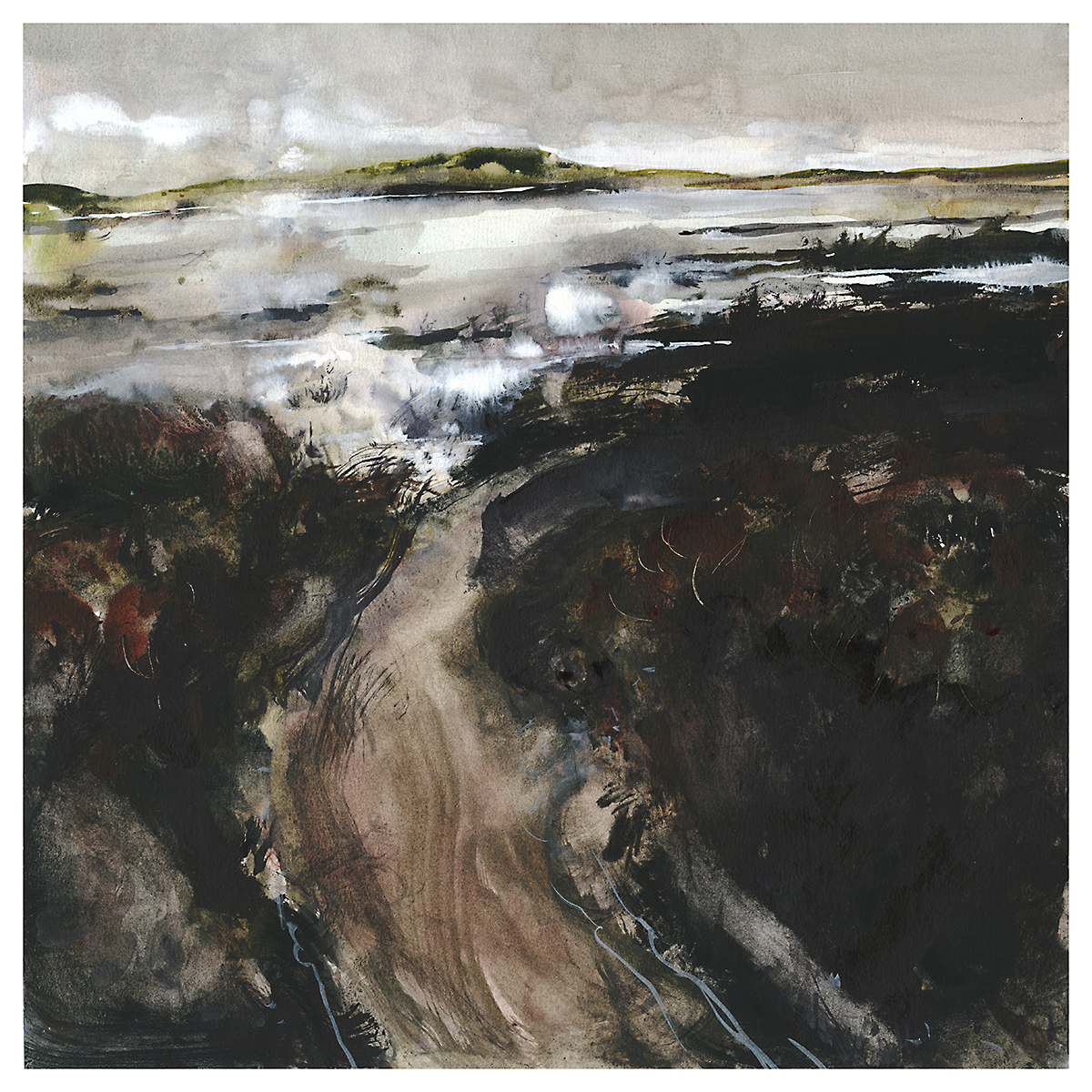
I have this theory that landscape paintings are a kind of magic teleporter.
When I look at a great painting, I feel like I’m actually there – traveling into the picture plane.
I’m telling myself a little story about wandering down this path towards the seashore, early morning mist sparkling on the water. It’s cold out, and the land is back-lit, pushing everything into shadow. I can see the path wind out of sight, off the edge of the painting and into the dunes. There’s a little inlet here, with the sea out in the distance.
You can create a whole novel imaging yourself traveling through the image.

Perhaps, this was the goal of all the plein air painting I’ve done. To build up a mental library of scenery for future-me to draw upon. Except, I’m pretty sure I’ve never actually been to this place.
~m
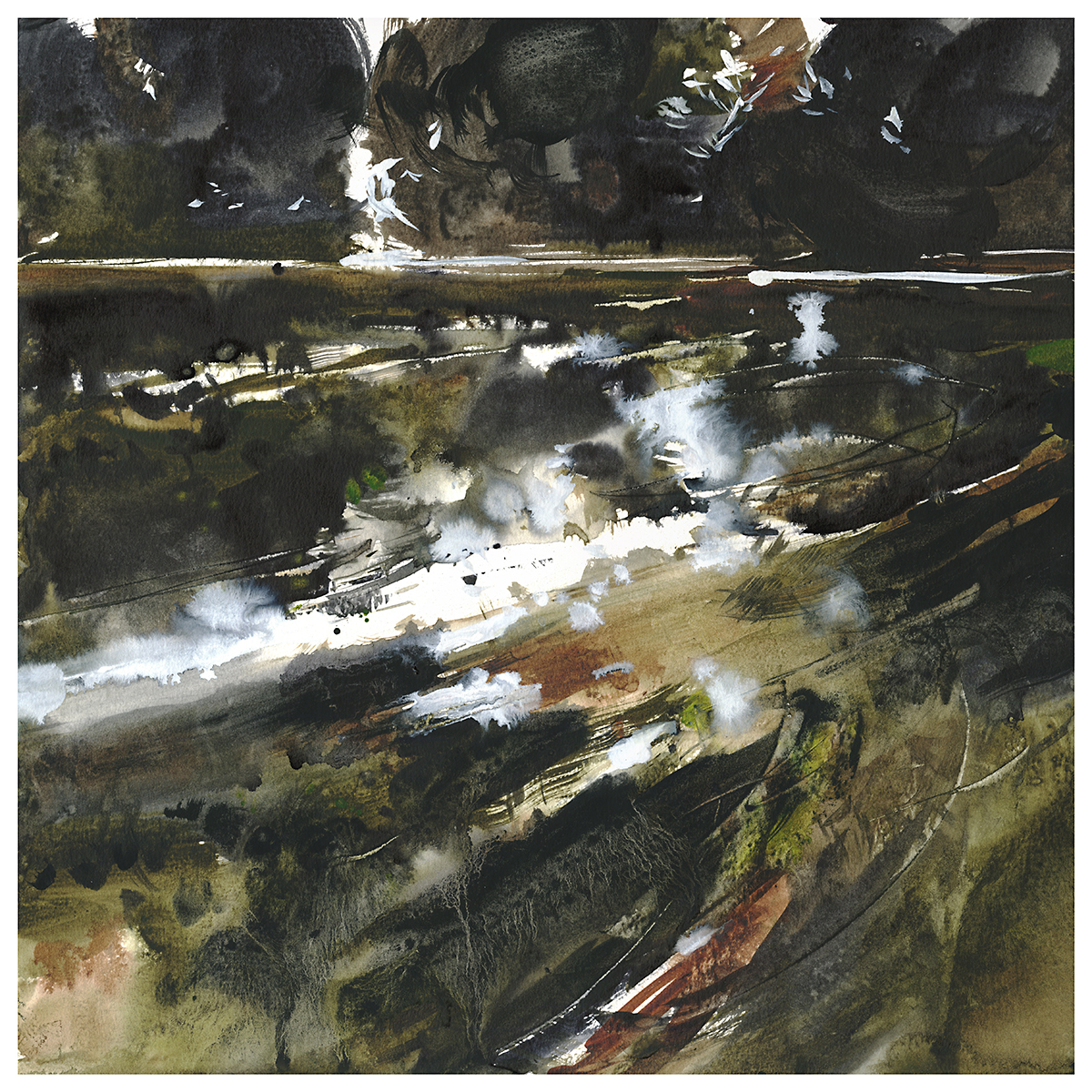
I wonder if this one didn’t capture the mood of the sketch? Maybe…maybe not…still debating with myself.

In my mind, looking at the black and white, I was seeing a great green slow-moving river surrounded by jungle, something like the Amazon. Seen from the point of view of a boat drifting downstream. Made me think of Joseph Conrad’s Heart of Darkness. For me, first encountered as a teenager through the Coppola film Apocalypse Now.

I did a couple more tries, but – ultimately I think this one still has potential that I haven’t captured. Something about it isn’t black and glossy enough for this series.
No worries, there’s always other go.


Day Eight : #30x30DirectWatercolor2019 : Two Million

OK, this is my favorite painting ever! (I’m always saying that. I think it’s best if that’s your attitude about every new painting). I love the amount of abstraction – but it’s also exactly what I wanted – a foggy, brooding rendition of a wetland marsh.

The sketch was from imagination, but, also fairly similar to a place I painted in real life – though you would never know it looking at the plien-air version. Doing the notan sketch, I was just free-forming it, and this dark, forbidding scene appeared out of the heavy values.

I liked this so much I did a second version.
I was researching bogs and peatlands after the fact, and I came across Bolshoye Vasyuganskoye – a region in Russia of some 2 million square kilometers containing 2 million lakes. I’ve never been up north in Quebec, but I have this feeling there are areas that look like this. Home to moose and waterbirds and a million wetland creatures.
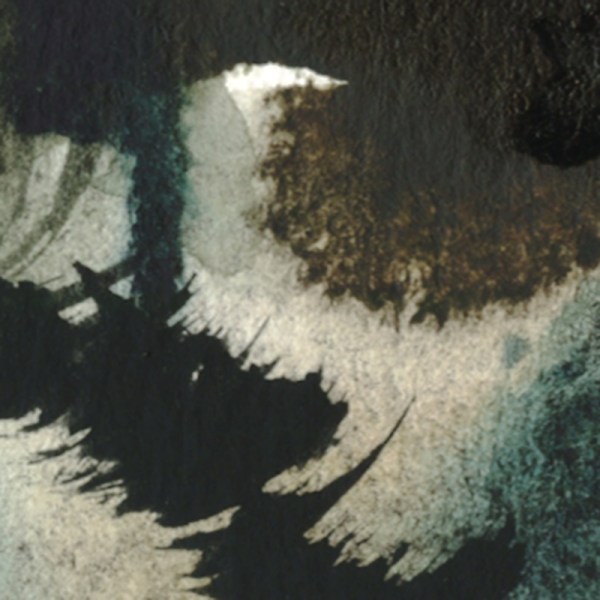
I feel like I’m hitting my stride. This is a pattern for me with these painting marathons. It takes a few days for the best paintings to appear. I can expect, from past experience, that I’ll peak a bit after the mid-point. I’ll get tired, and things will decline toward the end. But right now, I feel 100% in the zone.

This is a new thing for me. Not a landscape, not an abstraction, but something in between.
There are a lot of things I love about painting in a marathon-series. Mostly, I feel the pace of the work is important. Painting very quickly – to meet self-imposed deadlines – and painting every day – it starts to push a little further each day. You have this desire to do something a little better than the day before. Soon enough you’re past your comfort zone. I don’t find myself settling for repetitive, safe compositions – because I’ve *just* done the last painting and I have to make this next one stand out. That’s a good kind of pressure on your work.
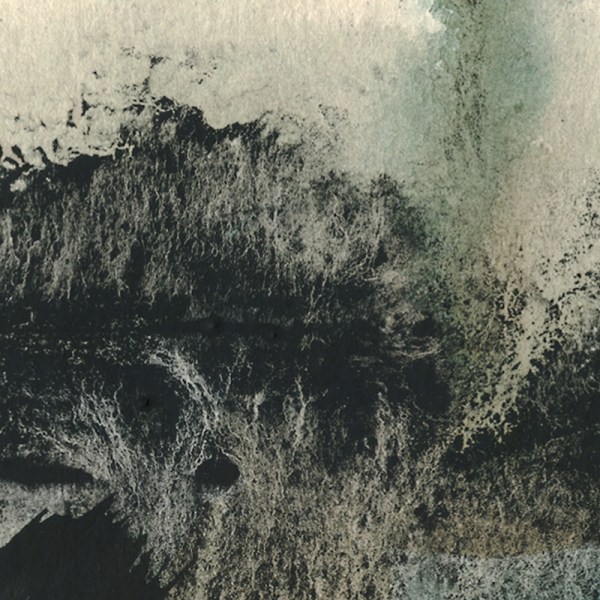

I have this idea that paintings are Psychic Teleporters.
Great paintings can send you a mental journey. Drawing you in and transporting you somewhere. It’s even more interesting when that place doesn’t really exist. You’re picked up and transported somewhere – even if it’s just into a mood the artist has set down.

I think this is a universal ability. To anyone born with sight. But it might be something you can get better at over time? Being a skilled viewer of paintings.
Being able to look at a painting and getting drawn in – even if that painting isn’t necessarily realistic. At first, we need completely realized paintings to be transported. But the more we look at art, the more we’re able to go into an imaginary place.

A while back we finally got around to hanging some paintings in our dining room. Now, every morning across the table, there are these portals to other places. I can spend a few minutes diving into each one.
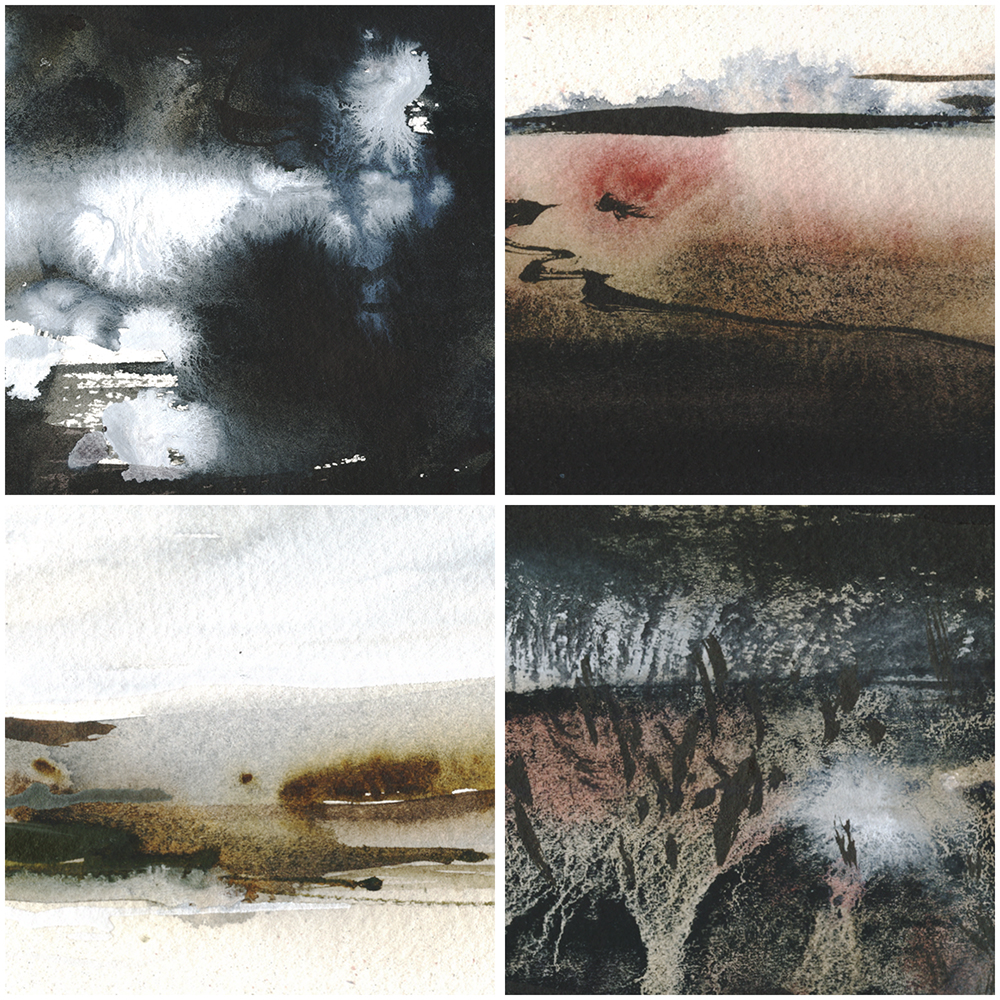
Want to practice your high level teleporting? Here are some totally abstract places :)


This one isn’t my favorite. Though it does have some nice areas.
Each time, I look at the work before and see if I can push it a little bit. Eventually, I push something too far. I think this is maybe enough with the blacks.
I think I’m using Neutral Tint mixed with a Lamp Black. Can’t be sure what was in the mix, as, I have different blacks – but all the mixing cups look the same after a while :) Probably should have labeled them.
But you can’t read black marker on cups of black paint :)
This is the nature of a series of work right? Set some parameters and start producing work quickly – staying (mostly) within the guidelines, but testing out variations. Each time they will be versions of the theme. You won’t always like every single one.
Sometimes though, the ones you don’t like at first, end up being favorites later. Have you ever have that happen with an album? The song I always skip ends up being the only one I play a year later.
~m
Day Five : #30x30DirectWatercolor2019 : Melt Water

I have always thought oil paints were better suited to detail and realism. Because of their ability to correct themselves in so many ways. Now I suppose I would add digital art to that. If I wanted realism, I’d absolutely be working in 3D these days.
Watercolor, on the other hand, is naturally suited to seascapes, clouds, anything fluid and dynamic.

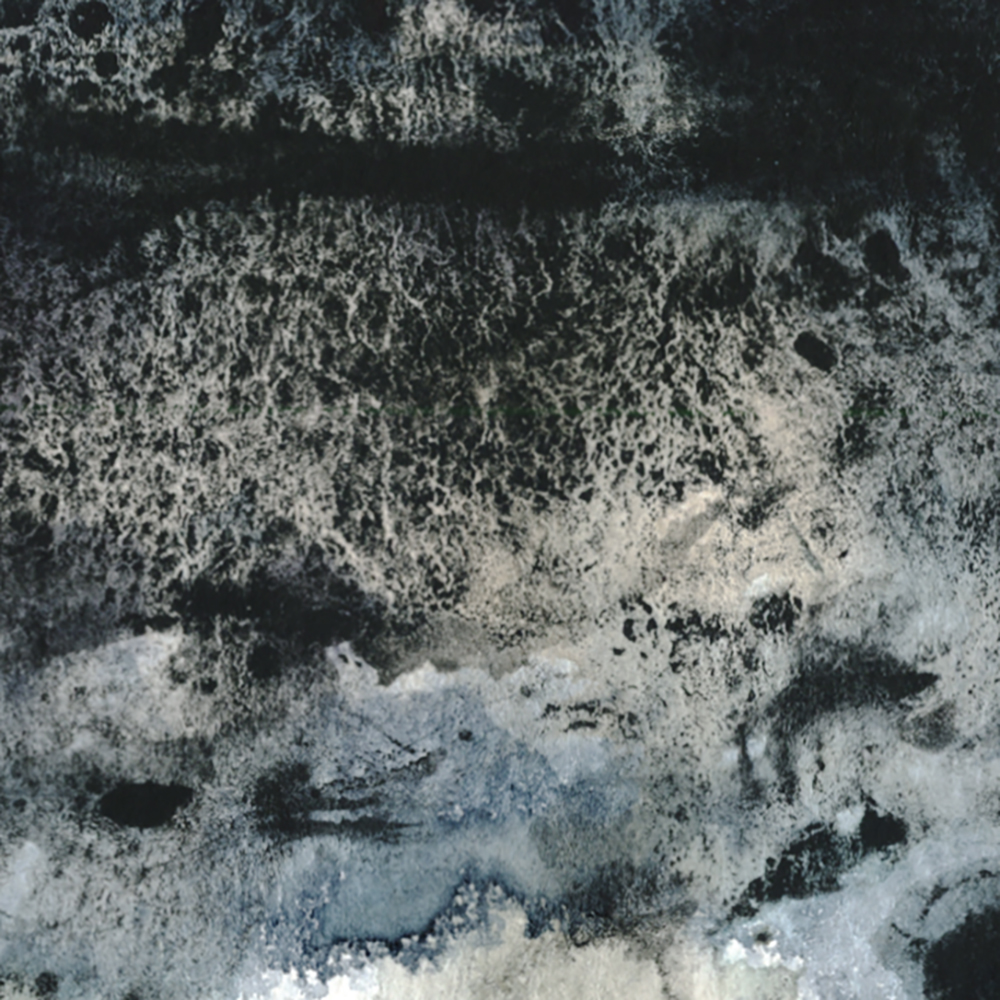
I’ve never been to the Antarctic sea. But I’m pretty sure this is what it looks like.


Day Four : #30x30DirectWatercolor2019 : The Divide

“The Divide”, 18×18″
I should talk about premixed paint.
These paintings are all 18” square. Not unusually large, but larger than I would normally paint in the field.
When I’m on location, of course, I only have a folding palette. I learned to paint with only the small mixing areas in the lid of the paint box. Often I pull paint right from the pan and mix it on the paper – not in the palette. As long as I’m painting smaller than half-sheet, this usually works. But – it does tend to push me towards smaller sizes. The amount of generous wet paint I have on hand is limited by the size of the paint box.

WELL, THAT HAS ALL CHANGED!
I started something new for these which is *Mixing Cups*!!! I’m using 30ml medicine cups. The ones for dispensing pills or liquid meds – I happened to have some sleeves of them handed down from the parents’ job at the hospital. I’m sure you can buy these online or at a pharmacy.
All I do is squeeze a dollop of paint and mix in the bottom of the cup. I used to talk about Tea/Milk/Honey – but now I am using what I call Wasabi Consistency.
You know the green horseradish paste you get with sushi? If you’ve ever mixed that – the idea is a dab of paste and one or two drops of soy sauce. (I use one or two spritz of water from my mini-atomizer bottle). Mix that tiny amount of water into the tube color (I use a needle pointed palette knife) and you get a nice gummy paste. Like a sludgy consistency. You do not want to just toss your wasabi blob into the soy (water) – or all you get is a diluted watery mess with floating flecks of un-mixed wasabi. Yuck. Don’t do that to your expensive sushi. You want a nice smooth paste. I’m sure there’s another cooking analogy here – but the idea is – the thickest possible gummy mix.
The Wasabi mix is too thick to actually paint with. (Except I do – in the dark black/brown here I actually do). But what I do is keep that sludge in the bottom of the cup, adding to it when necessary so I never run out. When I need paint, I take a brush loaded with the right amount of water, or the right amount of another pigment, and pull out a measure of wasabi, blending it on the side-walls of its own cup.
It’s a bit weird. But it’s like each cup is its own little palette. This does dilute and/or tint the paint in the bottom, but that stuff is so concentrated you can’t really lose your intended color.
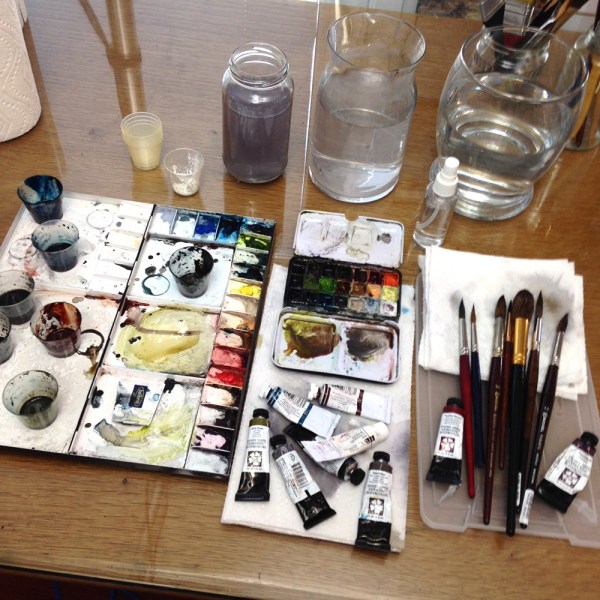
If I need a volume of tea – for a sky or something – I just take a new cup and make a batch of thinned paint. Periodically I take all these little staining-dregs and pour them together, or just find a place to use them on the painting. I end up with quite a collection of these cups in play. Maybe 10-15 at the most. I do have a traditional paint box, but I only use the mixing areas occasionally. Mostly its straight from these cups onto the page.
This is not quite pouring – but it’s close. I can bring the cup right over the paper and add large amounts of paint incredibly quickly. So yes – this isn’t something I could do on location. There’d be nowhere to put all these little mixing cups.

Alrighty. That’s it for me. See you tomorrow? Hit me up in the comments with your early-marathon pieces!
~m

“You Can’t Step in it Twice”, 18×18″.
I’ve been painting in oils for a year or so > Instagram Link < which has been the longest break I’ve taken from watercolor in – what – 15 years?
But getting back into water media was not a problem in the slightest. If anything, I feel better at it than when I left. Not sure how that works. Magically *any* kind of painting seems to make you better at *all* kinds of painting? That’s good news.
This sort of thing has actually happened to me before. One year, back in the days of art directing, I was managing a big project and didn’t draw for an entire year. Magically, when I got back to it, I was better than before. Weird hey? I was thinking about drawing the entire time. Maybe that’s enough.
Anyway – watercolor > OMG it’s SO FAST. It’s crazy how much faster you have to move compared to oils. I’m literally running for fresh water at times. Literally leaping across the studio to grab paper towels when a bad drip happens (That was just bad planning). Frantically adjusting the tilt of my clunky tripod.
Watercolor flows instantly. You can cover a whole painting in seconds. Nothing like the calm, steady, stroke-by-stroke buildup of oils. I’m paranoid about waiting too long for a touch, losing the wet window. Once the paper dries, it’s never the same. But at the same time, you can’t paint back into a wash too soon. If it’s soggy, you don’t get any interesting edges.
This might be what separates Direct Watercolorists from Oil Painters. It might be too stressful for some people :)
I always felt this is why Sargent switched to watercolor in later life. (Pet theory). For a person who liked alla-prima painting with big brushes – a watercolor wash is the biggest brush you’ll ever have.
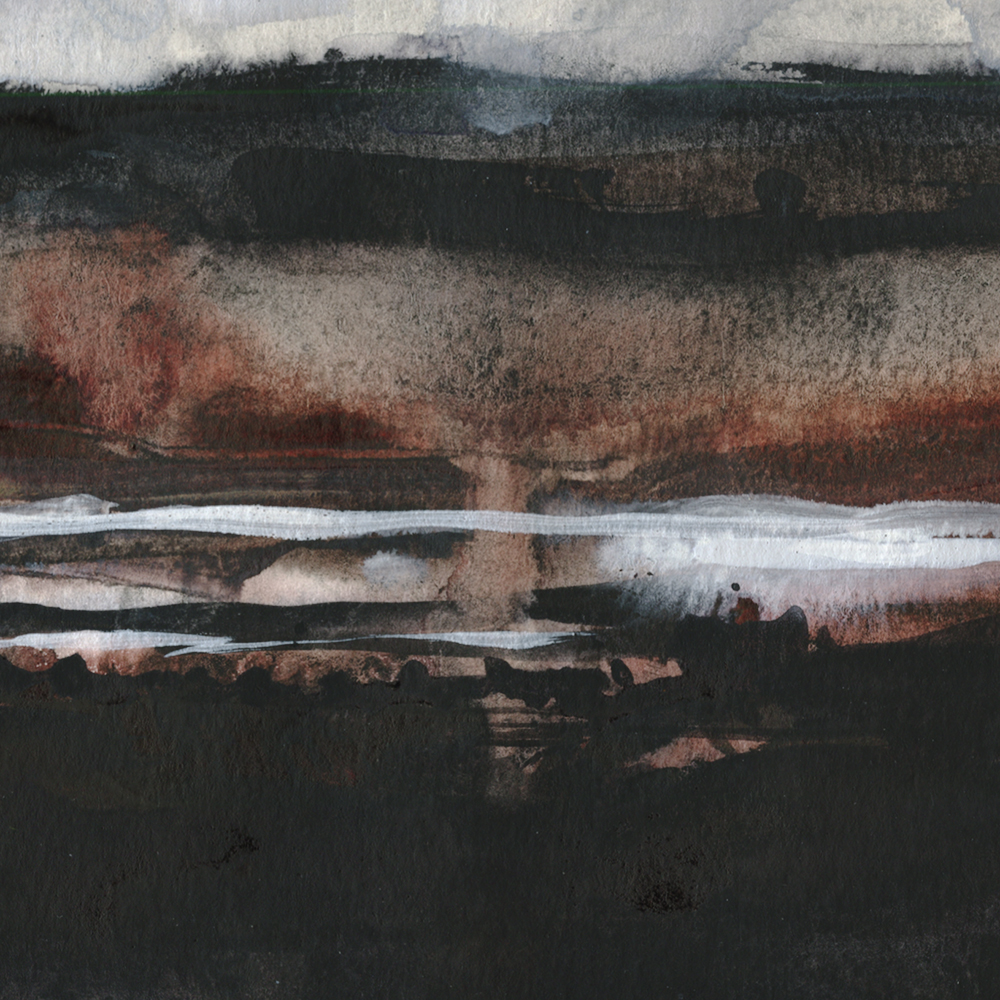
Doing these thick, densely pigmented surfaces, I feel like I’m breaking the rules of watercolor. I’m using such rich paint, it ends up looking chalky in areas. But I don’t mind. I’ve always felt like pale, tentative watercolors were a plague on young artists. My mantra is “More Paint, Less Water’.
I should note: I keep two large jars of water, so always have a dirty and a fresh water. I don’t want to have an emergency and not have clean water. I always find a reasonable time to change it out, so I have that backup. If you need to lay clear water – to draw out pigment (edge-pulling, [as per this video], or to lift an overly aggressive mark – or if you switch from a dark sedimentary color to a clear bright color – you can’t use dirty grey water.
So – always keep one water clean! That’s why, in the field, I use three small Nalgene water jars instead of one big one. So I have two backups to try and make it through a sketch.

Ok, that’s it for today! Let me know how your marathon is going? Is it hard to get started? Or hard to get your everyday things done once you start painting? :)
~m
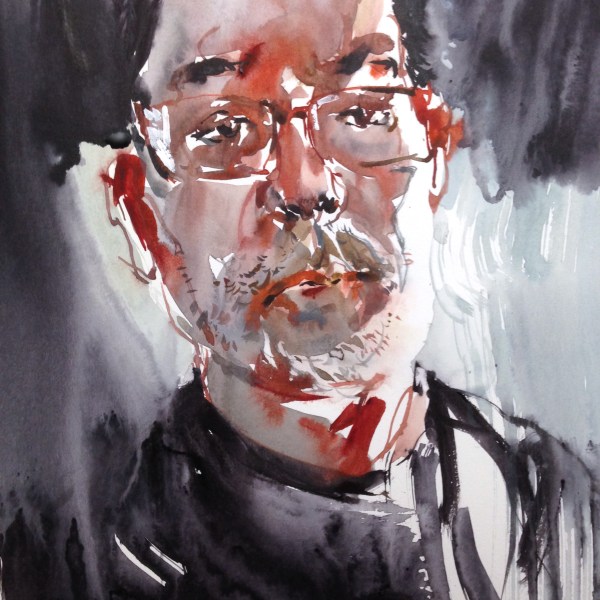
If you are not tired of hearing me talk – Uma Kelkar has posted a short interview with me, myself – part of our mutual getting-to-know-each-other for #30x30DirectWatercolor2019.
Have a read on Uma’s blog RIGHT HERE>
It’s short :) Mostly about my in-progress attempt to be a painter, and about the relevance of watercolor in today’s culture.
~thx!
Some people have been interested in the digital sketching process – so – here’s a video export.
I used the app ProCreate on the IPad. One of its neat features is the ability to automatically make these replays of every brush stroke. If only it was this easy to record a watercolor!

[^ Just a screenshot ^]
Things to note:
Big brushes: I use the biggest brushes I can. Even bigger relative to the image size than with real-world media, because digital makes it possible. In real life, this would have to a 6” diameter Japanese calligraphy brush. And it would take a bucket of paint. This would be pretty messy and expensive (so much paint!).
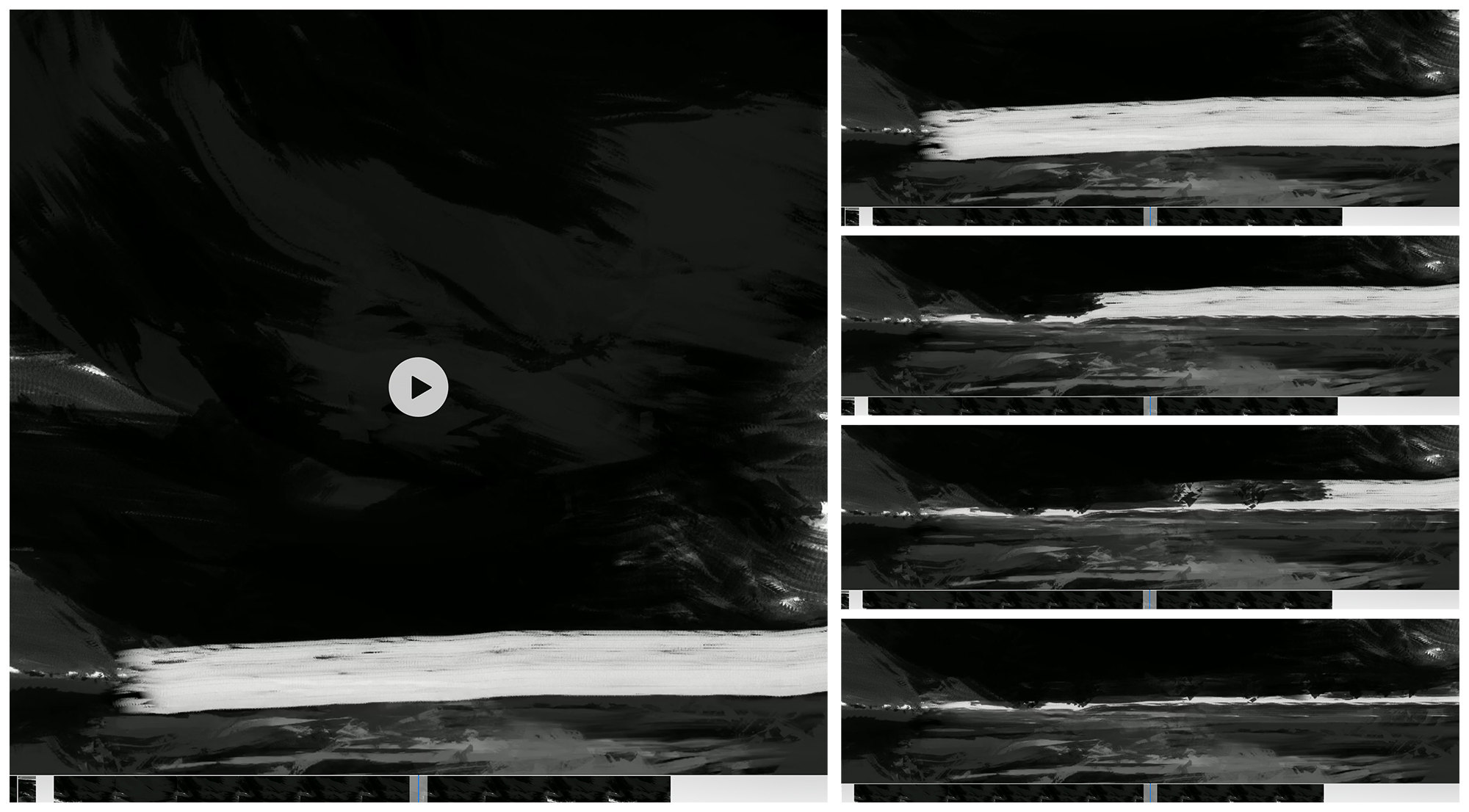
Layer/Draw/Erase loop > A: Swipe and Erase: This is something I do all the time. It’s essential to my approach to digital painting.
- Use a new layer so I can lay a big swipe of color across the painting.
- Erase it back to the shape I really wanted. I just find this more accurate – and I get more interesting edges than if I tried to force the software to draw exactly the right shape in one stroke. Especially for something tiny like this ribbon of light onto horizon.
- I use the ‘Jagged Brush’ preset in ProCreate quite a bit – (it’s like a splayed mop) and I use the same brush on the eraser, so none of my digital mark-making has that ‘overly clean’ look of digital drawing.
- Stay away from the generic mono-weight digital pen stroke!

Swipe and Smudge:
- Make a new layer,
- Sketch in some lines, patterns of dots, or just draw a brush swipe,
- Smear the edge of that shape with the smudge tool (shaped like a finger).
- This is similar to the stroke-erasing method, but gives a different edge quality. It’s sort of how you expect blending to work in oils, but much cleaner. More perfect amount of blend. You can also adjust the size and pressure of the blend tool.
I should also say – I do not use an iPencil or other stylus. I prefer to just paint with my fingers. I can’t be bothered keeping the pen charged etc, and – you’re always doing things like [two-finger pinch and zoom] or [two-tap for undo], [three-tap for redo]. I find it annoying to put down and pick up the pen all the time. I just finger paint the whole thing and I have gesture controls – at my finger tips! <wooomp wahhhh – dad joke]
Anyway. I find digital painting terrific for studies. I’m not sure I’ve figured out using it for finished work yet. But one day! I keep hoping it will become a wonderful new art form. It has so much promise for ease-of-use and instant sharing.
Feel free to post any of your own digital art in the comments!
~m


 Citizen Sketcher